
Frozen 2 and the Unexpected Tears of Relief
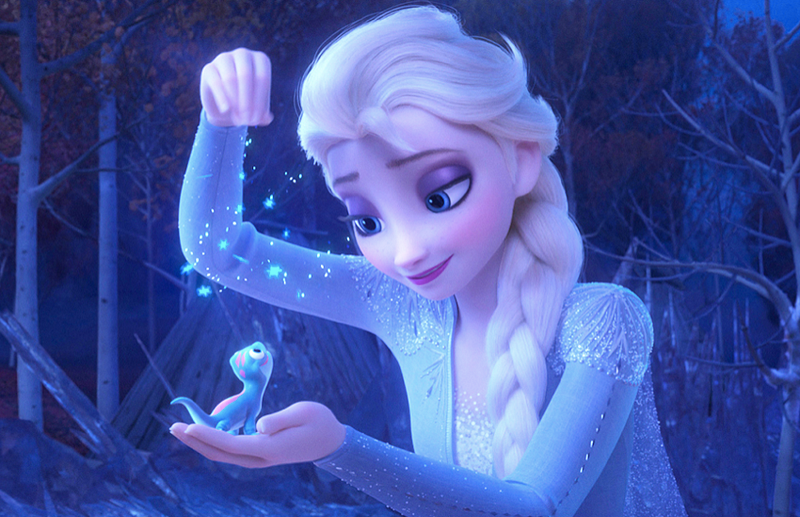
Trust me when I say I am shocked to find myself inspired to write a positive reflection around a kid’s Disney movie about princesses. I definitely don’t want to like Elsa for several valid reasons. I hate that her oversized eyeballs are twice the size of her grotesquely thin wrists. I scowl at her outfits — more fitting for a fancy gala than for the rugged adventures on which she finds herself. Why are we still imprinting on children these impossible bodily proportions and unrealistic appearances?
Yet every time I watch this movie, I am moved to tears, and I just figured out why.
The first time I saw Frozen II, it was pre-covid, and I was in an actual movie theater as a chaperone to three star-struck six-year-olds. (Spoiler alert) I cried at all of the expected moments: Elsa realizing her parents died trying to help her; Olaf using his final moments to reassure Anna that she’d be okay without him; Kristoff finally nailing the proposal. I heard adults sniffling all over that movie theater and felt comforted by the knowledge that I wasn’t the only one vulnerable to cinematic manipulation.
I felt less comforted, however, in the coming months, after purchasing the movie, to find that I was still crying. I know what’s coming. I’ve had time to digest all the tear-jerking moments. But there is one scene that has continued to make me weep. Every. Damn. Time.
The background to this bewitching scene is this: Elsa thinks she is looking for something or someone ELSE, something outside of herself that’s been calling her and that only she can hear. On her path to connect with this other being whom she vehemently believes she needs to find, she has to battle various natural elements. She doesn’t actually overcome these elements of nature, as it turns out, but instead conquers and befriends them. They become her resources and help her on her quest.
THEN, as she nears the source of the magical entity for which she searches, Elsa, as we’ve come to expect, breaks into a gorgeous, powerfully moving song. While she’s singing, she suddenly connects with her dead mother. A beautiful duet unfolds. At that point, her dead mother sings,
Show yourself
Step into your power
Grow Yourself
Into something new
You are the one you’ve been waiting for
All of your life
Oh, show yourself
That’s the moment I always cry. And I just realized that there are layers of symbolism wrapped up in this one scene.
For one thing, Elsa is ALL OF US. In a way. How many of us have felt called to find deeper truth or richer meaning — a calling only you can hear and answer for yourself? On your path, you have challenges. These challenges are natural, aka part of nature. You can’t actually defeat nature, but you can become better acquainted with and, yes, even use your challenging nature, internal and external, to your advantage. Your challenges can become your resources.
Additionally, there’s something even more pointed and sob-worthy than this relatable longing for self-actualization. The real cathartic tears come with the words, You are the one you’ve been waiting for. In contrast, the Disney movies that I grew up with included those like Cinderella and the Little Mermaid. All those princesses I unfortunately consumed and identified with were supposedly recused by someone else. This was false advertising. No one is coming to rescue grown-ass individuals. In fact, quite the opposite from being rescued, the biggest threat to women’s safety is actually the men who supposedly love us. Statistics show that domestic violence is the leading cause of injury to women — more than the next three most common causes of injury combined. Those storylines that encouraged us to find our meaning and value through the affection of some handsome, well-off man perpetuate a dangerous myth for women. And even when it isn’t dangerous, it’s still unsatisfying. Historically the women in these stories have been denied the recognition that they are whole, valuable, autonomous beings. And it’s not just Disney. Studies show that in film and television, in general, women represent a fraction of the protagonists and far less than half of all major characters. For most of my life, I’ve been subjected to the message that people like me — female people — are merely side show entertainment and supporting characters at best. Thus, when Elsa connects with her dead mother from the beyond and her message to her child desperately seeking something to help her make sense of her crazy life, and her mother says, “It’s you, honey, you are already everything you need,” I fucking weep great slobbery tears of relief. I cry because I know my kids are getting a different message. They are getting the message that women are whole-worthy beings and that people, in general, have what we need inside of us. This feels revolutionary.
At the risk of ‘diving too deep, lest I be drowned’ as the lullaby warns (and as I cringe), there is one more aspect of this scene in Frozen II that deserves a wink and nod, or a solemn bow, depending on where you’re at with these things. As I mentioned, Elsa re-connects with her mother, now deceased, whose presence helps Elsa understand that she already has all the power she needs within herself. What I didn’t say, however, was that her dead mother had been the link to her ancestors who had been deeply and lovingly connected to the wild land on which they had thrived. They appreciated, respected, and utilized the magic of nature. And those ancestors were then betrayed, murdered, and exploited by those who feared their kinship with the earth. I’m still talking about Frozen II, but this is also the story of the countless women tortured and executed by the Holy Inquisition and the women murdered during the puritan-era witch hunts. It’s also the story of indigenous communities all over the planet. This musical ice-princess made me see how we have perhaps evolved from peddling the story of the fairy godmother helping a bedraggled orphan attract her rescuing prince, or that of an octopus-witch tricking the red-haired leading mermaid on her quest to catch a clueless man (oh how I love you, Ursula, you cunning badass). In this scene, Elsa is connected with the supernatural, outside and within herself. It turns out it’s this connection that she needed all along.
This movie implies that perhaps we really are evolving from the perspective that magical, nature-worshipping beings are either bad or only show up when hopeless ladies need their help to catch a mate. Instead of explaining to my children why all those messages in which I was steeped are so fucked up, we get to watch a movie that celebrates female power and independence, demonstrates the injustices to indigenous folks, and openly celebrates environmentalism. The messages are changing. There’s a lot to appreciate in this movie. And, apparently, tears of relief to be cried. If only her eyeballs weren’t so much bigger than her wrists — then I could really call myself a fan of this movie.