From Zero to Hero: The Journey of a Diamond
Introduction
Diamonds have captivated the human imagination for centuries. They are a symbol of wealth, power, and everlasting love. Yet, few people are aware of the remarkable journey that a diamond takes from its humble beginnings deep within the Earth to its status as a coveted gemstone. In this article, we will explore how a diamond goes from "zero" as a rough, unremarkable crystal to a "hero" as a prized gemstone, cherished for its beauty and value.

The Genesis of Diamonds
Diamonds are born under extreme conditions, deep within the Earth's mantle, approximately 90 to 120 miles below the surface. These gems are formed from carbon atoms subjected to intense heat and pressure. The process begins with carbon-rich minerals such as graphite, which are subjected to temperatures of around 2,200 degrees Fahrenheit and pressures exceeding 725,000 pounds per square inch. Under these extreme conditions, carbon atoms bond together in a crystal lattice structure, forming a diamond.
Over the course of millions of years, volcanic eruptions carry diamond-bearing rocks, called kimberlite or lamproite, to the Earth's surface. These eruptions are the first step in a diamond's transformation from a mere mineral to a gemstone.
Mining the Rough Diamonds
Once these diamond-bearing rocks reach the Earth's surface, the next phase of their journey begins. Diamond mining is a complex and often dangerous process. While some diamonds are discovered in alluvial deposits, most are found in kimberlite pipes deep underground.
Miners employ various methods to extract these precious crystals, ranging from open-pit mining to underground mining. The choice of mining method depends on factors such as the depth of the deposit, environmental considerations, and economic feasibility.
Sorting and Grading
After extraction, rough diamonds are far from the dazzling gems we recognize. They are typically covered in a layer of rock and other minerals, known as "host rock." To transform them into the gems we admire, the rough diamonds must undergo a rigorous sorting and grading process.
This process involves cleaning, crushing, and sorting the diamonds into various categories based on their size, color, shape, and quality. Professional diamond graders use specialized equipment to assess these factors and determine the diamond's potential for cutting and polishing.

Cutting and Polishing
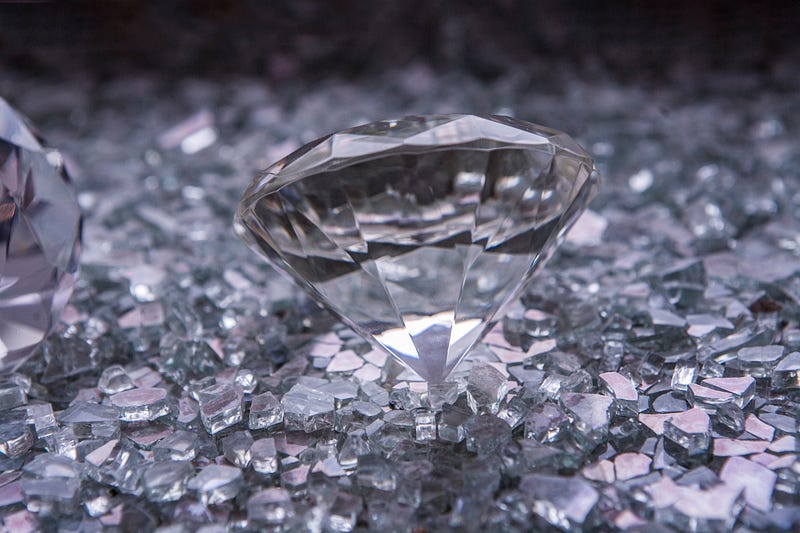
The most critical step in a diamond's journey from rough to gemstone is cutting and polishing. Skilled artisans, known as diamond cutters, take the raw, uncut diamonds and transform them into the brilliant, sparkling gems we adore.
The cutter's objective is to maximize the diamond's beauty by optimizing its shape and facets. They follow a precise plan to ensure that the diamond reflects light in the most dazzling way possible. This process requires both expertise and a deep understanding of the diamond's physical properties.
Cutting and polishing a diamond is a delicate and time-consuming process. Each cut is made with precision, and even a small mistake can result in a significant loss of value. Throughout the cutting process, the diamond's journey takes it from a rough, unpolished stone to a polished, multifaceted gem that captures and reflects light in mesmerizing ways.
Certification
Once a diamond has been cut and polished, it undergoes a certification process to evaluate its quality and characteristics. This process is typically carried out by independent gemological laboratories. The most well-known and respected of these laboratories is the Gemological Institute of America (GIA).
Diamond certification includes an assessment of the diamond’s "Four Cs": Carat weight, Color, Clarity, and Cut. These four factors determine the diamond’s overall quality and value. The certification provides potential buyers with essential information about the diamond’s characteristics, helping them make informed decisions when purchasing a gemstone.
Setting and Design
After certification, diamonds embark on yet another journey, where they are incorporated into various types of jewelry settings. Jewelers and designers use their creativity and expertise to craft stunning pieces of jewelry that showcase the diamond's beauty. The design process can range from classic solitaire rings to intricate and elaborate pieces that incorporate multiple diamonds.
These settings, whether for engagement rings, necklaces, bracelets, or earrings, are essential in showcasing the diamond's brilliance and enhancing its appeal. The design phase of a diamond's journey plays a pivotal role in how it is perceived and appreciated by its eventual owner.
The Heroic Role of Diamonds
Once a diamond has been cut, certified, and set into a beautiful piece of jewelry, it takes on the role of a "hero." It becomes a symbol of love, commitment, and personal achievement. Diamonds hold immense cultural significance and are often used to mark significant life events, such as engagements, weddings, and milestone anniversaries.
Diamonds are also prized for their rarity and enduring value. They have served as a store of wealth for centuries and continue to be a sought-after investment. The value of diamonds is determined by their quality and rarity, making them an asset that can appreciate over time.
Beyond their economic and symbolic value, diamonds have played a heroic role in various industries. They are used in cutting and drilling tools due to their exceptional hardness and durability. In technology, diamonds find applications in cutting-edge fields such as quantum computing and medical imaging.

Conclusion
The journey of a diamond from "zero" to "hero" is a remarkable tale of transformation. Born deep within the Earth, these carbon crystals undergo a journey of extraction, sorting, cutting, certification, and setting, ultimately becoming the dazzling gemstones we admire. Diamonds hold a special place in human culture, symbolizing love, commitment, and achievement, while also serving as valuable assets and enabling technological advancements. Their enduring beauty and rarity ensure that diamonds will continue to captivate our imagination for generations to come.


