From Zero To Best-Seller On Amazon: Where To Start?
Your journey toward self-publishing

Writing a book on Medium!
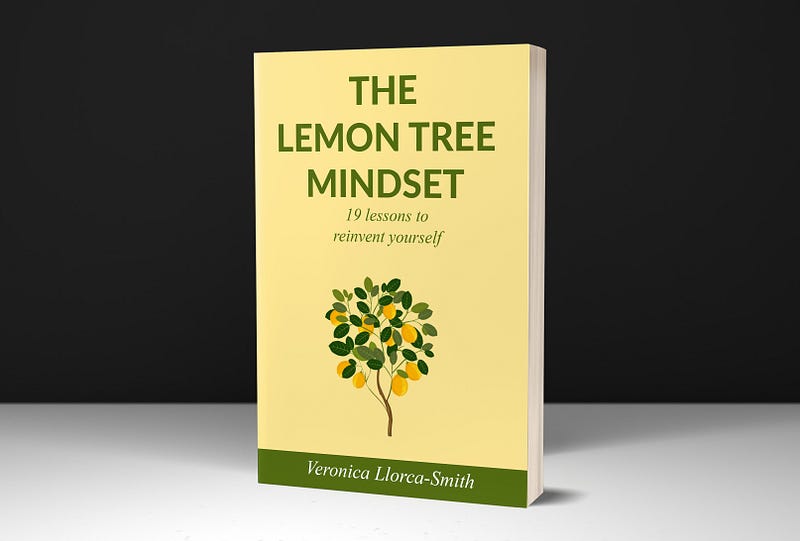
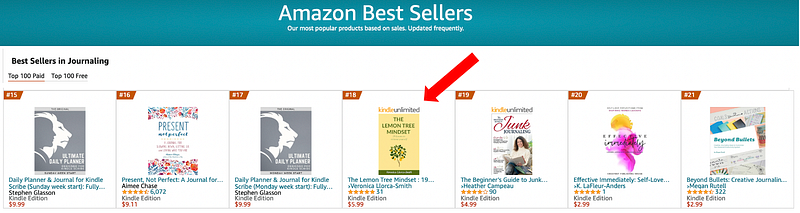
This week, I hit a new milestone as a writer: my first book, The Lemon Tree Mindset, hit number 18 on the Amazon Kindle ranking (category of Journaling). I was over the moon, celebrated on all my social media channels, danced the Macarena, and kept writing.
Then, multiple connections and followers contacted me with questions along the lines of,
‘Where do I get started?’ ‘Should I publish on Amazon?’ ‘I have finished a book, but I know nothing about publishing.’
So, now that I have some knowledge and a bit of credentials (I’m about to publish my third book), I have decided to write a digital guide about self-publishing on Amazon, sharing everything I have learned along the way.
My plan is to write it in public, here on Medium, and later on turn it into a resource guide that I will self-publish…on Amazon! Every week, I plan to release 1 to 2 chapters covering the end-to-end journey of self-publishing, from choosing your platform to formatting, pricing, and how to market your book and your brand as an author.
I will write my book live and on the go together with my connections and fellow writers; how cool is that!
You wrote a book…now what?
When I finished writing The Lemon Tree Mindset, I felt like an Olympian. Years earlier, I crossed the finish line of an Ironman in Australia. In both cases, I felt the same butterflies: I had achieved the unachievable and had proven myself wrong, deconstructing all the limiting beliefs that held me back.
Yet, as soon as I finished the last page, I had a reality check: What now? I had written a book, but I had no idea what to do next, how to publish it, and launch it on the shelves of the world. I googled ‘How to publish a book’ and sent the manuscript to a few publishers who requested standard information: the genre, previously published work, awards, audience size, etc. Some had a time frame of up to six months before giving feedback. As a novice writer, I felt overwhelmed, underqualified, and intimidated. I had none of that, and all I heard was the sound of rejection. Crickets.
Publishing options
Predatory publishers
In that initial phase, I heard back from two hybrid publishers, and after my online research, I quickly discarded them. Hybrid publishers, also known as vanity publishers, seduce new and inexperienced writers into the publishing process. They first send you flattering emails complimenting your manuscript and then tempt you with what looks like an irresistible publishing deal sealed with a time-limited offer to create a sense of urgency. Most are a money-making engine that takes advantage of writers desperate to be published and charge outrageous amounts. For that reason, they have also earned the less gracious term of predatory publishers. Watch out; you are the prey.
After doing my due diligence, I strongly recommend writers be cautious of this type of publisher and carefully read the reviews from their clients and published authors before moving forward. A trusted contact of mine gave me a wise piece of advice,
‘Never pay to have your work published.’
While some companies legitimately help authors to succeed, I urge you to do your research before tying the dot with any literary partner that asks you to pay in advance.
About self-publishing
After dismissing the option of traditional publishers (well, they dismissed me), I was left with the daunting route of self-publishing. I confess I initially had the preconception that self-publishing was for B writers who were not good enough to close a deal with a publisher.
I now have a different point of view: While securing a deal with a publisher is, in most cases, an endorsement of your writing, particularly if the publisher is well-known, a large number of authors, even seasoned ones, prefer the journey of self-publishing for multiple reasons:
- Ownership: When you self-publish, you have full ownership of the end-to-end process, from the timeline, the price, campaigns, promotions, marketing, etc. Publishers take away much of that freedom and publish on their terms, following their practices with little room for flexibility. Some take months and years before they publish a new title. It’s also common for publishers to request changes in the actual content of the manuscript, often to make it more commercial, which is an obvious contentious point.
Your baby is just perfect the way she is!
2. Royalties: Publishers keep a juicy chunk from the book sales, and rightly so because of all the overhead expenses they have, from brick-and-mortar stores, staff, logistics, marketing costs, etc. Traditional publishers typically give authors 5–10% of royalties (calculated as a commission from the retail sales). Of course, a publisher will push for broader distribution, which means a higher sales volume and royalty earnings, but the difference is still huge compared to other market places where you keep up to 90% of the sales. You have to sell a lot of books to compensate for the gap.
3. Marketing: There is a general misconception that when an author signs a deal with a traditional publisher, the marketing ownership and responsibility are fully delegated, and the publisher does the heavy lifting. While they will invest in A&P (advertisement and promotion), the bulk of the marketing still falls on the author’s shoulders.
You must still build your audience, create content, find interviews, pitch yourself to podcasts, and invest in your brand. A publisher will give you access to resources, book signing opportunities, and media exposure, but you must still invest in your brand and promote your work. You are not off the hook: you must show up and sell yourself and your book — in that order.
Self-publishing: the players
Once you go down the route of self-publishing, you have multiple options: some content creators choose Gumroad, others host the ebooks on their website, some writers use their newsletter, and the most popular platform is, of course, Amazon, the titan of book distribution.
I will only talk about Amazon because that’s the option that works for me; however, the other alternatives are worth exploring depending on your circumstances and objectives.
- Gumroad is the go-to platform for many content creators who sell ebooks and other digital products. Its 10% flat fee is attractive, and the platform is user-friendly and is built as a marketplace. Many creators use it strategically to give products for free and obtain emails in exchange for growing their email list.
- Your personal website is ideal for big creators with big traffic who have enough daily visits to convert directly without needing a third-party platform. This is a cost-effective option because the author keeps most of the sales (except for transaction fees).
- Newsletter: Leveraging a newsletter is a less common yet creative way of selling a book. Some successful writers effectively use Substack as a platform to sell their books. Each week, they share a chapter only available to paid subscribers. I have used this option myself to promote my book and will share more later.
- Amazon: The digital giant works extremely well for writers who want to build a name as authors and leverage the distribution power of the global online-to-offline platform. The royalties vary depending on the format, but authors receive up to 70% in ebooks and up to 60% in paperback. Amazon enables the publication of both digital and physical products on demand, making it a low-cost, low-risk option.
All options are valid, depending on your strategy, your traction, and what channels you can effectively leverage.
Before deciding which channel is the most suitable, it’s key to define the strategy behind your book. What is your number 1 objective?
Is it to position yourself as an author with the idea of publishing more books in the future?
Is it to give you credibility in your area of professional expertise?
Is it to help you promote another product or service, such as a course or your email list?
Is it purely to create a passive income source and generate monthly sales?
It’s most likely a combination of a few of the factors above.
My primary goal is to position and brand myself as an author. I’m about to publish my third book, and I plan to write more. My secondary goal is to give me credibility in my work as a public speaker and inclusion consultant. Having books under my name gives me an extra layer of credibility. Last, I’m building a foundation for a passive income.
With this, my platform of choice is Amazon.
Whatever you decide to do, especially as a new author, I recommend consolidating your efforts into one platform. Avoid diversifying online channels, as building a name is difficult when you are spreading too thin, and you want to concentrate ratings and reviews in a single hub.
My next article will discuss self-publishing on Amazon, the KDP platform (Kindle Direct Publishing), and how to get started.
My ultimate goal is to help you get self-published, have your name on the Amazon best-seller ranks, and receive a message from you saying,
‘Hey, thanks for sharing your strategy. It worked and I danced the Macarena too!’
That’s what success looks like. Good luck!
If you are ready to reinvent yourself and monetize your passions, check out The Lemon Tree Mindset on Amazon. Click here to read the sample.