
AN INTRODUCTION
From Warm Zephyr Breezes to the Colder Katabatic Wind
Orphaned and widowed a decade ago, in the blink of a tear-filled eye
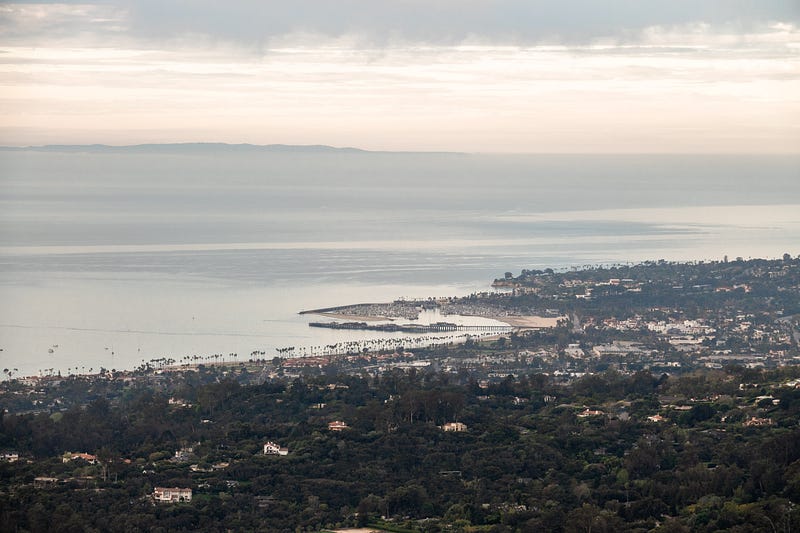
The view of my future develops slowly through my blurred vision.
I peer through my anguish and pain, into the silence of aloneness as it stretches ahead of me over endless splices of my existence. My heart vibrates loudly in my head at the soft focus of barren, monochrome landscapes, thunderous weather patterns speaking in whispers.
My vista
Such an insignificant noun with a magical meaning: a distant view through, or along, an avenue or opening.
I shout the word vista in my head.
Similarly, to view and outlook, I remember it refers to one’s mental scan of the future.
Except it hurts to remember, to think at all. I have no future, only endless pain.
My forecast is now my history. Where was my life? I don’t remember when I lived. Have I forgotten my life because I blended so expertly into the scenery?
All black, white and grey.
Grief
I no longer had the energy to live with this feeling of constant sadness in my life, this wretchedness in my landscape, nor participate in my very steady, well-paid position.
My clothes no longer depicted me or tailored my emotions. Not from the result of a changing shape but by an absent sense of self. My clothes were constricting, unbending, unyielding, and devoid of color.
Nothing in my life fitted, yet everything was too snug, stifling, and at the same time, transitory, fleeting.
I continued to stare at the vista of my existence through a narrowed vision, seeing the gray-scale cinematography of my endless days with slight variations, prominent intimations of shadows, and tiny splashes of light: without color, without joy.
I was too wounded to inhale deeply. I was suffocating, deprived of oxygen.
Taking steps
Colleagues treated me like I was a fragile presence.
I felt the tethering of well-intentioned friends warning me against making decisions until I took time to grieve and think.
To think was torture — I could no longer master the skill.
I struck out at my new labels — widow, orphan. I still caressed the recent memory of wife, daughter.
I stalked an angry need to escape this monochrome existence and breathe.
And breathe, breathe again.
I worked so hard.
I accumulated so much leave.
I quit.
I took an opportunistic redundancy.
Fleeing
I went traveling.
For ten weeks I roamed Europe and created a new history for myself.
I was anonymous. I could introduce myself with any type of narrative I cared to create.
The sense of freedom anonymity gave me was therapeutic for my grief. No-one expressed sorrow, only encouraged friendship, warmth, laughter, and life.
I sought out smaller guest accommodation. Here, in France, I could meet the hosts and feel the fullness of family connection. I needed the embraces from the enthusiastic people I met and connected with.
Here, in Italy, the people were robust, emotional, overwhelming, irresistible, hearty, and totally embracing. Much like the full-bodied wine they offered me wherever I went. I found their connection was organic: nurtured and bound by nature and encompassed in a spirit of passion for life.
I felt whole, fulfilled by the touch of strangers, fleeting strangers until we’re friends moments later. The energy of my passion for living again ignited, and massaging balm into my aching bones, aching from a desire for family connection, I connected.
Zephyr breeze
Spring had come, clad in no classical garb, yet fairer than all springs; fairer even than she who walks through the myrtles of Tuscany with the graces before her and the zephyr behind — Howards End, E.M.Forster

As the warm winds from the Mediterranean known as the Zephyr breeze blew from the west, I headed for my home country, but I didn’t recognize any nostalgic sense of home.
My house echoed with empty promises, trembled with historical voices, and choked attempts at a welcome for me.
The high country
I’m blessed with caring friends who encouraged me to stay and kept me busy.
My landscapes morphed into familiarity with friends and new comforts, including an invitation to explore the wine trail in the high country.
It wasn’t a region I’d visited before, a region where the Italian influences were celebrated, especially in the popular wines being produced in some of the valleys. My wine-loving friends convinced me to come and compare this wine region to “the real thing in northern Italy.”
We dined, we tasted the local wines, and we explored the countryside busy with tourists at the beginning of the harvest.
We paddled by canoe on an expansive man-made lake, assisted by a gentle breeze. The experience reminded me of Henry David Thoreau. He was an early advocate of recreational hiking, canoeing, conserving natural resources, and a keen preserver of natural wilderness for use by all. He wrote,
When I first paddled a boat on Walden, it was completely surrounded by … woods, and … grape-vines had run over the trees … and formed bowers. The hills which form its shores are so steep, and the woods on them … so high, … it had the appearance of an amphitheatre for some land of sylvan spectacle.
I have spent many an hour, when I was younger, floating over its surface as the zephyr willed … dreaming awake, until I was aroused by the boat touching the sand — The Ponds, Henry David Thoreau
My vista showed a different type of tree from those Thoreau viewed, rising to the surrounding hills above the lake.
My sylvan spectacle of trees and contours, was free of grape-vine bowers.
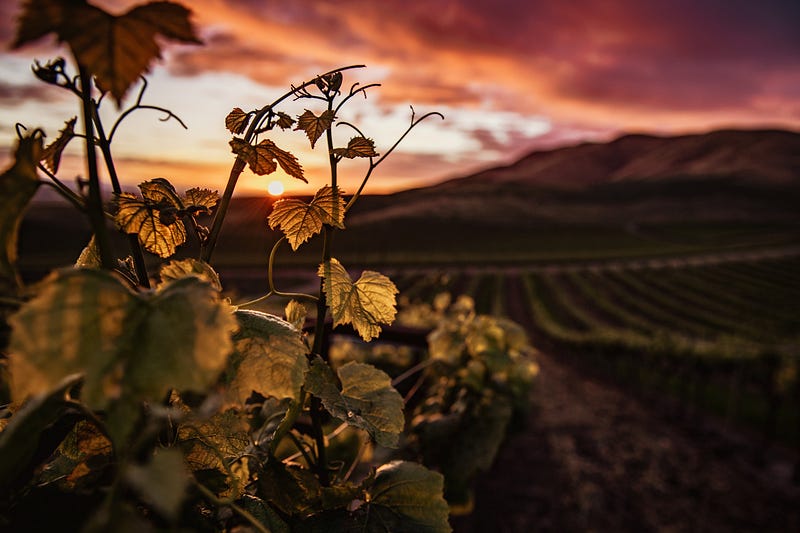
By contrast, these hills were studded with uniform rows of pegged and pruned plants bearing the fruit of the wine. Imbued with a haze shot with autumn amber and rusted leaves, the fortune of local produce was reflected in the water like clusters of gold nuggets.
A Katabatic wind
Gently swaying, my canoe was propelled by the katabatic wind, a wind stronger in the evenings, stronger than the zephyr, sometimes called the gravity wind, as it’s moved by the heat radiating from the slopes and mixing with the cooling air from above.
Warm days and cool nights, influenced by the katabatic breezes sweeping northward down the valley from the high country, is the climate causing the varying ripening of the grapes, which in turn influences the styles of wine.
My vista was fresh, pure
I didn’t return to the city with my friends.
I stayed longer.
I toured further.
I spoke to the locals.
I experienced a feeling of contentment everywhere I wandered.
Sitting in a coffee shop, I was reading a real estate magazine from a local agent when the waitress stopped by my table and asked if I was looking to buy. We chatted, and then she sat with me for a while longer.
The more we spoke, the more interested I became.
Her name was Lisa. She took time out from her job to direct me to a small village and up the smaller roads to hills on the other side.
I stood where we stopped, overlooking hills and valleys. I remember seeing the broad sweeping views from the mountaintop.
With a deep breath, my lungs expanded with contentment and expelled a single sigh of sorrow.
Connected
Lisa’s parents and her brother’s family had adjoining vineyards and were considering selling.
I walked the land with her. I think we became firm friends by the end of the day.
Lisa showed me the abandoned stone building, used when the property grew tobacco instead of grapes.
The skeleton building was tall, wide, and solid, with timber doors and shutters in the massive openings in the walls. A future cellar door?
Currently, the vineyard was a producer’s business. Sangiovese, an Italian red wine grape varietal, was the grape grown. It wasn’t an independent winemaking enterprise.
My vista of distant views shows me its prospects, with multiple connections and ideas, as I scan my future. Here, is a landscape of brilliant color, avenues of rust-colored plants, tinges of smoky blue hazes in the distant elevations.
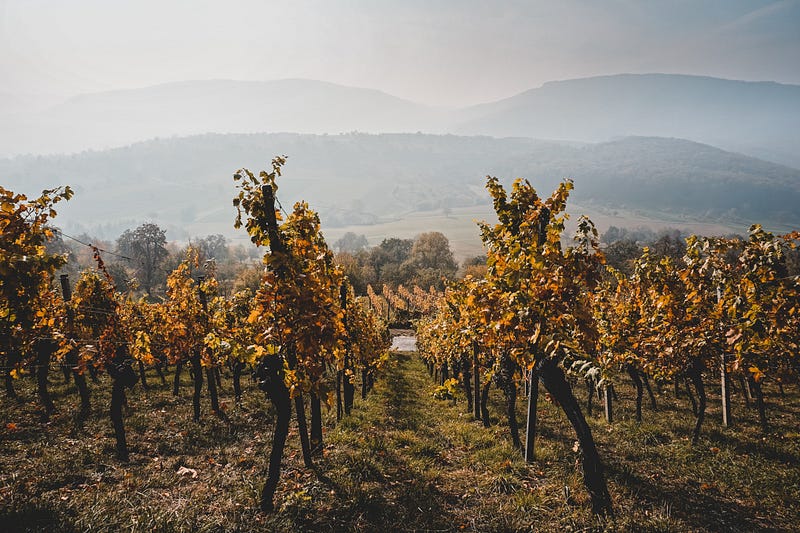
I draw the hand-knitted shawl I bought the previous day, made from homespun sheep’s wool, closer around my shoulders, feeling the close comfort and warm fit.
Smiling and treading lightly, I step inside with Lisa to meet her family, and discuss an offer.
I am home.