
From Volcanoes to Waterfalls, Iceland Stirs the Spirit and the Soul
Nothing in my experience could compare to this magical land
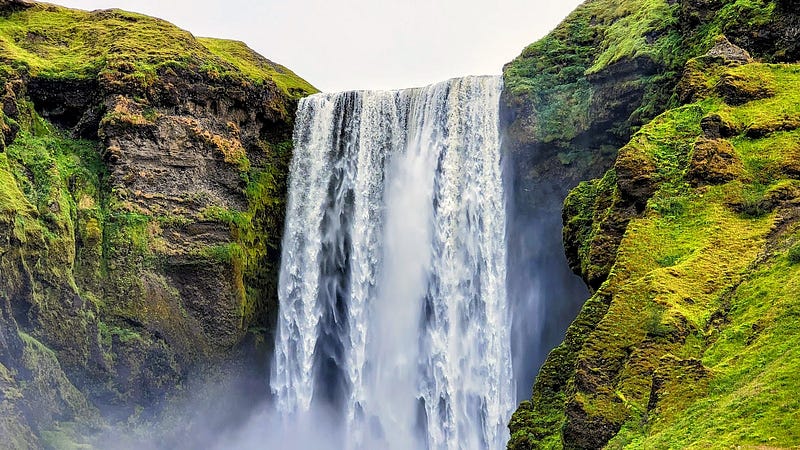
Being a Southerner who revels in beach weather and summertime, Iceland was not on my bucket list. But when an opportunity came to spend part of August in Iceland, it didn’t take me long to bid hot Georgia days goodbye and head to the land of fire and ice.
One reason my husband and I planned the trip is because you can’t always count on having the freedom, health, and opportunity to travel. Covid put our travel plans on hold for two years. Then my mother’s health failed, and she lived with us until her death. Friends who used to travel have been suddenly grounded by health issues. And some places I’ve visited in the past, such as Russia and Israel, are involved in wars that make them unlikely tourist destinations.
For all these reasons, I said yes to Iceland, even though I pictured a stark, snow-covered, nearly deserted wasteland.
But the images we conjure up in our minds aren’t always accurate and the scenarios we envision rarely happen. To my surprise, I discovered Iceland to be a country so mystical and magical that nothing in my experience could compare to its sheer, raw beauty.
We began our Icelandic journey in Dimmuborgir, or the Black Fortress, a dramatic lava field formed from an eruption that occurred 2,300 years ago. The rock formations are spectacular; rocky layers thrusting skyward, creating caves, crevices and natural lava bridges.
There was only one minor discomfort. Bugs! They swarmed so thickly that we took advantage of the rest stop to do more than use the facilities. We purchased mosquito nets, which turned out to be the best five dollars I’ve ever spent.
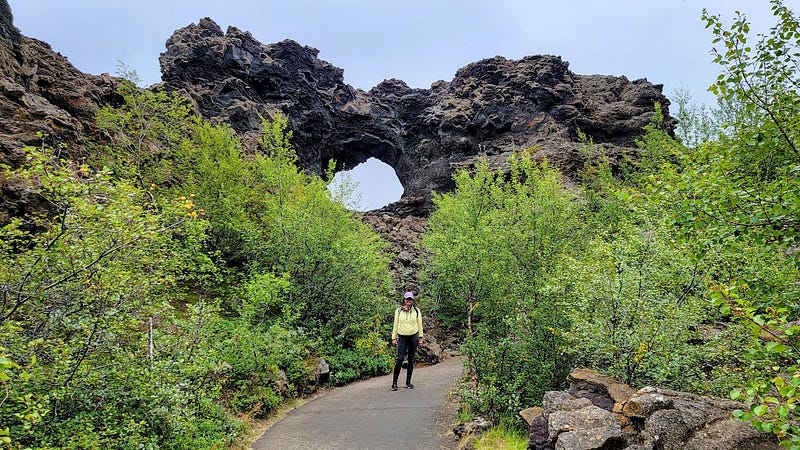
Bugs pinged against our nets as they dove and fluttered and darted persistently around our faces. They weren’t biting bugs, so what did they want with us, I wondered? If they didn’t want our blood, why did they try to dive into our eyeballs, our mouths, our hair?
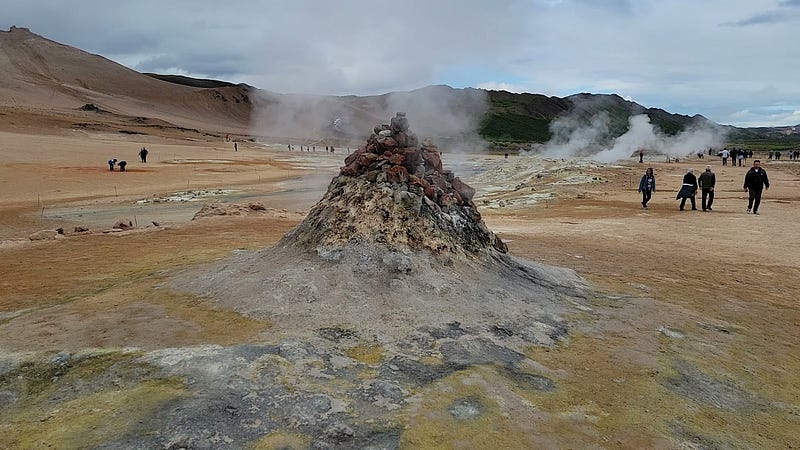
Bugs also swarmed in the barren, brown plains of geothermal pits, where smoke spewed from the ground, mud boiled, and the air reeked of sulfur. Some of this brown land reminded me of the rolling sand dunes of Colorado, except for smoke curling and puffing toward the sky, a portent of the latent volcanic activity seething beneath the earth’s crust.
These geothermal areas are sources of natural, renewable energy, forming underground ovens that can literally bake bread if you leave your unbaked loaf wrapped and buried beneath a mound of dark, hot dirt. Rocks are hot to the touch, and muddy holes gurgle and bubble like cauldrons coming to a boil.
But the next day, we left bugs, mosquito nets, and boiling mud behind to tour Iceland’s waterfalls.
And there are so many waterfalls in Iceland!
Some blow sideways, no match for the wind that hurls them away from a straight fall into the canyon. Some spread like a flowing mane, caressing the rocks, while others fall in a straight, tight descent into the waiting waters below. Waterfalls are everywhere, spewing from rocks and crevices, carving pathways and gullies onto the lava rock, and feeding the numerous rivers that crisscross the land.
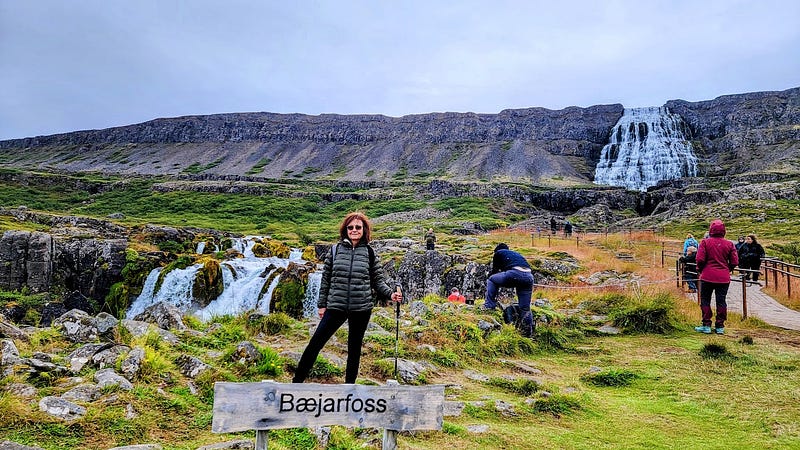
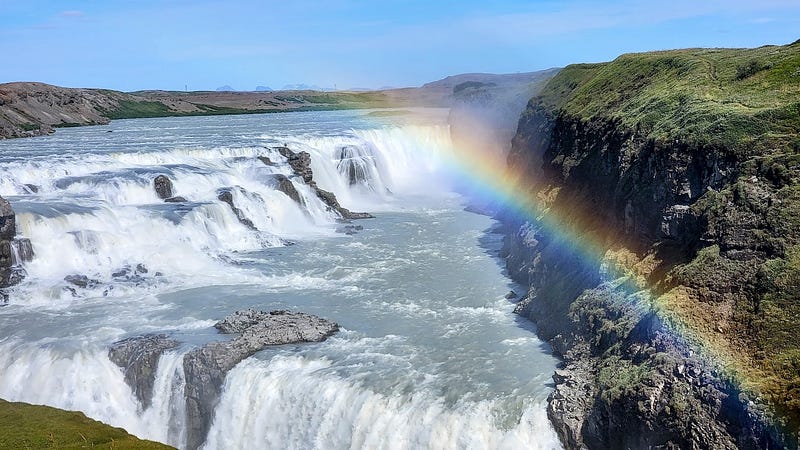
The rainbow waterfall, three tiers cascading over layers of rock, was one of my favorites. A rainbow, rising from the roaring water and illuminated by the sun, was visible from everywhere I stood.
On Day Three of our tour, we drove through valleys so green they made me think of leprechauns concealed behind moss-covered hillocks. Rivers sliced across the landscape, some foamy and gurgling, others placid and quiet, their shiny waters curling, narrowing, and broadening as they dissected lush fields.
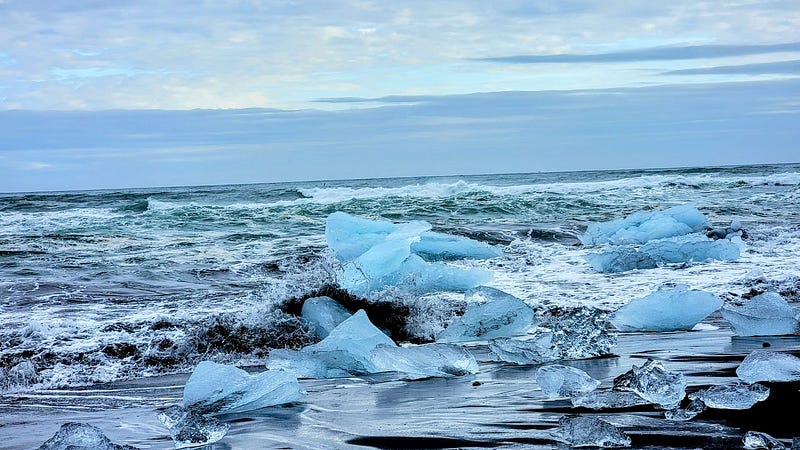
We covered 500 miles this day in a 14-hour trek that took us all the way to Diamond Beach, where pounding waves tossed glittering glacier chunks to shore. Just across the road in Glacier Lagoon, I watched seals frolic as glaciers drifted in with the tide and settled, like frozen palaces, in the lagoon.
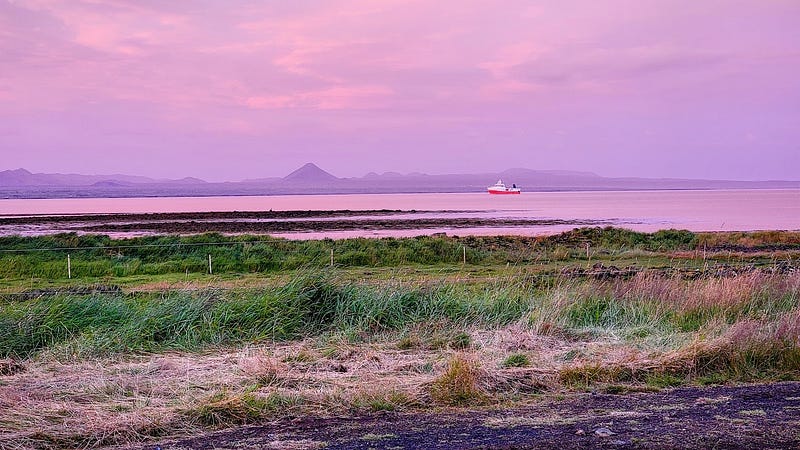
I thought we’d be staying in Reykjavík, the capital and largest city of Iceland. But my husband, who prefers to steer clear of standard hotels, booked us in an eclectic place called Fisherman’s Village on the Álftanes peninsula. Nestled next to the ocean and bordered by pastures of grazing Icelandic horses, the peninsula is also home to the President of Iceland.
My husband apologized profusely when he discovered you needed a car to get food, and we didn’t have a car. There was a restaurant across from our cabin, but it remained closed during our stay, no matter how many times I wandered over and pressed my face against the windows to stare hungrily at empty tables.
But when I woke to a sunrise visible and beautiful on both sides of the peninsula, I forgot about the lack of food. “This is wonderful!” I assured my husband. “I love it here!”
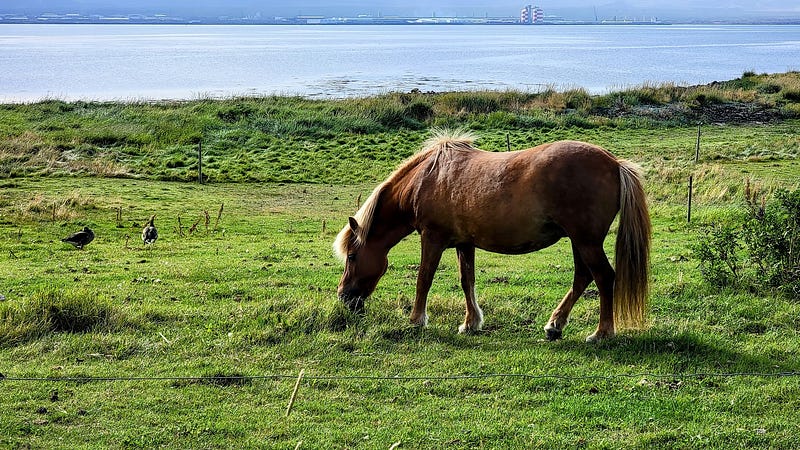
I even wandered down and snapped a photo of the horses, which I discovered are the only breed allowed in Iceland. There are 400,000 people living in the country, but around 500,000 of these small, rugged horses.
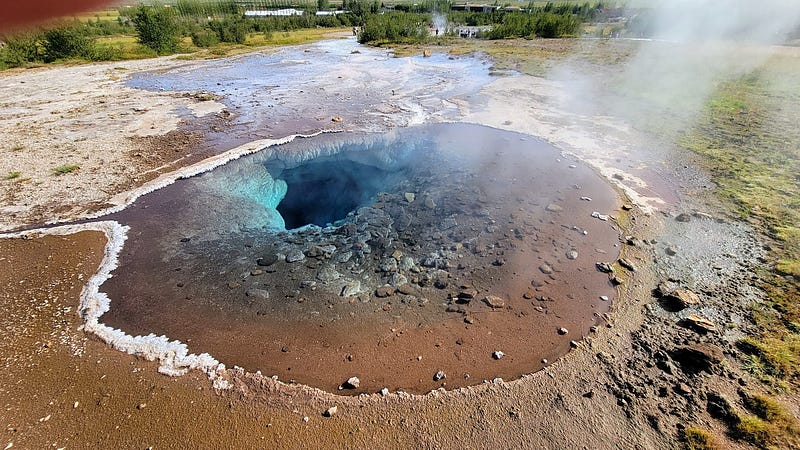
A trip to Iceland wouldn’t be complete without visiting the geyser fields, and that’s where our tour guide drove us on Day Four. We walked along marked paths and viewed the thinned, flattened, roped-off areas with their watery holes in the center. Our guide warned us not to walk on the thin crusts surrounding the geysers, since those crusts could break and send us plunging ankle deep into the hot, boiling geyser below. Still, some people walked across the thin crust, either oblivious to or ignoring the danger.
We watched in fascination as one geyser erupted six or seven times. The hollowed area began to spew fumes of mist, then to stir and bubble until the hole appeared to gather in on itself, pressure building until a flume of water erupted skyward, spraying those who stood too close.
I felt a little sorry for our guide, because one American woman on our tour did nothing but complain. She was more annoying than the bugs at the lava field because she grumbled about everything from her seat on the bus to the food at the restaurant to having to walk so far.
My husband tried to help by getting her husband’s walker in and out of the bus at each stop so our guide wouldn’t have to do it. The woman didn’t have a word of thanks or kindness for anyone. I was so embarrassed that she was from the United States, I tried to make sure our guide knew all Americans weren’t like that. I wondered how a country so beautiful could fail to enthrall anyone lucky enough to visit.
Our next stop was a hot spring, where my husband balked at getting naked in a communal shower and changing area. But when I said, “I’m getting naked because I didn’t come all the way to Iceland to skip the hot lagoon,” he reluctantly agreed to be a sport and go along. The water, fed by the same geothermal springs that provide heat and energy, was hot and relaxing and well worth “getting naked.”
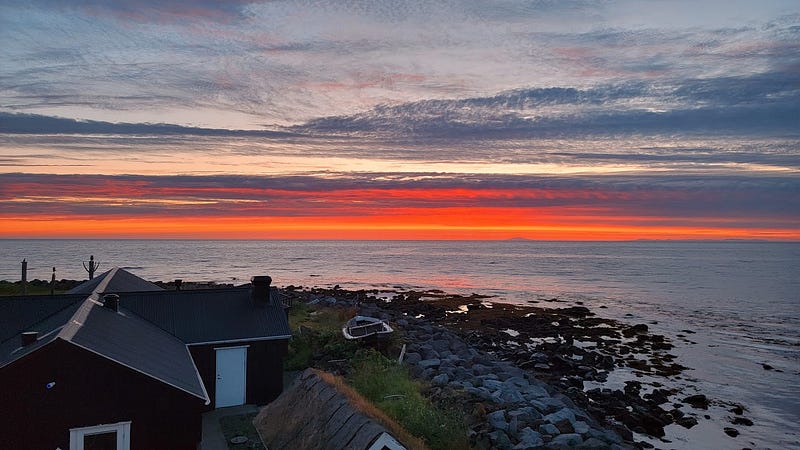
When we were leaving the hot springs, I spotted sandwiches in the gift store and seized this opportunity. We returned to Fisherman’s Village well-stocked with food and wine, then settled outside to watch a sinking sun paint the sky with shades of crimson.
We were the only Americans staying at Fisherman’s Village. A family from the UK currently living in France and a couple from another part of Iceland wandered out to watch the sunset. United by a shared appreciation for this mystical, magical place, we chatted like old friends until the last embers of a sinking sun disappeared beyond the horizon.
This was our last night in Iceland, a country that stirs the spirit and the soul. The next day we headed home with memories and pictures to remind us that our earth is an enchanting, amazing place.


