
From Sweltering Hot Africa to Bitterly Cold Oxfordshire — It Happened in February
After living in unrest in Africa to the return to England…from a child’s perspective
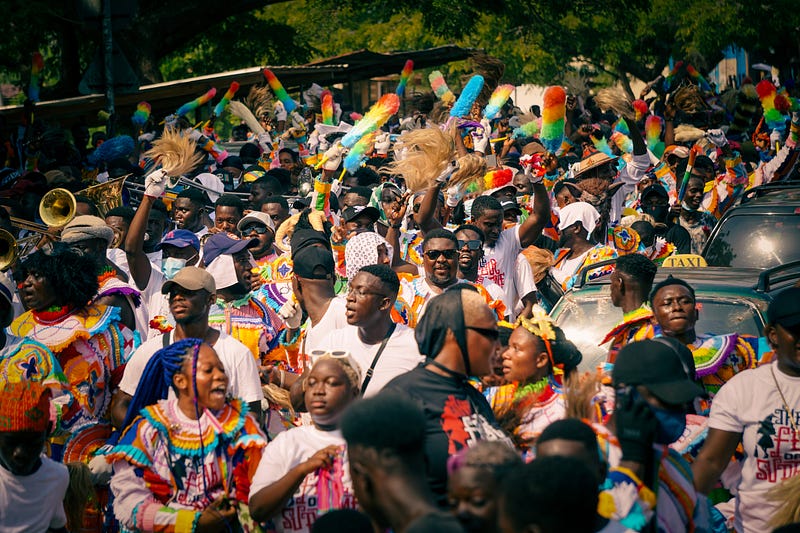
Ten days before my eighth birthday, we moved house.
Despite having travelled to — and lived in — far-off continents several times by that point in my life, I still considered this new house to be a world away from our old one.
It took a whole thirty minutes to drive; from one side of Oxford to another. And, as anyone knows, that kind of distance means you kiss goodbye to the friends you have known and say hello to a new set.
Except, I was going to have to wait a good while longer to integrate with my new school and new friends.
For, on the very day I turned eight years old, my mother, my sister, and I boarded a plane to go and join my father in the place that would be our home for the next eight months.
Accra, Ghana.
Only half of my short life had been spent in England
For an eight-year-old, I had already lived a pretty diverse existence.
I was born in Malaysia while my father was working there. We returned to England when I was seven months old, where we remained for nearly four years until my dad was given a new post. This time in Mtwara, Tanzania.
After a year and a half there, we returned for a short spell to our home in the UK, before setting out for the next instalment, on the outskirts of Mombasa, Kenya.
I remember celebrating my seventh birthday there, and so it was somewhere between seven and eight that we returned to England, before moving house and preparing for this new adventure. But there was not enough time for that new house to become our home before we were whisked away to another new set of friends and new school.
“Guess how old I am!”
I yelled excitedly at my dad.
“You’re eight!” He said. “Of course I know how old you are. It was your birthday yesterday.”
My dad had come to greet us at the airport and then took us to the compound that we were to share with two other households. Both of these families were of colleagues of my dad’s, and there was one other child there — a nine-year-old boy called Nicko.
He, my sister (then ten, soon to turn eleven), and I would all be attending the Accra International School together. It was just like one of those fancy schools that, for me, had only existed in Enid Blyton books. Until now, that is.
We even had prefects and everything. It was proper posh.
At home, however, we only had the confines of our compound, and it wasn’t big. We had a small banana plantation to the back of our house and were told off by the watchman for hanging out among the banana trees, for there were snakes that lived in them.
This was our first experience of living in a city in Africa. Our prior two homes had been out in the sticks, and within walking distance of the beach. We had roamed free, finding and creating our own adventures, and relished the vast space around us.
Accra was the opposite extreme. We had no decent swimming close by, except for a public swimming pool with green water. Our enclosed compound was surrounded by other houses and streets with endless activity. Still, we could stick our heads over the walls and talk to our neighbours, and we could go down the road to one of the sweet stalls to buy the terrible-tasting sweets, as well as the little gunpowder guns which Nicko corrupted us with.
No longer the sweet and innocent little girls from Tanzania- and Kenya-days, with Nicko’s influence, we became troublemakers in the neighbourhood of Accra, where we lived.
To make us feel more at home, my parents got some pets.
My sister, even then a huge dog-lover (she currently has five), got a dog, while I got a cat.
I called my cat Tinky. She was a very thin cat. I considered her to be “long” rather than “thin”, and I found it a concern. She remained long, no matter how much I fed her, but seemed to be thriving, and I adored her.
One day, while we were visiting the local market, I saw a stall with live chickens in woven enclosures. I asked my mum if we could get some pet chickens and, although reluctant at first, she gave in and told us to choose which chickens we wanted.
After my sister and I had each chosen, the stallholder asked us if we wanted him to break their necks for us, or would we do it ourselves at home?
I was horrified!
I had no idea that these chickens were being sold for meat. To me, live chickens meant pets and I was already in love with my chicken.
I would not be killing my beloved new bird!
Attempted coup and civil unrest
Not only were we stuck in this city that seemed to stretch for miles but we found ourselves living side-by-side with political unrest.
There had been a couple of attempted coups over the previous year. Things were becoming more tense and curfews were being enforced. I remember my dad beside himself with angst one evening, as we were coming home from a friend’s and the time of the curfew had already passed.
No-one stopped us on that occasion, but my parents did have friends who were thrown into prison and accused unjustly of being spies. There was one occasion when I remember a visit from the wife of my dad’s colleague who had been taken prisoner.
She sat in our house, crying. It would be her husband’s birthday the next day and she was devastated that he would be spending it alone, in a Ghanaian prison.
It broke my heart to hear this and to see her sadness. But mostly, it broke my heart to think of him alone on his birthday. I realised that there wouldn’t even be cake in prison, and so I baked him a cake, and his wife delivered it.
Baking days and cook-free days
Baking was one of the ways in which my sister and I entertained ourselves in Ghana and kept ourselves from getting into trouble along with the devious Nicko.
Since school would finish for the day at 12.30 pm, we would have plenty of time at home to do what the heck we liked. Baking was ideal to keep us out of mischief.
We used a cookbook that my parents had bought in Kenya, named very imaginatively as The Kenya Cookbook. It had obviously been written by a British expat since all of the recipes catered to the English palate.
We had two ovens — a decent, large one, and a rubbishy plug-in one. Rather than leave us to fight over who got to use which one, we were instructed to take it in turns.
In addition to this, we could only bake every other day since we had timed 24-hour power cuts on alternate days. Lack of power was something we had gotten used to during our time in Africa and so we were totally cool with that. Of course, my dad’s company did provide us with generators but, since they were awful, noisy, and polluting things, we certainly weren’t allowed to turn them on to bake.
In any case, there’s only so much cake a family can eat!
Catching malaria and the awful “punishment” for doing so
After a total of more than three years in Africa, I managed to be the first and only member of my family to catch malaria.
I remember the night very well.
We had been to visit a friend of my dad’s who was managing a project in the middle of some paddy fields, outside of the city. This was where we would go for a getaway, although, far from being “luxurious”, we slept on inflatable mattresses in one room, with a creaking fan overhead.
During the night, I became very ill. My body ached more than I had ever experienced before and I was running to the bathroom throughout the night to vomit.
The drive back to Accra was the worst. I felt horrible and utterly miserable. I was taken to see the doctor on our return and he confirmed it was malaria.
The worst thing was that even after weekly doses of the most foul-tasting anti-malarial tablets or syrup being forced down my throat — I hated Sundays throughout my time in Africa because of this one weekly ritual — I had still caught the illness those awful rituals were supposed to protect me from.
Now, I was having to take double doses, twice per day, for 2 weeks.
YUK!!
Apparently, I was the grumpiest child in the world during those two weeks. My mum even wrote across my bedroom mirror in crayon:
“I will not be grumpy.”
Fortunately, I recovered my health, only experiencing one short bout of a relapse, and I recovered my good humour too.
However, it took me until I was twenty to be able to sleep on an inflatable mattress again without having flashbacks to that awful night in the middle of the paddy fields.
Returning to the UK
At the end of my dad’s contract, it was time to leave Ghana. Little did I know that was to be the end of my time living in Africa altogether.
But happen it did.
It happened in February — a cold, cold February.
Whether or not it was considered, even by the British weathermen, to be bitterly cold, I would have felt it no matter what, coming from the unwavering heat of West Africa. However, the bitter temperatures, I am sure, contributed to the whole experience being an awful shock!
I remember the night of being bundled into a car at the airport, wondering how it was possible to ever get this cold. We were covered in blankets and I fell asleep for the journey home.
We arrived at this big, empty house — the one I had briefly experienced for ten days the previous summer — and the cold came out of every crevice. I was put into my strange bed, in my strange room, and given a hot water bottle.
Cosy though it was, it didn’t touch the biting cold of the air all around me.
In the following days, I found my way to survive; tights, thermal underwear, and four jumpers.
I have no idea how many weeks I existed in four woollen layers, or even how I managed to move while wearing four woollen layers. But, somehow I did, and I was very proud of my own survival skills.
And so began my new life in this village in North Oxfordshire. A tame existence after the heat, the snakes, the political unrest, and navigating regular power cuts.
My sister and I continued to be devoted to The Kenya Cookbook for some years to come, although we widened our scope and our menus, now that we had a whole British kitchen at our disposal. With no power cuts to contend with.
I missed my cat, Tinky, but she was soon replaced with more cats, while my sister’s dog was replaced by a golden cocker spaniel whom we named Honey.
Our air-conditioning and fans were replaced by central heating and a large wood-burning stove, and the animals dominated the space in front of it.
I made new friends, excelled at school, and joined the local swimming team, since years of open-water swimming in the heat of Africa had made me into a strong swimmer.
I have never loved the winters in England but, while February is considered the hardest, and often coldest month, it holds memories as a time of transformation for me.
Today, that manifests as the promise of spring, and the arrival of my favourite seasons of the year.
You see, a lot can happen in February.
Thanks for reading! If you aren’t yet a Medium member and would love to have unlimited access to read the work of all your favourite writers, please consider joining through my referral link.


