
From Suitcase to Pocket: The Incredible Shrinkage of Radar Tech
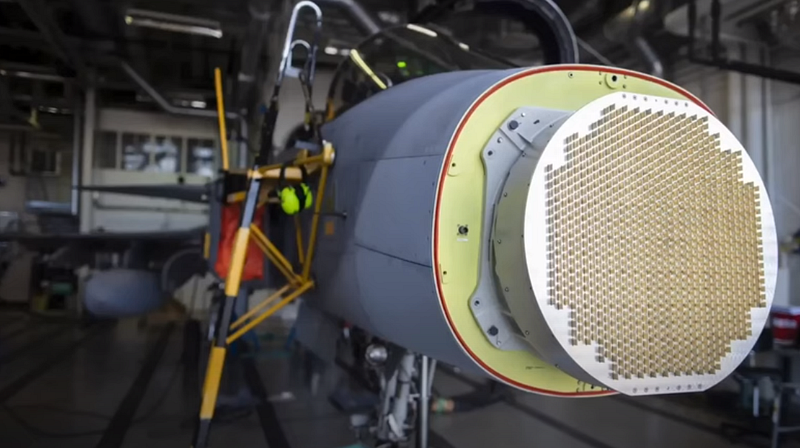
Hey tech fans! 🚀 Let’s zoom into the fascinating evolution of AESA (Active Electronically Scanned Arrays) and how solid-state electronics have revolutionized radar systems.
The Early Days: Bulky Beginnings Back in the day, radar systems were like the old-school boomboxes — big and bulky. They relied on hefty devices like klystrons or traveling wave tubes to create signals. Imagine lugging around a suitcase just for the receiver electronics because they had to handle super high frequencies.
Solid-State Revolution: Shrinking Tech Then came the 80s, a time of big hair and even bigger tech advancements. Gallium arsenide microelectronics entered the scene, shrinking receiver elements down to pocket-size proportions. We’re talking about a leap from suitcase to handheld radio sizes!
Power Boost: JFETs and MESFETs Just when we thought things couldn’t get smaller, JFETs (Junction Field-Effect Transistors) and MESFETs (Metal-Semiconductor Field-Effect Transistors) shrank the transmitter side too. This was like swapping out VHS tapes for DVDs — a total game-changer.
Milk Carton Magic: TRMs Fast forward to now, and we’ve got TRMs (Transmitter-Receiver Modules) that are about as big as your morning carton of milk. Array these bad boys together, and you’ve got yourself an AESA — a sleek, frequency-hopping radar system that’s as versatile as your playlist.
So there you have it, folks — a quick tour through the miniaturization marvel that is AESA. Stay tuned for more tech tidbits that’ll keep you buzzing! 📡✨