
From Stonewall to Stonewall: Progress and Pride.
During this final Pride month of the Obama Administration, I look back on the progress we’ve made together and trace my own thin rainbow line through it all. I hope you’ll indulge me and enjoy this retrospective look at how CHANGE happens and the personal moments at those intersections of history along the way.
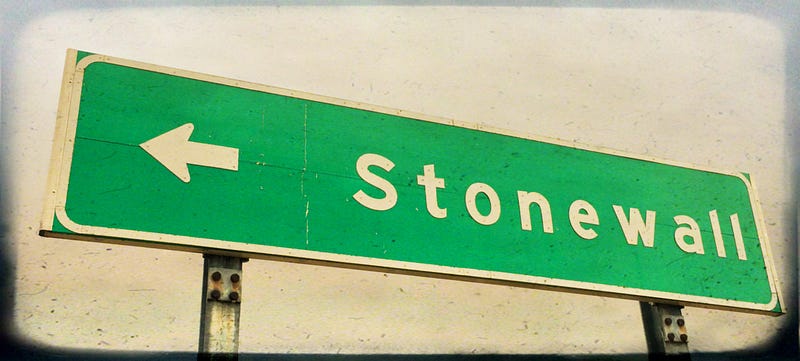
For many, Stonewall represents the start of the modern LGBT movement. For me, Stonewall is the name of my hometown in Oklahoma. Perhaps it was fate that a gay Christian from a progressive democratic family would be touched by these two vastly different, yet equally important places to me that are both named Stonewall.
In the summer of 2007, I left my Stonewall to see the change I wanted in my country realized. Our country was transitioning away from an abysmal eight years of executive policy under President George W. Bush, and those years had taught me that it was going to take a lot of collective effort and active participation in our democracy to do something about it. I was resolved to be part of it.
From my parent’s living room earlier that February, I watched a speech by then-long-shot candidate Barack Obama as he declared his intention to seek the Presidency. He was surrounded by a packed audience of folks energized about the potential to change our politics. After walking onto the stage to U2’s City of Blinding Lights, he opened his speech by “giving praise and honor to god.” He brought a refreshing rhetoric that carried hope, optimism, and was a stark change to the season we were leaving behind.
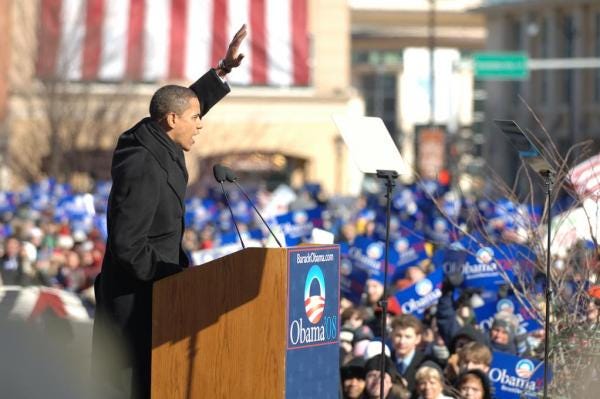
His soaring speech, in turn, flipped a switch deep in me. It was the final tipping point to get me out of my comfort zone to go do my part to help change the world. He was the guy for me and I believed in him; I believed in us. As we would soon come to say: I was fired-up and ready to go!
I arrived in DC in August that year to work in Indian Affairs for my tribe and I began to learn the tough ropes of a city dominated by politics and strong personalities. Suddenly I realized that I had been given a chance most people never get: the opportunity to reinvent myself.
I was living in a bigger city for the first time where I was free to explore, make new friends, and try new things. All while surrounded by diverse types of people, ideas, and religions. Being gay in Oklahoma wasn’t looked highly upon and unfortunately, the churches where I had spent years of service weren’t of any help on the topic. It was taboo. Too difficult for people to deal with at the time. Most of the LGBT community just quietly suffered the slow trauma of burying that part of ourselves so deeply it would never see the light of day. But in DC, nobody gave it a second thought. I was free to discover myself and put forward the real person that had been neglected for years.
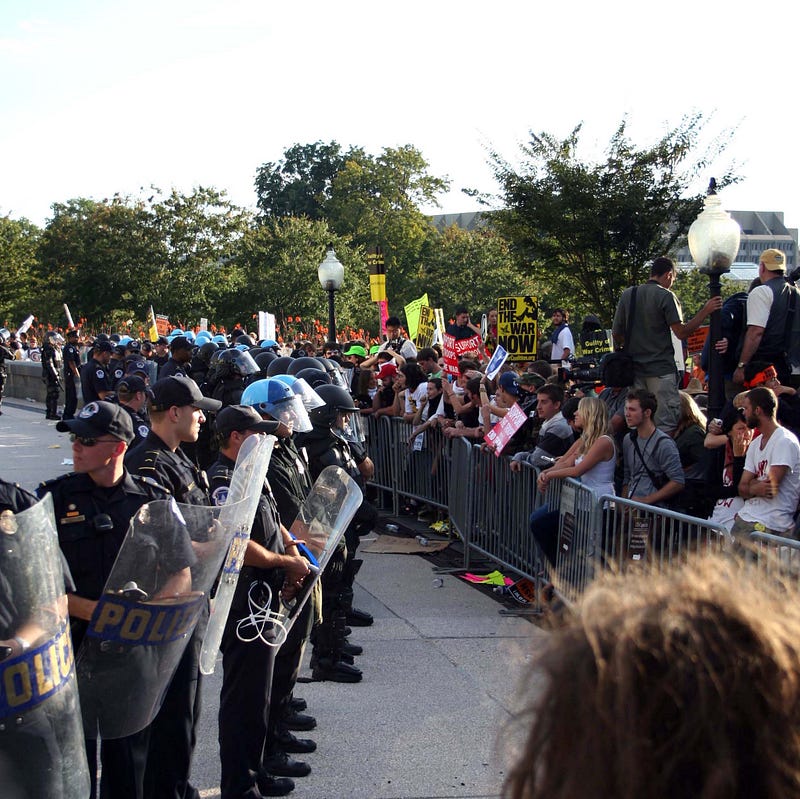
That first year was as politically tumultuous as it was full of growing pains for me personally. Anti-war sentiment was high and we marched on the Capitol in September, demanding that something was done to get us out of those ill-conceived conflicts. The LGBT community was also denied even the simplest of protections, like hate crimes legislation that had been repeatedly ignored and stymied in Congress since the brutal murder of Matthew Shepard, a boy my own age from rural Wyoming, in October 1998.
And though basic support for LGBT rights like civil unions were beginning to cause micro-fractures within Republican Party, we weren’t far removed from 2004 when we saw a wave of state constitutional amendments banning same-sex marriage, and from a proposed federal marriage amendment.
There wasn’t much support coming out of the U.S. Congress and it was going to take a large groundswell to make real progress on social issues. The country was ready but our elected representatives hadn’t caught up yet.
I had the good fortune to be in the right place at the right time when the call came to join Senator Obama’s campaign in Philadelphia in July of 2008. It was a once in a lifetime opportunity, but it meant dropping everything in DC, packing my entire life into a rental car, and relocating to Pennsylvania in four days. I would later learn that anxiety-inducing choice to pay it all forward for our future was a common experience I shared with my new Obama for America family. But at the time I felt mostly alone sorting out that decision.
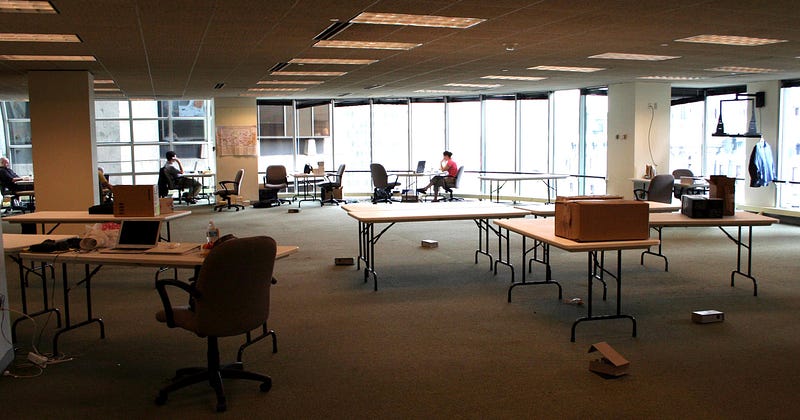
A few days later, I walked onto the floor of the state campaign headquarters in Center City Philadelphia to start my new job. It was sparsely populated with folding tables, a few laptops, and spotty wifi, but it had a few friendly faces and a commanding view of City Hall. I instantly knew as I met my new coworkers that I had made the right choice. Those folks needed my technology skills as much as I needed their campaign experience and limitless motivation. I was able to apply my talents in support of an amazing group of community organizers across the state who were giving every ounce of their spirit to elect the next President.
At the time we were motivated by broad external issues: expecting our government to be a better representation of us and to return a sense of inclusion and empowerment to our public dialog. A notion that our candidate would crystallize into words:
“Change will not come if we wait for some other person or some other time. We are the ones we’ve been waiting for. We are the change that we seek.”
Those words resonated with me personally as I was still finding my own path while fighting in the trenches of a presidential election cycle. I was serving alongside some of the best and brightest folks I’ve ever had the honor of working with. Folks who had put their lives on pause, who had deferred college or quit their day jobs to get this man elected. Folks of a caliber I’ve rarely seen matched in the intervening years. Folks who inspired me to be more.
My job with Obama for America/Pennsylvania for Change afforded me something new that even today a lot of my LGBT family are unable to enjoy: being out in the workplace. And it was never an issue for me. I was surrounded by amazing progressive democrats and, even in the awkward mini coming out moments that every LGBT person must confront when meeting new friends or colleagues, they were exceedingly supportive. I felt entirely free to be me. The team from Pennsylvania means more to me than they’ll ever know just by being accepting and supportive of a fledgling gay as I found my own way in the City of Brotherly Love.
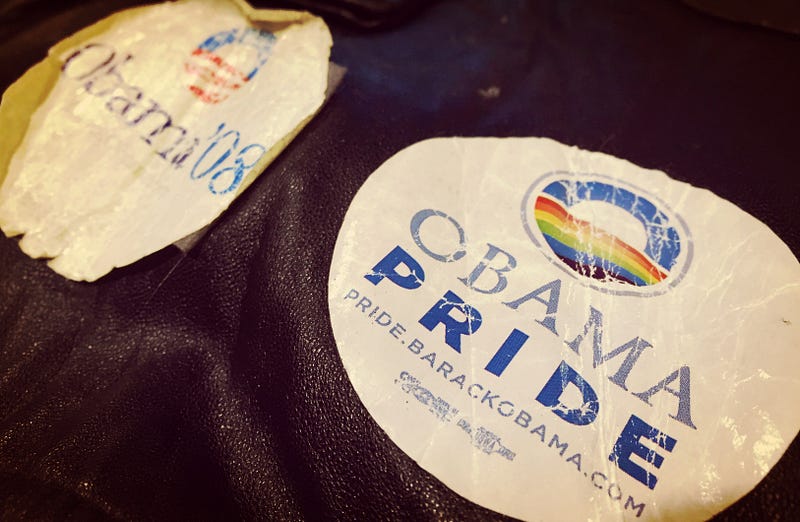
I made fast friends with the LGBT Outreach team who let me tag along after hours to help with things like registering voters, signing up volunteers, and encouraging people to vote. One of my fondest assignments of any campaign cycle was working a canvassing group for Governor Rendell as he made his signature gay bar crawl during Get-Out-the-Vote weekend just before the November 4th election! The combination of a dedicated, left-leaning constituency that was always fired-up, the atmosphere of the all-accepting gay bars where we usually came to unwind, and a political rockstar like Ed Rendell advancing our candidate’s prospects was entirely surreal to this Okie. The work was exhausting, but I was having a great time!
It had become clear in the last two weeks leading up to the election that if we could deny John McCain and Sarah Palin Pennsylvania, we had a great shot at winning the White House. And after long months of hard work fighting for votes person-by-person, precinct-by-precinct, and leaving it all on the field November 4th, the Obama-coalition carried the state by 11%! We had done our collective job securing the #1 battleground state and set election night on a path to a declared President-elect just a couple of hours later.
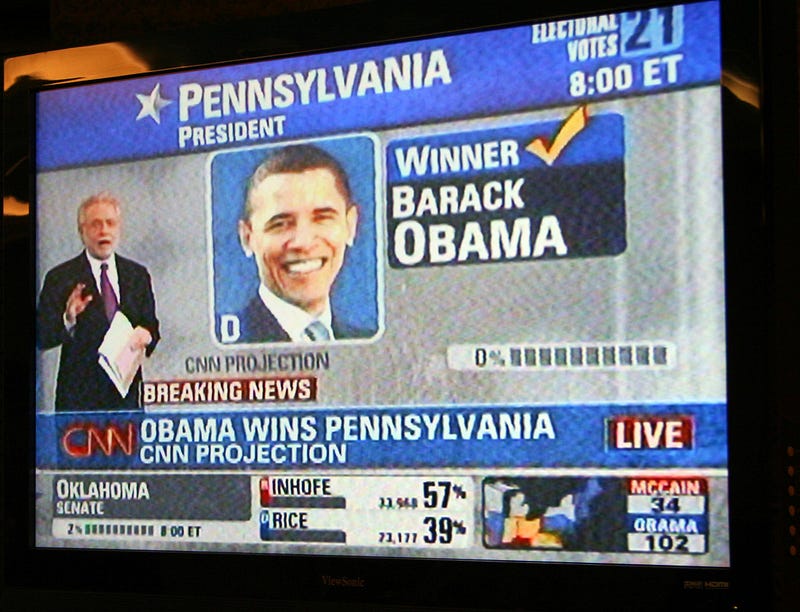
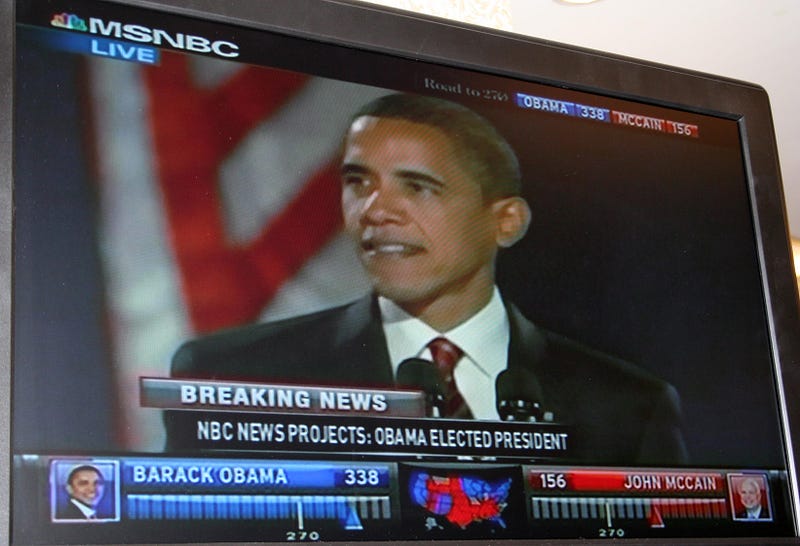
Those 36-hours are still a bit hazy given the lack of sleep, over-caffeination, and emotional highs and lows. We regrouped over the next few days dismantling our headquarters, getting some much-needed sleep, sharing sobbing speeches, and saying a lot of bittersweet goodbyes. We began to go our separate ways as people left town for the last time. It was hard to go after such an accomplishment and building such a bond with people that can only be had on the other side of such intensely stressful work. But the fact was dawning on those of us called to public service that the election was just the prelude and that the actual hard work of governing to deliver the change we all desired so much was just beginning.
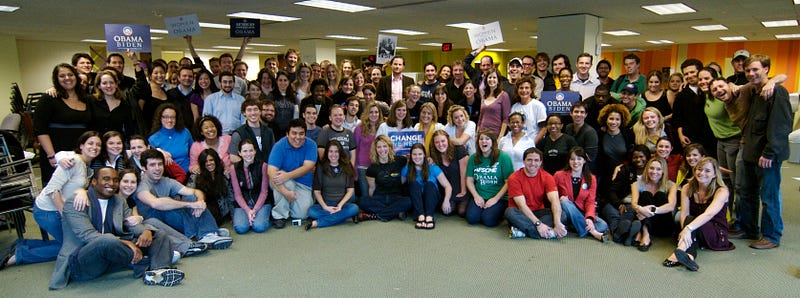
I was able to move immediately back to DC and continue supporting the President-elect as his deputy chief technologist for the 2009 Inaugural Committee. We saw him sworn in and then began to be dispatched to our various roles across government. The situation we inherited was bleak and the work never really slowed down. We were still mired in two wars, the stock market was down 20% from the previous year, and the economy was obliterating 600,000 jobs a month as the President raised his hand off Lincoln's family bible. But we were blessed with democratic control of the U.S. House and Senate. And with Barack Obama in the White House things began to change quite rapidly.
Among those huge priority challenges during the early days of the President’s term: banning torture, setting limits on lobbying, signing the economic stimulus, the Lilly Ledbetter Fair Pay Act, the Recovery Act, and the Affordable Care Act were woven formative moments for me personally.
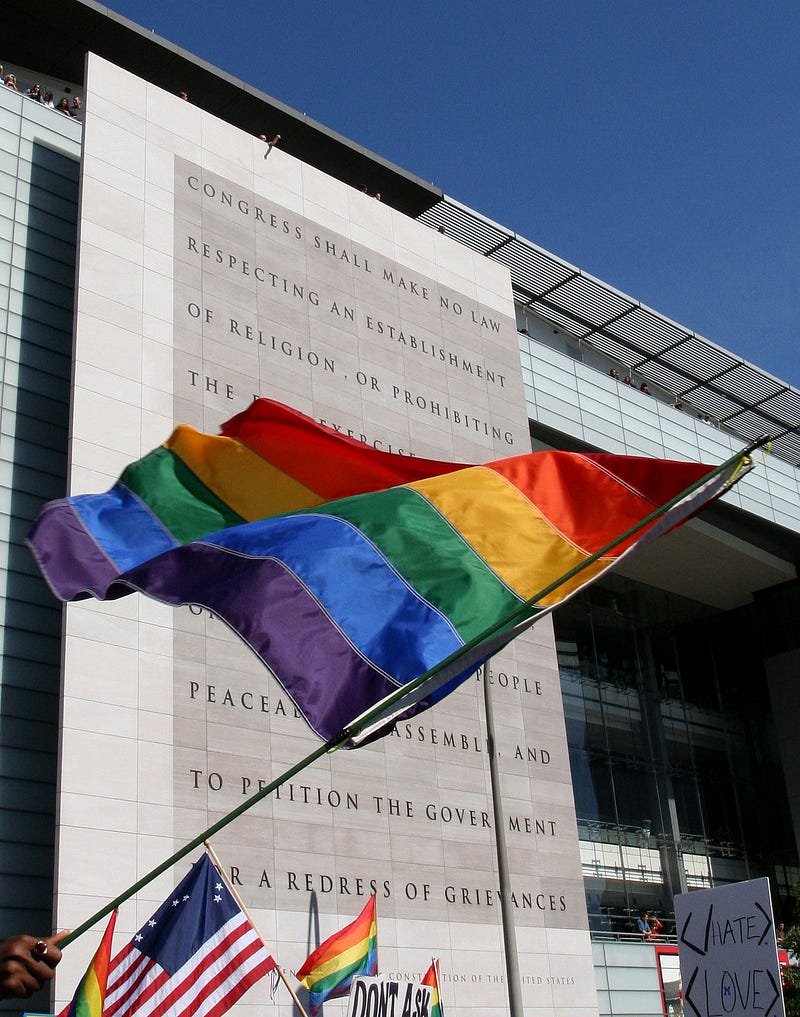
I marched with friends in the National Equality March on Coming Out day in 2009 and there was a glimmer of hope that the sentiment of the country was shifting. It was a time when we stood up to say: “It’s okay to be here, in this moment, to be out, and to just be me.” And, of course, there were all the highs and lows that come with the single-life in a big city.
The 111th Congress with Speaker Pelosi enabled us to move actual progressive legislation to the President’s desk for the first time in a long time. At long last we passed the Matthew Shepard and James Byrd Hate Crimes Act and I think that was when it began to settle in on me what we’d really done with regard to it impacting me personally.
When I was experiencing my political awakening a few years earlier we had Republicans in control of both the White House and the House of Representatives. We couldn’t even get hate crimes legislation passed under their watch. They literally could not summon the willpower to enforce stricter punishment for people beating and killing LGBT Americans. They weren’t sympathetic. That was the degree of inaction those folks were willing to abide to maintain the political status quo.
But when the Hate Crimes bill passed, it was like a shadow was suddenly lifted. Progress could be made; progress was being made!
Then like dominoes things started to fall, the repeal of Don’t Ask Don’t Tell, ending the legal defense of the Defense of Marriage Act, ensuring hospital visitation rights for LGBT patients families, federal housing and hiring discrimination protection, …they began to come in more and more rapid succession. Even things where the President could move forward on his own by executive order or interpretation of the law from various regulatory agencies started to have a huge ripple effect. EEOC guidance and simple rules preventing federal contractors from discrimination the basis of sexual orientation or gender identity were huge. I was watching one of the core tenants of our administration, to “treat everyone fairly,” expand and take hold in a real way across all levels of government where good people were thoughtfully implementing positive change wherever we could.
In his Second Inaugural Address in 2013, the President mentioned Stonewall and LGBT rights as he leveled the unassailable case for equality among all people:
We, the people, declare today that the most evident of truths –- that all of us are created equal –- is the star that guides us still; just as it guided our forebears through Seneca Falls, and Selma, and Stonewall; just as it guided all those men and women, sung and unsung, who left footprints along this great Mall, to hear a preacher say that we cannot walk alone; to hear a King proclaim that our individual freedom is inextricably bound to the freedom of every soul on Earth.
It is now our generation’s task to carry on what those pioneers began. For our journey is not complete until our wives, our mothers and daughters can earn a living equal to their efforts. Our journey is not complete until our gay brothers and sisters are treated like anyone else under the law –- for if we are truly created equal, then surely the love we commit to one another must be equal as well. Our journey is not complete until no citizen is forced to wait for hours to exercise the right to vote. Our journey is not complete until we find a better way to welcome the striving, hopeful immigrants who still see America as a land of opportunity — until bright young students and engineers are enlisted in our workforce rather than expelled from our country. Our journey is not complete until all our children, from the streets of Detroit to the hills of Appalachia, to the quiet lanes of Newtown, know that they are cared for and cherished and always safe from harm.
That section of his speech was unprecedented and gave voice to millions of American’s like me who were humbled to hear a President say those words on the world stage.
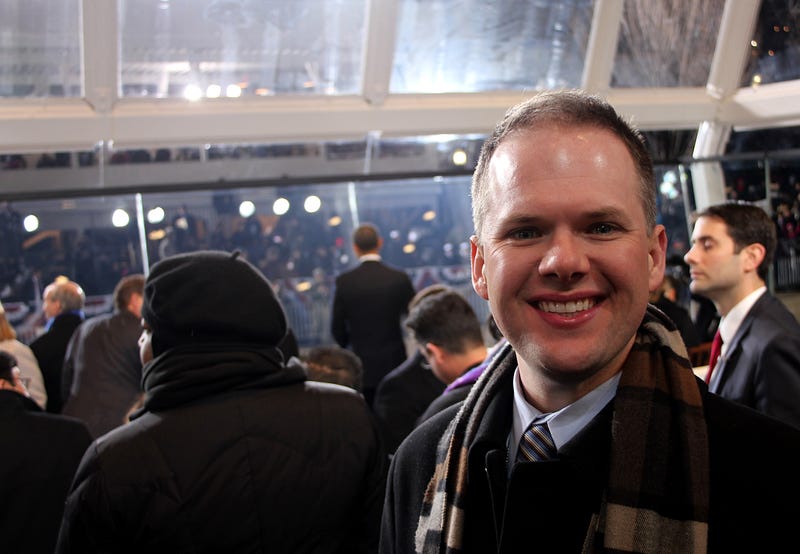
Even the Supreme Court decided it was time for the law to catch up. United States v. Windsor removed in 2013 the narrow and discriminatory definition of marriage as “one man and one woman” within the Defense of Marriage Act. This a held primarily as a violation of due process, but even that was a seismic shift on LGBT rights that set the stage for full marriage equality.
All our organizing, our rallying, our toiling away quietly to build technology systems, coalitions, youth networks, nominating progressive Supreme Court justices, and just standing up for fairness wherever we could was turning the tide. It was a groundswell of progressives all moving together toward a shared and inclusive future.
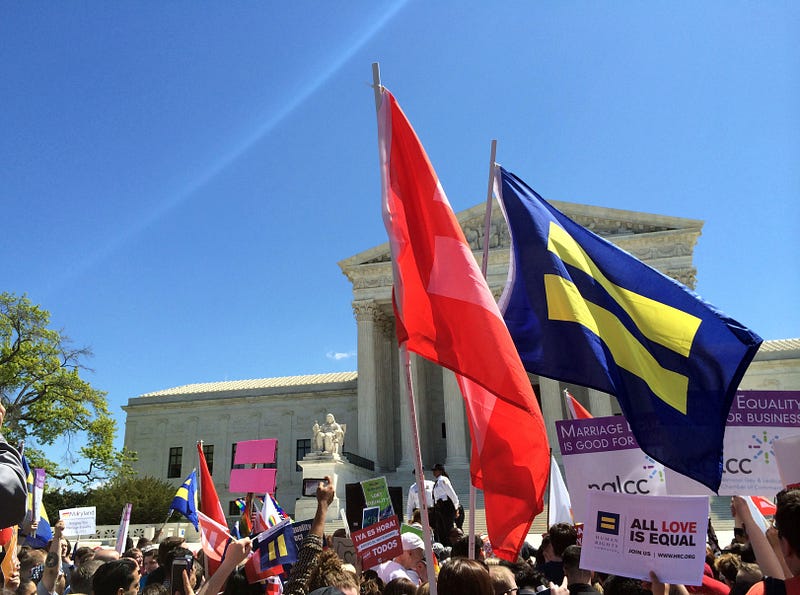
And then, the opportunity we’d been hoping for arrived: a challenge under the Equal Protection Clause of the 14th Amendment. The Court took up Obergefell v. Hodges in April of 2015 and, we hoped beyond hope, that it would settle the question of how same-sex marriages could be legal in some states but outright banned by constitutional amendment in others.
Even with my novice understanding of constitutional law, it had been clear for a while that until we received a favorable ruling under the Equal Protection Clause, we’d be forever stuck in “protected class” legal status. Until the question of equal protection was settled, true and lasting equality could never be ours.
That all changed on June 26th, 2015. After months of speculation and gnawing anxiety, the Supreme Court released its opinion on the final day of the court’s term. Marriage equality was suddenly the law of the land!
Justice Kennedy wrote the opinion for the Court, concluding:
No union is more profound than marriage, for it embodies the highest ideals of love, fidelity, devotion, sacrifice, and family. In forming a marital union, two people become something greater than once they were. As some of the petitioners in these cases demonstrate, marriage embodies a love that may endure even past death. It would misunderstand these men and women to say they disrespect the idea of marriage. Their plea is that they do respect it, respect it so deeply that they seek to find its fulfillment for themselves. Their hope is not to be condemned to live in loneliness, excluded from one of civilization’s oldest institutions. They ask for equal dignity in the eyes of the law. The Constitution grants them that right. The judgment of the Court of Appeals for the Sixth Circuit is reversed.
Again, I had the good fortune to be up close and personal with this bit of history. I was hosting an inter-agency meeting for a group of technology folks in the Indian Treaty Room of the Eisenhower Building when news broke:
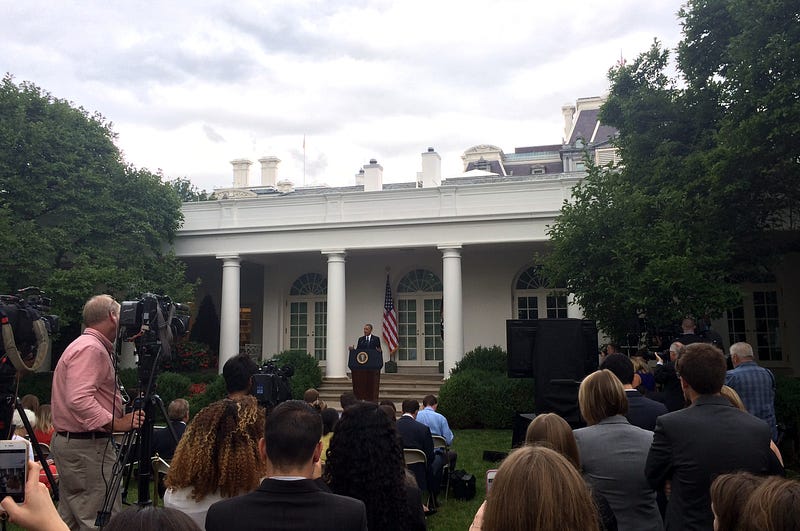
I was able to walk over to the Rose Garden a few minutes later and watch the boss speak to the country about the historic ruling:
This morning, the Supreme Court recognized that the Constitution guarantees marriage equality. In doing so, they’ve reaffirmed that all Americans are entitled to the equal protection of the law. That all people should be treated equally, regardless of who they are or who they love.
…
But today, we can say in no uncertain terms that we’ve made our union a little more perfect. That’s the consequence of a decision from the Supreme Court, but, more importantly, it is a consequence of the countless small acts of courage of millions of people across decades who stood up, who came out, who talked to parents — parents who loved their children no matter what. Folks who were willing to endure bullying and taunts, and stayed strong, and came to believe in themselves and who they were, and slowly made an entire country realize that love is love.
What an extraordinary achievement. What a vindication of the belief that ordinary people can do extraordinary things. What a reminder of what Bobby Kennedy once said about how small actions can be like pebbles being thrown into a still lake, and ripples of hope cascade outwards and change the world.
Those countless, often anonymous heroes — they deserve our thanks. They should be very proud. America should be very proud.
It was just a quick nine-minute speech during the middle of an otherwise busy workday, but it meant the world to me. It was full circle from watching Barack Obama the candidate declare in February of 2007 to seeing him in June of 2015 presiding as President of the United States when we achieved full marriage equality.
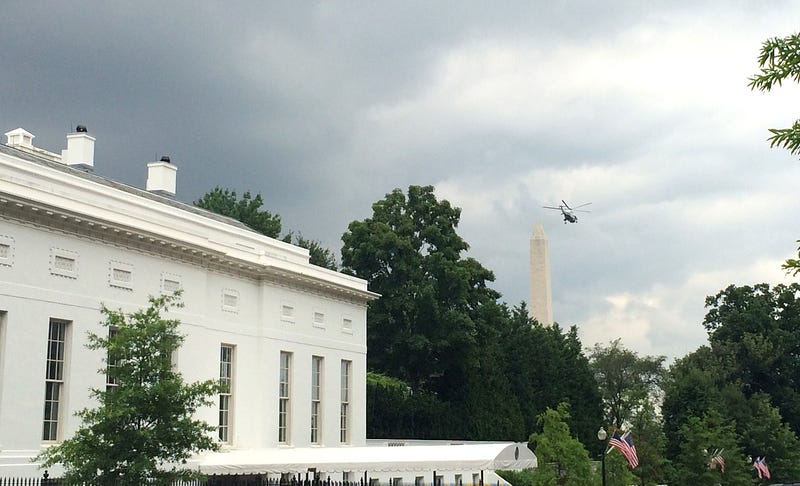
But that moment was short-lived as the business of governing the country intruded again and we all got back to work. Minutes later we watched the President board Marine One and depart for South Carolina to eulogize a pastor gunned down in cold blood in his own church. A feeling that was becoming all too familiar and, though nobody could know at the time, would rear it’s ugly head in a much more personal way all too soon.
During the eulogy, the President was moved to lead the congregation through a few stanzas of Amazing Grace. I like to think that the emotion of the day, starting with the celebration of love from the Rose Garden, had framed his mindset to celebrate life amid the tragedy of gun violence in Charleston.
Later that afternoon, word began to quietly spread that a special thing was going to happen that night. One of our own in the Press Office, Jeff Tiller, had been inspired to make a real statement by bathing the White House in a glorious rainbow and he had worked hard to prepare for it in case the Court ruled in our favor.
We finished up our work: rainbow graphics on Whitehouse.gov, the press releases posted and tweeted, cameras set up and the live-stream of the mansion streaming globally so the world could share in the moment with us:
Then we celebrated with a toast on the Vice President’ balcony as we watched the sunset and that spectrum of colors begin to slowly glow more brightly. Many others joined us as they gravitated downtown to be with our little tribe. Lots of administration folks who had been working hard on this for many years arrived and a very touching reunion began.
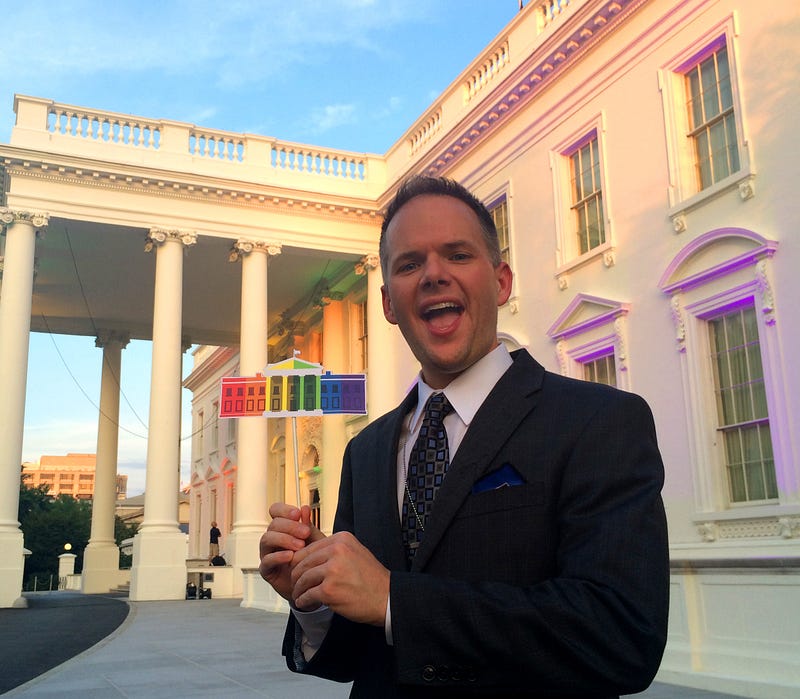
Eventually, we all made our way over to the North Lawn. Chatting, embracing, and with the occasional happy tear, it was a subdued atmosphere of reverent celebration. But mostly, we could only look up, much like one does in a cathedral, in awe of the building we’d all worked so hard to secure for our future in its radically different state. For that one night, our hopes had been realized and we were broadcasting it to the world.
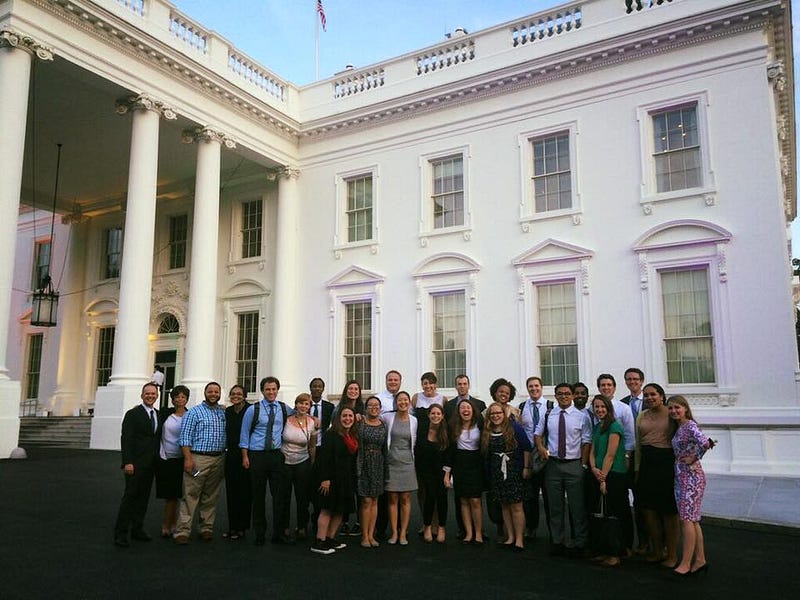
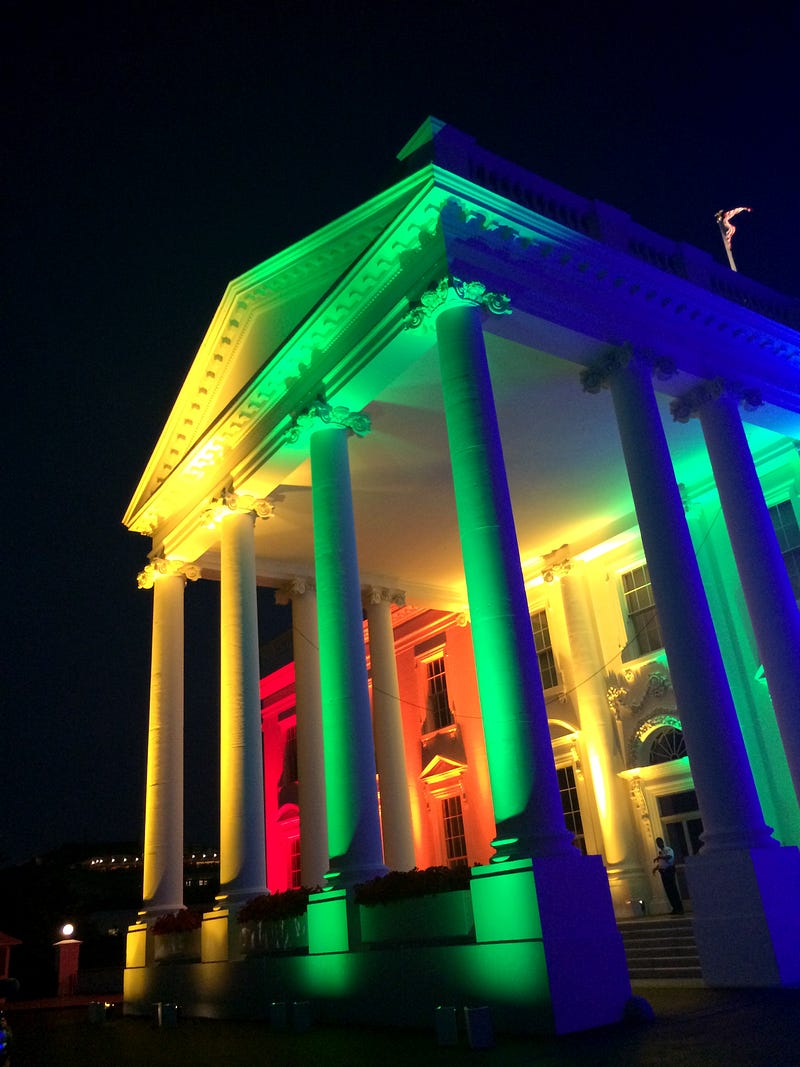
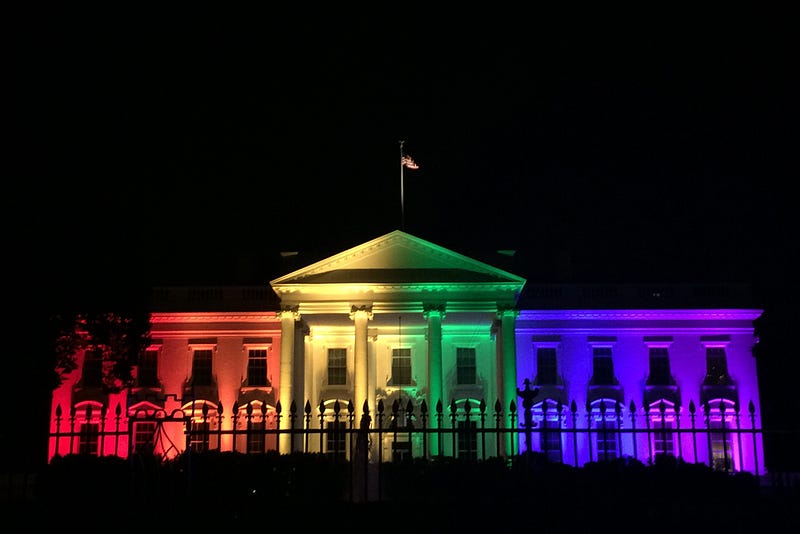
A crowd gathered in Lafayette Square in a spontaneous celebration that lasted long into the night. The President returned home from South Carolina and rather than dampen the high spirits of the crowd with his security detail closing the park, he watched along from inside the Residence, while letting us have our moment outside.
Sometime after dark during one of the quieter moments, one of the staff struck up a reprise of Amazing Grace, doubtless they were inspired by the President’s earlier performance, and we sang to one another there arm-in-arm. We lingered as long as we could into the night, striving to hang on to that moment and visually mark that memory as long as possible before returning home and bringing the day to a close.
Now a year later, I take stock of how far we’ve come together just over two presidential terms. I started out nine years ago wanting to just get our soldiers out of harm’s way and our economy back in the black. But along the way, I also learned it was okay to present my full self to the world and helped support the change that’s deeply affected my own life for the better.
Fundamental rights and liberties that were denied just a few short years ago under a different administration and political climate have so rapidly accelerated now under a team who fought hard to secure them and nurture them as the country changed. The list of achievements for the LGBT community alone has grown quite lengthy under President Obama.
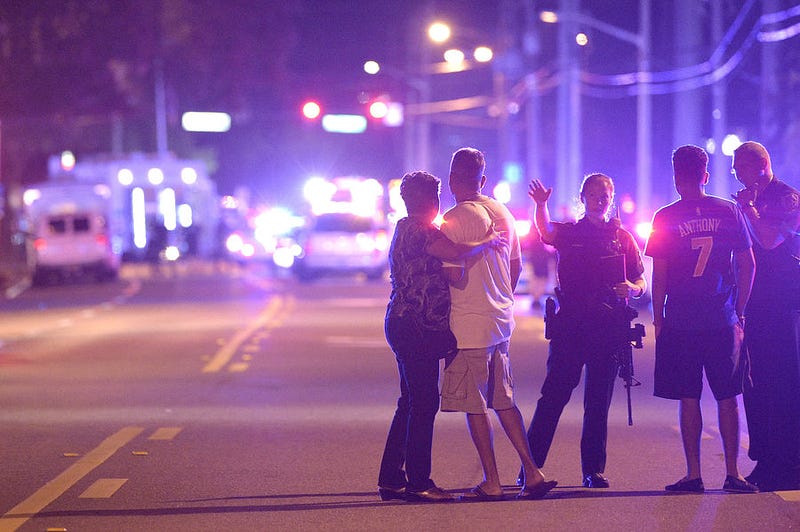
But it turns out we haven’t changed as much as I thought or hoped: in the early morning hours of June 12th, 2016 while DC was still partying away its own Pride celebration, a gunman was shooting up a gay nightclub in Orlando.
It was the last thing any of us ever expected. Usually, gay bars are avoided at all costs by folks who aren’t friendly to us. And we’d never be on the defensive in a place like that where we go to have fun and be ourselves. Most of us learned to find solace and acceptance in those safe spaces if we’re lucky enough to have one in our neighborhood or city. It’s sometimes the one place a person who doesn’t feel like they quite fit in out in the world can let their guard down and drop all those meticulous filters on their behavior. For an attacker to strike in the heart of what should have been a safe space made the whole tragic event that much more insidious.
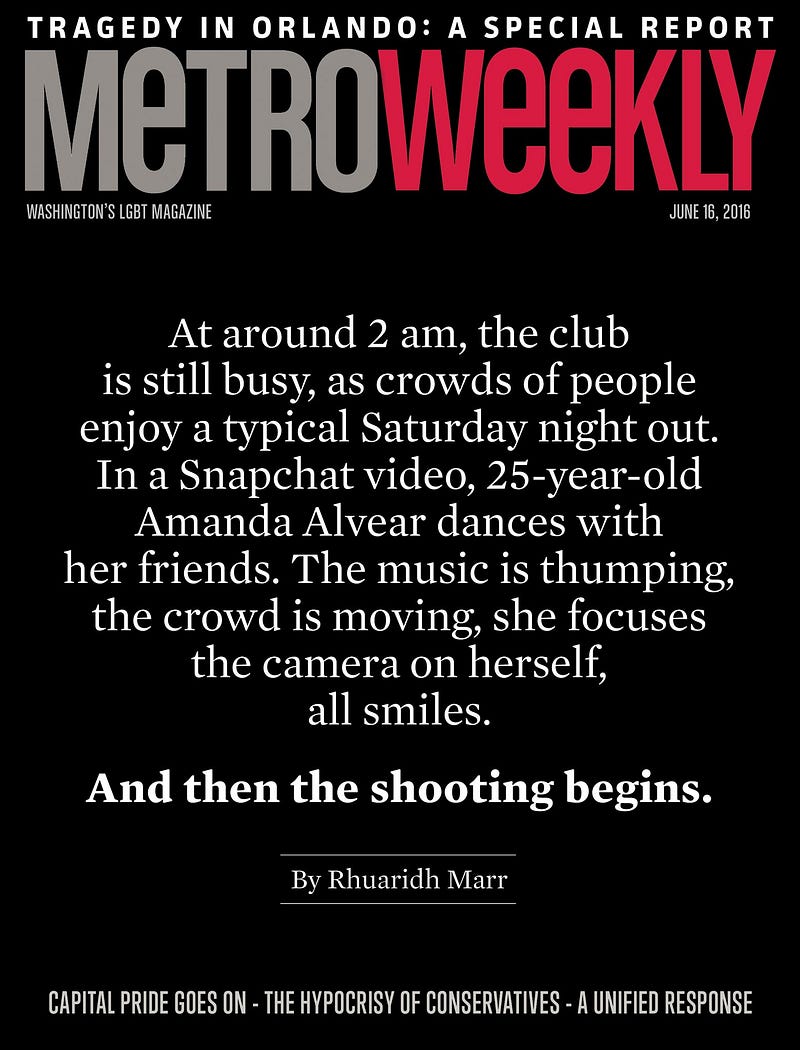

And so we declared: enough. And we started organizing. Once again. Because it’s what we’re good at and it’s what we do when things need to change.
The President made a statement a few hours after the shooting:
So this is a sobering reminder that attacks on any American — regardless of race, ethnicity, religion or sexual orientation — is an attack on all of us and on the fundamental values of equality and dignity that define us as a country. And no act of hate or terror will ever change who we are or the values that make us Americans.
And again the next day:
My concern is that we start getting into a debate, as has happened in the past, which is an either/or debate. And the suggestion is either we think about something as terrorism and we ignore the problems with easy access to firearms, or it’s all about firearms and we ignore the role — the very real role that that organizations like ISIL have in generating extremist views inside this country. And it’s not an either/or. It’s a both/and.
We have to go after these terrorist organizations and hit them hard. We have to counter extremism. But we also have to make sure that it is not easy for somebody who decides they want to harm people in this country to be able to obtain weapons to get at them.
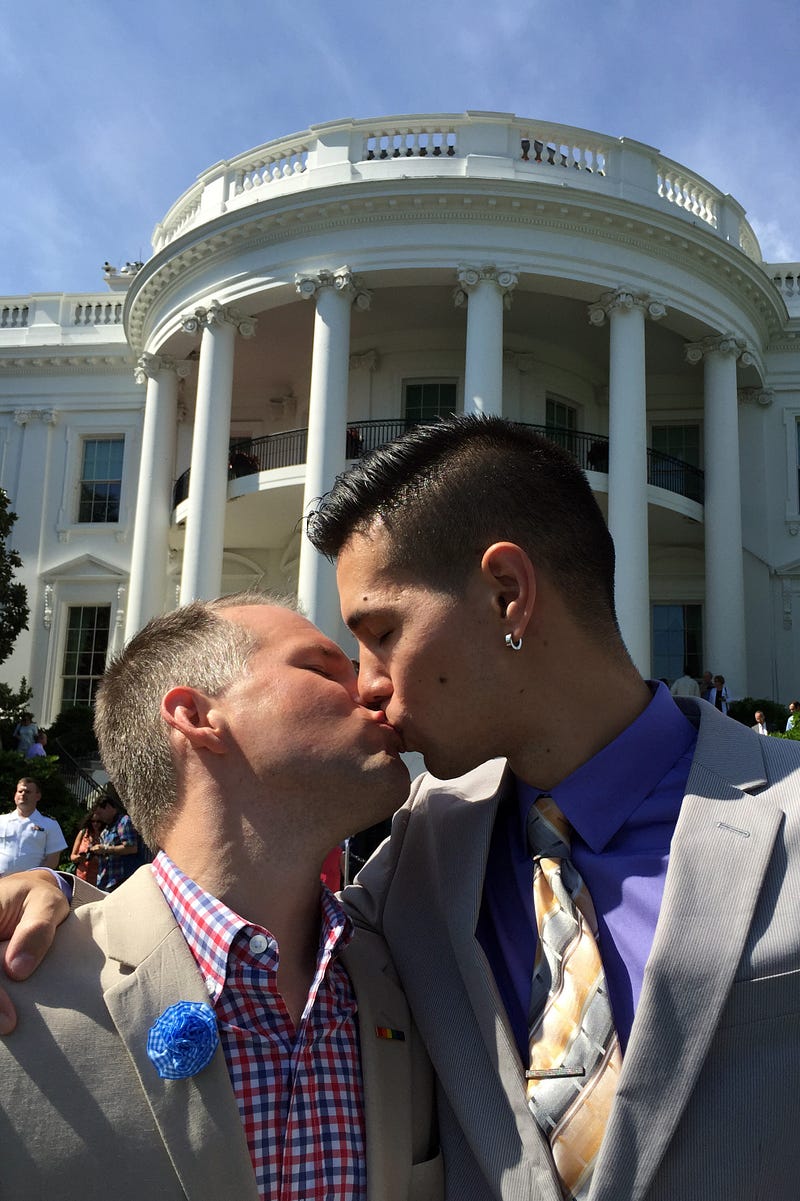
The President’s annual picnic for political appointees was that same day. Our hearts were heavy. The flag atop the White House was at half-staff. But there was a lot of support. Plenty of rainbow bracelets around and compliments on my rainbow lapel pin. This tragedy had somehow moved the conversation forward. It was easier to talk about and it felt good to give voice to those feelings.
POTUS made sure to mention and mark our solidarity with the victims and their families when he spoke to us. He also bitter-sweetly observed that this was the last one of these events for our team. But just looking out across the diversity of the people standing among our ranks now it is quite evident that a tremendous amount of progress has been made under his watch.
In the wake of the Pulse Nightclub in Orlando, I stumbled across a short podcast episode centered around the White Horse Inn in Oakland. Supposedly it’s the oldest gay bar in America and has endured through all this turmoil, much like the Stonewall Inn, as a gathering place for folks to come be themselves. The podcast closes with these poignant lines that are testimony to the resilience of our community and how we move forward in tough times:
“The White Horse Inn stayed open. As it has been, again and again, when men and women, the boys and girls, transgender people were murdered for who they were. So many since 1933 or thereabouts. Mourned by what is now called the LGBTQ community. A community built year by year, night by night in windowless rooms like the White Horse.
It was open when Vermont passed its civil union law, when Massachusetts passed its marriage law. When San Francisco’s Mayor issued marriage licenses. And when the California Supreme Court annulled those unions. It was open when the California voters rejected gay marriage and it was open for dancing when the Supreme Court threw that vote out. It was open on a Saturday in June when someone killed 49 people in Orlando, Florida, in a place like the White Horse, where people came to be who they were. And it was open on Sunday. And it’s open tonight. And it’ll be open tomorrow…”
We’re closing out our final Pride Month under the 44th President and despite the tragedy, we’re able to move forward on a happier note. The President declared on Friday, June 24th that he was making the Stonewall Inn in New York a National Monument:
I’m designating the Stonewall National Monument as the newest addition to America’s National Park System. Stonewall will be our first national monument to tell the story of the struggle for LGBT rights. I believe our national parks should reflect the full story of our country, the richness and diversity and uniquely American spirit that has always defined us. That we are stronger together. That out of many, we are one.
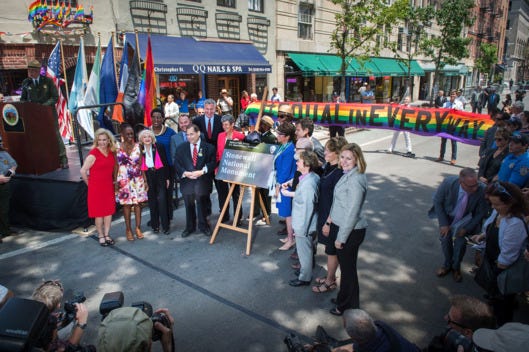
Here in the twilight hours of his administration, President Obama has established this memorial as one more small way to further equality and tell the story of millions of LGBT Americans. For generations to come, this national monument will stand as testimony to the many hard-fought victories for LGBT rights.
Hopefully one day I can take my kids to experience both of these Stonewalls. And I’m confident we’ll have done our jobs and built a world for them where, no matter where they live, they’re always free to be their whole selves. A world where equality and civil rights extend equally across the streets of New York City just the same as the red dirt roads of rural Oklahoma. That’s the world I want Team Obama to leave to the next generation.
From one Stonewall to another Stonewall, it’s been quite a journey of progress and self-discovery for me. We are far from done and there are many miles left to go. But this is why elections and politics matter. Why we must actively participate in our democracy. Because at the end of the day these political choices impact people in very real and sometimes very personally unexpected ways. While it may be hard at the time and you might not be able to see where you’ll end up, it’s my firm belief that good decisions and doing the right thing will pay off in the long run.
To President Obama and my entire #44 family far and wide: thank you. I am honored to count myself among you. I am so very proud of how far we’ve come together and I stand shoulder-to-shoulder with you as we continue to move forward to combat hate and inequality and grow…together.
The words of another great champion of our cause that we lost along the way sum up my thoughts this month better than I ever could:
For all those whose cares have been our concern, the work goes on, the cause endures, the hope still lives and the dream shall never die. -Senator Ted Kennedy
Happy Pride, 2016.