avatarYuri Minamide

Free AI web copilot to create summaries, insights and extended knowledge, download it at here

5066

Abstract

tion>A Victorian courtroom (Photo by author)</figcaption></figure><p id="dbff709e-d4dd-46be-abba-11a289024972">Then, it was time for the trial, which is held twice daily. This is the actual Victorian courtroom that was used.</p><p id="275c">The magistrate approached two British visitors, saying, <i>‘Would you like to play the role of the mayor and take part in the trial?’</i> She also asked me, <i>‘Would you mind joining us as a witness?’ </i>What?😅</p><figure id="2788"><img src="https://cdn-images-1.readmedium.com/v2/resize:fit:800/0*EWg7KQmplgTUXETX"><figcaption>A Victorian courtroom (Photo by author)</figcaption></figure><p id="7154df3d-4d9e-433a-8fe3-78feac06e1ef">The other spectators were all English, so it would have been safer to choose one of them. However, because British public institutions value diversity, they are never hesitant to include foreigners in these situations. That’s why I’m often given some interesting opportunities, which sometimes makes me nervous. But at the same time, I enjoy them.</p><figure id="76c7"><img src="https://cdn-images-1.readmedium.com/v2/resize:fit:800/0*bbpdJvCdCiqDz_6E"><figcaption>A Victorian courtroom (Photo by author)</figcaption></figure><p id="7a147d9d-414d-4cd1-8c9c-68fdc6b435d5">The story was about someone stealing cheese at the market when the seller was away, with the plaintiff and defendant also played by actors. The other nominated people were fully motivated and did a brilliant job. As a villager who witnessed the scene, I did my best as well. The judge gave us a piece of paper with a plot, so 80% of the time, we just read it.</p><figure id="0458"><img src="https://cdn-images-1.readmedium.com/v2/resize:fit:800/0*ZiohSjGTr930E08W"><figcaption>A shot drill used for a punishment (Photo by author)</figcaption></figure><p id="d3b0">Now that the cheese snatcher was found and sentenced, we were allowed to go back to the exhibits. British history has produced an astonishing variety of punishments. This one with a metal ball, for example, was once practiced in the British army and was revived as a punishment for prisoners in the Victorian era of the 19th century.</p><p id="ea3d">In an exercise courtyard, prisoners were made to lift a ball weighing between 11 and 31 kg to chest height, build pyramids with the ball, or simply move the ball from place to place. This punishment lasted for several hours and, as you can imagine, was extremely hard both physically and mentally, although five-minute breaks were allowed every 30 minutes.</p><figure id="cdea"><img src="https://cdn-images-1.readmedium.com/v2/resize:fit:800/0*Qua6Q9_HU1mgcZMv"><figcaption>This place was used as a prison from the 15th century (Photo by author)</figcaption></figure><p id="994a">The museum was also used as a real prison, so you can visit that space.</p><figure id="60d6"><img src="https://cdn-images-1.readmedium.com/v2/resize:fit:800/0*3tAmgwTH_cTjLmgQ"><figcaption>A solitary cell (Photo by author)</figcaption></figure><p id="1832">There is also a punishment cell (too dark to take photos) and a hole dug in a very deep place like this, considered a solitary cell.</p><figure id="d359"><img src="https://cdn-images-1.readmedium.com/v2/resize:fit:800/0*y_4ocPOnKKSaOk1r"><figcaption>Gallows (Photo by author)</figcaption></figure><p id="dbc9">We all know what this is.</p><p id="fa18">This museum holds ‘executions’ here twice a day. I missed them, but I’m not sure whether I want to see an execution, even if it’s an act.</p><figure id="68a3"><img src="https://cdn-images-1.readmedium.com/v2/resize:fit:800/0*stxlvRM37RCVTiQF"><figcaption>Japan is one of the countries that still support the death penalty (Photo by author)</figcaption></figure><p id="89e9">As many of you know, the death penalty has already been abolished in many countries. In the UK, it was abolished in England, Wales and Scotland in 1969 and in Northern Ireland in 1973. Well, it is more recent than you might think.</p><figure id="90c8"><img src="https://cdn-images-1.readmedium.com/v2/resize:fit:800/0*M87VRB-UZwbWYxhg"><figcaption>A whisky bottle (Photo by author)</figcaption></figure><p id="8565">This whisky was offered to prisoners on the morning of the day the execution took place. It is probably the same in all countries to show a little pity for prisoners sentenced to death.</p><p id="a99c">By the way, the death penalty is still favoured by more than 80% of the Japanese population, and unless a major event occurs or there is significant external pressure, it is likely to continue. Personally, I am against the death penalty, mainly because of the psychological burden it places on the executioner.</p><figure id="dc0b"><img src="https://cdn-images-1.readmedium.com/v2/resize:fit:800/0*CHtgvXV72p6W7ysE"><figcaption>Hundreds of thousands of criminals were sent to the US and Australia (Photo by author)</figcaption></figure><p id="c00f">The UK had its own unique form of punishment: Banishment to the US or Australia.</p><p id="257a">There were, of course, some reasons for this: firstly, it reduced the risk o

Options

f escape and re-offending; secondly, it was so horrendous a punishment that it discouraged people from committing crimes; thirdly, it was a lot cheaper if they sent them to the other side of the world. Building a dedicated facility in the country to feed and exercise prisoners required a lot of money.</p><figure id="ab4a"><img src="https://cdn-images-1.readmedium.com/v2/resize:fit:800/0*pE50Ecdr9VXmWriy"><figcaption>Neck irons were used to move prisoners from prisons to the convict ships (Photo by author)</figcaption></figure><p id="b8b2">So, from 1614, English prisoners were sentenced to either seven, ten, or fourteen years or life in prison and exiled to America. This included women and children. However, following the American War of Independence (1775–1783), such exiles came to a halt. As Captain Cook made the east coast of Australia a British territory in 1770, they began to be sent there.</p><p id="8af9">The current UK Government also hopes to send some <a href="https://www.bbc.com/news/explainers-61782866">asylum seekers to Rwanda</a>. I’m shocked that the <i>‘sending people far away if we don’t want them’ </i>attitude is still there! Of course, there were exiles in Japan and many other countries, but not on this scale. As far as I know, the only countries that sent criminals this far away were Britain and France — New Caledonia used to be a French penal colony.</p><figure id="2bc3"><img src="https://cdn-images-1.readmedium.com/v2/resize:fit:800/0*oWiG6SBscKp917l8"><figcaption>Daily routine on a convict ship (Photo by author)</figcaption></figure><p id="7f88">Now, let’s look at the life on ships that carried convicts to America and Australia. There was a regular life on board, with time for prayer, study, singing, and dancing, which gave me a slight relief.</p><figure id="7b3f"><img src="https://cdn-images-1.readmedium.com/v2/resize:fit:800/0*5ZTjLaqQl-Zvjb-x"><figcaption>An example of a meal served on board (Photo by author)</figcaption></figure><p id="27f9">According to the documents, the food was not bad, although it doesn’t look delicious in this photo. Below is an example of a weekly menu.</p><ul><li><b>Sunday</b>: plum pudding with suet and beef.</li><li><b>Monday</b>: pork and green peas.</li><li><b>Tuesday</b>: beef and rice.</li><li><b>Wednesday</b>: plum pudding with suet and beef.</li><li><b>Thursday</b>: pork and green peas.</li><li><b>Friday</b>: beef and rice, dessert.</li><li><b>Saturday:</b> pork only.</li></ul><p id="eea6">You can see that they didn’t eat any fish at all. In addition, lime juice, sugar, and vinegar were given to prevent scurvy. Half a pint of port wine was provided every evening to lift the spirits.</p><figure id="6c68"><img src="https://cdn-images-1.readmedium.com/v2/resize:fit:800/0*JHDJb93LPXaPlBYI"><figcaption>Prison guards in the 19th century wore black (Photo by author)</figcaption></figure><p id="895e">As I wandered the museum, this woman stopped me and said, ‘<i>You must be the new prisoner. What’s your prisoner number?’ </i>Oh… I had forgotten that I was a prisoner!</p><p id="a9fa">I gave her the number on the wristband, and she took out the list and said, ‘<i>The crime you committed is… Oh, how horrendous! You are a murderer!!’</i> What… Was I?😆</p><figure id="24ad"><img src="https://cdn-images-1.readmedium.com/v2/resize:fit:800/0*JzK9X4fdALpWgc5X"><figcaption>Female prisoners were given tasks such as washing and cooking (Photo by author)</figcaption></figure><p id="654c">I wondered if I was going to be sent to the US or Australia (a free holiday?). However, according to this guard, female prisoners in the 19th century were given clean clothes and assigned to light work such as washing. This also served as job training, and they were even paid, albeit a meagre wage. <i>‘Not so bad, is it?’</i> She said.</p><p id="58f2">Compared to some of the harshest punishments I had seen that day, indeed, it was not bad at all. Nevertheless, nothing is better than living freely, and not committing any crime. So when I stepped outside the museum, my ordinary life felt even more beautiful.</p><p id="5cf2">Few things show the values of society at the time more clearly than the justice system. This museum allowed me to experience British society from the Middle Ages to the Early Modern period through a variety of exhibits and role-playing. When compared to modern systems, the differences are interesting and striking.</p><p id="22d6"><i>Thank you for reading. If you enjoyed it and would like to support me, there are several ways, all of which I would greatly appreciate. Arigato Gozaimasu!</i></p><ol><li><b><i>Engage with this article</i></b><i> by liking, commenting, highlighting, and sharing it.</i></li><li><a href="https://medium.com/@yuriminamide0509/subscribe"><b><i>Subscribe to my articles</i></b></a><i>. You will receive a notification once a new article is published.</i></li><li><i>If you feel super generous, <a href="http://buymeacoffee.com/yuriminamide"><b>buy me a tea</b></a>! That will make my day🎉</i></li></ol></article></body>

From Stocks to Exile: Discover the Various Punishments in British History

I was thrown into jail at the National Justice Museum, Nottingham

Prison guards await you with a variety of punishments (Photo by author)

I had the rare experience of being summoned as a witness at a trial and being imprisoned for murder. Although it was part of a museum tour, the actors’ performances, surroundings, and props felt real. The different punishments that have been implemented in the history of the UK were intriguing.
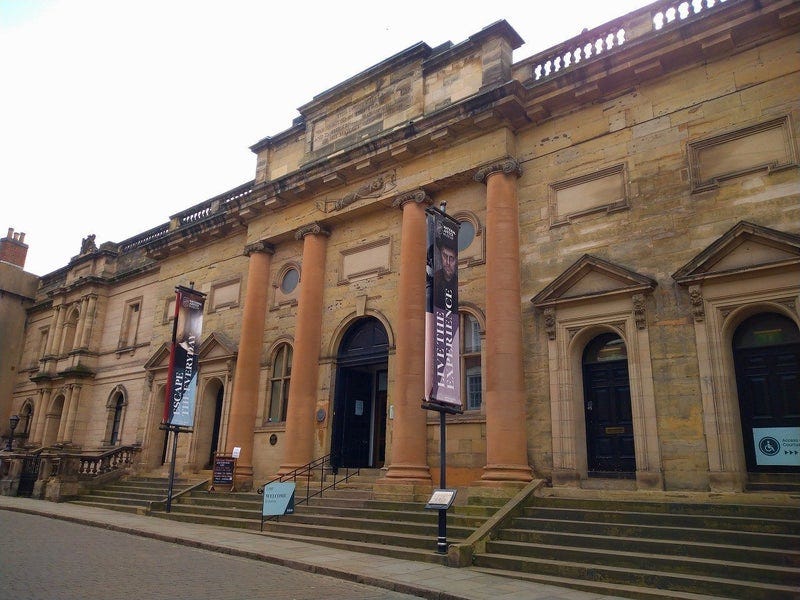
The National Justice Museum (Photo by author)

This is the National Justice Museum in Nottingham. The building served as a court, prison, and police station. It is documented that it was used as a courtroom from 1375 onward and as a prison from 1449.
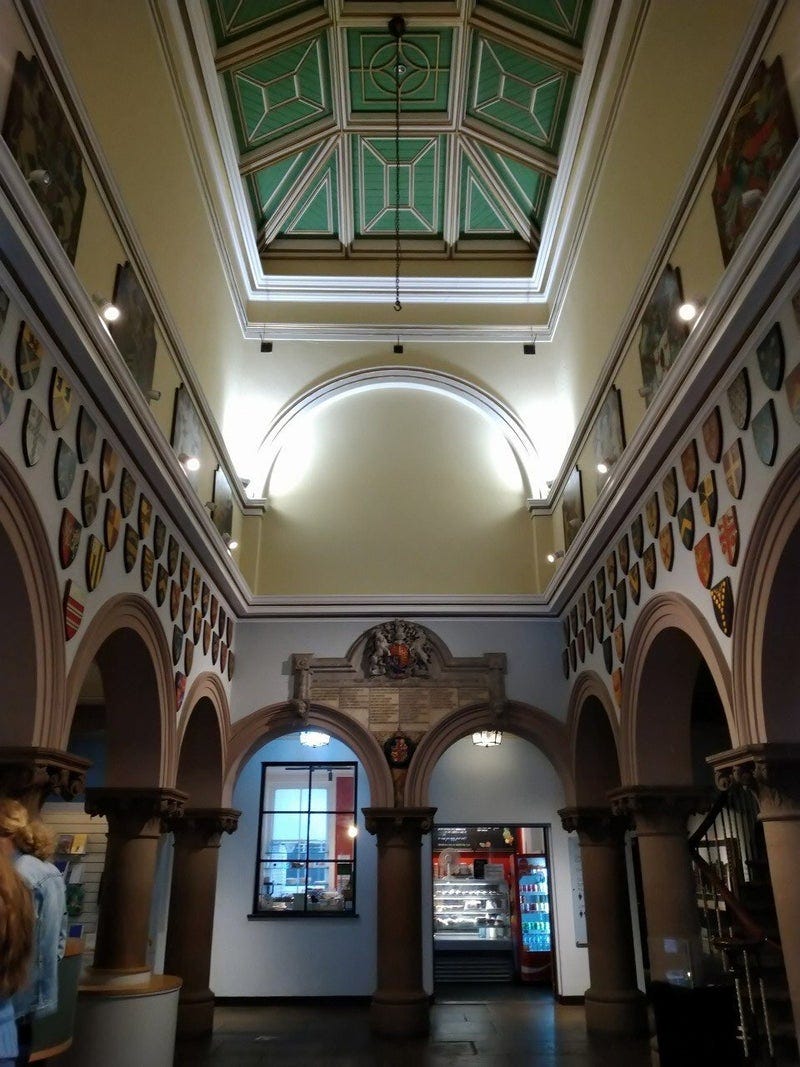
Inside of the National Justice Museum (Photo by author)

I showed the online booking confirmation at reception and received a paper wristband with a number. ‘That’s your prisoner number!’ the receptionist cheerfully told me.
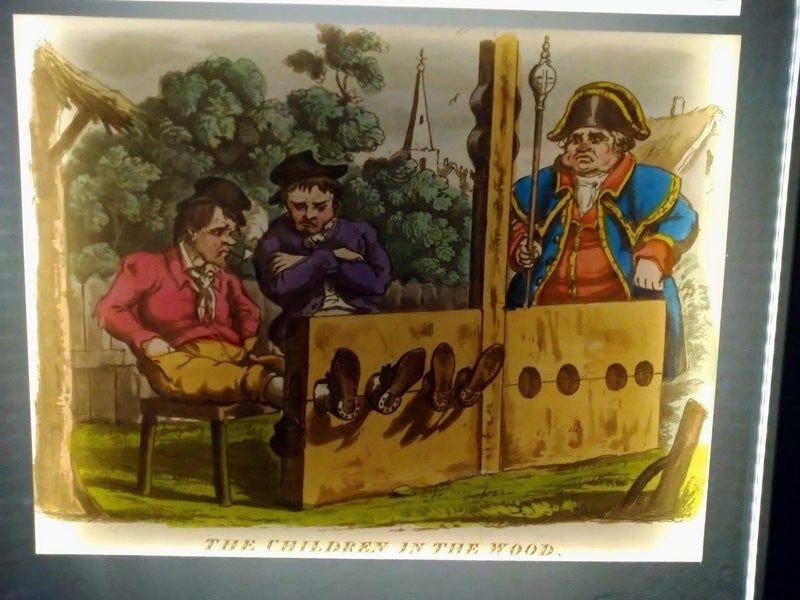
A picture of stocks (Photo by author)

This museum shows the various punishments that were carried out in Britain.

Stocks were a common punishment that humiliated petty criminals such as drunkards in public. They were wooden or metal, restraining criminals’ feet. Rotten vegetables were thrown at them, and sometimes, their shoes and socks were taken off so that the public could tickle their feet.
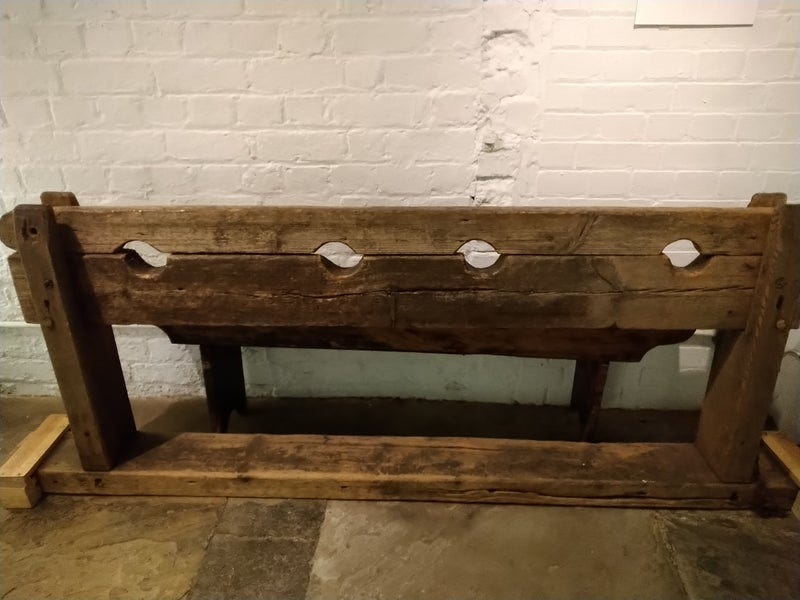
Real stocks (Photo by author)

The real thing is also on display. Stocks were used from the Middle Ages to the 19th century and are still legal in England.
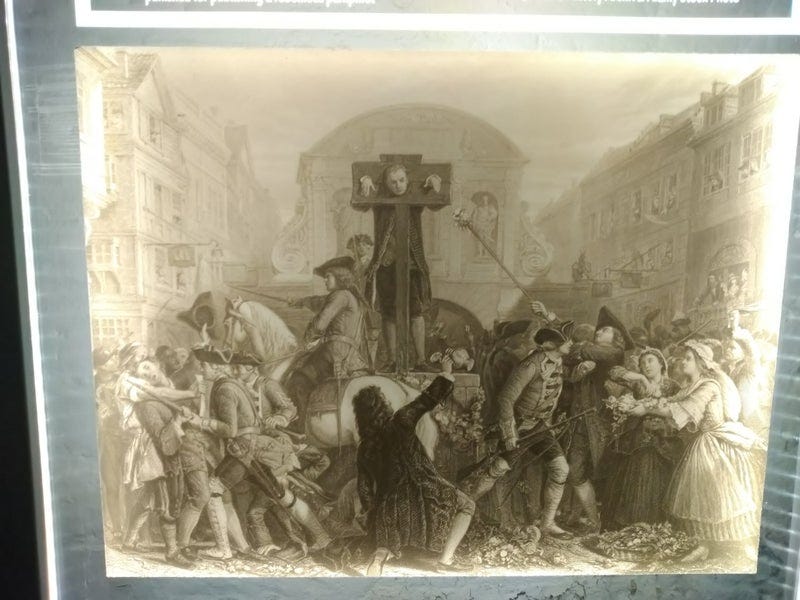
Punishments as entertainment (Photo by author)

The punishments in the UK used to be a kind of entertainment, and even young women came to enjoy such shows.
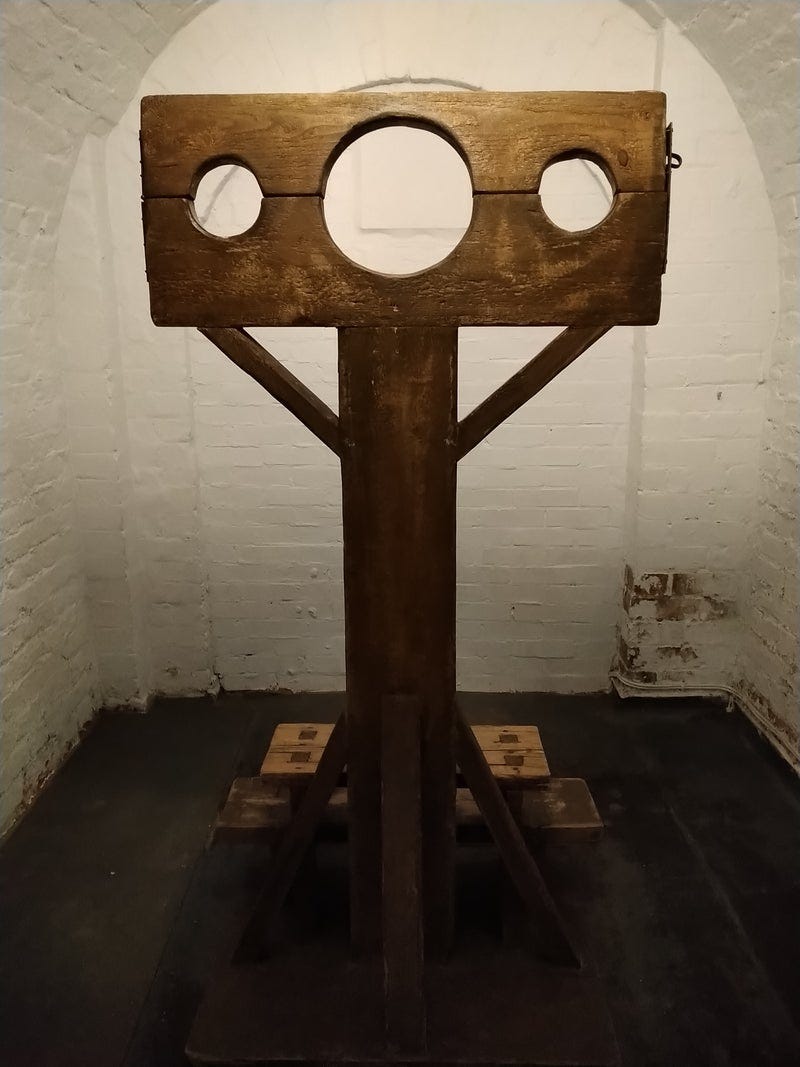
A pillory for photo shooting (Photo by author)

I chuckled when I saw a pillory for visitors. Even though the times have changed, it’s still entertainment.
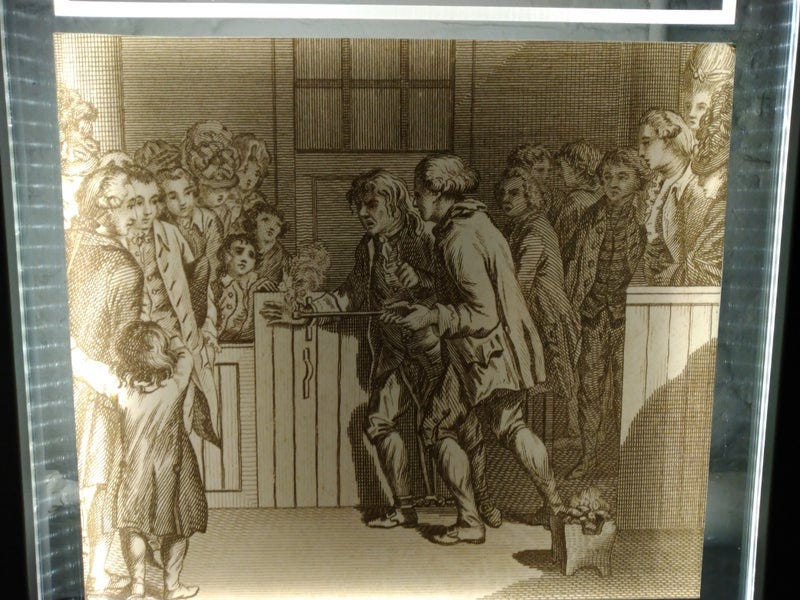
A criminal being burnt by a burning iron (Photo by author)

Here, they are using a burning iron. When we think of discipline, these physical restraints and torture come to mind, don’t they?
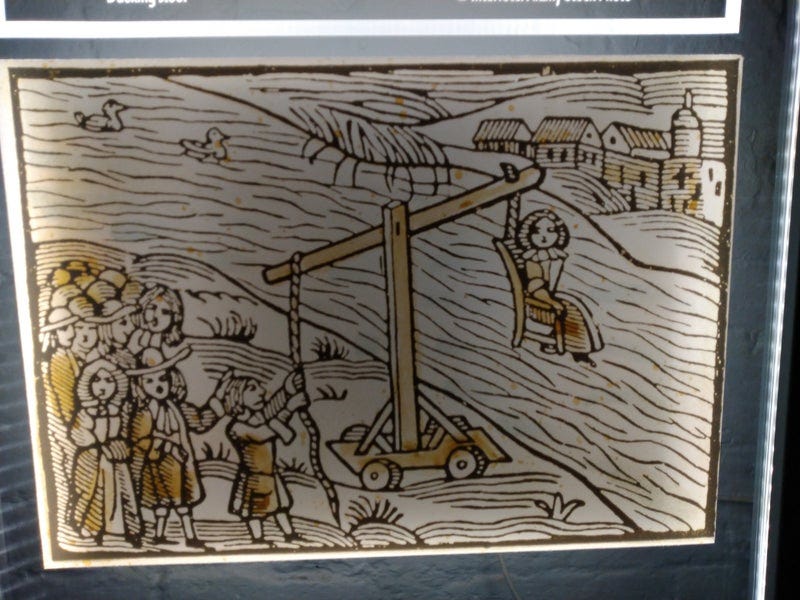
A ducking stool above the river (Photo by author)

Some Medieval penalties involved mental torture, though. A ducking stool is the one I found most interesting. What kind of punishment do you think this was? In fact, the crime committed by this woman hung above the river is ‘talking too much’. Perhaps she was accused of gossiping. The ultimate punishment for a chatty person is to be left alone with no one around, probably even today.

A ducking stool was also used to trial suspected witches. In that case, they were thrown into the river. If they floated, they were found guilty of being associated with the devil; if they sank, they died, albeit acquitted.
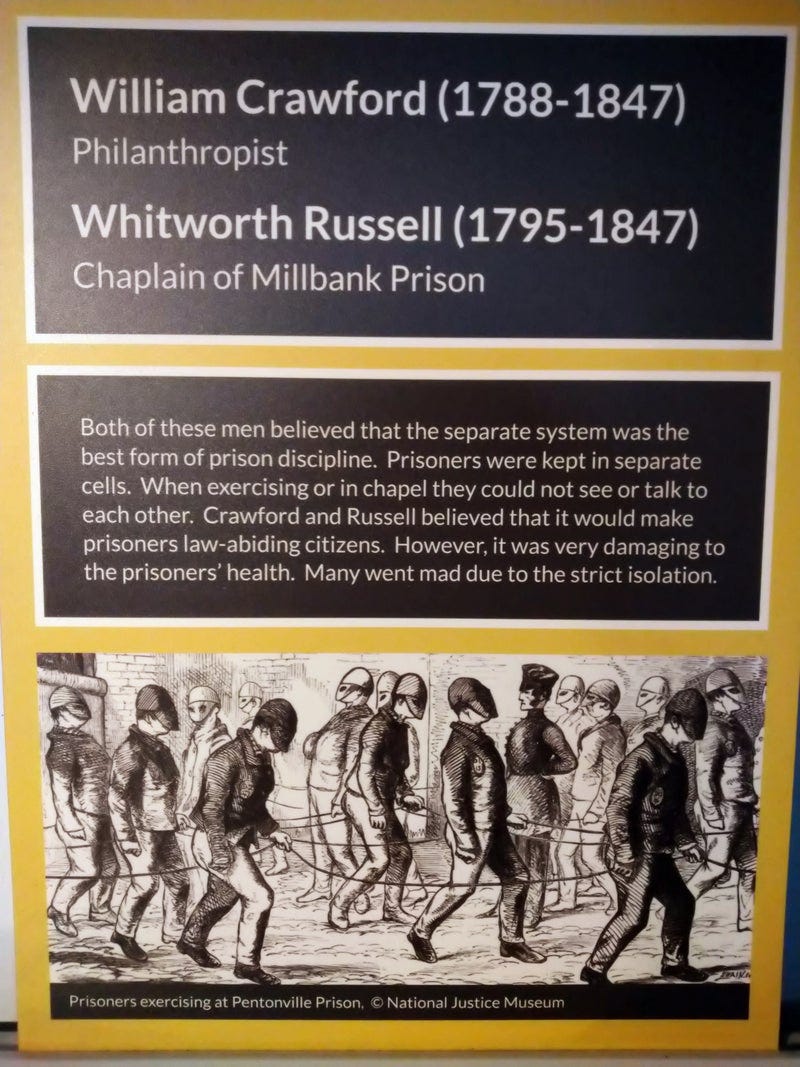
Isolation as a punishment (Photo by author)

Some punishments were more severe than others: in the first half of the 19th century, ‘isolation’ was introduced. Prisoners were placed in solitary cells, deprived of sight when exercising, and not allowed to talk to anyone. This drove many insane.
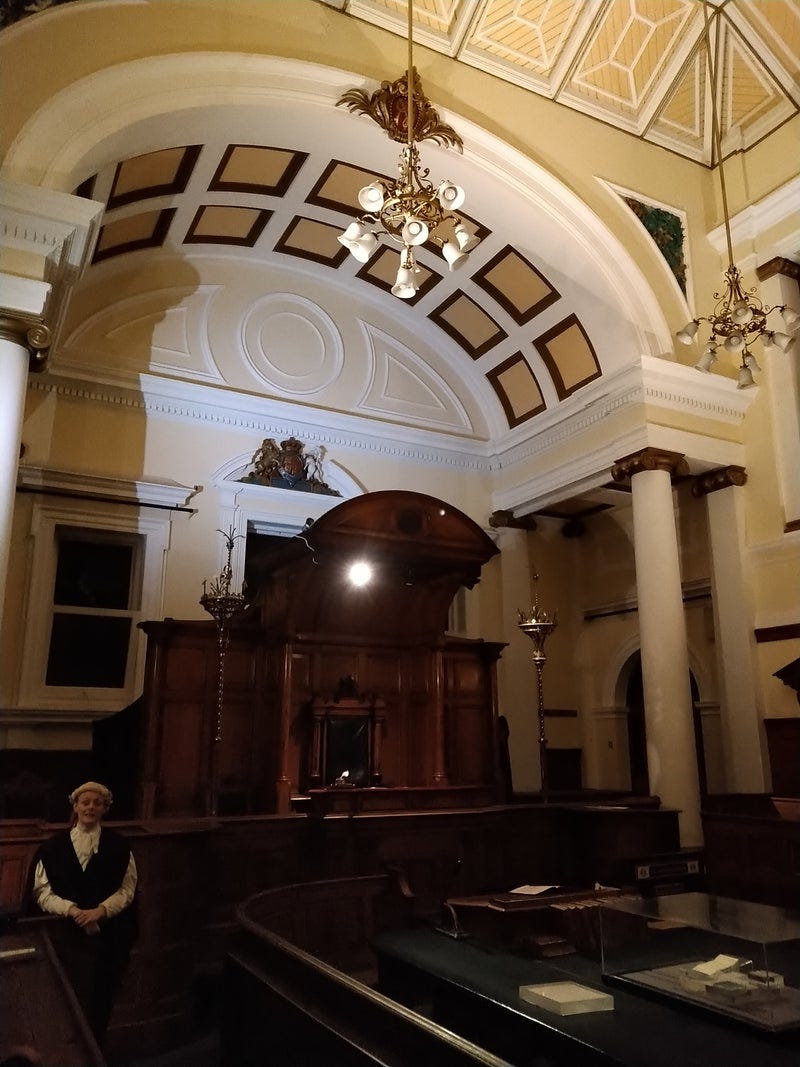
A Victorian courtroom (Photo by author)

Then, it was time for the trial, which is held twice daily. This is the actual Victorian courtroom that was used.

The magistrate approached two British visitors, saying, ‘Would you like to play the role of the mayor and take part in the trial?’ She also asked me, ‘Would you mind joining us as a witness?’ What?😅
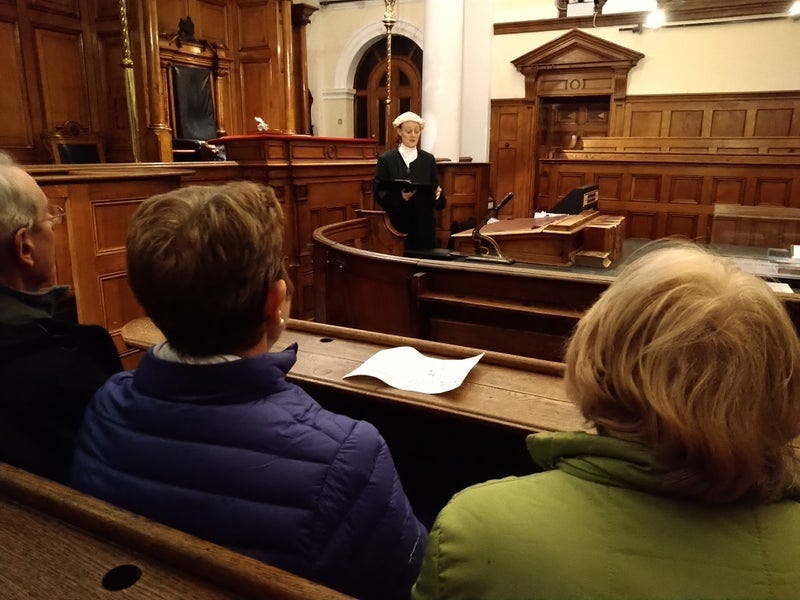
A Victorian courtroom (Photo by author)

The other spectators were all English, so it would have been safer to choose one of them. However, because British public institutions value diversity, they are never hesitant to include foreigners in these situations. That’s why I’m often given some interesting opportunities, which sometimes makes me nervous. But at the same time, I enjoy them.
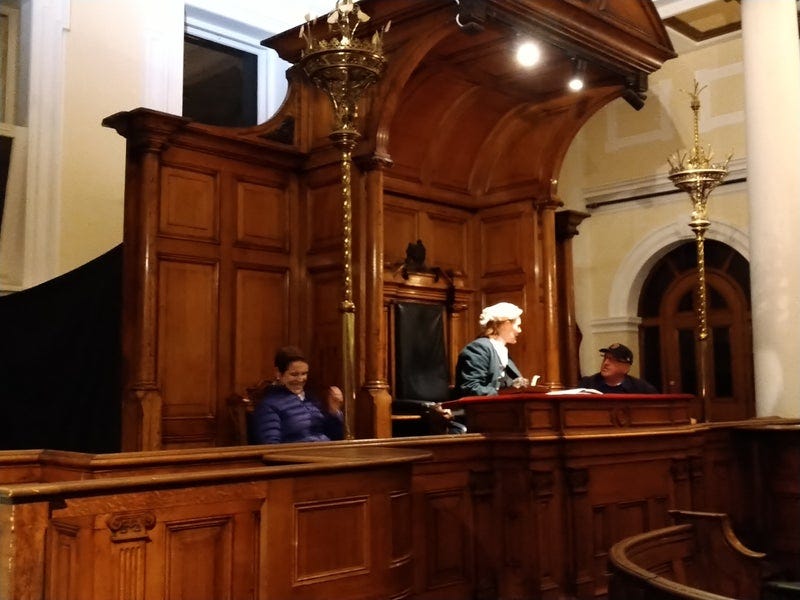
A Victorian courtroom (Photo by author)

The story was about someone stealing cheese at the market when the seller was away, with the plaintiff and defendant also played by actors. The other nominated people were fully motivated and did a brilliant job. As a villager who witnessed the scene, I did my best as well. The judge gave us a piece of paper with a plot, so 80% of the time, we just read it.
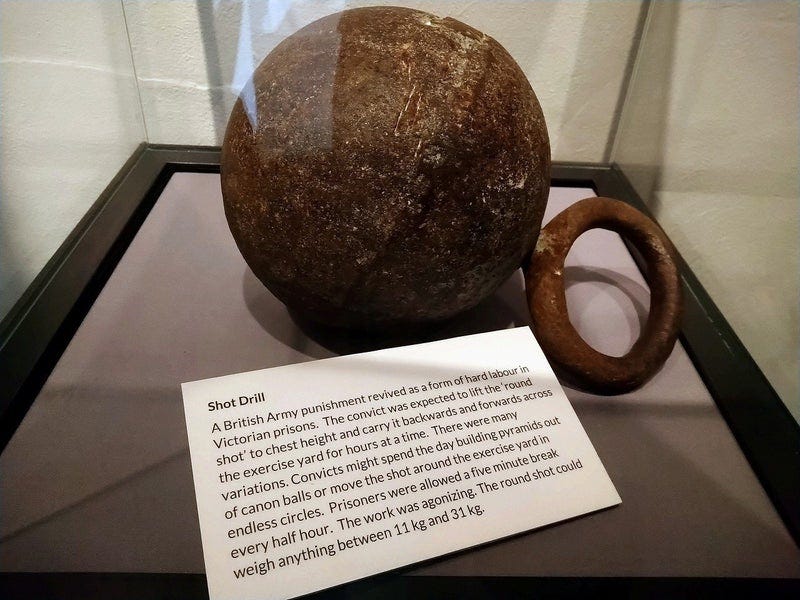
A shot drill used for a punishment (Photo by author)

Now that the cheese snatcher was found and sentenced, we were allowed to go back to the exhibits. British history has produced an astonishing variety of punishments. This one with a metal ball, for example, was once practiced in the British army and was revived as a punishment for prisoners in the Victorian era of the 19th century.

In an exercise courtyard, prisoners were made to lift a ball weighing between 11 and 31 kg to chest height, build pyramids with the ball, or simply move the ball from place to place. This punishment lasted for several hours and, as you can imagine, was extremely hard both physically and mentally, although five-minute breaks were allowed every 30 minutes.
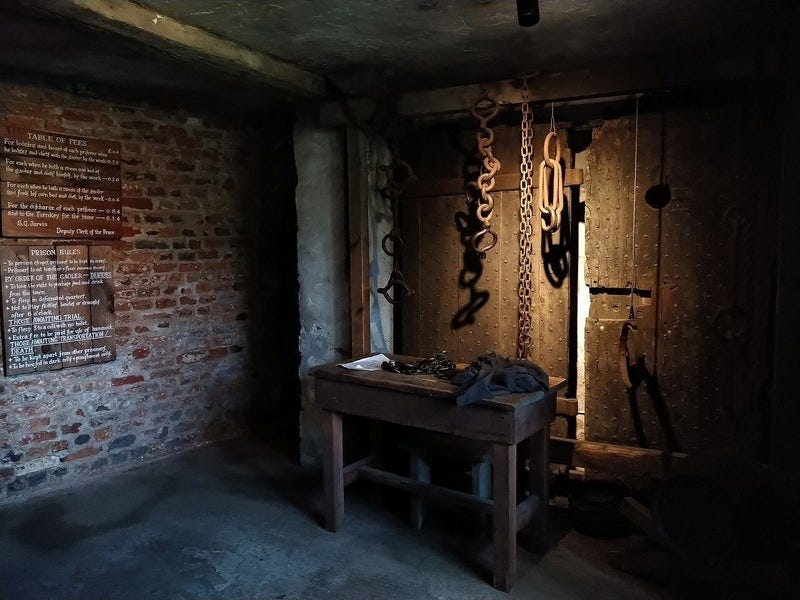
This place was used as a prison from the 15th century (Photo by author)

The museum was also used as a real prison, so you can visit that space.
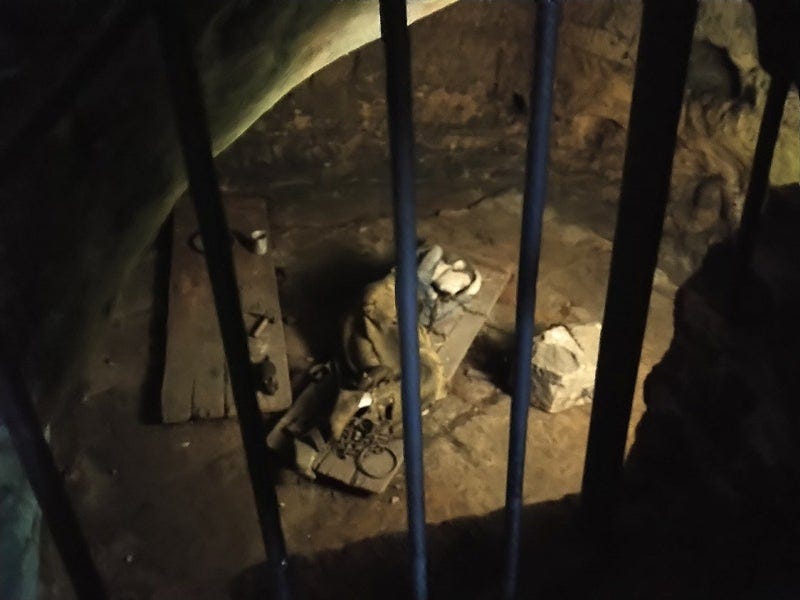
A solitary cell (Photo by author)

There is also a punishment cell (too dark to take photos) and a hole dug in a very deep place like this, considered a solitary cell.
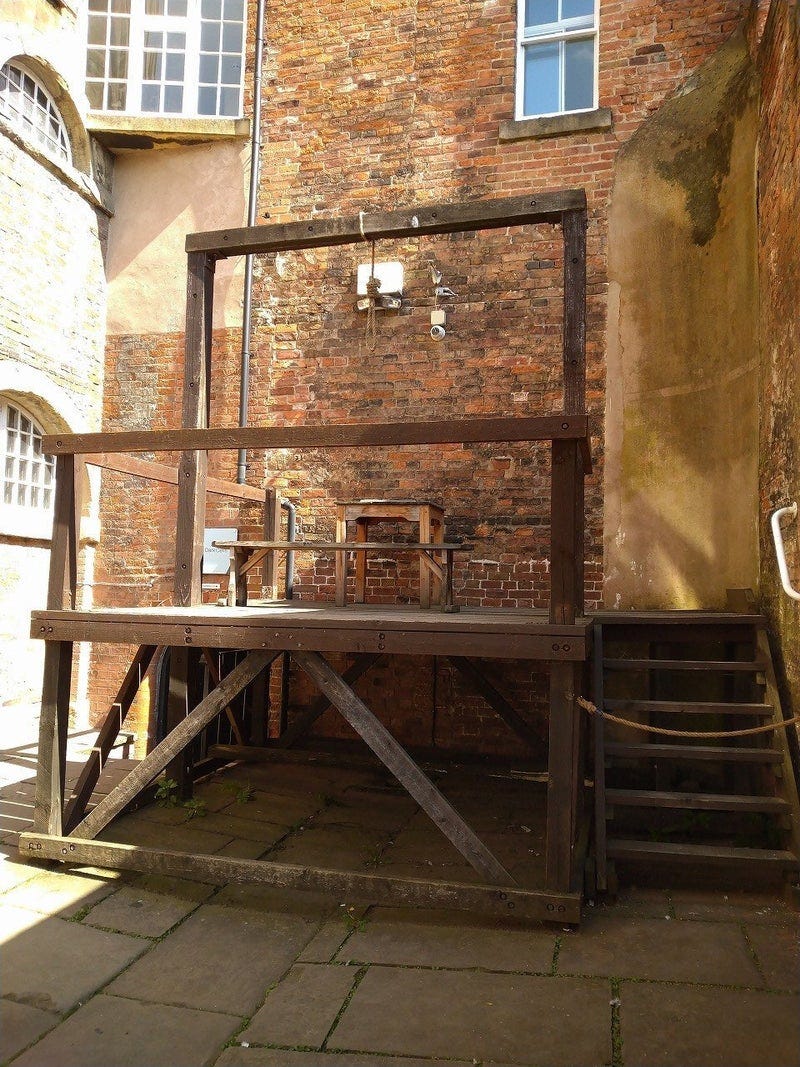
Gallows (Photo by author)

We all know what this is.

This museum holds ‘executions’ here twice a day. I missed them, but I’m not sure whether I want to see an execution, even if it’s an act.

Japan is one of the countries that still support the death penalty (Photo by author)

As many of you know, the death penalty has already been abolished in many countries. In the UK, it was abolished in England, Wales and Scotland in 1969 and in Northern Ireland in 1973. Well, it is more recent than you might think.
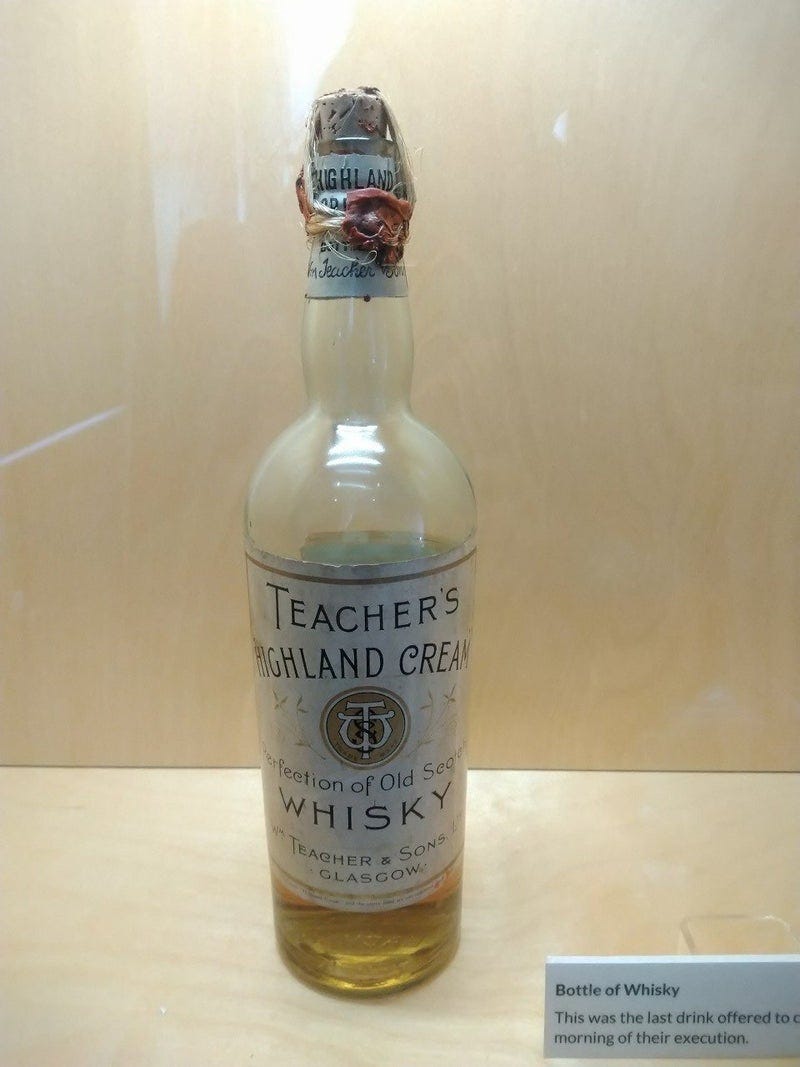
A whisky bottle (Photo by author)

This whisky was offered to prisoners on the morning of the day the execution took place. It is probably the same in all countries to show a little pity for prisoners sentenced to death.

By the way, the death penalty is still favoured by more than 80% of the Japanese population, and unless a major event occurs or there is significant external pressure, it is likely to continue. Personally, I am against the death penalty, mainly because of the psychological burden it places on the executioner.
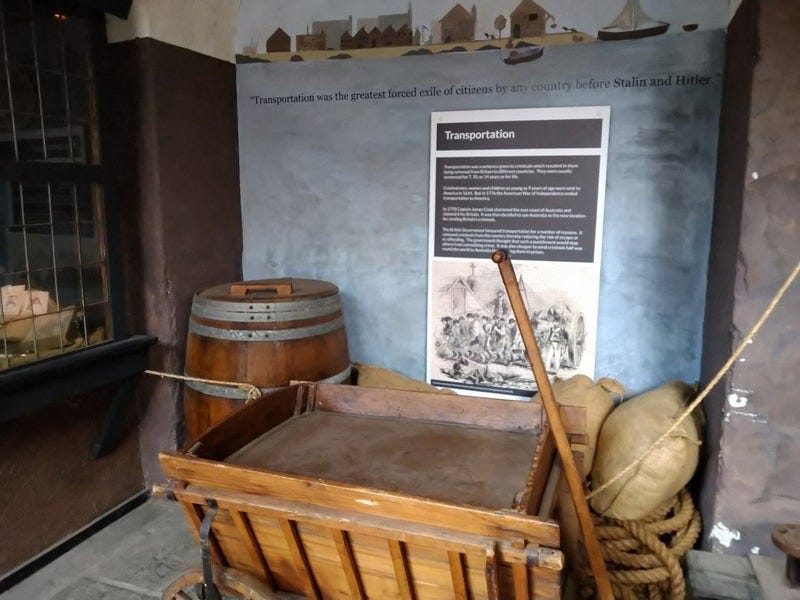
Hundreds of thousands of criminals were sent to the US and Australia (Photo by author)

The UK had its own unique form of punishment: Banishment to the US or Australia.

There were, of course, some reasons for this: firstly, it reduced the risk of escape and re-offending; secondly, it was so horrendous a punishment that it discouraged people from committing crimes; thirdly, it was a lot cheaper if they sent them to the other side of the world. Building a dedicated facility in the country to feed and exercise prisoners required a lot of money.
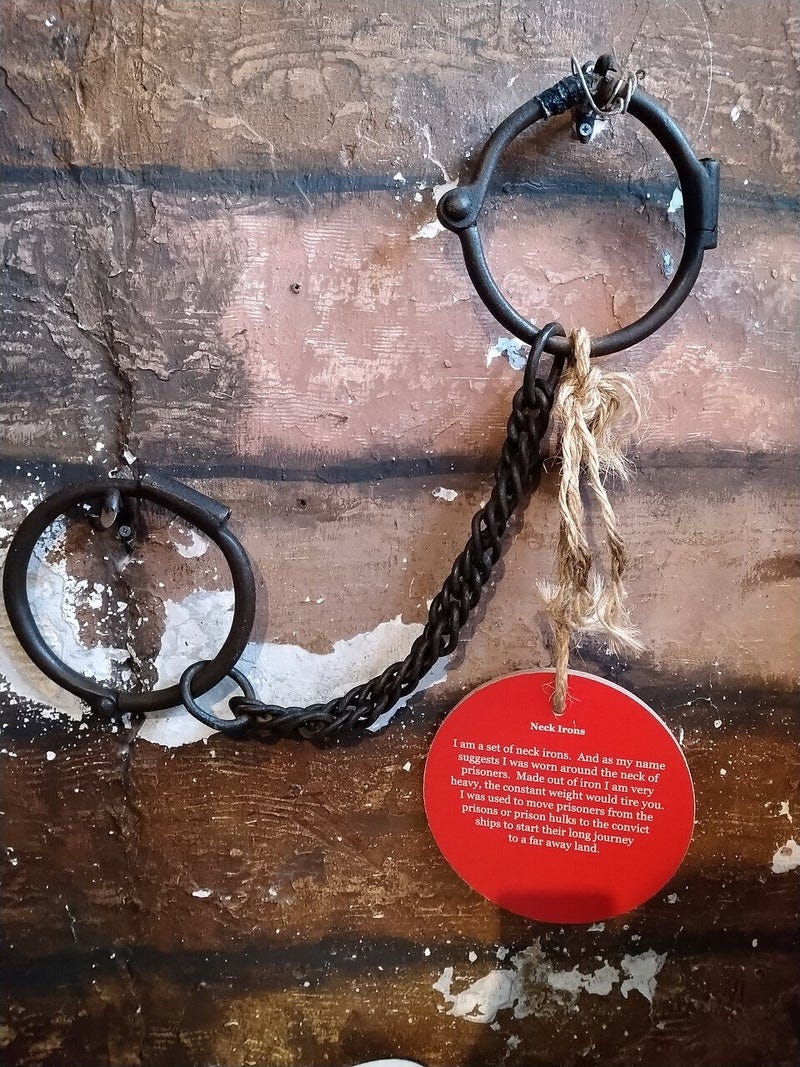
Neck irons were used to move prisoners from prisons to the convict ships (Photo by author)

So, from 1614, English prisoners were sentenced to either seven, ten, or fourteen years or life in prison and exiled to America. This included women and children. However, following the American War of Independence (1775–1783), such exiles came to a halt. As Captain Cook made the east coast of Australia a British territory in 1770, they began to be sent there.

The current UK Government also hopes to send some asylum seekers to Rwanda. I’m shocked that the ‘sending people far away if we don’t want them’ attitude is still there! Of course, there were exiles in Japan and many other countries, but not on this scale. As far as I know, the only countries that sent criminals this far away were Britain and France — New Caledonia used to be a French penal colony.
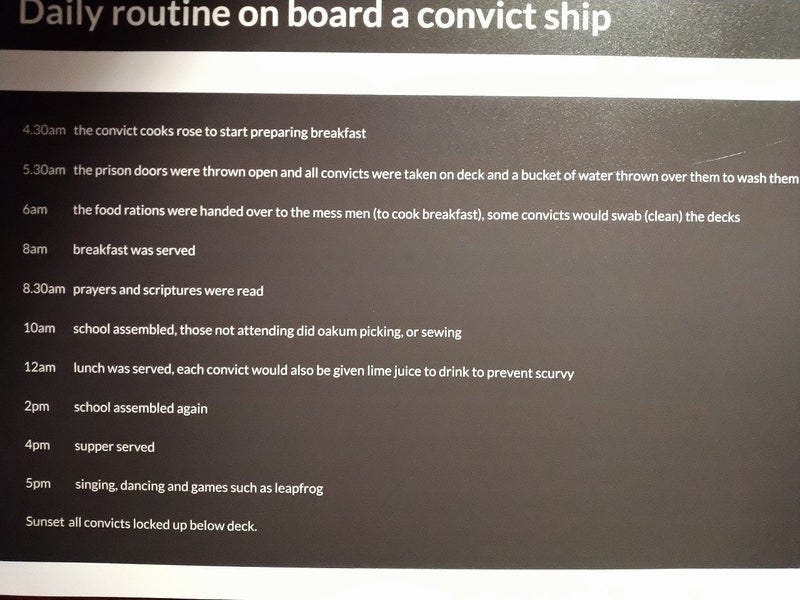
Daily routine on a convict ship (Photo by author)

Now, let’s look at the life on ships that carried convicts to America and Australia. There was a regular life on board, with time for prayer, study, singing, and dancing, which gave me a slight relief.
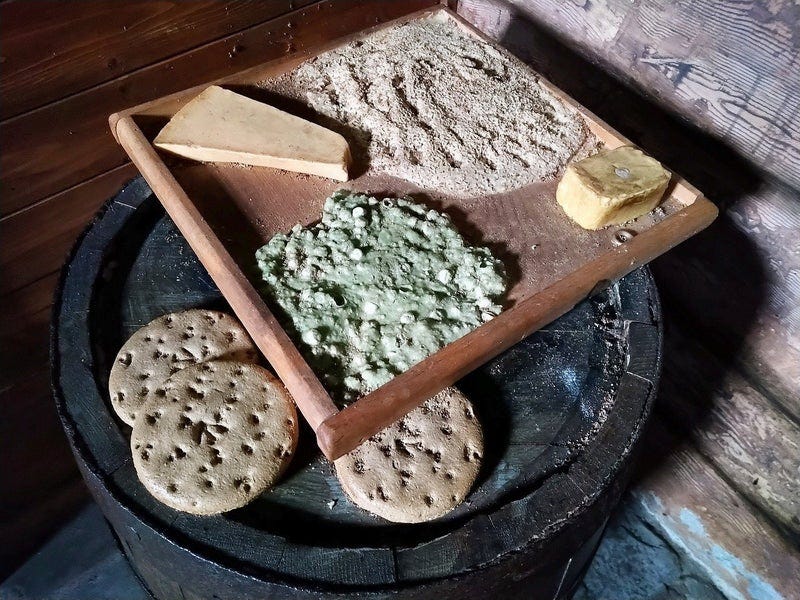
An example of a meal served on board (Photo by author)

According to the documents, the food was not bad, although it doesn’t look delicious in this photo. Below is an example of a weekly menu.

  • Sunday: plum pudding with suet and beef.
  • Monday: pork and green peas.
  • Tuesday: beef and rice.
  • Wednesday: plum pudding with suet and beef.
  • Thursday: pork and green peas.
  • Friday: beef and rice, dessert.
  • Saturday: pork only.

You can see that they didn’t eat any fish at all. In addition, lime juice, sugar, and vinegar were given to prevent scurvy. Half a pint of port wine was provided every evening to lift the spirits.
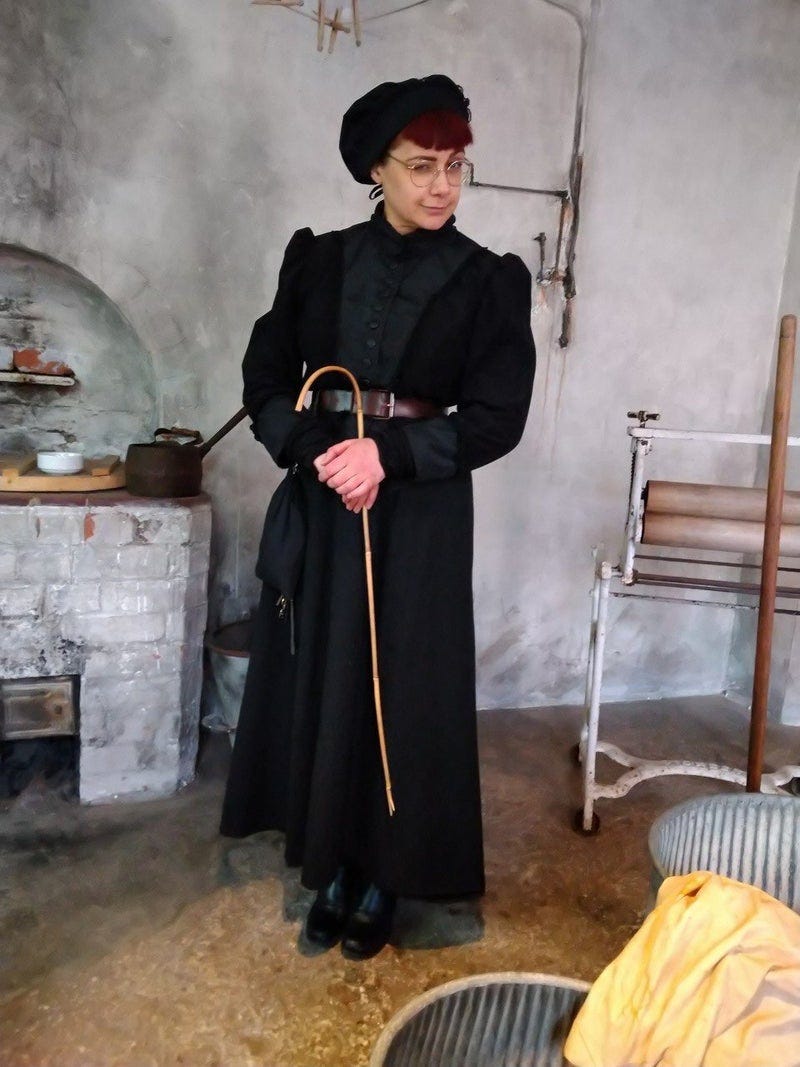
Prison guards in the 19th century wore black (Photo by author)

As I wandered the museum, this woman stopped me and said, ‘You must be the new prisoner. What’s your prisoner number?’ Oh… I had forgotten that I was a prisoner!

I gave her the number on the wristband, and she took out the list and said, ‘The crime you committed is… Oh, how horrendous! You are a murderer!!’ What… Was I?😆
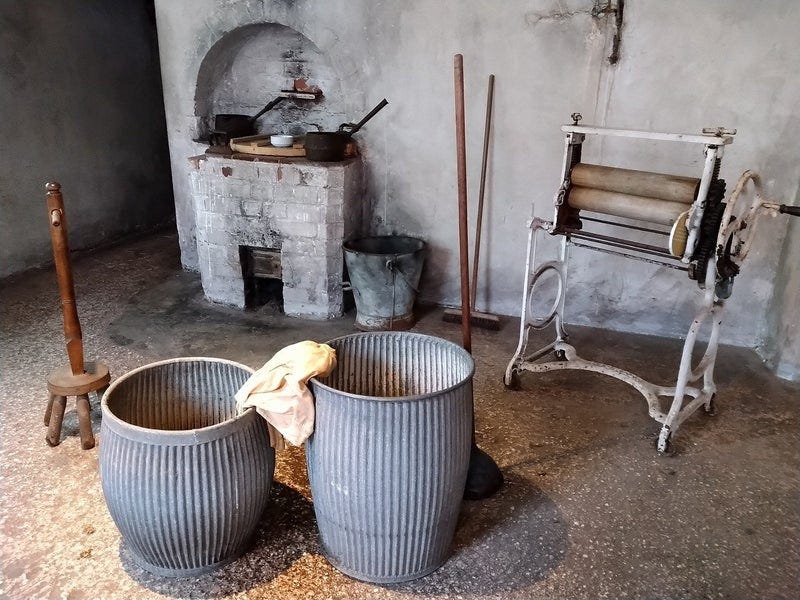
Female prisoners were given tasks such as washing and cooking (Photo by author)

I wondered if I was going to be sent to the US or Australia (a free holiday?). However, according to this guard, female prisoners in the 19th century were given clean clothes and assigned to light work such as washing. This also served as job training, and they were even paid, albeit a meagre wage. ‘Not so bad, is it?’ She said.

Compared to some of the harshest punishments I had seen that day, indeed, it was not bad at all. Nevertheless, nothing is better than living freely, and not committing any crime. So when I stepped outside the museum, my ordinary life felt even more beautiful.

Few things show the values of society at the time more clearly than the justice system. This museum allowed me to experience British society from the Middle Ages to the Early Modern period through a variety of exhibits and role-playing. When compared to modern systems, the differences are interesting and striking.

Thank you for reading. If you enjoyed it and would like to support me, there are several ways, all of which I would greatly appreciate. Arigato Gozaimasu!

  1. Engage with this article by liking, commenting, highlighting, and sharing it.
  2. Subscribe to my articles. You will receive a notification once a new article is published.
  3. If you feel super generous, buy me a tea! That will make my day🎉
History
Museum
Nottingham
Punishment
UK
Recommended from ReadMedium