
From Stalled to 40% Growth: How I Turned Around My Youtube Channel
How I finally understood my audience and got rewarded.

By now, the silver plaque celebrating 100,000 subscribers on YouTube should shine in the background of all my videos.
But the cruel Youtube dashboard slaps me in the face every day with this depressing number:
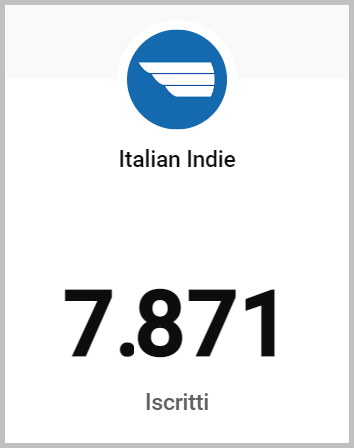
I’ve been publishing since early 2019. Mistakes were made, for sure.
But recently, I may have found the right strategy to revive my channel. Instead of a bleak, slow decline, I’m now seeing double-digit growth month over month.
Let me explain the mistakes I’ve made, the current strategy, and, most of all, the thought process behind it. It will help you analyze your content and come up with a winning strategy tailored to your needs.
The viral video delusion
I create videos in Italian in the online business niche. Which is a more respectable name for the “make money online” niche. At least for the majority of people.
You guessed it: the space is filled to the brim with the standard gurus. They achieved some desirable outcome, generalized their unique story into a precooked recipe for quick and labor-free success, and sell it for four figures a pop.
There’s also the inevitable other side of the coin. Our potential audience is filled to the brim with opportunity seekers with no desire to work or learn, just the desire to get rich.
This isn’t our target audience. My co-founder and I are looking for passionate entrepreneurs (and aspiring entrepreneurs) like us. We want to popularize the opportunities brought to individuals by online businesses. They’re obscure for most Italians. I live in a country of fearful Luddites.
As any savvy Youtuber, when I started, I turned to keyword research. SEO gives a powerful push to new channels that can’t count on an existing audience.
Unfortunately, search volumes in our niche are a fraction of what you see in the English language. The largest keyword is, unsurprisingly, “come guadagnare online” (”how to make money online”). It gets a whopping 8200 searches per month.
There are just a handful of other viable keywords with a similar volume. This keyword felt too generic and scammy, but I had to cover it.
We already snatched the first position on Google with a blog post on that topic. So I turned the article into two videos. The first one started getting lots of views, proportionally to the size of the channel.
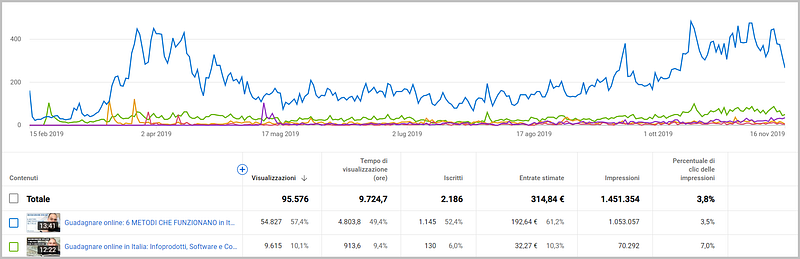
Time to uncork the champagne! No: those views were useless.
My fear was right. People looking for “how to make money online” weren’t our intended audience. We were looking for business builders, aspiring entrepreneurs, and ambitious freelancers. We got unskilled, lazy daydreamers.
Worse, that single top performer hid the failure of dozen other videos. I published tutorials about email marketing, content marketing, productivity, self-development for entrepreneurs, and more. 99% of them didn’t even reach 1000 views, while the two videos about making money online were raking up more than 60000 views.
When they lost their ranking in the search results, our total views plummeted.
Too sophisticated
Generic, high-volume keywords didn’t work. So, sometime in 2020, we flipped our approach and niched down.
Content creators and course creators were making fortunes in the English market. We had been creating content and courses for years, we had the expertise. We also saw many sites attracting more motivated subscribers by publishing more advanced content.
So I started making video tutorials only for people (professionals and employees) who wanted to scale their expertise through courses.
We expected low views but higher earnings. Our potential audience was made of people already making money from other sources.
The negative part of our hypothesis was right. Most videos got less than 500 views over their entire lifetime. We exchanged calls and emails with potential clients who liked the topics and loved my relaxed style, distant from the alpha males overcrowding the business niche.
But we were wrong about a crucial aspect: it wasn’t a high-spending audience. Better, there weren’t enough high-spending clients. And professionals who were ready to pay didn’t want to risk their time on creating content and building online courses that didn’t bring immediate, outstanding results.
Another failure that fortunately brought us to a better strategy.
Reading the signs
At least, Youtube analytics are a goldmine of data about your viewers’ preferences. By the end of 2022, we had about 300000 views. A depressing amount after almost four years, but enough to understand patterns and trends.
Our most viewed videos of all time were all about useless keywords such as “making money online” and their variants. But I intentionally kept experimenting with topics and formats.
So, we had several dozens of videos with views in the low thousands. They were all tutorials about software tools used by entrepreneurs and freelancers. Notion, in particular, attracted some extra attention.
In the English market, there are awfully successful creators with mouth-watering amounts of views and earnings. I’m disillusioned enough to know that in Italy, just a tenth of those views would be a dream.
But the results from a couple of tutorials seemed promising.
The new strategy
So, I bit the bullet. Course makers wouldn’t make us wealthy. Ordinary software tutorials were more appreciated than tutorials on business skills and practices.
Also, other Italian Youtubers in our niche grew faster than us, thanks to exactly those kinds of tutorials. One of them is also a personal friend. He gave me an insider view of why and how this strategy works.
The pivot shouldn’t either alienate our existing audience. They already showed they liked software tutorials. And the numbers on the other videos were so low I would be missing almost nothing.
So, I designed a simple content calendar:
- one video per week,
- one tutorial about Notion every two weeks,
- on the other weeks, a tutorial on another tool.
I also committed to talking to a very beginner audience. My experience and the other creators showed me that our market is hopefully unsophisticated. I just sprinkled some advanced stuff here and there to let people know that there’s more if they need it.
It went well, better than any other experiment.
The results
We weren’t wrong about Notion. It immediately started to lift the channel performance up.
The other tools didn’t disappoint as well, though not all of them. Riding the AI wave helped, too.
I published the first Notion tutorial after the pivot on December 15, 2022, then stayed faithful to my content strategy. Look at the views graph:
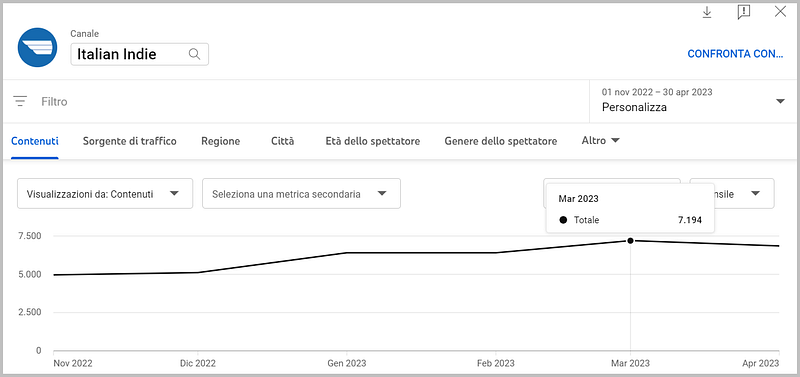
From 5000 to 7200 views per month: a 44% increase.
And the viewing time graph looks similar:
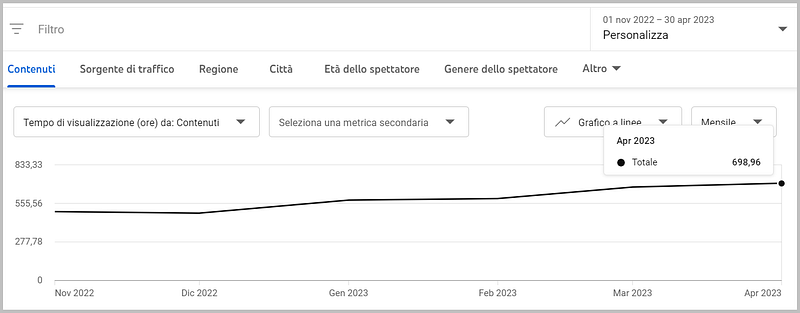
From 495 to 698 hours per month: a 41% increase.
The greatest news? This growth isn’t caused by a single jackpot video. It’s more like a rising tide. I also made sure to post almost only evergreen tutorials. They will keep fueling the channel over time. And often on Youtube, old evergreen content can pick up steam weeks or months after publication.
How does this help you?
Go publish software tutorials on your channel!
Just joking. They work, but only in some niches. And they may not be your cup of tea.
Instead, the underlying lesson is:
- keep publishing, despite the setbacks, possibly once per week (to maximize data collection),
- experiment with different formats and topics, even staying within a specific niche,
- when you seem to have tried everything, but growth is stalling, dive into your analytics and look for the most viewed content.
The last point may hide some dangers: the data may be equivocal, or you may draw the wrong conclusions. You will still need some guessing. Be quick to identify your mistakes by immediately devising new tactics based on your observations and testing them quickly with frequent publications.
How do you analyze your analytics? It’s part science, part art. Some suggestions to avoid the easiest mistakes:
- consider a long time interval, at least a year,
- know your averages,
- consider aggregated data (for example, based on topic, format, or other features of your videos),
- but also go more granular to avoid putting together apples and oranges or being confounded by outliers,
- rule out the influence of external events or seasonality,
- look for outliers, single videos with exceptional stats,
- look for patterns, topics, and formats that repeatedly outperformed.
Sidenote: these steps will help you on any content platform.
If you need help with your content strategy, reach out on Twitter. Or, even better, subscribe to my email list for free. You’ll get unpublished tips, and you’ll be able to contact me from there.