
From Sorrow to Wisdom to Words
or The Art of Writing While Crying Your Damn Eyes Out
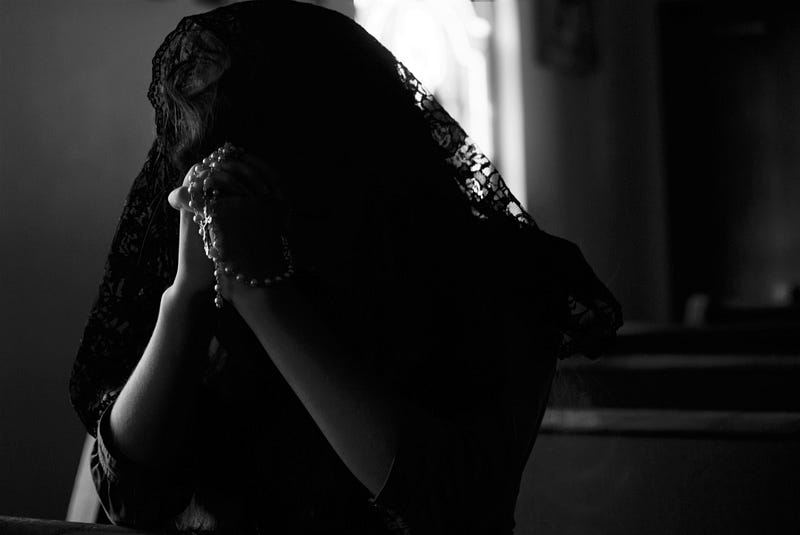
My current work-in-progress, The Grave Thereafter, is difficult to write.
Not in the usual sense that makes any novel difficult to write, but in that this is a story that hits very close to home. At the beginning of the story, my main character suffers an emotional blow very similar to something that I, myself suffered through.
Insert lesson here on how good art derives from real life, and so on.
Anyway. Though the specific context of the story is different from my life, the feelings that he goes through, the depression, the grief, the mourning, the hurt, the isolation, all of it, is identical to what I felt. I am, in essence, dredging up the worst years of my life, and trying to channel them into this character, onto the page.
So I wind up crying. A lot.
—
To be fair, I cry a lot, anyway, when I get swept away in a story.
I don’t recommend going to the movies with me, especially when you know that it’s going to be a tear-jerker, because I am the very large guy sitting there, letting the tears stream. I might even be ugly snot crying.
Sometimes, it might be because I’m actually watching a sad movie (On a related note: go see The Miracle Season.), but sometimes it can be a perfectly ordinary superhero movie, and I start crying because everything looks abject and hopeless, but then the orchestra kicks over to the Agents of S.H.I.E.L.D. theme, and somebody shows up with a helicarrier to save the day, and, God damn it, aren’t Phil Coulson and Maria Hill and Melinda May the greatest heroes of this entire damn franchise because they are ordinary humans who interact with super-powered beings without having those powers themselves, and… Oops, sorry, tangent. (Note: This is not an Infinity War spoiler. I wouldn’t do that to you.)
I live with an emotional hair trigger, especially when it comes to stories.
So, yeah, I cry while I’m writing.

Not always. Not often. And to be perfectly honest, it never happened when I was working on my first novel. While Somehow You’re Sitting Here was definitely an emotional story, and definitely had its moments, it was a hopeful, happy, slightly lighter story. TGT, on the other hand, isn’t. The main character will go through Hell before the end of the story. And, specifically, he’s going through my Hell.
It’s a lot to bear. It’s a lot of emotion to open yourself to. And, god knows, it might make you uncomfortable to feel that, especially if you’re a man who’s been culturally conditioned to know show that kind of emotion.
I saw a post in Ninja Writers today about some writers who’ve also experienced this, but who’ve let the overwhelming emotion stop them from writing. To this, to them, I say: you can’t let the tears stop you. You have to keep writing through the emotions, through the feelings, and trust that whatever you’re writing is worth having to feel these things.
And, not only that, but trust that your work might be better for all the tears that you’ve shed. Jennifer Niven, author of my favorite book, All The Bright Places, says it best:
6. Let yourself cry. You need to be willing to let yourself cry (or laugh or feel), because if you don’t cry/laugh/feel while writing your story, how do you expect your reader to? (x)
Like my current WIP, All The Bright Places was a very personal story for her. I remember an interview where she talked about almost constantly crying during the process of writing the story. And the outcome of that was the most stunning novel I’ve ever read.
So sit at that keyboard, and cry, and keep writing. Bring a beach towel if you’re afraid that you might short-circuit the computer. Keep writing. Keep crying. And the words will set you free.
—
Zach J. Payne writes YA fiction, poetry, and plays. He’s an assistant at Ninja Writers, helping writers find their voices and their tribe. In the past, he read queries as an intern for Pam Victorio, a literary agent at D4EO. He lives in Reno.


