
From Singapore to Hong Kong to America — Three Perspectives on Freedom of Expression
Liberty for all cannot truly exist without responsibility
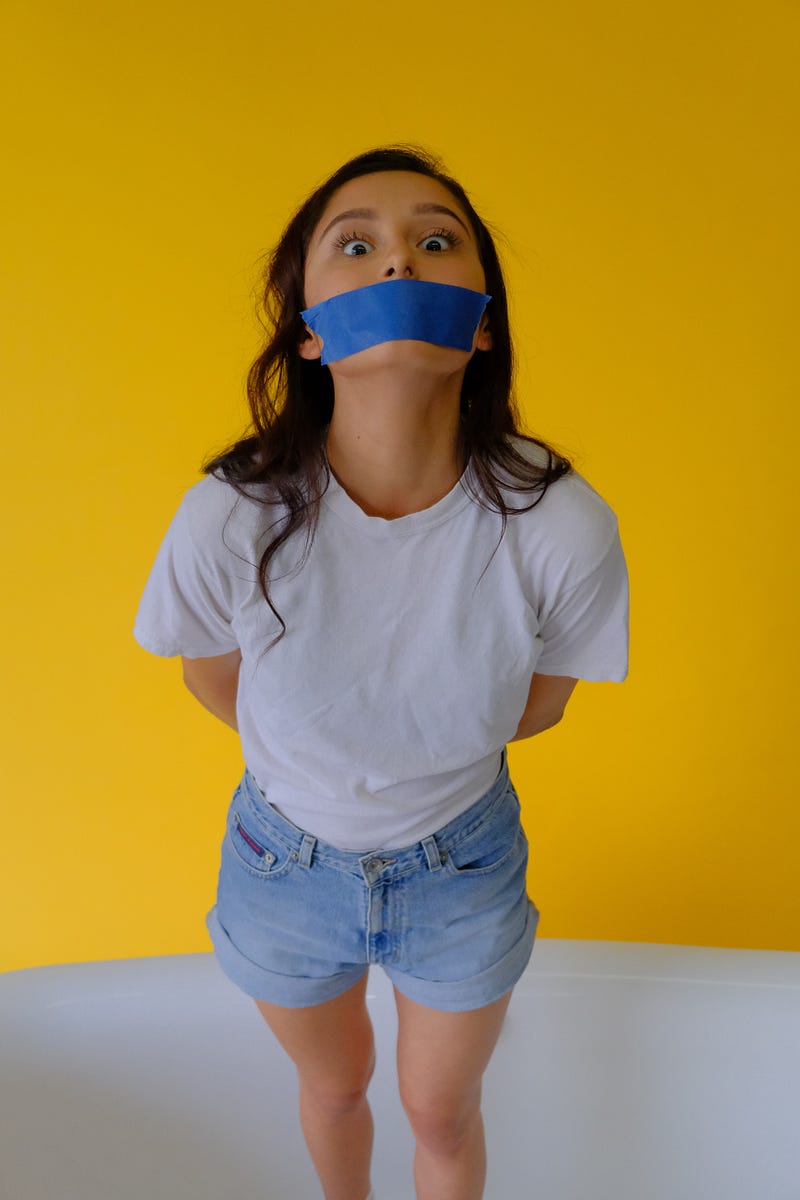
Singapore: Consensual censorship
Growing up in Singapore, I knew that even though we had a democratic, multi-party government, the real power laid with the People’s Action Party (PAP) — the conservative, center-right party founded by the nation’s revered late prime minister Lee Kuan Yew. To non-Singaporeans, it may seem strange that for the last 55 years, the PAP has legitimately beat eleven opposition parties and maintained its stronghold in the nation’s parliament. While most Singaporeans support the PAP, there have always been whispers that the party’s authoritarian stance on internal security, political dissent, public demonstrations, and press freedom (Singapore comes in at 160 out of 180 countries in the world press freedom index in 2021) is the reason for its hegemony. Despite these whispers, the majority of Singaporeans accept the curtailing of their freedom of speech because censorship was present at our country’s birth, and its existence is tangential with social stability and steady economic progress.
As a journalism student in London, I had been disturbed by my country’s abysmal press freedom score, so I decided on ‘press freedom in Singapore’ as the topic of my dissertation. While censorship is no doubt dangerous, through my research, I discovered that in the context of Singapore’s fight for independence, it was excusable, perhaps even necessary. When Singapore — a tiny island with no natural resources and a population consisting of a large population of Chinese immigrants and smaller populations indigenous Malays, Indian immigrants, and other ethnic groups — gained independence from British rule in 1963 and was annexed from Malaysia in 1965, it faced two big threats to social order: 1) racial conflict between the indigenous Malays and the migrant Chinese community, and 2) communist ideology from China.
Survival became a key theme in Singapore politics, so Lee had built the PAP based on an ideology of pragmatism, pluralism, communitarianism, and meritocracy. Not only was he an outspoken critic of communism, he also fought what he saw as the imposition of liberal democracy by the west on developing Asian countries like young Singapore. To Lee, the concept of freedom was not universal but one that should to be determined by situational and cultural relevancy.
In the last five decades, Singapore has changed a great deal. Most members of the different races get along well, and Red Scare is no longer a problem. This has me questioning if censorship is still beneficial for Singapore’s citizens.
One of the biggest complaints I’ve heard with regards to Singapore’s idiosyncratic brand of self-censorship is that it stifles creativity and produces a culture that is stagnant and sterile. This can’t be positive thing. However, the sociological trade-off for silence — which includes family cohesiveness, low crime, good employment opportunities, and a high quality of life — seem reasonable to many citizens. This got me wondering if there is such a thing as a middle ground when it comes to freedom of expression.
Hong Kong: Non-consensual censorship
From 2011 to 2021, I have been living as an expat in Hong Kong with my American husband. 14 years earlier, in July 1997, the British returned Hong Kong to China. At the handover ceremony at the Hong Kong Convention Centre, Prince Charles told the people of Hong Kong: “We shall not forget you and we shall watch with the closest interest as you embark on this new era of your remarkable history.” As soon as the British left, tensions between Hong Kong and China mounted. In 2014, the Umbrella Movement saw Hong Kongers organizing sit-ins to protest China’s growing political influence in the Special Administration Region. In June 2019, the demonstrations escalated to civil unrest over the amendment of an anti-extradition bill. But today, dissenting voices in the former British colony have been hushed because of the passing of the National Security Law, which makes it easier for the Chinese government to control separatism and subversion in the Region with imprisonment.
Covid-19, along with the changing political, cultural and economic climate of Hong Kong is provoking a mass exodus, and large numbers of western expats and liberal-minded Hong Kongers are leaving the city for good. There is fear that Hong Kong will lose its glamorous, laissez-faire vibe. There is fear that the city’s British colonial history will be erased, that it might become a surveillance state, or that its residents might slowly lose their civil rights.
Freedom as an ideal
Those ambivalent about the “new” Hong Kong have an accepting, conservative attitude not dissimilar to the attitude of the Singaporeans — “As longs as we can still live comfortably and earn our money, there’s no problem here”, “Mainland Chinese or Hong Konger, we are all ethnic Chinese and can live in multicultural harmony”, this camp says. The more liberal-minded or those who have embraced western-style democracy however, mutter “police state” and decry the change claiming that to stifle freedom of expression is a grave and atrocious injustice.
Living free and freedom as an ideal are two very different things.
As a Singaporean (accustomed to censorship by public consensus) living in Hong Kong, it’s dawned on me that living free and freedom as an ideal are two very different things. When you understand and agree with the motives behind a political or social action that infringes upon your personal rights — as Singaporeans from my parents’ and grandparents’ generation do – then censorship is tolerable. This isn’t necessarily good, but it does serve as a prophylactic against the dissolution of society order. However, when you do not trust the powers that be, or understand or agree with their political motives — as is the case in Hong Kong — then the curbing of personal liberties becomes an affront.
Where we come from and how we were raised determines how we see the world and its grand themes like justice, truth and freedom. Hong Kong was governed by the Brits up till 1997, so as a society, its views on liberty are quite different from Singapore which had severed its British ties 34 years earlier in 1963. I am curious to see if over time, Hong Kong will become more like Singapore, where political dissent is heard in whispers rather than shouts.
America: Give me liberty, or give me death!
My husband got laid off three months ago, and in three days from now, we will be departing Hong Kong for Portland, Oregon. Prior to arriving in Hong Kong, we had been living in Boston and I had enjoyed my time there very much. However, of late, I’ve been hearing so many horror stories about post-Trump, post-Floyd America that I’m feeling a little nervous about returning to the land of the free. When I tell my American expat friends here in Hong Kong that I will be relocating to the U.S., they shake their heads and say, “How do you feel about that?” as if I had told them I were going to hell.
When I was a child in Singapore, America was beautiful, it was one of the coolest and best places in the world. It was the land of “Happy Days”, and “Family Ties”, “The Osmonds” and “Little House of the Prairie”. American culture was what Singaporeans, secretly or not so secretly, aspired to. But today, outside of the U.S.A., when America comes up in conversation, the associated themes that are brought to the table are homelessness, drugs, crime, ignorance and racism. Thanks largely to Trump, America-bashing has become the new favorite pastime of progressive cosmopolitan expatriates.
How did this happen? Patrick Henry urging the American colonies to revolt against England cried, “Give me liberty, or give me death!” Powerful words and the bedrock upon which America’s rugged individualism rests.
But could it be that prioritizing freedom of expression above other important things (like racial and religious harmony for instance) fuels the polarization that’s tarnishing America’s image on the global stage? Could it be that allowing certain liberties – such as political lobbying or easy access to firearms — to go unchecked contributes to an increasingly fragmented society?
Freedom is sweet, but unless it is chaperoned by responsibility, it is a freedom that belongs not to every person, but only to the ones who have the mic and the audience’s attention. Without responsibility, freedom’s bedfellow, anarchy, takes over. Words — spoken or published – are powerful. When used indiscriminately by politicians, civic leaders, groups or individuals with questionable agendas, words can segregate, handicap or disfigure societies and nations. If our words are divisive or biased, it may be best to think twice before saying (or writing) them.
Power and responsibility
I consider myself politically moderate and I can never quite decide where I stand on free speech and censorship.When I was a student journalist, one of the books that made a big impression on me was James Curran’s “Power Without Responsibility”. Curran’s book — which reveals the press as a neoliberal establishment and examines the moral decline of journalism — gets its title from a 1931 speech made by British Conservative Party politician Stanley Baldwin as a retort against accusations made against him by the Beaverbrook and Rothermere newspapers.
“The newspapers attacking me are not newspapers in the ordinary sense,” Baldwin said. “They are engines of propaganda for the constantly changing policies, desires, personal vices, personal likes and dislikes of the two men (Beaverbrook of Rothermere — the owners of the paper). What are their methods? Their methods are direct falsehoods, misrepresentation, half-truths, the alteration of the speaker’s meaning by publishing a sentence apart from the context…What the proprietorship of these papers is aiming at is power, and power without responsibility — the prerogative of the harlot throughout the ages.”
Since reading Curran’s seminal text, I’ve not been able to take anything I read, watch or hear at face value. I am now hypervigilant with regards to public opinion, and this makes me averse to any information presented in extreme, sensationalist or radical ways (something that the press, religious institutions, salespeople and politicians are apt to do). It’s made me particularly wary of any type of news feed that comes across as lopsided or vindictive.
On my wedding day, my dad gave my husband and I some wisdom stolen from John Wayne: “Talk low, talk slow, and don’t say too much.” These words have been useful in helping us maintain peace in our marriage. Both within and outside of my marriage, whenever I am gripped by the desire to air my opinions as loudly as possible, or ram them down someone else’s throat, I contemplate this advice and do my best to follow it.
I have left Singapore and consensual silence. Later this week, I leave Hong Kong and non-consensual silence. I hope that when I arrive in Portland, I will be able to speak, write and live not with absolute and fiery freedom, but low and slow, and with loving honesty, gentleness, sensitivity, and discernment.


