
From Péla To Perfection: The Birth Of Tartiflette
The evolution of a traditional shepherd’s dish to a modern comfort food
It amazes me how some dishes have a magical quality that makes you feel better in specific situations or environments. Think of chicken soup when battling a cold or a hearty stew on a chilly evening. These culinary creations have an innate ability to soothe both body and soul.
Further, certain dishes evoke a sense of time and place. So much so that they become synonymous with their origins. The smell of Tourtière or Ragout de Boulettes takes me back to my Grand-Maman’s house. For that matter, even buttered popcorn at home takes me to a movie theatre.
As I continue learning French cuisine, I’ve read about one such dish from the Alpine region of Savoy — Tartiflette. This dish is said to embody the essence of rustic simplicity and to tantalize the taste buds with its rich flavours and hearty ingredients.
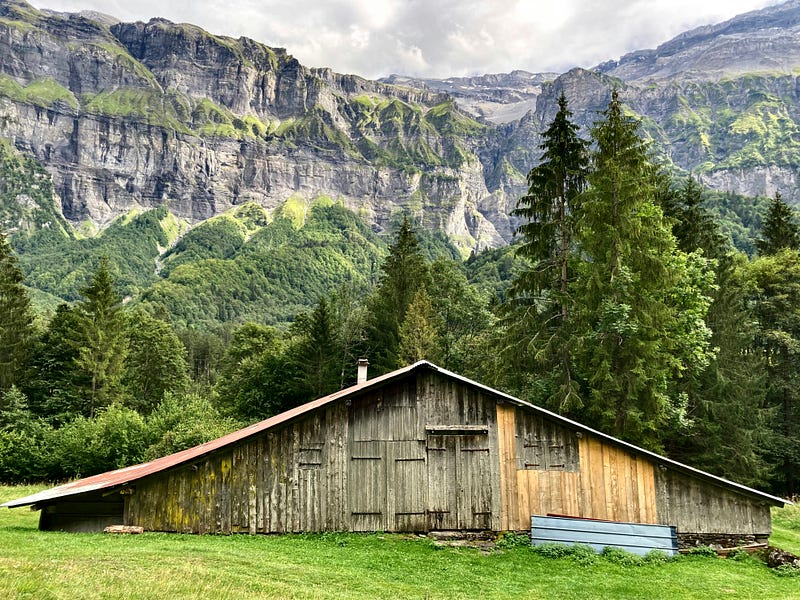
Tartiflette is entrenched in the culture of the Savoy region in the French Alps. It has become a staple comfort food cherished by locals. It brings visions of snow-capped peaks and picturesque villages in the French Alps. Despite the interwoven connection between Tartiflette and the Savoy region of France, the dish’s origin is unclear.
In researching many recipes, I discovered two things. Tartiflette evolved from a dish called Péla, and the cheese used in Tartiflette must be Reblochon.
Péla, a shepherd’s dish
To understand the origins of Tartiflette, we must delve into the rich tapestry of Savoyard culinary heritage. The mountainous region was home to farmers and shepherds who relied on hearty meals to sustain them through the harsh winters. Potatoes, onions, and cured meats were abundant, easy to transport, and kept well.
Péla is a rustic concoction of sliced potatoes, onions, and lardon (pork belly), cooked in a large frying pan until golden and crispy. Such a dish exemplifies the resourcefulness of the Savoyard people. They use simple, readily available ingredients to create a satisfying meal.
Even the origin of the name Péla is uncertain. Some locals claim it comes from a dialect spoken in the Savoy Region. Large frying pans or skillets are sometimes called “poêles” in French. An older Savoy region dialect could have pronounced this péla. The dish’s name refers to the large skillet used to cook the potatoes — a péla.
Tartiflette is a recent recipe.
Tartiflette emerged as a modern adaptation of Péla in the 1980s. The story goes that local cheese producers sought to boost the popularity of Reblochon cheese. As a creamy, semi-soft cheese made from raw cow’s milk, it was delicious when melted in savoury dishes. Inspired by the traditional Péla, local farmers devised a new recipe incorporating Reblochon as a central ingredient.
It was a familiar recipe since the only innovation was the addition of Reblochon cheese. Farmers layered the cheese atop a bed of sliced potatoes, lardon, and onions before baking it to golden perfection. The result is a decadent dish with earthy flavours of potatoes and onions and the creamy richness of melted Reblochon.
Despite its recent invention, Tartiflette has become a beloved classic. Locals cherish it for its heartwarming qualities and soul-satisfying taste. It has found its way onto the menus of bistros and brasseries across France. It has also gained a devoted following among food enthusiasts worldwide.
What is most interesting to me is how so many purists will insist on steadfast adherence to tradition. We are not talking about hundreds of years old traditions but less than fifty. Further, the only authentic tradition worth mentioning is the specific use of Reblochon. Everything else seems optional.
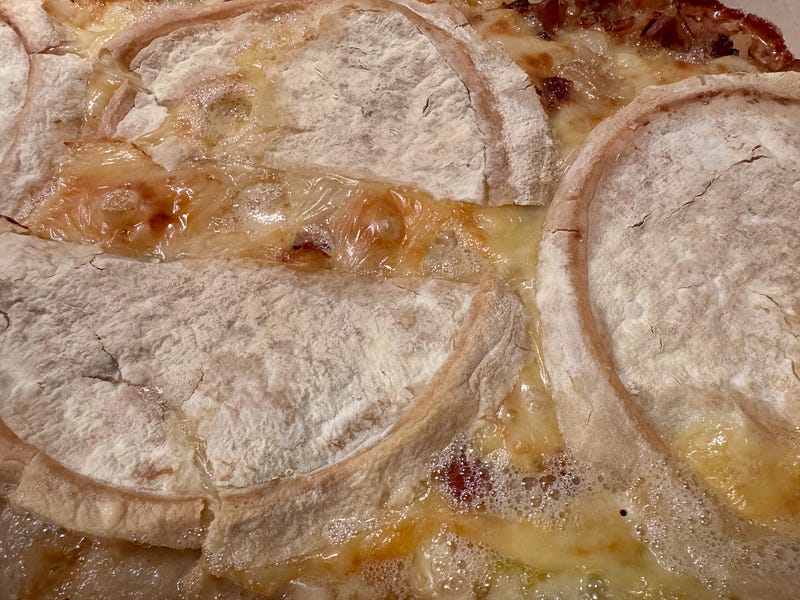
The recipe is unspecific, except for the cheese.
I embarked on a quest to recreate the authentic flavours of Tartiflette. The first step in this adventure was to get the finest ingredients. But, there was no true consensus on these ingredients.
For the potatoes, the only consensus was “potatoes that will hold their shape after baking.” Okay, I’ll get a waxy potato. For the onions, I found no consensus at all. One recipe even used shallots rather than onions. I made it easy on myself and went with yellow onions.
The discussion on lardon was interesting. Half the purists claimed it must be smoked. The other half claimed it must not be smoked… Everybody seemed confident — they swore on the absolute need for smoked or unsmoked lardons! Since I didn’t know better, I went with half and half. This was a brilliant decision and will be part of my recipe.
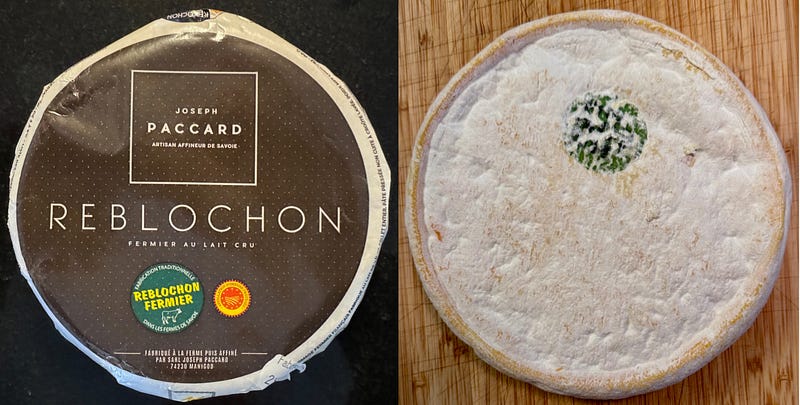
But the cheese must be Reblochon. Of this, there is no doubt. Further, the purists will say you must use “green-label” Reblochon. The French can be sticklers on many things when it comes to cuisine. I learned Reblochon cheese comes in green- and red-label varieties. These labels denote the methods of production and aging. Each factor contributes to the cheese’s final flavour profile and characteristics.
The green-label Reblochon, also known as Reblochon Fermier or farmstead Reblochon, is crafted on small-scale farms. Farmers use traditional methods passed down through generations. They source the milk from their own cows, ensuring freshness and quality. The cheese is then aged for at least three weeks, developing its signature creamy texture and nutty, earthy flavour.
In contrast, the red-label Reblochon, or Reblochon Coopératif, is produced on a larger scale by cooperatives. They source the milk from many regional farms. While still adhering to strict quality standards, the cheese may undergo a different aging process. The resulting cheese varies in flavour and texture compared to its green-label counterpart.
Where to find Reblochon?
Having never tasted Reblochon, I didn’t have an opinion on the red vs green issue, but I did like the idea of supporting farmsteads. Still, Reblochon is not something you find in a corner store in Canada. Cheddar, of course. Brie, sure. Camembert, probably. But Reblochon, I’d never seen before. I went to a few larger grocery stores with more extensive cheese selections but found nothing.
Then, on a Saturday morning, I went to my local Farmer’s Market and walked to the cheesemonger. Success! Not only did my new cheesemonger have Reblochon, but he sold only the green-label variety. He explained why he would avoid the red labels and warned me to check that the green label was on the cheese itself, not just the wrapping.
I was delighted to have discovered authentic Reblochon at a local Farmer’s Market. Many artisanal producers showcased their cheeses, fresh produce, and locally sourced meats here. As I wandered through the bustling market stalls, I couldn’t help but marvel at the vibrant tapestry of colours and aromas surrounding me.
It became clear I could get everything I needed for Tartiflette right in this place. Every ingredient was a bountiful harvest of my local landscape, from potatoes to savoury lardon and fragrant onions. Buying all the ingredients at the Farmer’s Market made this recipe feel even more rustic.
As I returned home with bags brimming with ingredients, I couldn’t help but feel a profound sense of gratitude for the Farmer’s Market. It gave me access to the finest local produce and a vibrant hub of community life. It is a place where farmers, producers, and food enthusiasts come together to celebrate the richness of the land and the bounty it provides. I can’t wait to see this place bloom in the spring.
Back in the kitchen
In the kitchen, I layered potatoes, lardon, onions, and Reblochon. I also thought about the journey that had brought me here, from the humble origins of Péla to the modern-day phenomenon of Tartiflette. Each ingredient bore witness to a culinary tradition that had stood the test of time, evolving and adapting yet remaining true to its roots. And now, this recipe is being made in my neck of the woods, in a city apartment building.
An aroma of bubbling cheese and crispy potatoes filled the air. I had embarked on more than just a culinary adventure. I was reminded that I had ventured on a journey of discovery — a journey of connection and appreciation for the simple joys of good food shared with loved ones.
So here’s to Tartiflette. It's a fantastic rustic dish. While it is not much to look at, it tastes terrific and is a spectacular meal on a cold winter night.


