avatarScot Butwell

Free AI web copilot to create summaries, insights and extended knowledge, download it at here

3715

Abstract

liked watching Star Wars. But when I discovered Tolkien, it made a massive impact on me, and then I got into playing Dungeons & Dragons as a teenager and devouring fantasy novels.</p></blockquote><p id="34ab"><b>Scot: </b>I read you like to write on trains. Why trains?</p><blockquote id="af20"><p>JF: I think you just need some time to think. In some ways, it’s more convenient for me to write at home, with a bigger screen and more comfort, coffee whenever I want it. But then someone can come to the door, the dog needs to go out, or my kids want help with something. On a train, there are few distractions. And when writing long novels, you need time to immerse yourself in the world of your book.</p></blockquote><p id="bce6"><b>Scot: </b>Your historical fantasy series is called <i>the Druid Stones Saga </i>(five books) and LitRPG series is called <i>Sparta Online</i> (third book on the way). How would you describe the plot of the <i>Sparta Online</i> series?</p><figure id="d5d3"><img src="https://cdn-images-1.readmedium.com/v2/resize:fit:800/1*z_2eFALQEqwJiwoCMOTHuQ.jpeg"><figcaption>Photo credit:<a href="https://jfdanskin.medium.com/"> JF Danskin</a> on Medium</figcaption></figure><blockquote id="405d"><p>JF: It’s set in a dystopian future where there is a military stalemate between two remaining nation-states. One decides to put young army recruits into a VR simulation of ancient Greece, because the Spartans were the greatest soldiers of history. So this kid called Troy finds himself training as a Greek hoplite, fighting mythical monsters. But before long, they realize something is very wrong. The training is brutal, all the previous recruits have vanished, and it appears that enemies have infiltrated the simulation. One reader described it as being like ‘Ender’s Game.’ Another reader said it’s like Harry Potter-meets LitRPG.</p></blockquote><p id="3219"><b>Scot:</b> I’ve never heard of the LitRPG genre. Can you explain it?</p><blockquote id="7ed9"><p>JF: Sure. LitRPG is short for a literary role-playing game, aka ‘role-playing game literature’. The books have the same things that you find in games like Dungeons and Dragons — stats, hit points, skill levels. Sometimes, a novel is based on a person playing a VR video game, and they somehow gets stuck in the game.</p></blockquote><blockquote id="3f61"><p>A lot of readers love LitRPG because you know what your protagonist can and can’t do. Usually, the protagonist in the story knows they are in a game and are forced to be strategic. Most LitRPG novels are fantasy or sci-fi, so if you love those genres, video games or table-top games, you’ll love this kind of book!</p></blockquote><p id="232c"><b>Scot:</b> I’m wondering if you’re a story nerd like me. When you write a novel, do you think about inciting incidents and climaxes to scenes? I’m writing a memoir and thinking about these while taking a walk. What about you?</p><blockquote id="de48"><p>JF: I do think about those things, but it becomes more of an instinct after a while. I think about the structure and key moments when I’m planning a novel. My planning is quite loose. I think about the main ‘acts’ of the story. But I don’t plan a book scene by scene. It’s more of an outline with room to improvise.</p></blockquote><blockquote id="8d29"><p>When I’m writing, it’s more of a feeling. You know in the back of your mind that you’re building towards something, but it takes patience. Sometimes you think, “Hey, this is getting too slow — we need some action!” Or perhaps a character hasn’t progressed, so you make something happen. Writing is problem-solving. You know where you want to get to, and you just have to find a way to get there.</p></blockquote>

Options

<figure id="c63d"><img src="https://cdn-images-1.readmedium.com/v2/resize:fit:800/1*1MKWNTp5OIqqB9BSs2BBIQ.jpeg"><figcaption>Author nephew photo: Scotland city life.</figcaption></figure><p id="935c"><b>Scot: </b>What can you tell us about<b> </b>the business side of writing a novel? Do you have an agent? How do you get paid? How do you promote your books?</p><blockquote id="0214"><p>JF: I’ve never tried to get an agent. Most LitRPG authors are indie-published. They publish directly to Amazon or other sites. The money then comes from sales and from page reads on Kindle Unlimited. In terms of promotion, the biggest methods are Amazon and Facebook adverts, and you have to promote on social media.</p></blockquote><blockquote id="7989"><p>If I was starting out today, I’d probably begin by writing a web-novel on sites like Royal Road where you post a story chapter by chapter. They have a lot of readers, and if people like your stuff, they will most likely buy your novel. Otherwise, a new novel on Amazon can just disappear among the thousands of others!</p></blockquote><blockquote id="6393"><p>Partly, success depends on having the right idea that’s hot right now. You need to be a fan of the genre, to communicate with the readers, and to be willing to drop one idea and try something different if your fantasy series isn’t taking off.</p></blockquote><figure id="19fc"><img src="https://cdn-images-1.readmedium.com/v2/resize:fit:800/1*eMFzNzQEZeY78oBsHjUIFA.jpeg"><figcaption>Author nephew photo: Chuch in Scotland.</figcaption></figure><p id="3f93"><b>Thanks for reading.</b></p><p id="6362">Introducing JF to <a href="undefined">Bernie Pullen</a>, <a href="undefined">The Sober Vegan Yogi</a>, <a href="undefined">Mike Butler</a>, <a href="undefined">Angie Mangino</a>, <a href="undefined">Laurel B. Miller</a>, <a href="undefined">Maria Rattray</a>, <a href="undefined">Ira Robinson</a>, <a href="undefined">Gerald Sturgill</a>, <a href="undefined">Mahein Kazi</a>, <a href="undefined">Belcairn</a>, <a href="undefined">Evon</a>, <a href="undefined">Cristina Cattai</a>, <a href="undefined">Taylor Davidson, The Jaded Orator</a>, <a href="undefined">Sabrina Johnson</a>, <a href="undefined">Kristen Stark</a>, <a href="undefined">Cliff Hightower</a>, <a href="undefined">Annie Trevaskis</a>, <a href="undefined">Adrienne Beaumont</a>, <a href="undefined">PJ Kaplan</a>, <a href="undefined">Aimée Gramblin</a>, <a href="undefined">Marilyn Glover</a>, <a href="undefined">Lu Skerdoo</a>, <a href="undefined">Jules Weldon</a>, <a href="undefined">Jane Kelley</a>, <a href="undefined">Devette Lindsay</a>, <a href="undefined">Nicole Dake</a>, <a href="undefined">Linda Ng</a>, <a href="undefined">Bridie Dillon</a>, <a href="undefined">Debika Kumari</a>, <a href="undefined">Beth Hankoff</a>, <a href="undefined">Ginger Cook</a>, and <a href="undefined">Susan Wheelock</a>.</p><div id="55ec" class="link-block"> <a href="https://readmedium.com/hi-im-scot-butwell-c08e6211ce2e"> <div> <div> <h2>I started a YouTube Writing Channel. Here’s Why You Should Subscribe.</h2> <div><h3>Do you want to improve at storytelling?</h3></div> <div><p>medium.com</p></div> </div> <div> <div style="background-image: url(https://miro.readmedium.com/v2/resize:fit:320/1*RqMqBxha0WeLvuBBBCmUZA.jpeg)"></div> </div> </div> </a> </div><p id="f581">New to Medium? For $5 a month, you get access to thousands of articles. Use my <a href="https://medium.com/@butwellscot/membership">referral link </a>to join, and I get a small bonus.</p></article></body>

QuickTalk Friday Interview Series

Writing Fantasy Novels On a Train

Talking to JF Danskin about his process
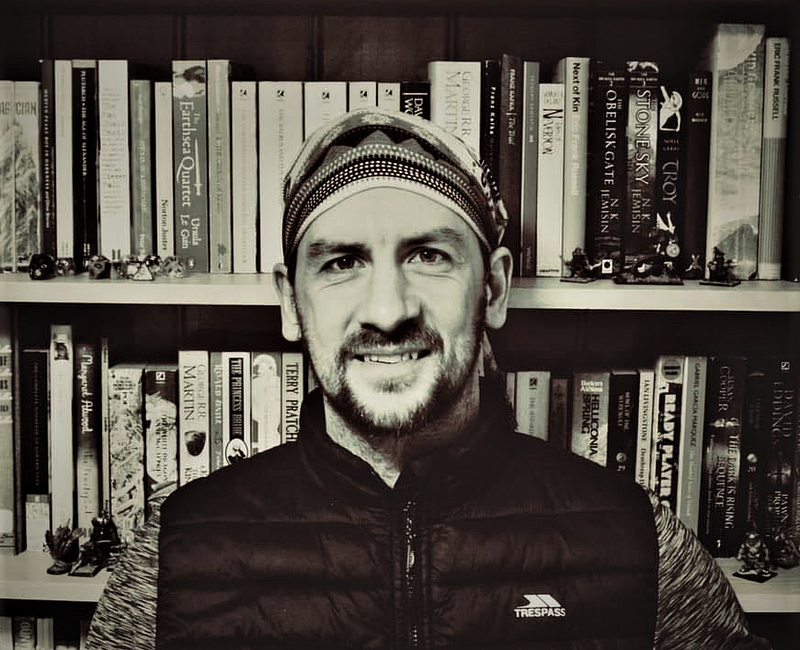
Photo credit: JF Danskin.

I’m having breakfast and JF Danskin is eating dinner.

That’s because there is an eight-hour time difference between us.

It’s 10 a.m. in California.

And 6 p.m in Scotland.

And that’s the wonderful thing about Medium. We’re making friends with other writers from all over the world and interacting across time and space as we share slices of ourselves and read and comment on each other’s stories.

Which is a good introduction to JF Danskin.

JF is a fantasy or sci-fi writer who has written seven novels, so he is comfortable switching from Ancient Greece to the dystopian future.

Do you have a dream of writing a novel? Then this story is for you.
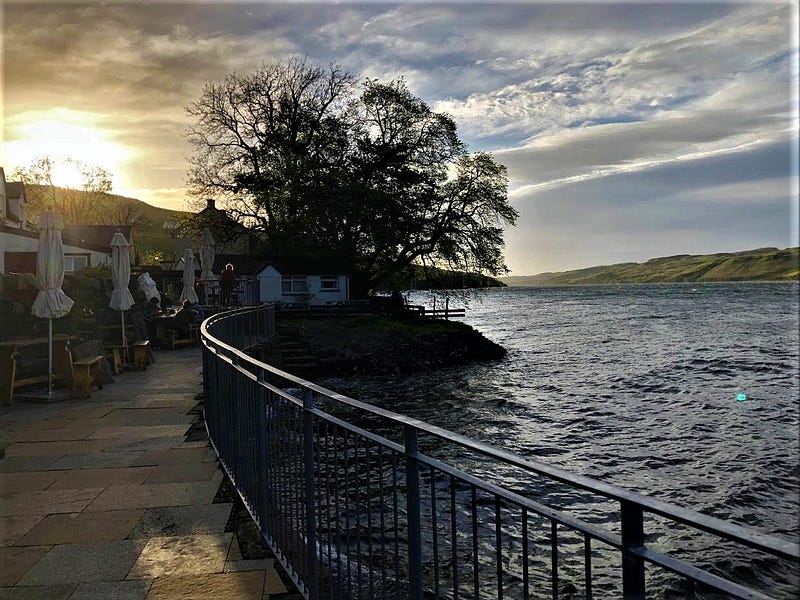
Author’s nephew photo

Scot: How do you write seven novels while holding a job as a university academic and having a family with a wife, kids, and a Labradoodle?

J.F. Great question, Scot. Honestly, writing a novel isn’t for everyone. Most people have a day job, and then you just need to ask yourself, “Can I find an hour a day to write on top of everything else that I do? Or even half an hour a day, on average?” The key is you need to make a committment to your writing.

Scot: So you just need 30 minutes or an hour a day to write a novel?

JF: Most people think you need to have five hours free at a time. For me, an hour is enough to get into the flow of writing, though it’s partly a matter of practice.

Put it this way — if you can write a thousand words in an hour and you can spend an hour a day writing, that is over 300,000 words in a year. That would be two novels. So it comes down to committing and being efficient with your time.

Scot: You sound efficient, but I imagine it’s a struggle writing a novel …

JF: NaNoWriMo helped me gain confidence. It’s the global challenge where you try to write a 50,000-word novel in one month. My first year I went for something futuristic. It wasn’t good, but it helped me to get my writing speed up and to better understand how to structure and edit a novel. I did that a few times, and on my third try when I got more confidence, I started a fantasy novel.
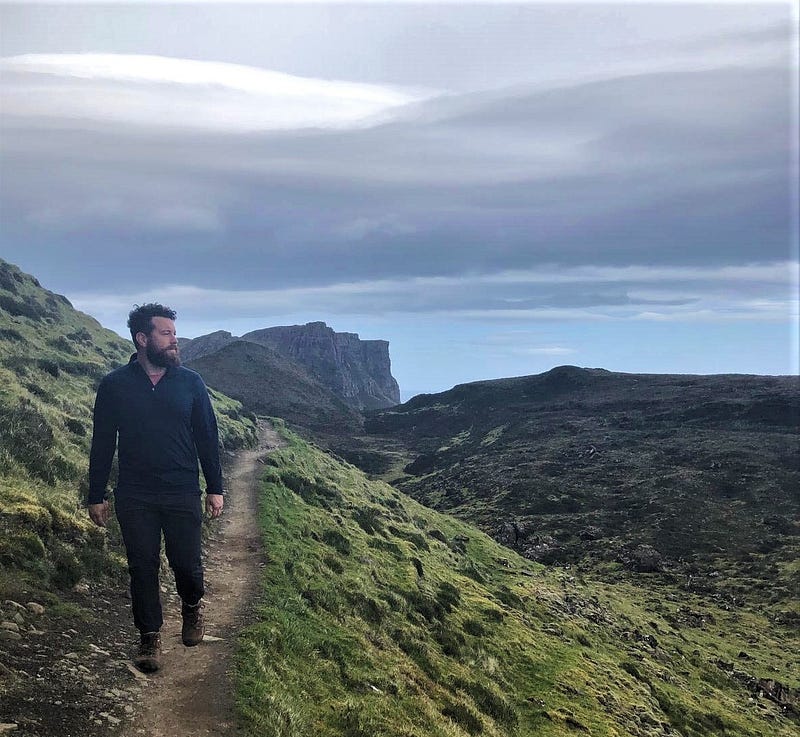
Author photo: Scottish-looking JF Dappledanger-nephew Reese

Scot: I’m guessing you grow up watching Star Wars since you’re a fantasy writer or were you born with a fantasy writing gene?

JF: A fantasy gene, that’s an interesting idea! I don’t know about that exactly, but I was always interested in fantastical stories. As a kid, it began with fairy tales. I liked Puss in Boots and Jack and the Beanstalk. Those are fantasy stories.

I read ancient Greek myths and sci-fi. I liked watching Star Wars. But when I discovered Tolkien, it made a massive impact on me, and then I got into playing Dungeons & Dragons as a teenager and devouring fantasy novels.

Scot: I read you like to write on trains. Why trains?

JF: I think you just need some time to think. In some ways, it’s more convenient for me to write at home, with a bigger screen and more comfort, coffee whenever I want it. But then someone can come to the door, the dog needs to go out, or my kids want help with something. On a train, there are few distractions. And when writing long novels, you need time to immerse yourself in the world of your book.

Scot: Your historical fantasy series is called the Druid Stones Saga (five books) and LitRPG series is called Sparta Online (third book on the way). How would you describe the plot of the Sparta Online series?
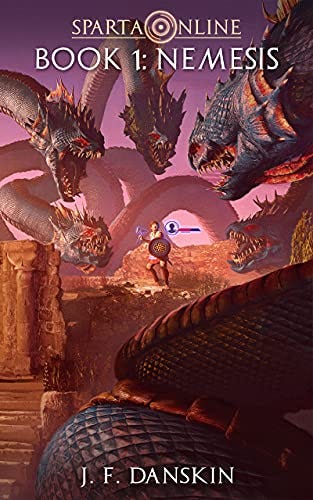
Photo credit: JF Danskin on Medium

JF: It’s set in a dystopian future where there is a military stalemate between two remaining nation-states. One decides to put young army recruits into a VR simulation of ancient Greece, because the Spartans were the greatest soldiers of history. So this kid called Troy finds himself training as a Greek hoplite, fighting mythical monsters. But before long, they realize something is very wrong. The training is brutal, all the previous recruits have vanished, and it appears that enemies have infiltrated the simulation. One reader described it as being like ‘Ender’s Game.’ Another reader said it’s like Harry Potter-meets LitRPG.

Scot: I’ve never heard of the LitRPG genre. Can you explain it?

JF: Sure. LitRPG is short for a literary role-playing game, aka ‘role-playing game literature’. The books have the same things that you find in games like Dungeons and Dragons — stats, hit points, skill levels. Sometimes, a novel is based on a person playing a VR video game, and they somehow gets stuck in the game.

A lot of readers love LitRPG because you know what your protagonist can and can’t do. Usually, the protagonist in the story knows they are in a game and are forced to be strategic. Most LitRPG novels are fantasy or sci-fi, so if you love those genres, video games or table-top games, you’ll love this kind of book!

Scot: I’m wondering if you’re a story nerd like me. When you write a novel, do you think about inciting incidents and climaxes to scenes? I’m writing a memoir and thinking about these while taking a walk. What about you?

JF: I do think about those things, but it becomes more of an instinct after a while. I think about the structure and key moments when I’m planning a novel. My planning is quite loose. I think about the main ‘acts’ of the story. But I don’t plan a book scene by scene. It’s more of an outline with room to improvise.

When I’m writing, it’s more of a feeling. You know in the back of your mind that you’re building towards something, but it takes patience. Sometimes you think, “Hey, this is getting too slow — we need some action!” Or perhaps a character hasn’t progressed, so you make something happen. Writing is problem-solving. You know where you want to get to, and you just have to find a way to get there.
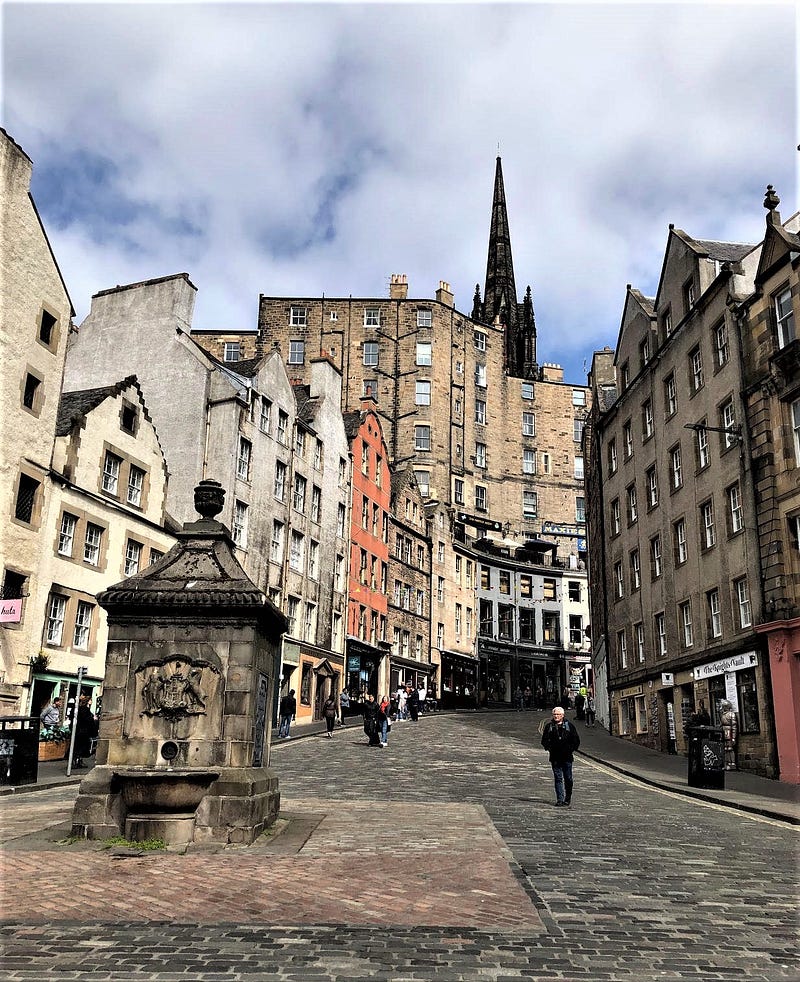
Author nephew photo: Scotland city life.

Scot: What can you tell us about the business side of writing a novel? Do you have an agent? How do you get paid? How do you promote your books?

JF: I’ve never tried to get an agent. Most LitRPG authors are indie-published. They publish directly to Amazon or other sites. The money then comes from sales and from page reads on Kindle Unlimited. In terms of promotion, the biggest methods are Amazon and Facebook adverts, and you have to promote on social media.

If I was starting out today, I’d probably begin by writing a web-novel on sites like Royal Road where you post a story chapter by chapter. They have a lot of readers, and if people like your stuff, they will most likely buy your novel. Otherwise, a new novel on Amazon can just disappear among the thousands of others!

Partly, success depends on having the right idea that’s hot right now. You need to be a fan of the genre, to communicate with the readers, and to be willing to drop one idea and try something different if your fantasy series isn’t taking off.
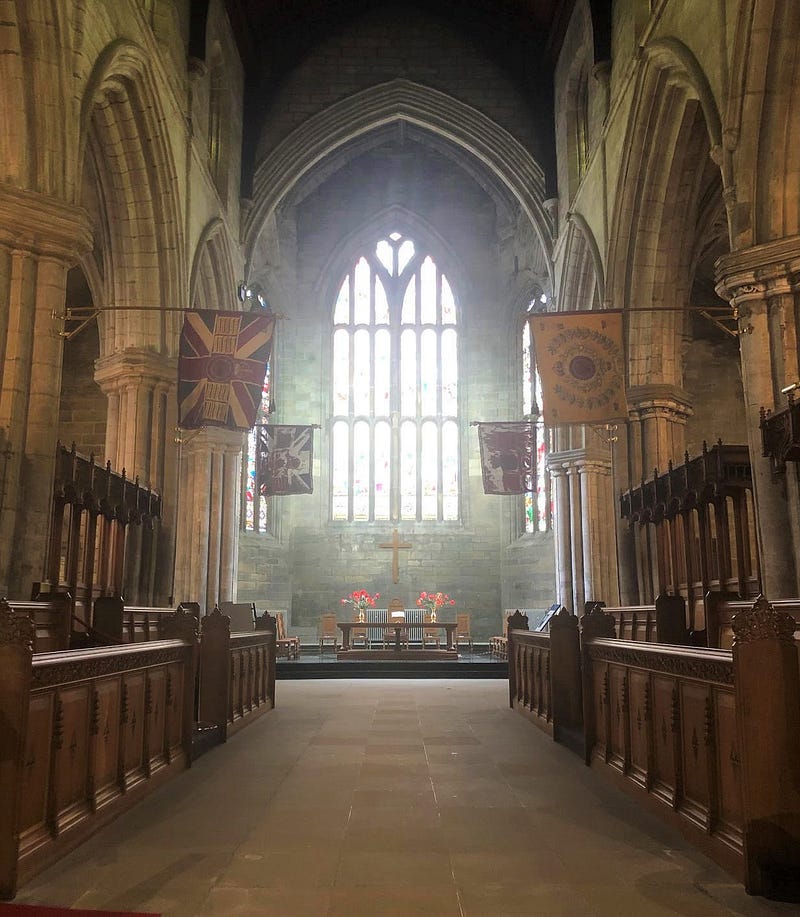
Author nephew photo: Chuch in Scotland.

Thanks for reading.

Introducing JF to Bernie Pullen, The Sober Vegan Yogi, Mike Butler, Angie Mangino, Laurel B. Miller, Maria Rattray, Ira Robinson, Gerald Sturgill, Mahein Kazi, Belcairn, Evon, Cristina Cattai, Taylor Davidson, The Jaded Orator, Sabrina Johnson, Kristen Stark, Cliff Hightower, Annie Trevaskis, Adrienne Beaumont, PJ Kaplan, Aimée Gramblin, Marilyn Glover, Lu Skerdoo, Jules Weldon, Jane Kelley, Devette Lindsay, Nicole Dake, Linda Ng, Bridie Dillon, Debika Kumari, Beth Hankoff, Ginger Cook, and Susan Wheelock.

New to Medium? For $5 a month, you get access to thousands of articles. Use my referral link to join, and I get a small bonus.

Interview
Writing
Books
Reading
Nonfiction
Recommended from ReadMedium