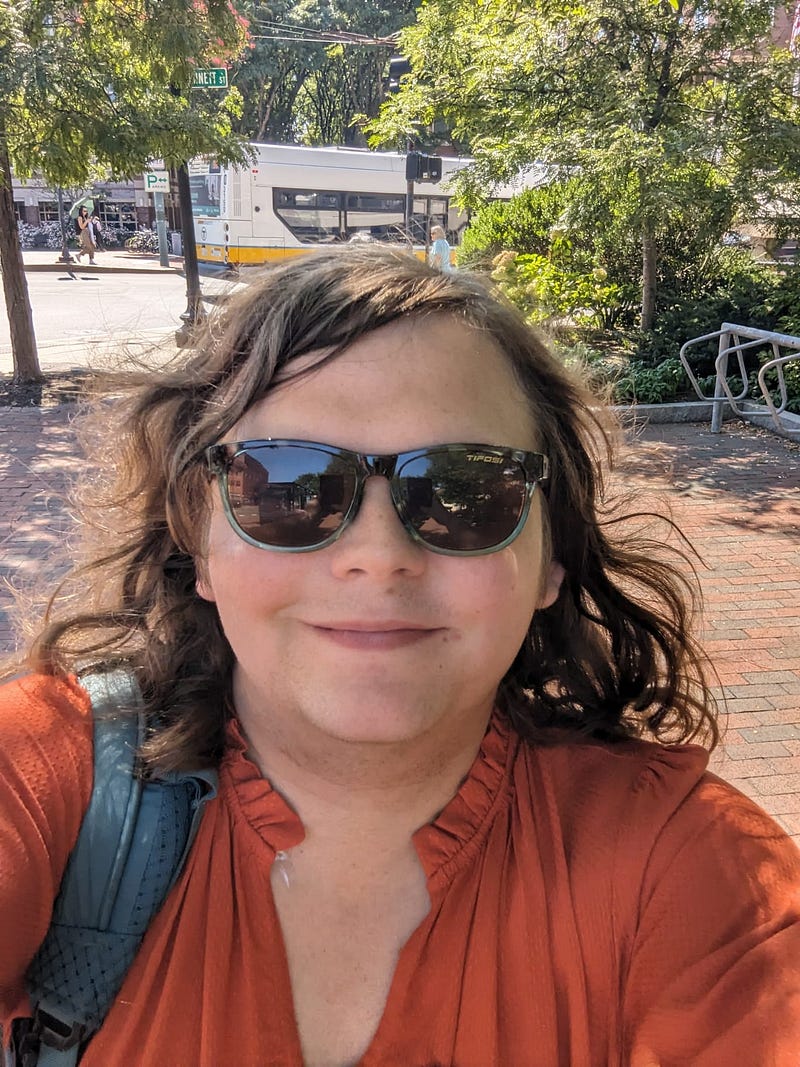
From Psych Ward to Grad School
Dear Reader,
I have made it back to the classroom! I’m not really sure how, but I am here. Despite fitting into a sea of identical Macbooks, stickered-up water bottles, and grad school dishevelment, I feel like the most obvious, prominent imposter. Surely they can see that I don’t belong? Surely they can see what has happened to me? Do they know? Yet this is a big moment, right? I haven’t been able to ‘feel’ it yet, but I think it must be. I have tried to absorb how enormous it is, and perhaps feel some form of satisfaction or pride, but my mind still isn’t there yet. And that is okay (#RadicalAcceptance). I logically know, though, that this is a big deal and that I should be proud of it. I never expected to be back, (and at times I never wanted to be back), but here I am, in the classroom. Given that I haven’t wanted to be alive for much of the year, and for most of today, I still wonder if this might just be the greatest achievement of my life. It is tempered by my constant suicide/self-harm ideation, but I think it means something. I hope to find meaning in it one day.
I had quite a few sessions of ECT while in the psychiatric unit at McLean, and whilst I think it helped, it was (and is) not a cost-free treatment. It affected my memory and made me cognitively slower, contributed to my medication-induced brain fog, and I’m confident that it didn’t exactly help my left-sided tremor either. In the before-times, my mind was usually razor-sharp. I did cool, impactful work, and the sharpness of my mind made everything possible. I was proud of it. The effects of ECT were thus so, so noticeable to me and my spouse. While in the hospital, my memory and cognitive slowness could be so severe that I couldn’t remember what I had done the day before, that I could not read a book, and that I couldn’t even watch a show. I was worried for the longest time that my mind would never return to its former state and that it would impede my ability to study and work. I worried that my life had drastically changed. At the same time, I didn’t want to be alive, of course — but I could see that whatever my future looked like had changed. In truth, ECT and medication still have some impact on my mind. It isn’t quite as sharp, my memory isn’t quite as good as it used to be, and sometimes it freezes up. These moments are thankfully increasingly fleeting, but they are still part of my day-to-day life. And that is okay, too.
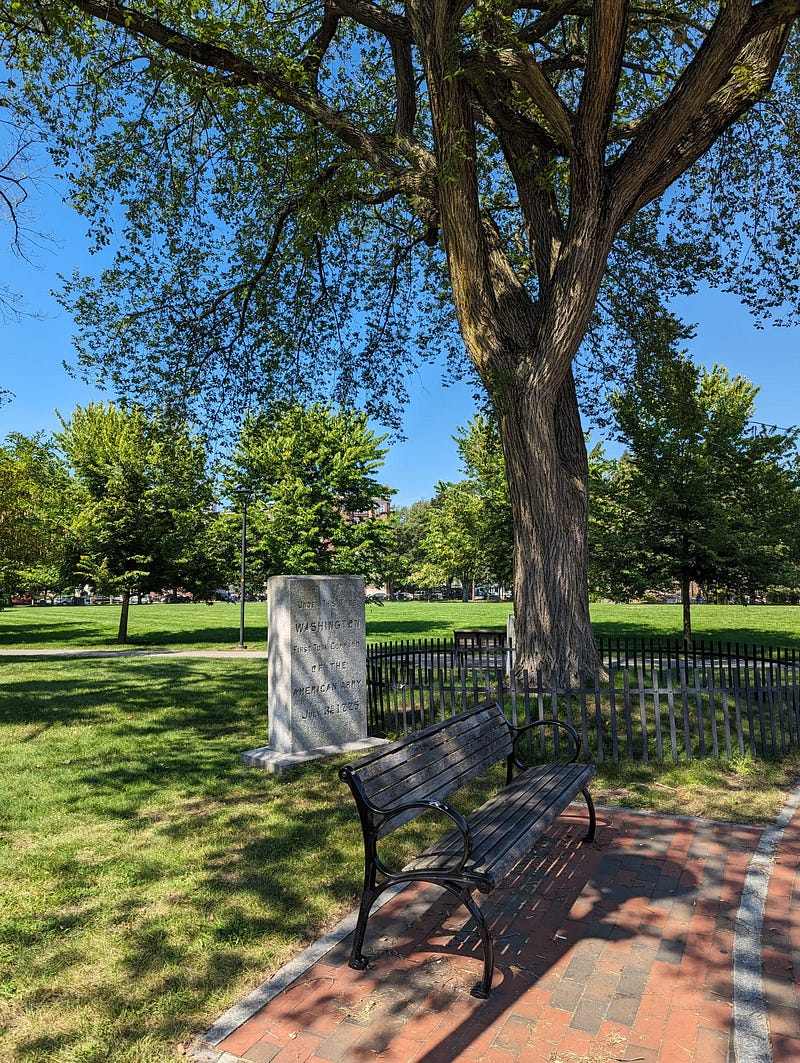
I’ve been burying the lede a bit, Dear Reader, because when I say I am ‘back in the classroom’, I am underplaying where I am and what I am doing. For complicated reasons, I have little affinity with my home grad school at the moment, and so in thinking about how this is my last semester, I decided to try and cross-register to other schools where I could start afresh and be in a different, if not better, environment. I thus decided I would try and cross-register for classes at Harvard, which is (bizarrely) an opportunity from my home institution. It is always quite an uncertain thing because Harvard students obviously get priority and it is unclear if there will be any space for cross-registrants. In a wonderful twist of fate, I was able to cross-register for 3 classes and thus comes something that feels powerful to put into words and write here for posterity.
I somehow went from the Psych Ward to taking classes at Harvard Law School and Harvard Kennedy School.
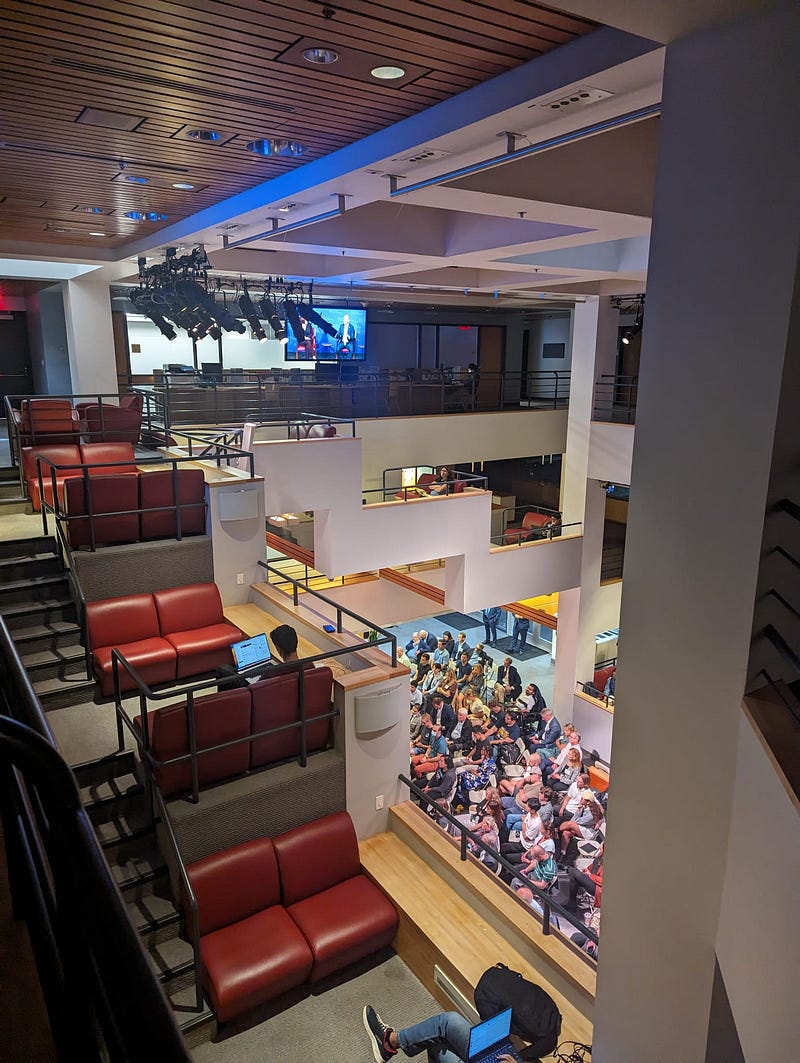
Not only that, but despite everything that has happened, despite the effects of ECT and medication on my brain, I am still (somehow) competitive in class. HLS must be one of the most challenging academic environments in the world, and I am still hanging in there with the best of them. I obviously don’t expect to be near the top of the class, but I am delighted to not be out of place. I think being in a different environment was definitely the right call, and somehow even the act of having to drive a fair way into Cambridge to class has helped me really commit to this stage of my recovery journey. I know that I am a different person to the one that started classes (or tried to) in January. I feel much older and wiser, for I have been into the belly of the whale, and I am still here. Take that (or thank you), Jonah.
One of my classes that isn’t at Harvard is on Internal Conflicts, and I didn’t realize that it would be on Salafi Jihadism (I bet you never thought you would read that here) and Far-Right Extremism until my first class. Dear Reader, I also didn’t realize that Far-Right Extremism, for obvious trans reasons, would hit uncomfortably close to home. I always try to foreground questions and arguments I want to make in class in context or in literature, but I confess I have already made a purely emotional contribution to the classroom just two sessions in. In a discussion of whether hate speech is violence, I stated that it FEELS like violence and that when tied to increased suicide rates, I believe it is violence (I was too emotional to make a more sophisticated argument). What I want to say, at some point in the semester, is to really share my insights from my life this year into that question. I want them to understand and to feel — to really, really feel — what those consequences are. I don’t want this to be left as a dry, academic concept with no lived experience of what it is. I want them to know the consequences, the pain, and the hurt. I need them to know.
I want them to know how far-right, anti-transgender extremists and their hate speech effectively took me to the ER because I was going to commit suicide. I want them to know that it kept me in a secure psychiatric hospital for 110 days straight, and how many restrictions and challenges I faced in there. I want them to know that it took me to the darkest bottom of the abyss, and there I had to dance with death. I want them to know that it is the reason I am scared to walk from my car to Harvard, why I am scared to go shopping alone, and why I am scared to even sit in that classroom. I want them to know that it makes me want to die, every. single. day. I want them to know how normalized that is within the trans community, and of those trans people I am proud to have known in mental health settings. We are survivors, against all odds. I need them to know that it hurts, that it has consequences, and I want to show them what that looks like. I want them to understand that trans suffering should never be considered normal. I think I would be betraying myself and my experience if I didn’t do that. Sometimes you have to represent, y’know? Maybe it will even be cathartic.
Finally, Dear Reader, there is always another side to my life. I am in class and that is exciting, but I am only surviving and not thriving. The suicidal ideation stalks me in the dark and light of every day, and sometimes it is overwhelming. I have had to use my mental health kit in most classes, using ice packs, taking medication, and using extremely sour warheads candy to cut through challenging dissociation. I may have left the psych ward and now be able to study at grad school, but I am not that far removed from it. The painful duality of my life is that I have that immense academic privilege, yet I also want to die with every hour that passes. I exist between the fierce ocean waves and the rocks, the oil and the water, the darkness and the light. I exist in academia, yet I die in life. The fragility of the tightrope I walk is illustrated by a self-harm relapse and a suggestion from one of my mental health care providers that they send a team to do a crisis assessment on me. Perhaps involving the police or EMS, that would surely have been a one-way trip back to inpatient psychiatric care. I refused it, and it didn’t happen, and I am still okay. I just want you to understand just how fragile my recovery feels. This is my semester, if I can keep it.
So, Dear Reader, that is me. I am doing the work, showing up to class, and using all kinds of skills and pills to (just about) keep me safe. I am reminded of a mantra I adopted when in inpatient care, trying to force myself to go to group sessions: ‘if nothing else, I show up’.
Until next time.