
From Masturbation to Morphine — History’s Weirdest Cures for Hysteria
In case your uterus runs away…
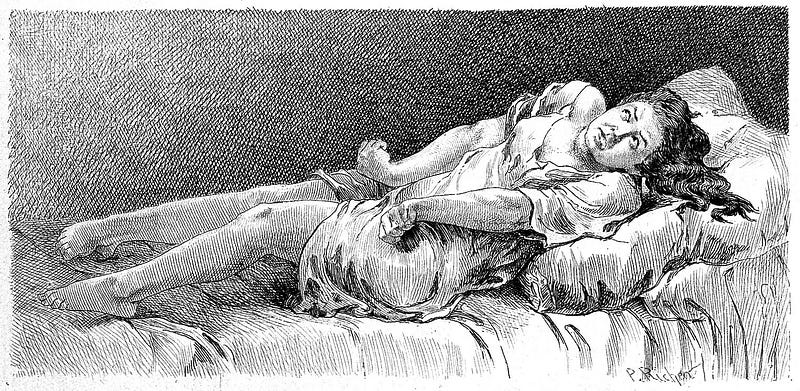

Call a woman “crazy” today, and it is guaranteed to make her…well, crazy. That’s partly because the treatment for female hysteria has a painful and torturous past.
The first diagnosis of hysteria dates back to ancient Greece. (Hystera is the Greek word for “womb.”) In later centuries, it became a catch-all diagnosis for seizures, depression, pelvic pain, and women acting up (disobeying your husband.)
The nonsense began with the father of medicine, Hippocrates. He believed a woman’s “female seed” polluted her delicate organs unless it found an um…release. All that pent-up lady juice just sat around fermenting in her womb, and if it didn’t find its way out…she went batty.
Galen didn’t help matters. He dissected a bunch of pigs and found the secret to female hysteria — a wandering uterus. Galen believed a woman’s uterus “wandered” throughout her body, causing mischief. One minute your uterus was in place, and the next minute…boom, it had packed its bag for a seaside vacation elsewhere.
By the Victorian period, women suffered through mayhem and medical malpractice because doctors simply didn’t understand how our lady bits worked. The following were some of the most creative cures for female hysteria.
Scents, leeches, and hanging upside down
According to the ancient Greeks, the only way to keep that rogue uterus from moving around was to lure it back into place with the correct scents. If the uterus had moved upwards, place horrible smells near the women’s nostrils to push the uterus downward. If the uterus had moved downwards, douse her vulva with sweet smells to get the uterus to move upward. The uterus could basically be baited like a wild bear.
Other women were hung upside down so that gravity could work its magic. If that didn’t work, leeches were applied to her labia to suck out the impure seed.
Sex…and lots of it
Hippocrates said, “First, do no harm,” and he meant it. This is the only cure on this list that sounds like good ole’ harmless fun.
Hippocrates’ goto cure for female hysteria was having lots of sex. For this reason, Hippocrates worried the most about widows, nuns, and spinsters. If they let their seed fester inside them, then they risked dangerous vapors infecting their brains. Basically, not orgasming caused craziness. (Kinda true.)
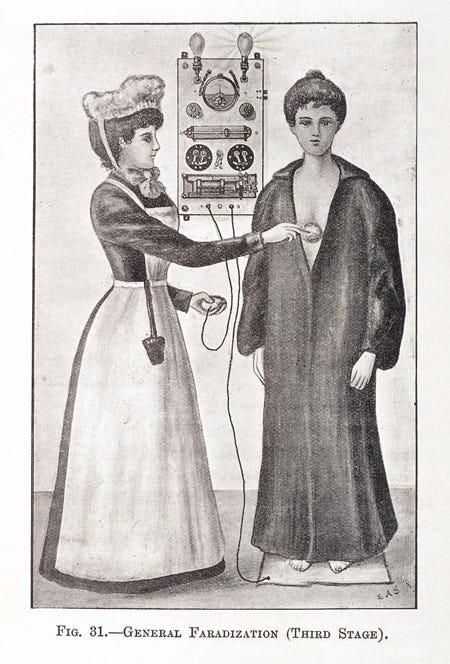
Masturbation
If you couldn’t cure your crazy lady with sex, the next best thing was to diddle the madness out of her. In Hippocrates’ day, doctors and midwives used “gentle massage” to release the sex hounds trapped inside.
Then the Victorians came along and wrecked everyone’s fun. Suddenly, piano legs were immodest, and women had to “Lie back, and think of England.” To the Victorians, most evils of the mind were caused by evils of the loins.
They partly blamed it on all those romantic novels that drove young, impressionable girls wild with passion. At the time, it was believed “good” women never got aroused (and apparently never read a book). In contrast, “bad” women had sexual appetites that destroyed them.
The 1899 Merck Manual recommended “uterine massage” for nervous conditions like hysteria. Thus, helping women reach orgasm became a cash cow for many doctors. To start, it was an easy treatment to administer (other than wrist pain). Second, most women were never going to be cured of their libido, so they kept on coming back for more.
Wilhelm Riech was one of the most enthusiastic proponents of masturbation to cure hysteria. Riech was very popular with his female patients because he stimulated them to “paroxysm.” (Victorian doctors did not use the word orgasm.)
In the early 1880s, Dr. Joseph Mortimer Granville patented the first electromechanical vibrator, supposedly to prevent those diddling doctors and midwives from getting wrist cramps.
Some historians have questioned the role of the vibrator in curing hysteria, but the advertising clearly uses euphemisms that cannot be ignored. Most advertisements tout claims like the one below. “With the strength of the perfect man,” ladies could cure their “weak nerves.”
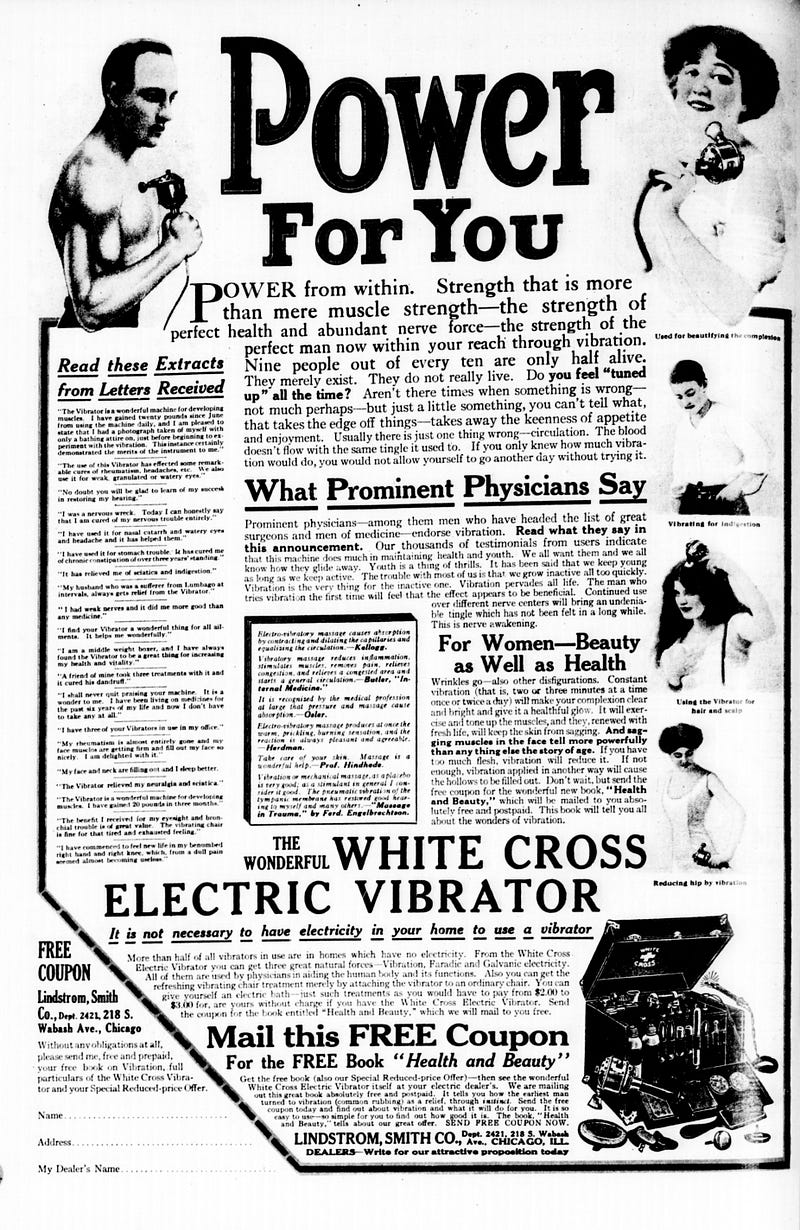
Whether or not these vibrators were being used on body parts other than the face, stomach, and head can be left to our imaginations. (But…they so were.)
What is certain is that when the porn industry enthusiastically adopted vibrators, this cure fell out of favor with the medical community.
Hysterectomy
By the early twentieth century, hysterectomies were the panacea for almost every female complaint. Got pelvic pain? Cut the uterus out. Got migraines? Bye-bye uterus. Got hysteria. The uterus definitely has to go.
The first vaginal hysterectomies were performed in ancient times and continued into the middle ages. Hysterectomies were most commonly performed to treat endometriosis — a painful condition in which tissue forms outside of the uterus, usually inside the pelvis, or in the abdominal cavity.
In the pre-antibiotic age, these surgeries didn’t go so well. Doctors sometimes dug out endometriosis lesions with their dirty fingernails. They had a 70% death rate, usually due to sepsis.
The most influential physician to cut into women’s privates was the father of modern Gynecology, J. Marion Sims. Sims believed ovaries must be removed because a “women’s entire psychology was governed by her sex organs.”
He performed these first experimental oophorectomies without anesthesia and only on Black women. (Sims and other physicians believed Black women did not feel pain, so anesthesia was unnecessary.)
Even today, Black women are two to three times more likely to have recurring fibroids as white women and are twice as likely to have their uterus removed to treat those fibroids.
Clitorectomy
Yes, a clitorectomy is exactly what you think it is — removal of the clitoris.
By the nineteenth century, leading gynecologists such as E. W. Cushing taught that you could cure hysteria by removing the clitoris. They had only one problem — they couldn’t find it.
So they ended up cutting portions of it out and sometimes mutilating women to the point of incontinence. Most women reported that their libido remained after the procedure, most likely because surgeons weren’t getting the whole enchilada.
By the 1920s, Sigmund Freud identified paroxysm as a sexual climax. Masturbation was “self-abuse” that caused female hysteria, neurasthenia, and addiction. But because masturbation was hard to stop, physicians continued to recommend female castration.
An influential proponent of clitorectomies was Dr. John Harvey Kellogg — cofounder of Kellogg’s cornflakes. He mostly recommended sunshine, cold baths, and exercise for young girls caught masturbating. Caught too many times…he advised parents to have the clitoris removed.
Are you squeezing your legs together yet?
“The scalpel is the greatest proof of the failure of medicine.”- Gabriel García Márquez
Lobotomy
By the 1940s and 1950s, clitorectomies were no longer en vogue, mostly because it didn’t appear to be working. But when cutting out a woman’s genitals didn’t do the trick, surgeons grabbed their ice picks and whacked at their brains.
The procedure, called a lobotomy, removed the prefrontal lobe to treat mental illness. In 1949, over 5000 lobotomies were performed, and Antonio Egas Moniz was awarded the Nobel Prize for inventing the operation.
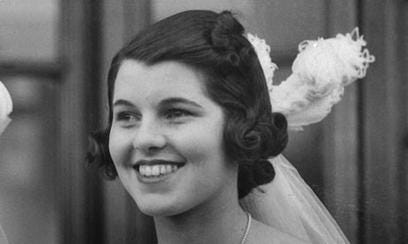
One of the most famous lobotomy patients was John F. Kennedy’s sister, Rose Kennedy. When Rose was born, her doctors diagnosed her with a “uterine accident.” (Most likely a learning disability.) Rosemary grew into a rebellious teen with a temper and a proclivity for late-night tavern romps.
The patriarch of the family, Joe Kennedy, wasn’t having it. Rose’s scandalous behavior threatened to destroy the family’s political aspirations. So Joe sent his daughter to have a lobotomy (it is unclear if Rose consented.) After the procedure, Rose was no longer a rambunctious teen. She was a complete vegetable.
Lobotomies were performed on many hysterical women with similar disastrous side effects.
Morphine
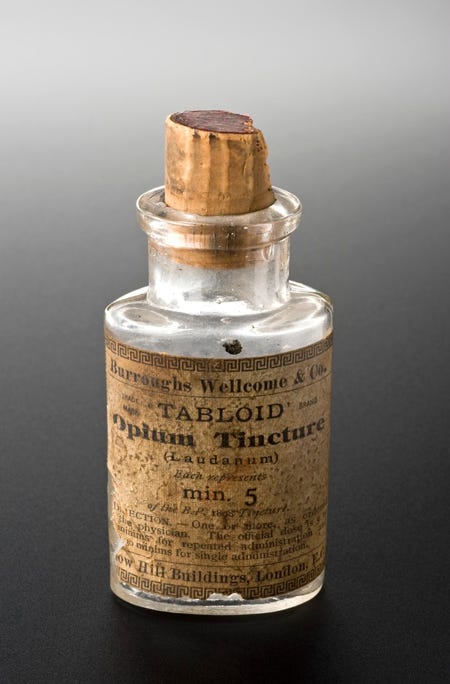
When sex, masturbation, and the knife failed, the only recourse was to drug women up. Morphine or laudanum became was of the most popular cures to treat female nervousness. Mary Todd Lincoln used laudanum — a tincture of alcohol and opium — to treat nervousness and quickly became addicted.
Of course, no one understood how addictive opiates were because they were too busy chasing their tales, trying to ban alcohol. By the end of the nineteenth century, two out of three morphine addicts were women. It wasn’t until 1905 that Congress banned the use of opium in medication.
Hysteria was a disease that afflicted only white, upper-class women. (Men suffered from insanity, not hysteria.) It was a disease that classified women for centuries as incapable of controlling their minds or bodies. The American Psychiatric Association did not even drop the term “hysteria” as a disorder from the Diagnostic and Statistical Manual of Mental Disorders until 1952.
Even today, women are diagnosed with mental illnesses such as Borderline Personality Disorder 75% more often than men. And no one knows why.
Today, I cringe when I hear the word “hysteria” because it has such a sordid past. So next time you have the urge to call a woman hysterical, remember the ladies who suffered through smelly vulvas, quack cures, inappropriate touching, and the irreversible scalpel.


#/media/File:White_Cross_Electric_Vibrator_ad_NYT_1913.jpg)
