
From Many, One
Towards Equity for All
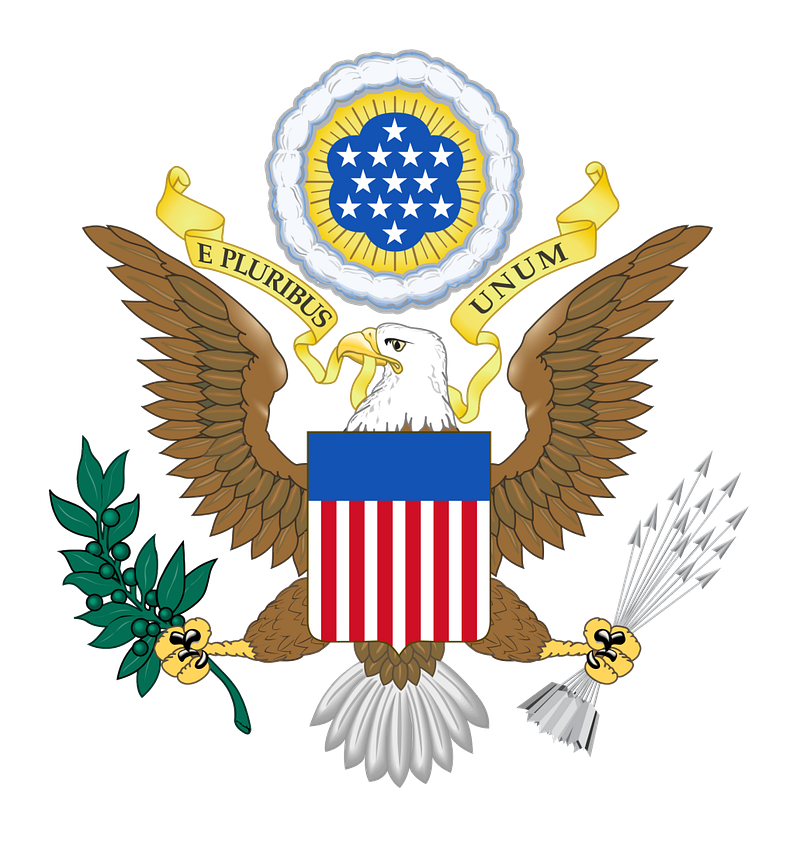
John Adams, Benjamin Franklin, and Thomas Jefferson proposed that the Latin Phrase “E Pluribus Unum” be embossed on the seal of The United States of America in 1776. Adopted by Congress in 1782, the motto was originally intended to reflect the unity of the original 13 states (Foster, 2011). Today it reflects a national concern — the need to unite as one nation of people for the good of all citizens.
Throughout the past two hundred forty-five years our nation has had cause to revisit this declaration in several contextual meanings. International migration has resulted in a myriad of racial, ethnic and religious variations in our population.
E Pluribus Unum, in this context, speaks to the process of positive enculturation and multiculturalism.
However well-intended, this Latin phrase has faced serious challenges. There are among us some that interpret “from many, one” to mean that the “many” people who participate in our culture must conform to the “one” understanding of mores and values. They support ideals of racial, ethnic and social intolerance. They vie for power in our democracy and seek to influence legislative policy.
Historically, their efforts have lead to racial, ethnic, social and economic subjugation of millions of Americans. Their greed and quest for power has metaphorically placed their knees on the necks of poor and woking class Americans. Their narrow-minded understanding of “From many, one” for all Americans has resulted in an exacerbated racism and bigotry resulting in economic and social partitioning ostensibly so during the last Presidential administration.
Similarly, among the Abrahamic Faith groups, differences in worship practices have superseded the myriad on commonalities. So today, we are thoroughly divided. But all is not lost.
In 1956 Congress adopted a new National Motto, “In God We Trust!” At the height of the Cold War and at a time when Communism’s secularist ideals were gaining world-wide support, American legislators embraced the need to put Faith in God above all else (Foster, 2011).
Our Creator has said, “Let there be a group among you who call one another to goodness, encourage what is right, and forbid what is evil — it is they who will be successful” (Qur’an 3:104).
So, if we cooperatively and collectively live by our National Motto, “In God We Trust,” the efforts of those individuals that are intolerant and divisive will not prevail. A great challenge looms before us and we must face it together. We can see the pendulum of change swinging from domination toward social justice. These changes, initiated by our recently elected Executive leadership are moving our national’s moral compass toward equity for all.
Works Cited
Foster, T., 2011. “In God We Trust” or “E Pluribus Unum”? The American Founders Preferred the Latter Motto | Origins: Current Events in Historical Perspective. online Origins.osu.edu. Available at: