
From Light To Darkness, “Mommy” To “Your Mother” A Blind Mom’s Power Of Invisibility
I Was Sirena
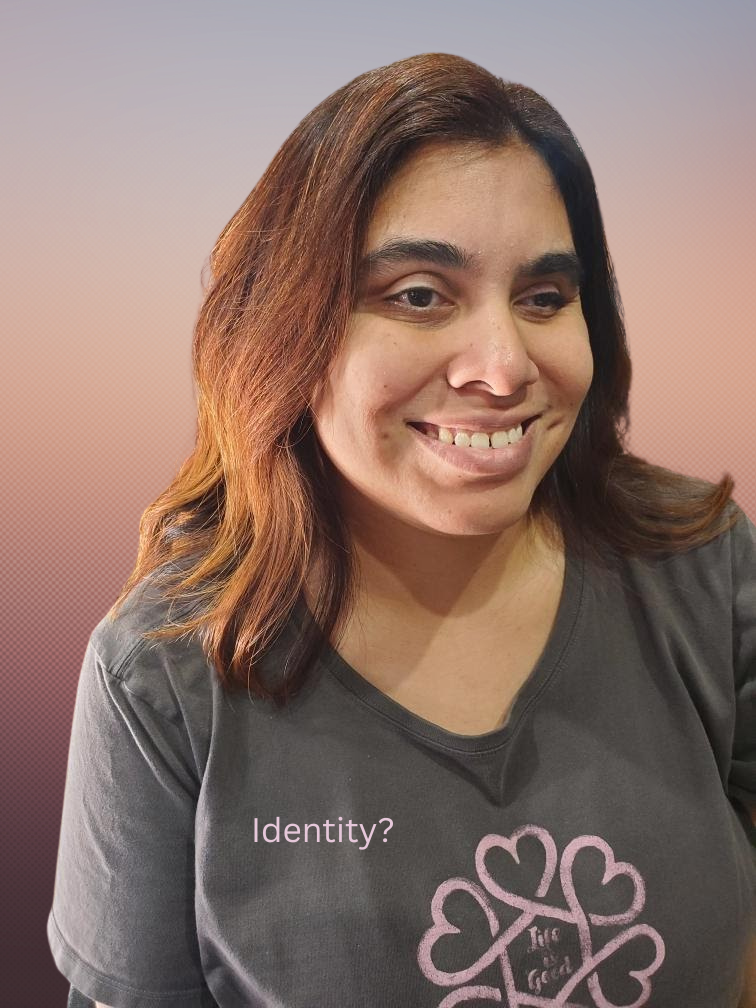
The first thing I lost was my face.
It faded into the steamed glass fog my vision was becoming as cataracts in my fourteen-year-old eyes sought to claim what little sight remained to me. I looked into a mirror every day and watched myself be erased.
My dimpled smile transformed from curved lips and white teeth to the feeling of muscles tightening in a way that suddenly felt foreign and false. My voice, disjointed from my countenance, now felt ghost-like when a glance toward a mirror could no longer affirm it still came from my lips. Logic broke away from perception, and for over a year, I floated like a phantom in a body I could no longer see.
I was visually impaired.
No.
I was blind.
The taste of tears wasn’t something I ever noticed until they fell from eyes I could no longer see. There were oceans inside me, and I cried them all where no one could use their sight against my lack of it.
“Sirena. Sirena. I have dark brown hair. I have dark brown eyes. I have olive skin. I have a heart-shaped face. Sirena. Sirena.”
The words were the mantra to my fading. I’d repeat them to myself so I could remember who I was. Who would I become without a visual identity in a world where visuals are assigned such decisive significance? When my face was gone, what would take its place?
I Was The Blind Girl
As the perception of my abilities faded, I chafed against the shrinking of my world. Freedom was once found flying through the neighborhood on the seat of a bicycle. Now, freedom was walking through my mother’s childcare without feeling the parents’ eyes tracking my every footfall lest I tread on one of their babies.
Only the babies knew that love isn’t a language of the eyes. Mine were the arms babies reached for when they wanted comfort. Mine was the voice that built dreams out of lullabies. Before they knew what learning was, I taught them I was able, and they taught me I was worthy.
I was mommy?
Not then.
But one day, I knew I would be.
I Was The Dog Mom
Black paws came before tiny hands. I held my first harness handle before I held my first infant.
The babies in the childcare above were too young to stress me out. There was a healthy dose of mama reality I didn’t expect, and when a living thing was placed in my care, I was in free fall like a boulder from an airplane.
Dog mom, child mom — both versions will give you gray hair!
I could have been a better guide dog handler at twenty-four. I didn’t have the patience. I didn’t have the compassion, even though I had the love. I didn’t have the emotional maturity to realize I was still too much a child.
There were days when I shouted at my guide dog in frustration when he made a mistake on a route. I exercised no self-control over my temper and showed him no grace, and only in hindsight did I recognize how deeply it damaged our bond.
My dog shut down in response, which only fueled my frustration. With light stabbing my eyes from all sides, so bright in the Florida afternoon it was like knives scraping away at what little visual perception remained to me, I could only see his faults, and not that mine had brought us to that point. Sweat mingled with tears on my face as cars rushed by, and the median held us prisoner in a cement cell of my own making.
I was lost.
I was stranded.
I was wrong.
So what did that make me? I wasn’t the person I thought I would be when I first touched a guiding harness.
I thought I could do it all, and be right every time. In the end, that belief empowered me. It also caused me years of suffering.
Ultimately, loss, mistakes, and one black dog’s sensitive heart taught me more about compassion than I ever thought I’d learn. It didn’t prevent me from choosing the wrong man to have a child with, but it was the first step on a ladder fraught with rungs of lessons learned.
I’m sorry you wound up being my trial child, Tony-Bone.
I was mommy?
Almost. Not quite.
I Was “Mommy”
“If you’re not going to eat the grapes,” my daughter’s father snapped at her, “bring them upstairs to your mother.”
My identity as Rose’s mommy always filled me with joy. I had a name, I had a purpose attached to that name, and she knew me by it when her father spoke to her.
Birthday balloons lose air, flowers wilt, summer ends and a man’s degeneration into misery comes at the cost of my name.
There’s a primal wound in the theft of a name. Mother. Genetic contributor. When stripped down to my mere biological association in front of my daughter, I stand naked and unseen, robbed of an identity I thought could never be shattered.
My sight is gone.
My face is gone.
My name is gone.
I Was, I Am
There’s a truth about identities I’m only just learning.
They’re not static.
My sight is gone, but I’ll never lose vision.
My face is gone, but my personality remains.
My name is gone, but only if I let him take it from me.
Who are you today, reader?
I am Sirena.


