
From Gold to Canvas: Paris Through the Louvre and Montmartre
Leaving the ornate gates of Versailles behind, I found myself heading back towards the city that housed the essence of France’s artistic legacy. Paris, with its winding lanes and historic boulevards, awaited me, holding within its confines, art and stories that spanned centuries.
A day removed from the grandeur of Versailles, I prepared myself for another intriguing journey through time and art, this time via the Louvre and the artistic enclave of Montmartre.
The Louvre, with its iconic glass pyramid, has always been synonymous with art, culture, and history. It is home to some of the world’s most renowned masterpieces, a testament to human creativity across time and cultures.
As I crossed its threshold, I felt a sense of anticipation. A stark contrast to the royal apartments of Versailles and the castles of Scotland (both of which I had just visited), the Louvre offered a different kind of historical richness, a tapestry woven with countless artistic narratives.
Walking through the gallery, I was surrounded by art from all epochs and regions, from Mesopotamian antiquities to Italian Renaissance paintings. Every artefact, every sculpture, and every painting bore silent witness to a past civilisation’s ethos and its unique artistic expression.
As I moved from one hall to another, I felt a unique sense of connection with the individuals behind these creations. I could imagine them, hundreds, even thousands of years ago, painstakingly crafting their visions into reality, their dreams into tangible forms.
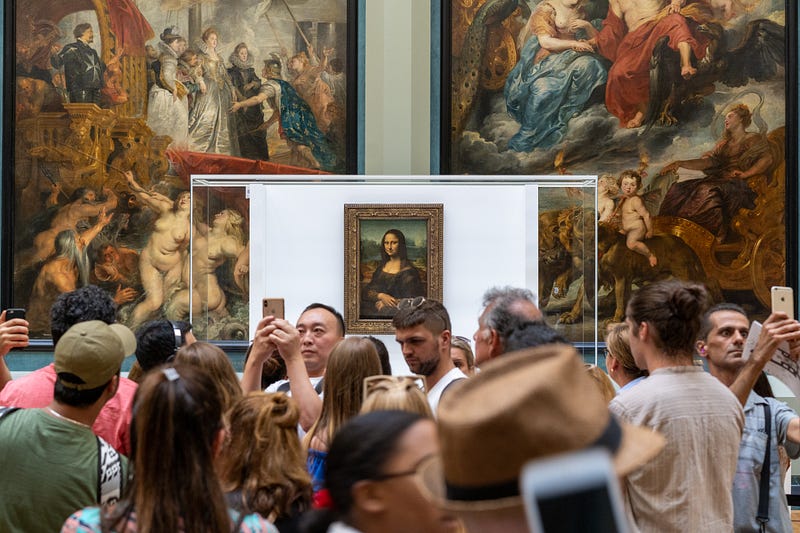
Among the myriad of art pieces, Leonardo da Vinci’s Mona Lisa captured my imagination. Standing before her enigmatic smile, I felt a surreal connection with Leonardo, thousands of miles and hundreds of years away.
While Versailles reflected the aspirations of kings and queens, the Louvre offered an insight into the creative minds of countless artists, each with their unique perspective on life and existence.
Leaving the grandeur of the Louvre behind, I moved towards Montmartre, an entirely different facet of Paris’s art scene.
Known as the haven for artists in the late 19th and early 20th century, Montmartre, with its bohemian vibe, seemed worlds away from the monumental history of the Louvre and the opulent splendour of Versailles.
As I climbed the steep, cobbled streets, lined with quaint cafés and studios, I could sense the neighbourhood’s raw artistic energy. Here, art was not confined within gilded frames or behind glass cases. It was alive, evolving, and visceral.
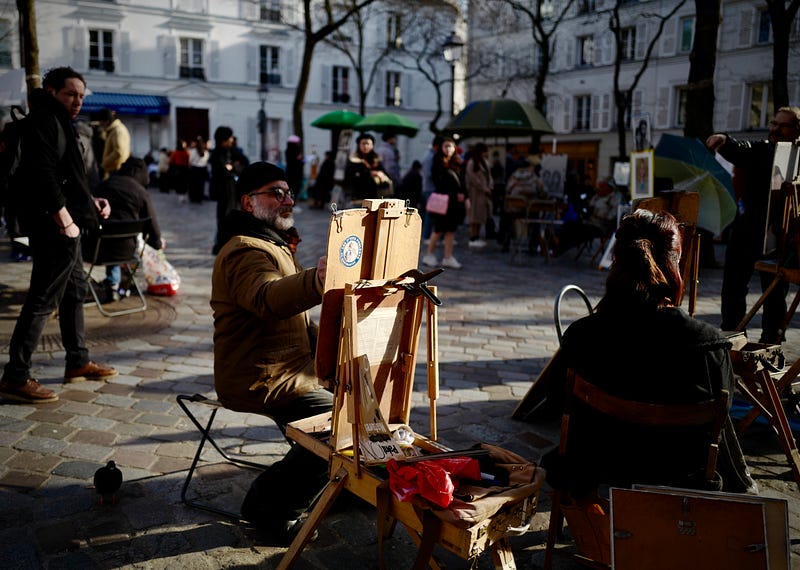
The bustling Place du Tertre, with its artists creating portraits and cityscapes, felt like a vibrant canvas, each stroke adding to its vibrant character.
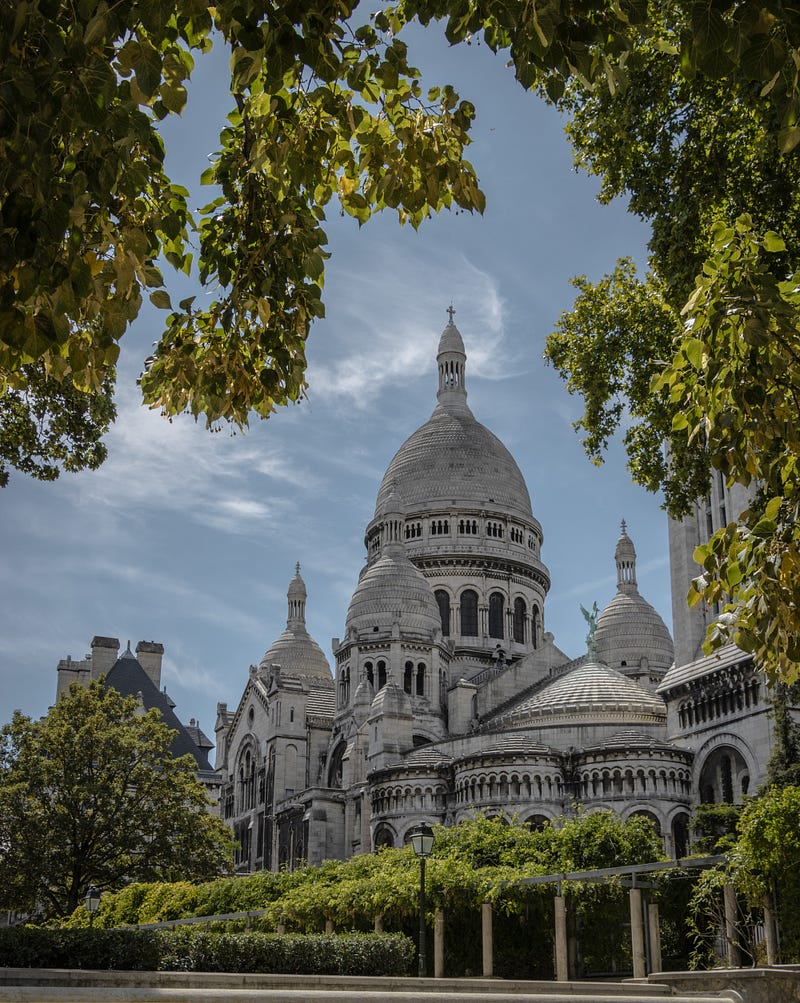
Montmartre’s heart, for me, is the Sacré-Cœur Basilica. Standing on the hilltop, overlooking the city, the Basilica’s stark white façade contrasted with the vivid hustle and bustle of Montmartre.
Inside, the stunning mosaics took me back to the Scottish castles’ stone carvings and the intricate artwork at Versailles. Yet, there was a distinct feel to it, a unique fusion of spirituality and art that made the Basilica a soulful experience.
A visit to the Espace Dali, a museum dedicated to Salvador Dali, added a surreal twist to my Montmartre experience. Dali’s unique and eccentric style, his dreamlike, often bizarre imagery, provided a stark contrast to the classical artworks housed in the Louvre.
It was as if I had stepped into a different dimension of creativity, one where the usual boundaries of aesthetics and reality blurred, creating an eclectic mix of art and imagination.
My exploration of Paris, through the Louvre and Montmartre, was a journey through diverse artistic styles and eras. Each, in its unique way, provided insights into the human experience.
The Louvre, with its extensive collection, symbolised our innate need to document, express, and create. Each piece of art, from the ancient Egyptian artefacts to the Renaissance masterpieces, represented a milestone in our collective creative journey.
In contrast, Montmartre echoed with the vibrant and often tumultuous history of the modern art movement. The spirited energy of the bohemian neighbourhood was a testament to art’s transformative power, its capacity to question, disrupt, and inspire.
Visiting Vincent Van Gogh’s former residence, I could not help but think of the artist’s tumultuous life, his passionate love for art, and his tragic end. Walking through the rooms, I could sense his presence, his struggle, and his brilliance.
It was a humbling experience, making me appreciate not just his artwork, but also the human behind the masterpieces.
Looking out from the hill of Montmartre, with the city spread out below and the Sacré-Cœur behind me, I felt a deep connection with Paris. This was a city that celebrated art in all its forms.
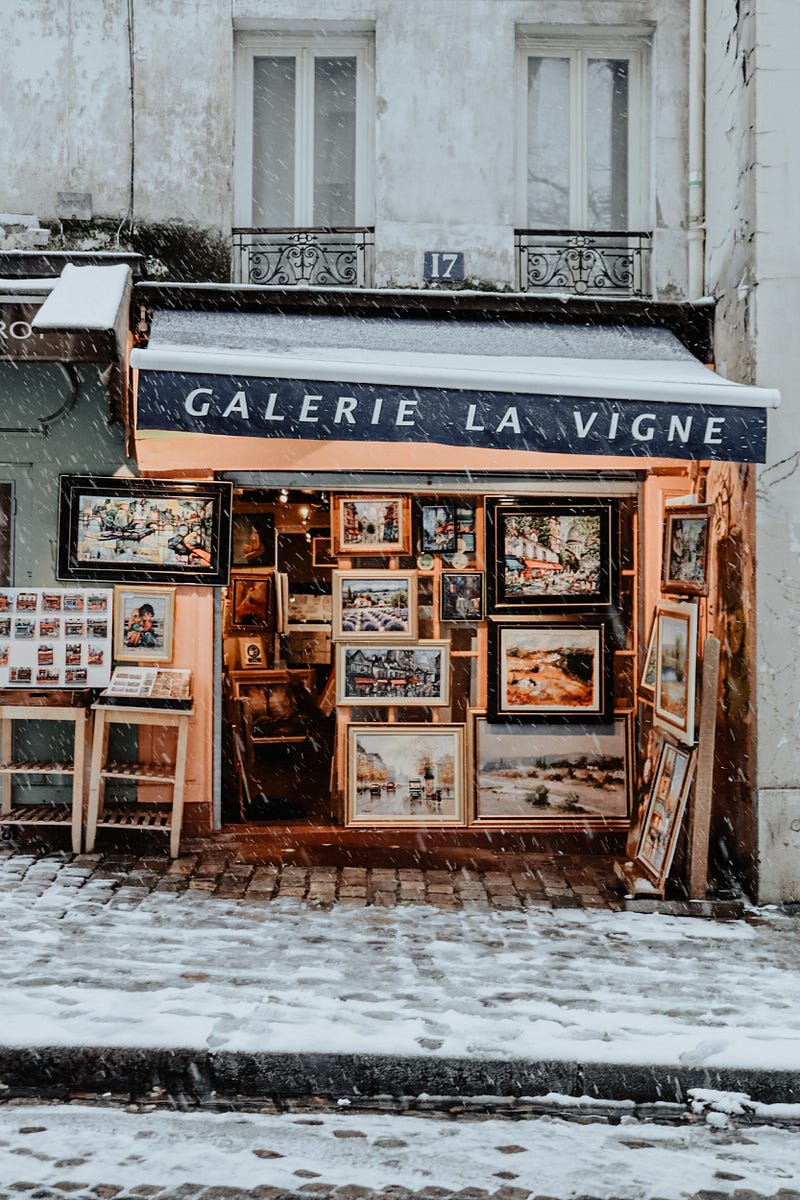
From the grandeur of Versailles and the historic richness of the Louvre to the bohemian vibrancy of Montmartre, Paris was a living, breathing canvas of human creativity.
Reflecting on my journey from the rugged landscapes of Scotland to the opulent chambers of Versailles and the artistic spirit of Paris, I was struck by the rich diversity of experiences. Each place offered a unique perspective, a different narrative of human history and art.
From the stoic castles standing against the Scottish skies to the luxurious palace echoing with tales of decadence, from the centuries-old artworks housed in the Louvre to the vibrant art scene of Montmartre, I had traversed through time and cultures.
As I concluded my journey, I realised that regardless of the differences in time, place, and culture, there is a universal language that connects us all — the language of art.
It is a language that tells our stories, expresses our emotions, and captures our collective experiences. The Scottish castles, Versailles, the Louvre, and Montmartre, each in its unique way, were chapters in this universal narrative, etched in stone, gold, and canvas.
In the end, as I walked along the Seine, the city of Paris twinkling under the soft glow of the setting sun, I carried with me a kaleidoscope of memories.
As I reflected on these experiences, I felt not just like a traveller, but also a witness to the fascinating tapestry of human history and art.