avatarChristian Martinez Founder of The Financial Fox

Free AI web copilot to create summaries, insights and extended knowledge, download it at here

3111

Abstract

big to handle for a human so a computer do a much better job at classifying and analyzing so humans can make data driven decisions.</li><li><b>Algorithmic Trading: </b>One of the most popular use cases of ML in finance is to program algorithms to conduct trades autonomously. You program the algorithm to learn from past performance and from itself so you can try to outperform the market.</li><li><b>Money Laundering Prevention and Cyber-Security: </b>You can use ML to collect internal and public information from a network to spot money laundering signs and prevent fraud.</li></ul><figure id="fa55"><img src="https://cdn-images-1.readmedium.com/v2/resize:fit:800/1*PzE4EXtSsFDYt8tcb9tfyQ.png"><figcaption></figcaption></figure><h1 id="45d4">Study Plan for Machine Learning</h1><p id="fa56">There is a lot of information about Machine Learning online and in most cases it’s FREE! The problem is that it is fragmented. I tried to compile a guide of 10 resources to get you to <b>learn and use Machine Learning in Finance in 10 weeks!</b></p><p id="646c">This guide assumes that you do not know anything about machine learning (except what you read above).</p><h2 id="0a21">Week 1:</h2><ul><li><a href="https://www.coursera.org/learn/machine-learning">Coursera Free Course by Andrew Ng</a></li></ul><h2 id="7876">Week 2:</h2><ul><li><a href="https://www.youtube.com/watch?v=PPLop4L2eGk&amp;list=PLLssT5z_DsK-h9vYZkQkYNWcItqhlRJLN">Machine Learning Stanford Full Course on YouTube</a></li></ul><h2 id="1e29">Week 3:</h2><p id="d356"><a href="https://christianmartinezfinancialfox.medium.com/from-finance-and-accounting-to-data-science-learn-python-programming-bceeee1ee89e">Learn the basics of Python</a></p><h2 id="e101">Week 4:</h2><ul><li><a href="https://www.linkedin.com/learning/applied-machine-learning-algorithms/the-power-of-algorithms-in-machine-learning?u=2195836">Applied Machine Learning: Algorithms</a></li></ul><h2 id="2446">Week 5 and 6:</h2><p id="f513">Try to do as much projects as possible! Some ideas here:</p><ul><li><b>Stock Prices Prediction: </b>Predicting stock prices is a challenging task that can be improved with machine learning. There are two main approaches to predicting the stock price: Technical analysis method uses metrics like closing and opening price, the volume traded, adjacent close values etc. of the stock for prediction, whereas qualitative analysis looks at external factors like company profile, market situation, political and economic factors, textual information in news, social media and even blogs by the economic analyst. This <a href="https://www.sciencedirect.com/science/article/pii/S1877050920307924">academic paper</a> outlines how to predict the Stock Closing Price using Machine Learning. For data, I recommend to start with this <a href="https://www.kaggle.com/borismarjanovic/price-volume-data-for-all-us-stocks-etfs">Kaggle competition dataset</a>.</li><li><b>Inventory Demand Forecasting: </b>Accurate predictions in demand forecasting can improve the financial results of a company and they can be made through the application of relevant machi

Options

ne learning algorithms such as Bagging, Boosting, XGBoost, Gradient Boosting Machine (GBM), Support Vector Machines, and many more. I found this <a href="https://www.projectpro.io/project-use-case/forecast-inventory-demand">website </a>that outlines how to develop ML models for this problem in R.</li><li><b>Sentiment Analysis:</b> As we discussed above, there is an enormous volume of unstructured data like videos, photos, social media posts, presentations, pdfs that can help determine the market sentiment. All of this data is too big to handle for a human so a computer do a much better job at classifying and analyzing so humans can make data driven decisions. In this video below, you can learn how to perform sentiment analysis using Python and Twitter data.</li></ul> <figure id="ddba"> <div> <div> <img class="ratio" src="http://placehold.it/16x9"> <iframe class="" src="https://cdn.embedly.com/widgets/media.html?src=https%3A%2F%2Fwww.youtube.com%2Fembed%2FpgZcP852dMg%3Fstart%3D412%26feature%3Doembed%26start%3D412&amp;display_name=YouTube&amp;url=https%3A%2F%2Fwww.youtube.com%2Fwatch%3Fv%3DpgZcP852dMg&amp;image=https%3A%2F%2Fi.ytimg.com%2Fvi%2FpgZcP852dMg%2Fhqdefault.jpg&amp;key=a19fcc184b9711e1b4764040d3dc5c07&amp;type=text%2Fhtml&amp;schema=youtube" allowfullscreen="" frameborder="0" height="480" width="854"> </div> </div> </figure></iframe></div></div></figure><h1 id="3fa7">How to Develop a machine learning model?</h1><p id="dc7f">In 2019 I organized and taught a free workshop in Melbourne on how to develop a machine learning model. You can download all the slides in this <a href="https://www.linkedin.com/posts/christianmartinezthefinancialfox_machine-learning-data-in-finance-by-christian-activity-6635273998110470144-Oc5H/">link</a> but these are the <b>seven steps to develop a ML model</b>.</p><figure id="71e6"><img src="https://cdn-images-1.readmedium.com/v2/resize:fit:800/1*w7xaudbBS970vvHsPhnSAw.png"><figcaption></figcaption></figure><figure id="d0a0"><img src="https://cdn-images-1.readmedium.com/v2/resize:fit:800/1*JVlKdWuet8x1nKqMWSa82Q.png"><figcaption></figcaption></figure><figure id="19fa"><img src="https://cdn-images-1.readmedium.com/v2/resize:fit:800/1*7FGR220lm7XMsuquE_ta2Q.png"><figcaption></figcaption></figure><figure id="0f8e"><img src="https://cdn-images-1.readmedium.com/v2/resize:fit:800/1*W3FeXtzu14uew40SEWQh-g.png"><figcaption></figcaption></figure><figure id="429e"><img src="https://cdn-images-1.readmedium.com/v2/resize:fit:800/1*XcWbfX8H6i2VkFrJnK3zXA.png"><figcaption></figcaption></figure><figure id="3c99"><img src="https://cdn-images-1.readmedium.com/v2/resize:fit:800/1*gGBlSU8Io-KaqDtUsXonvw.png"><figcaption></figcaption></figure><figure id="5911"><img src="https://cdn-images-1.readmedium.com/v2/resize:fit:800/1*da0ovwIieKRW29HZQSqQWw.png"><figcaption></figcaption></figure><figure id="9cf7"><img src="https://cdn-images-1.readmedium.com/v2/resize:fit:800/1*BChwtrK4Ndw9rxT_dzHCoA.png"><figcaption></figcaption></figure></article></body>

From Finance and Accounting to Data Science : Machine Learning

With the rapid increase in the amount of data available, there is huge potential for Machine Learning (ML) to transform the finance industry.

ML is the science of teaching a computer how to automatically learn (and improve) how to make accurate predictions using data.

In this article, I will explain 3 key things:

  • Use Cases of Machine Learning in Finance
  • Study Plan for Machine Learning
  • How to Develop a machine learning model?

But first, just a little bit about me.
From Finance and Accounting to Data Science : Machine Learning

About Me

My name is Christian Martinez and I am the International Finance Automation Manager for Kraft Heinz and Founder of a side project called The Financial Fox.

My background is in Finance and Accounting but I successfully transition to Data Science and Automation. I use data analytics and automation tools such as Python, Tableau, Alteryx, Power BI, SQL, Excel with VBA, and R to build and improve on the existing productivity-reporting infrastructure across Kraft Heinz International Zone (LATAM/EUROPE/ASIA/PACIFIC).

This role is part of the Finance team in close collaboration with business stakeholders and functions like Manufacturing, Logistics, Procurement, R&D, Quality, ORM — supporting their decision-making using analytics and data.

I am a finalist in the Young Leaders in Finance Awards 2018 ; Marathon Finisher and World traveler (have been in 65+ countries and always planning next adventure!).

Feel free to connect with me in LinkedIn!
Christian Martinez, Finance Automation Manager at Kraft Heinz and Founder of The Financial Fox

Use Cases of Machine Learning in Finance

In the past decade, machine learning has given us self-driving cars, practical speech recognition, effective web search, and a vastly improved understanding of the human genome. All of those use cases are great, but what about use cases of machine learning in Finance?

Machine Learning can be used for:

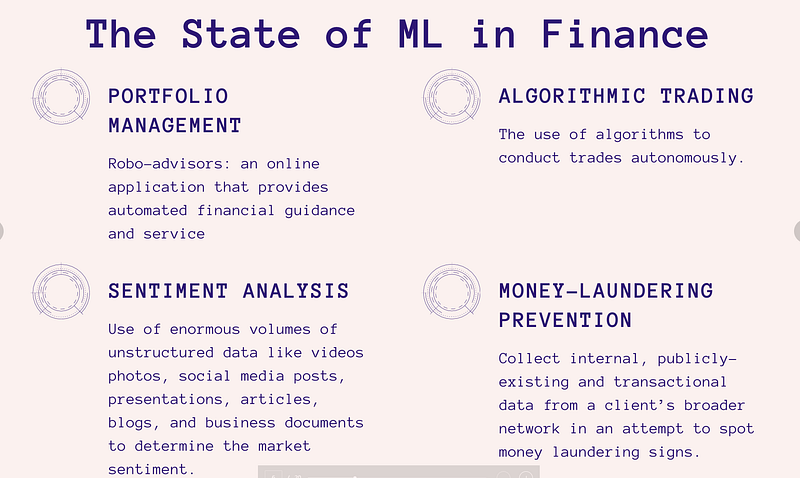
  • Portfolio management: One use case is to use ML to program “Robo-advisors” which are online applications that provide automated financial guidance.
  • Sentiment Analysis: There is an enormous volume of unstructured data like videos, photos, social media posts, presentations, pdfs that can help determine the market sentiment. All of this data is too big to handle for a human so a computer do a much better job at classifying and analyzing so humans can make data driven decisions.
  • Algorithmic Trading: One of the most popular use cases of ML in finance is to program algorithms to conduct trades autonomously. You program the algorithm to learn from past performance and from itself so you can try to outperform the market.
  • Money Laundering Prevention and Cyber-Security: You can use ML to collect internal and public information from a network to spot money laundering signs and prevent fraud.
Study Plan for Machine Learning

There is a lot of information about Machine Learning online and in most cases it’s FREE! The problem is that it is fragmented. I tried to compile a guide of 10 resources to get you to learn and use Machine Learning in Finance in 10 weeks!

This guide assumes that you do not know anything about machine learning (except what you read above).

Week 1:

Week 2:

Week 3:

Learn the basics of Python

Week 4:

Week 5 and 6:

Try to do as much projects as possible! Some ideas here:

  • Stock Prices Prediction: Predicting stock prices is a challenging task that can be improved with machine learning. There are two main approaches to predicting the stock price: Technical analysis method uses metrics like closing and opening price, the volume traded, adjacent close values etc. of the stock for prediction, whereas qualitative analysis looks at external factors like company profile, market situation, political and economic factors, textual information in news, social media and even blogs by the economic analyst. This academic paper outlines how to predict the Stock Closing Price using Machine Learning. For data, I recommend to start with this Kaggle competition dataset.
  • Inventory Demand Forecasting: Accurate predictions in demand forecasting can improve the financial results of a company and they can be made through the application of relevant machine learning algorithms such as Bagging, Boosting, XGBoost, Gradient Boosting Machine (GBM), Support Vector Machines, and many more. I found this website that outlines how to develop ML models for this problem in R.
  • Sentiment Analysis: As we discussed above, there is an enormous volume of unstructured data like videos, photos, social media posts, presentations, pdfs that can help determine the market sentiment. All of this data is too big to handle for a human so a computer do a much better job at classifying and analyzing so humans can make data driven decisions. In this video below, you can learn how to perform sentiment analysis using Python and Twitter data.

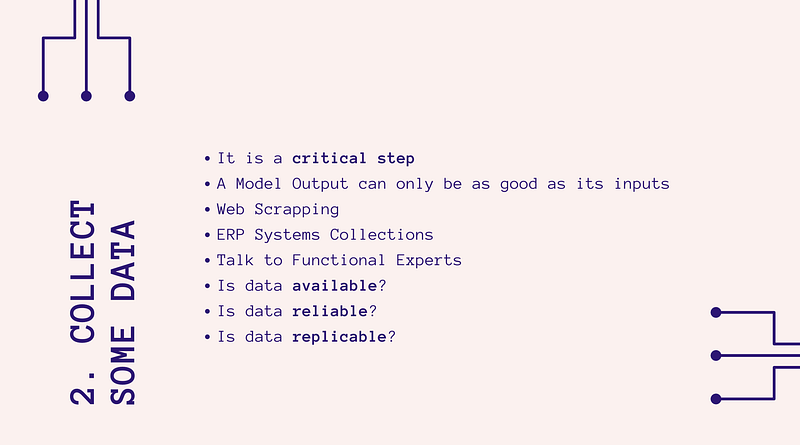
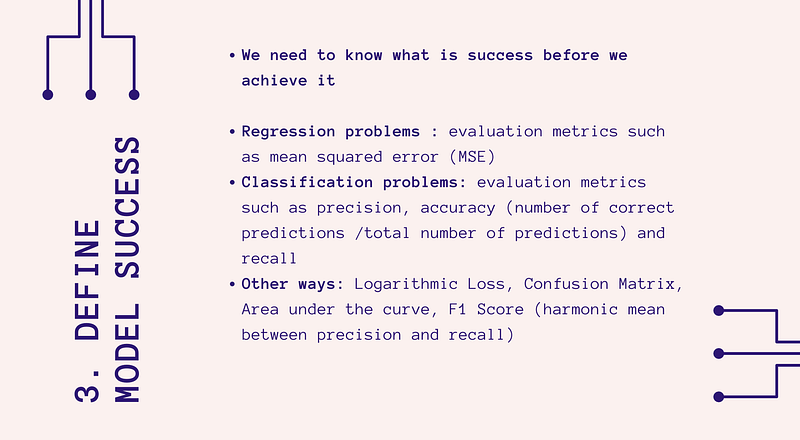
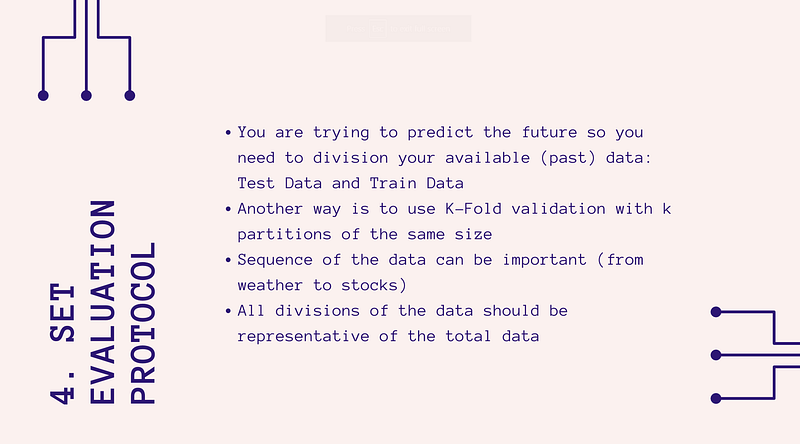
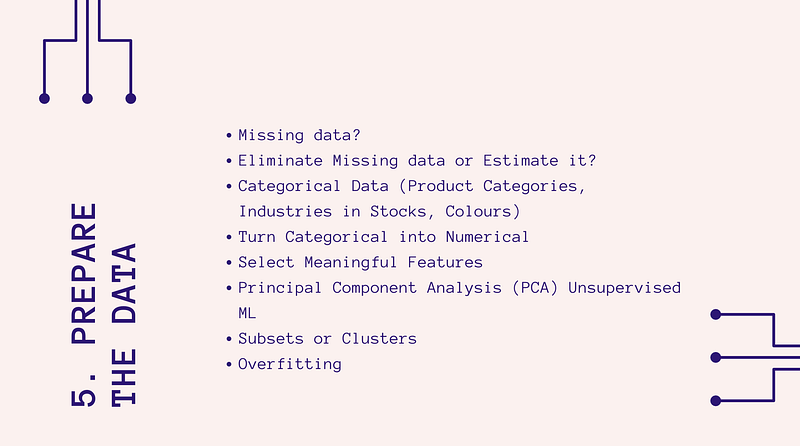
How to Develop a machine learning model?

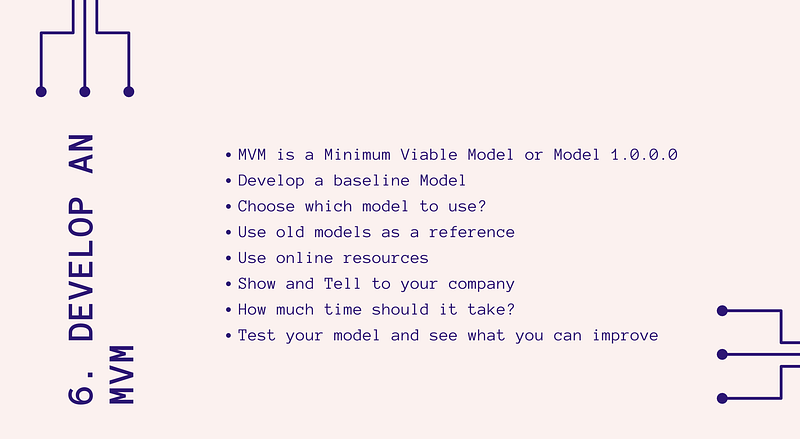
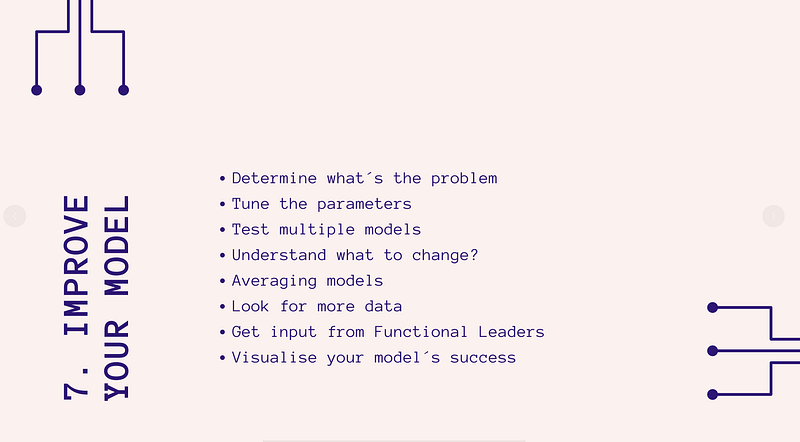
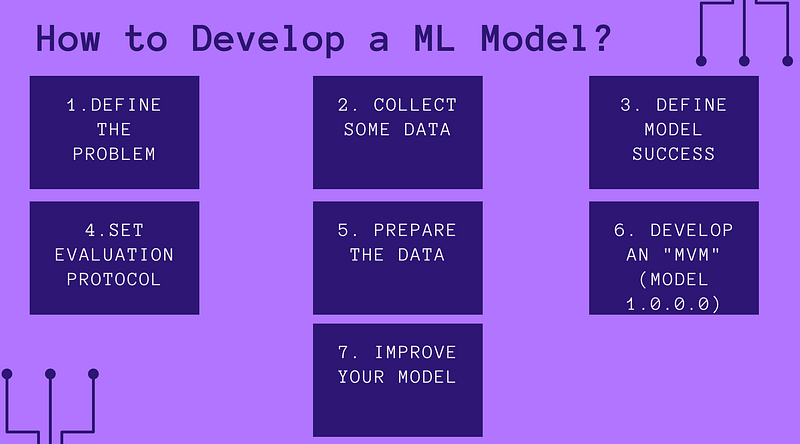
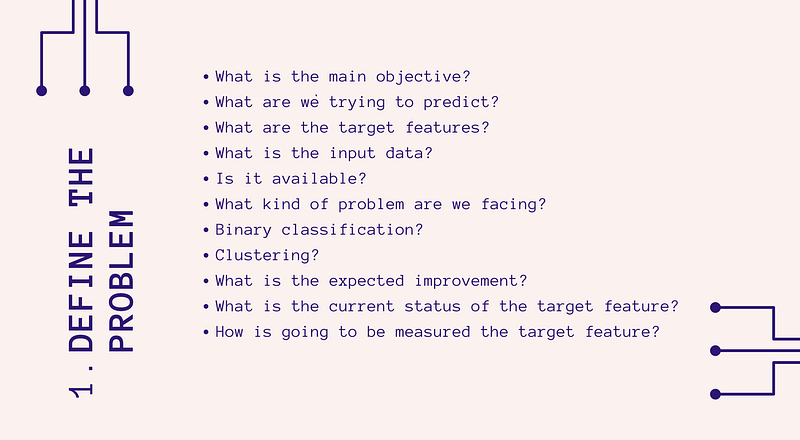
In 2019 I organized and taught a free workshop in Melbourne on how to develop a machine learning model. You can download all the slides in this link but these are the seven steps to develop a ML model.
Machine Learning
Data Science
The Financial Fox
ML
Finance
Recommended from ReadMedium