
From Educators to Plant-repreneurs: Why forgo a stable $6000 monthly salary to run a plant nursery?
“It is time to put myself first, for real, this time” — Avie Mercado, co-founder of Plants Ate My Money.
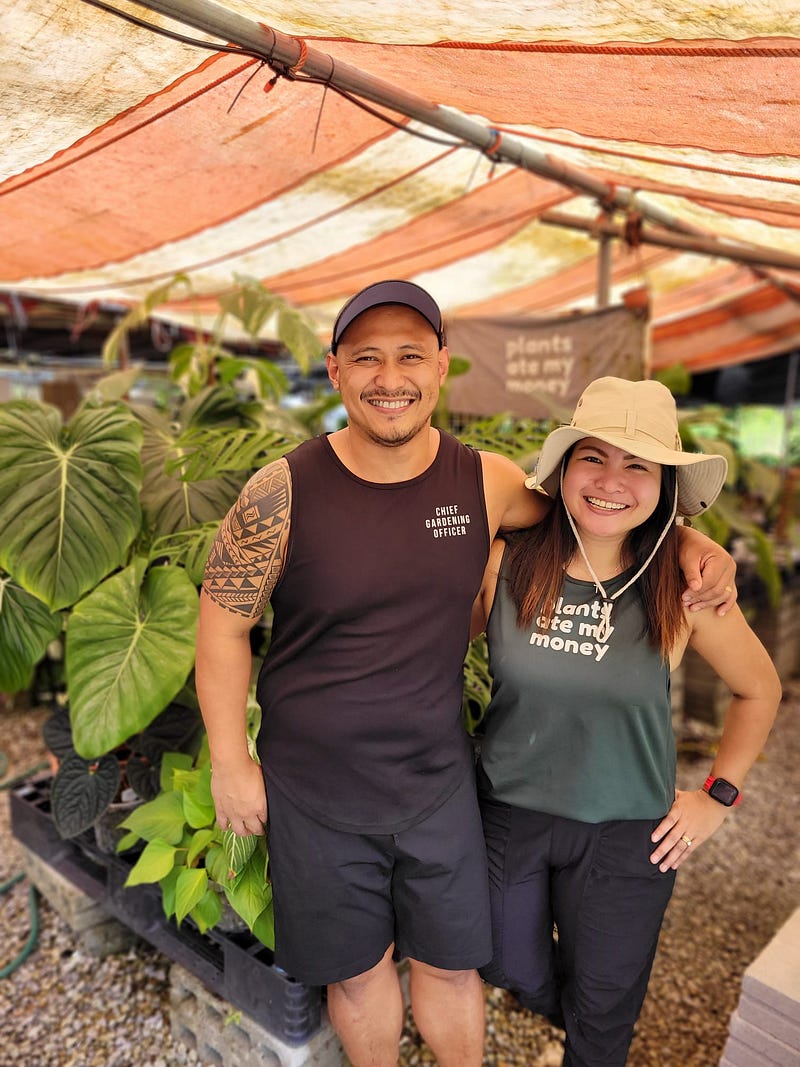
Heintjie Santos and Avie Mercado, founders of Plants Ate My Money
I first met Avie Mercado, a cheerful person who is well-loved, at my new workplace in July 2021. I joined her team of fresh, young and driven people who were tasked with a nebulous mission: Innovate. They gamely took on the title, “Workplace Innovators”, and spent the last 2 years experimenting, building, and facilitating professional development on a digital platform they built from scratch. Avie was leading in quite a few pieces of work, and drew high praises from our leaders for her creativity, positive attitude and role in building a wonderful workplace culture.
In just a month, Avie announced a piece of big news with much excitement — “I just handed in my resignation letter! I’m leaving in a month!” The team cheered for her, and also conveyed their sadness — they were happy for her decision to pursue what she loves, and at the same time, sad to lose a valuable team member. Avie’s announcement came in the midst of an uncertain time. We were in the troughs of a prolonged pandemic, and many companies had started retrenching workers in the thousands. I wondered if she was moving on to a private education sector. When we had some time over Zoom, I asked her where she was leaving for, and was dumbfounded when she said, “Oh, I’m running a nursery!”
‘Leaving a wonderful workplace, stable job, a comfortable pay to run a nursery? Why would someone do that?’, I wondered. It didn’t help that we were all working remotely — honestly, an arrangement that made staying in our jobs an even more attractive reason.
While The Great Resignation is not new, in pragmatic Singapore where money drives most of our economy, personal and professional decisions, coupled with the fact that we were both working in a place we love, I was particularly intrigued by Avie’s choice. It wasn’t a job she hated, nor was the new venture one that boasted a more attractive pay. Furthermore, the business idea seemed like a particularly risky one — can you really make a living, selling plants?
Evidently, both Avie Mercado and her husband, Heintjie Santos, believe so. After all, they named their nursery, “Plants Ate My Money” — a reflection of their own personal experience when they decided on bringing in plants to their home to make it a cozy abode. 6 months after Avie left our company, I decided to pay her a visit to understand what drove her to leave in such uncertain times, and how it is going 6 months in.
Why Money Cannot Always Satisfy
“Why did you leave, Avie? In the midst of a pandemic, even though you had a job you liked? Why didn’t you just keep it as a side hobby?”, I asked. This was a question burning on my mind for months. As we took a stroll in her nursery, checking the state of her plant babies, watering them, and scrutinizing their growth, Avie shared, “I just wanted more.”
“Even when I was studying to become a teacher, I just wasn’t satisfied. I wanted to leave. And then when I became an educator in the classroom, I loved it, but I still wanted to leave. And finally, when I came to our workplace, it really gave me the space to think, what do I want from life? You know it’s hard to leave right, when our company gives us more money in the 5th year and 7th year of staying in the job. The money is nice, but it was no longer enough.”
What was enough, I wondered? As Avie checked on her baby philodendron gloriosum, gently turning the underside of an exquisite zebra-lined leaf, she said, “you know, it was just time to put myself first, for real, this time”.
Reconstructing what it means to be ‘Fully Alive’
It was not a hidden secret that educators in Singapore and all over the world, have always put their students before themselves, even before fulfilling their basic needs to answer nature’s call, eat a meal, or get a proper night’s sleep. In fact, a new focus on teachers’ mental health was highlighted last year, as droves of teachers reported feeling burnout.
Putting myself first?, I mused. I remember how it was a constant tussle to do so when I was still teaching in the classroom. Even when I was hungry and exhausted, I would drop everything to be with a student in need — whether it was simply listening to their emotional struggles, advocating for them, and even accompanying them (with permission from higher management) to places until their parents could take time off to be with them. One particular flashback crossed my mind — I was bleeding in my first trimester, wrecked with worry about having a possible miscarriage, and even while on medical leave, conducting a class via Zoom that was transmitted into the classroom. This was pre-Covid times. It was never easy to simply take care of myself, especially when the system lacked support structures to ensure that the students’ needs were still met without the teacher around.
“What do you mean by putting yourself first, for real, this time?” I asked. I was curious — my decision to leave the classroom for a more office-setting job in the education line already felt like I was putting myself first. I wondered if Avie felt the same way.
“Well, the job was great, Vic! But it’s not just about taking care of our basic needs. You know how we can do different pieces of work well, but it just doesn’t challenge us? It doesn’t make us feel fulfilled? I wanted more for my life, for the work that I do.”
Wow, I thought. Avie’s insight reminded me of a quote that greeted me every morning in the school halls — “the glory of God is man fully alive!”. Avie was not simply looking at surviving life, she wanted to be fully alive! Fully alive and invested in the work that she does, even if it meant losing a comfortable, steady in-flow of cash.
When Selling Plants Are More Than Business
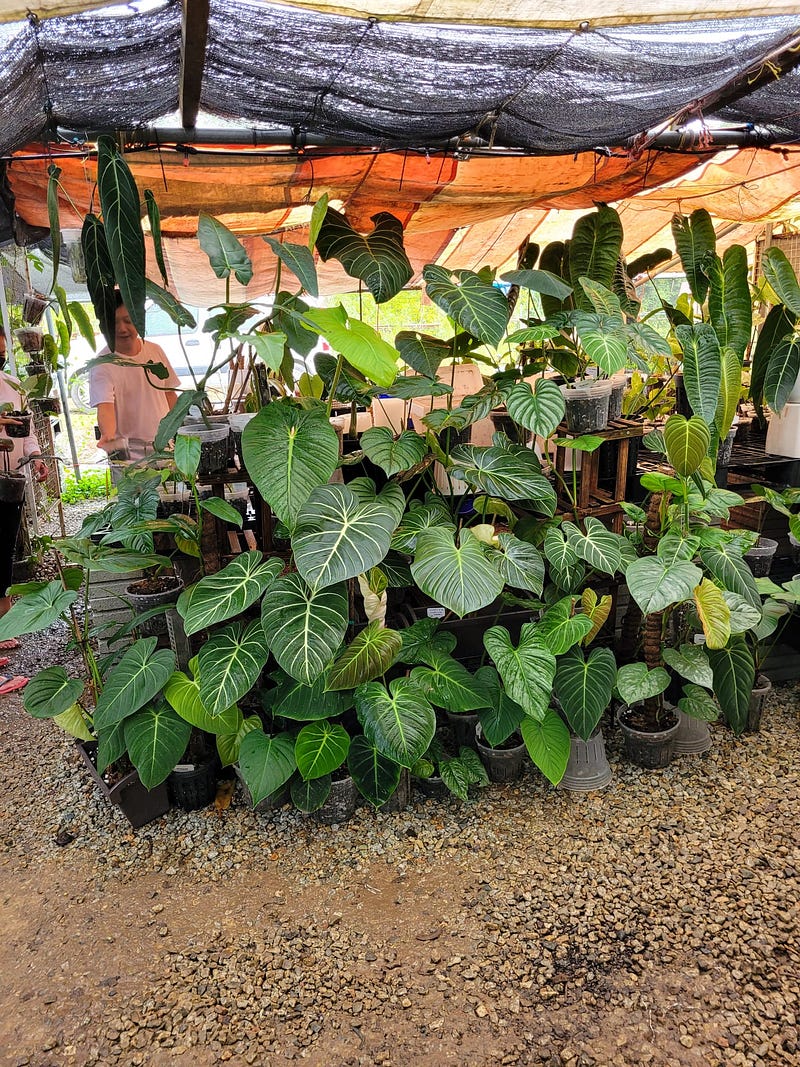
Still curious about what she meant, I pursued the point. “Sure Avie, I do see that you love plants. But, why leave? You could do both!”, I jested. Being a fellow plant-lover, I was in the same foilage fanatic community that Avie was a part of. The foilage fanatics were equally passionate about plants, but even more savvy with turning their hobbies into side hustles. They would parade their exquisite plants on Facebook, acquire young ones, and then propagate and sell off younglings for a decent price. In fact, more and more were coming up with their own soil mixes, with fancy labels like “aroid mix”, “forest mix”, to appeal to especially new plant parents who had no clue how to look after their plant babies.
As we continued trailing through the racks of beautiful philodendrons, Avie shared, “you know, this business isn’t just a business. We became support systems for our customers — companions in their journey of life.” I was puzzled by what she meant. After all, I’ve been buying plants from tons of nurseries, and wouldn’t consider any of them to be an acquaintance, much less a companion. A neat transaction was all it was.
“These are very dark times for people”, Avie continued. “Many Singaporeans came to grow plants as a result of the pandemic. None of us could travel, we couldn’t see family, and so this was one way to cope.” Oh, this was definitely me, I thought.
“The plants then became symbols of their mental state. They were in dark times, painful times, great emotional struggles, especially when we had the circuit breaker. We couldn't just do a transaction. We could see the pain in their eyes. And so, we always did follow-ups after the sale. How is the plant? How are you? In sharing about the plants, they also shared about the struggles in their lives. We became their support system, some of which we journeyed with them in the depths of their depression. That’s where I find meaning.” Avie said, in deep thought.
I was floored. Avie and Heintjie were doing the work that we educators do with our students, only this time, via the medium of caring for plants. They didn’t just take their work as a money-making enterprise, contrary to what the name of their nursery suggests. It was an enterprise of love, of community support, of nurturing and caring not just for nature, but for the emotional and mental forests in the lives of their clients. A much much more messy, fragile and isolated one, worsened by the pandemic and the micro-managed lives of Singaporeans who for the longest time, could not meet with their big families, friends, and loved ones in more than groups of 5.
Living by Grace
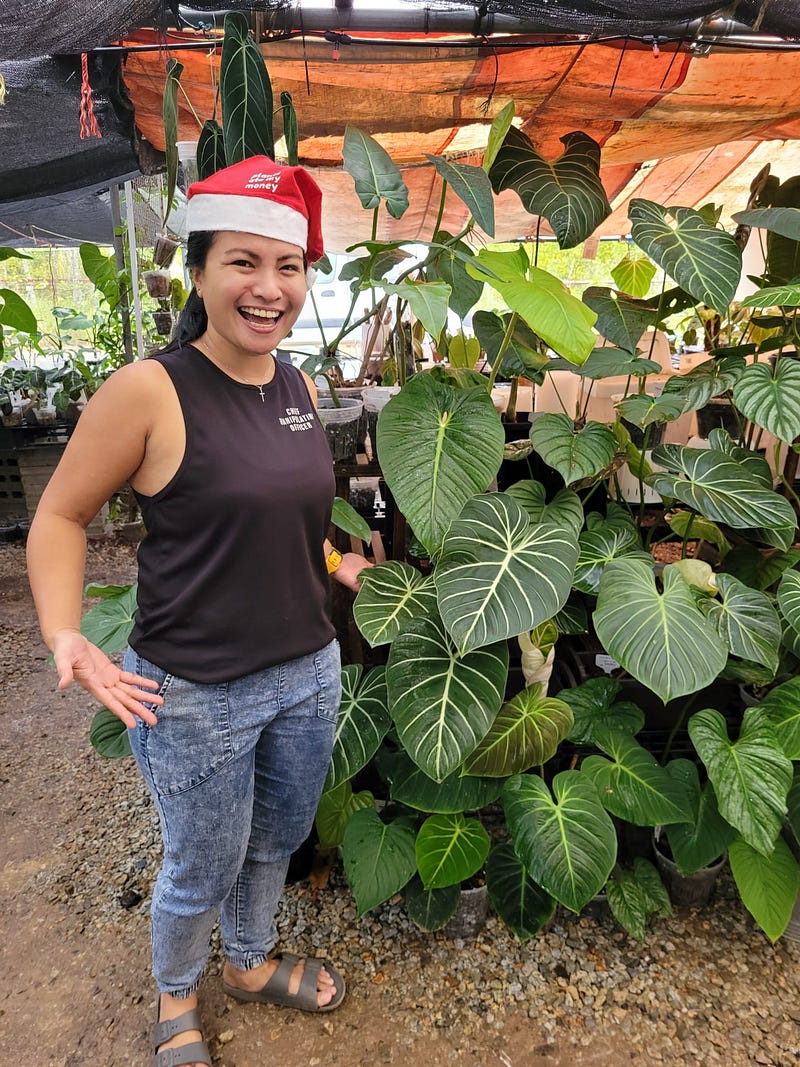
As we came to the end of our conversation, my little, almost-2-year old started crying in the background. It was much too hot for us adults, much less for his little body. As she comforted him by teaching him to scoop water from their bucket as they got ready to do another round of watering the plants, she smiled and said, “It was a decision that I made that has given me the most peace, one that I’ve not experienced in life. I knew this was for us, we were meant to do this, in this time.”
When asked about their plans, Avie and Heintjie were well aware that such a venture might not bring in the dough for long — especially as borders start opening up, for Singaporeans would turn their attentions from plants back to the national past-time, travelling. But it was enough for both of them, for now. Their eyes gleamed as they spoke about how God led them to this, leaving their jobs — Heintjie from a senior management position at an international school, and Avie from a promising career in the Ministry of Education — to be here, now, for the community in a most intimate and unique position of cultivating plants and friendships.
Their faith in God’s goodness and trust that He will lead even as the next steps are uncertain, were mind-blowing. How do we live without certainty of money coming in? Heintjie smiled and said, “We don’t have any worries about money. We started out this business with no experience- and we trusted and relied on the Lord. He is our financial advisor and provider — we don’t have any concerns about money, and we will continue to keep our eyes on him.”
As we said our goodbyes, I took one last look around the surroundings of the nursery. There were beautiful clear skies, and a rare silence that was only sweetened with the sound of singing birds. To live, to be fully alive and live in the moment, in a time where most of us just want some sense of control — is magical. It is perhaps a magic we all need in such frigid times, to remember that life itself is a gift, a grace, an opportunity to be and rest from the doing.
Find Avie and Heintjie at Plants Ate My Money. Step into their idyllic nursery at Lim Chu Kang Lane 3A Singapore 719843.
*This post was not sponsored.