
From Department of Defense to Cybersecurity Startup: Justin Travis Shares His 10 Best Pieces of Advice
Justin Travis always had an entrepreneurial spirit. After studying and working in IT administration, he became interested in cybersecurity. For many years, Justin consulted for the Department of Defense and the Airforce, and it was during this time he met his future co-founder, Matt McClaskey. He then spent nearly a decade focusing on cyber research and development.
The idea for Kasm actually stemmed from a capstone project Justin completed for an IT security course back in college. He and Matt knew they always wanted to build something together, and they finally had the time and the tech they needed to found Kasm Technologies Inc in 2017. Kasm is a container streaming platform for people who want a virtual desktop or higher level of security for applications used over the web. It enables remote work for employees and vendors trying to access remote systems, a very helpful tool during the height of the Covid-19 pandemic. Kasm is built on the philosophy that you can’t protect your computer and personal data from threats you don’t know about. It provides a rendering of a browser, application, or desktop in a temporary container, and none of the code running in the container ever touches your personal computer.
During our Clubhouse interview with Justin, we learned more about his startup journey, biggest obstacles, and greatest lessons. Let’s dive into Justin’s advice for other startup founders:
1. Sometimes you have to wait for the right time to turn a concept or idea into reality
Although Justin came up with the original idea for a containerized streaming service in college, there was no technology available at the time to bring the concept into reality. Justin and Matt had to wait over a decade before they had the capability to begin building Kasm.
“That was really the genesis of kicking off that project,” said Justin. “Here’s this idea we’ve had for awhile, and we now have the capability and the technology to apply that concept to a new area that seemed really interesting.”
It’s important to be patient and never forget any ideas or projects that you’re passionate about. Just because they seem unrealistic or impossible now, doesn’t mean they still will be ten years in the future. Justin’s story was supported by our interview co-host, James Augeri. Sometimes when you have an idea, “it just has to sit for a while either for technical reasons or either just being in the right place yourself.” Waiting to start or finish a project doesn’t make you a bad entrepreneur. It’s better to take the time to produce a great product instead of rushing to finish everything as quickly as possible.
2. If you don’t like something a competitor is doing, do the opposite
As he and Matt were growing up and learning about tech, they hated when you couldn’t see screenshots or actually test how the product worked. So when building Kasm, they did the exact opposite.
“We want to make it as frictionless as possible for customers to see and use our platform,” explained Justin. “You can pretty much see and test everything.”
Kasm offers a community edition of the platform that takes a few minutes to get up and running, allowing potential customers to easily test and try the solution. This, along with a documented developer API, has really helped Kasm engage the open source community and attract more business.
3. “Realize how much time and effort it takes to have a startup” — Justin Travis
Kasm wasn’t the first project Justin and Matt worked on. Before Kasm, they built another startup that automatically collected data, ran analyses, and produced reports and maps for a network. It was ultimately designed to help Airforce bases check their managed infrastructure devices like routers, switches, and firewalls.
When it comes to building a startup, Justin warned that “there might be consequences if you don’t fully commit.” You can end up wasting your time if you’re not ready to direct all your effort towards your startup. His team underestimated the amount of time and energy required to build their first startup, and the project was ultimately unsuccessful. Major life events and other responsibilities caused the project to fizzle out before it ever really got off the ground. In contrast, Kasm has become successful because Justin and Matt committed their full effort creating a great product.
4. Build a product you’re passionate about and that you would use everyday
While Justin and Matt’s first startup solved an important problem, it had limited use cases and didn’t need to be implemented daily. In contrast, customers use Kasm everyday and in multiple different ways depending on their needs. Justin also pointed out that it’s easier to stay excited about a product you actually want to use, as this helps you stay motivated.
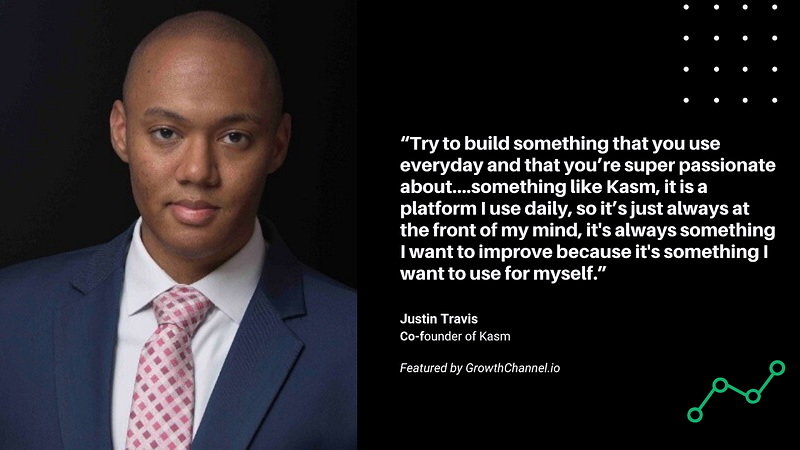
“Try to build something that you use everyday and that you’re super passionate about…. something like Kasm. It is a platform I use daily, so it’s just always at the front of my mind, it’s always something I want to improve because it’s something I want to use for myself.”
5. Know and address your user’s pain points
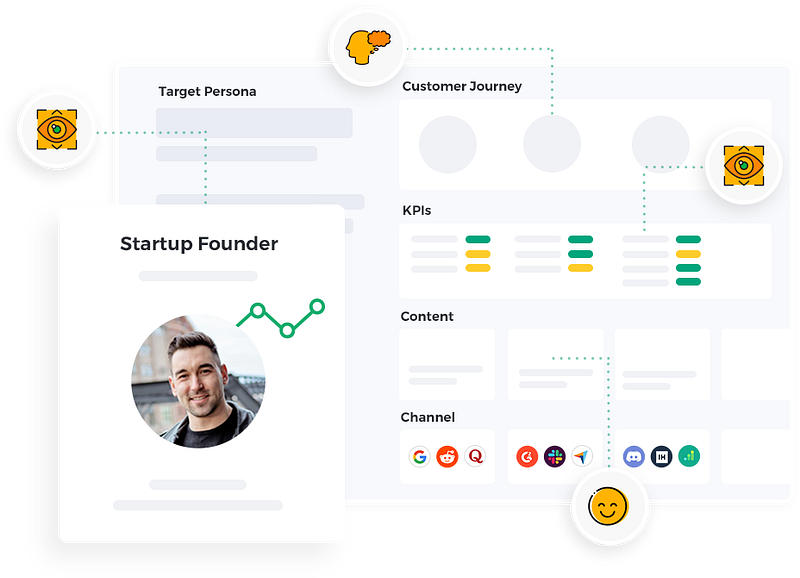
Whenever you’re trying to sell a product to a potential customer, you always want to explain to them why it’s valuable and how it will improve their lives. Therefore, you have to know the problems your target audience is facing so you can determine the best solution. Justin knows Kasm is great for people who want a browser isolation solution, so he targets similar keywords with his Google ads. This way, he can drive relevant traffic to his website. Once a user clicks on an ad, they’re brought to a landing page that’s “tailored towards explaining how Kasm is a turnkey solution” for their problem, immediately acknowledging their pain points and explaining Kasm’s unique value.
6. You can’t just focus on building your product, you need to actively seek out potential customers
“Ultimately to grow your business you need to get your product or your solution in front of the right people, and it is challenging.”
Justin explained the most challenging, but important, part of running a startup is “getting it in front of the right people.” Founders often get so caught up in creating and expanding their product that they forget to sell it. If you don’t know who your target audience is, or how to communicate with them, you’ll waste time and resources engaging with people who have no interest in your brand. Startups need customers to generate revenue and word of mouth, two aspects that are key for a sustainable business. You also have to consider your competition. For Kasm specifically, many competitors like VMware and Citrix have huge budgets, so they can easily spend more on marketing and Google Ads. To combat this, Justin and Matt use slightly different strategies. They try not to bid on the same keywords and they focus more on engaging IT professionals, the open source community, and technology enthusiasts in Reddit, blogs and Youtube.
Justin also stressed the importance of crafting a short, focused elevator pitch that sums up the idea and value of your product. “One of the hardest questions that someone can ask me is, “Hey, what is Kasm?” I think founders should always be focused on honing that little three sentence elevator pitch: what is it that I have, what value does it provide, and why is it different from everything else out there?” Having a focused message not only makes it easier to capture someone’s attention, but it also helps your team stay on track with the main vision of the startup.
7. Focus on your vision and stick to it initially, but once you have customers, listen to them
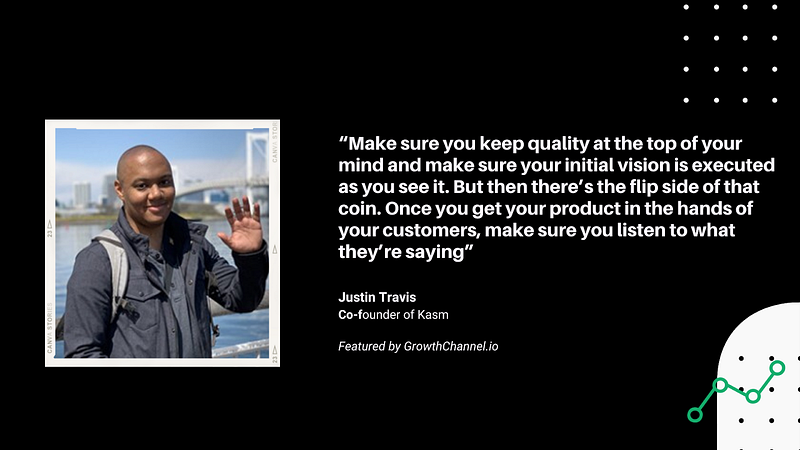
“Make sure you keep quality at the top of your mind and make sure your initial vision is executed as you see it. But then there’s the flip side of that coin. Once you get your product in the hands of your customers, make sure you listen to what they’re saying”
When you first begin, Justin recommended sticking with one main idea. This prevents you from getting overwhelmed and makes it easier to communicate value to initial customers. It’s tempting to start expanding and adding features right away, but you need to build a great product and test it with the market first. At the end of the day, you need to satisfy the needs of your customers if you want to stay in business.
Once you start seeing success with your startup, it’s important to listen to your customers! They’re the ones paying for your product, and they’ll likely have some great ideas about how you can improve. Justin and Matt thought browser isolation was the main purpose of Kasm, but it’s use cases have developed and grown in ways they never thought about. Justin believes Kasm’s success has come from sticking to a core vision, but also being flexible and willing to adapt to what customers want. Regarding this “listen and learn” mindset, Justin said: “Just try not to have an ego about it. You will have bugs, you will have problems…try to be as receptive as you can.”
8. Optimizing your marketing and ads is an ongoing process
“It’s a constant project I would say, and it requires constant care and feeding.If you just set ads and walk away, you’re probably either going to have no engagement or you’re going to spend a lot of money with no return on investment.”
As mentioned, one of Kasm’s main marketing channels is Google Ads. During the interview, Justin explained that Kasm is always refining and testing different ad settings to maximize return on investment. It definitely takes some trial and error. Marketers need to collect data and then use that data to make better targeting decisions. It often turns out that we don’t know as much about our customers and target audience as we think we do. Your initial targets may not be engaging with your ads, and you don’t want to waste resources on a persona that isn’t going to convert. As your business grows and evolves, you may also find that your target audience shifts or changes, and your digital ad settings need to reflect these updates.
9. You can’t ignore the legal documents and contingencies required to organize your business
Justin explained that the actual process of creating a business can be quite difficult, especially for tech folks. Although it’s easy to ignore all the legal documents, it’s incredibly important to take the organization of your startup seriously, especially if you want to see long term success. Although tedious and often confusing, contingencies ensure you have a plan for any situation your business may face in the future. “Take care of it as soon as possible, but make sure you get some consultation about all the decisions you have to make,” Justin emphasized. He even recommended The Founder’s Dilemma, a book by Noam Wasserman, which helps founders avoid common mistakes and anticipate different scenarios.
10. Your team can make or break your startup
Justin’s advice is simple: “Get the right people on the bus.” You need the right people to help build the product and bring it to the market. The first few hires are really important decisions, but they’re difficult to get right, especially if you’re not super knowledgeable about the function or job requirements. Justin recommended learning about the position you’re hiring for and verifying candidates through research and recommendations. He also stressed the importance of implementing good processes and documentation so new employee onboarding is as quick and seamless as possible.
Want to hear more awesome startup stories? Growth Channel is teaming up with Sloop.ai to interview a new founder on Clubhouse every second Friday of the month with the club Go, Go, Startups! Attend the next session and participate in a live Q&A!


