
From Dance Floors to Battlefields: The Rise of Robotic Dogs in Military Operations
How Dancing Robot Dogs Are Revolutionizing Military Applications with Their Spatial Awareness Capabilities
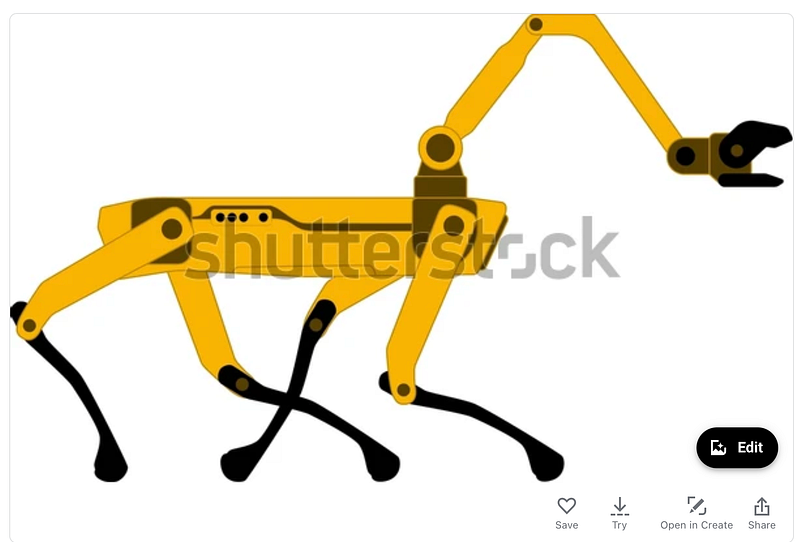
In the YouTube video, seven Spot robots from Boston Dynamics dance to the song “I’m On It” by the world-famous boyband BTS. The seven Spots dance with precision and synchrony, like the seven men of BTS.
Also like the dancing men from BTS, robot dogs are joining the military.
The intersection of dance, military training, and robotics may seem like an unlikely convergence at first glance. However, upon closer examination, the interplay between these seemingly disparate fields reveals a fascinating landscape of shared principles, innovative applications, and potential advancements.
Importance of Spatial Awareness in Dance and Military
At the core of dance lies a journey of self-discovery, wherein dancers explore their bodies intimately, honing proprioceptive abilities crucial for spatial awareness.
Through immersive experiences in choreography and improvisation, dancers develop a spatial intuition enabling them to navigate complex environments seamlessly.
This heightened awareness extends to depth perception, enhancing not only the aesthetic quality of dance but also fostering a deeper connection with the surrounding environment.
Surprisingly, dance has a longstanding history intertwined with military training. Ballet, for instance, traces its origins back to the French state and martial fencing traditions. In historical contexts, courtiers were trained not only in the art of dance but also in swordsmanship and equestrianism simultaneously.
This multifaceted training cultivated skills such as spatial awareness, coordination, and discipline — qualities essential for success both on the battlefield and the dance floor.
Teaching Dog Robots to Have Spatial Awareness
If you have a group of robots dancing together, it’s going to look bad if they are running into each other.
How can we prevent this from happening?
First of all, equipping robots with an array of sensors such as cameras, depth sensors like LiDAR, and inertial measurement units (IMUs) is essential. These sensors serve as the robots’ sensory organs, enabling them to perceive their surroundings accurately.
The information gathered from these sensors forms the basis for the robots’ spatial understanding.
Once equipped with sensors, the next step involves creating a real-time map of the environment using simultaneous localization and mapping (SLAM) techniques. This mapping process allows robots to understand their position relative to their surroundings and navigate through the space efficiently without colliding with obstacles.
Moreover, implementing computer vision algorithms facilitates object detection and tracking, enabling robots to identify and monitor objects, including humans, in their environment. This capability is crucial for robots to adjust their movements dynamically, avoiding collisions and synchronizing their actions with human interactions.
Furthermore, motion planning algorithms play a vital role in enabling robots to generate trajectories for their actions while considering spatial constraints and the presence of other objects or individuals. These algorithms optimize for smooth and efficient movement, ensuring safe navigation and coordinated interactions.
Additionally, interaction design plays a pivotal role in shaping the behavior of robots in response to environmental cues and human interactions.
Moreover, incorporating machine learning algorithms allows robots to learn from their interactions and improve their spatial awareness over time.
Reinforcement learning techniques can be employed to reward robots for safe and effective navigation and interaction behaviors, fostering continual improvement.
Finally, testing and iteration are integral parts of the process, involving the continuous evaluation of robots’ performance in diverse environments and scenarios.
By collecting data from these tests, areas for improvement can be identified, leading to iterative updates to algorithms and robot behavior.
How Robotic Dogs Are Being Used By Military
Robotic dogs equipped with sensors and cameras are being used to gather intelligence in dangerous or inaccessible areas. They can provide real-time video feeds and data to troops, helping them make informed decisions without exposing themselves to potential threats.
The robot’s capabilities are also helpful for search and rescue. In disaster scenarios or combat zones, robotic dogs equipped with sensors and communication devices can search for and locate survivors or injured personnel. Their agility and ability to access confined spaces make them valuable assets in urban search and rescue operations.
Additionally, robotic dogs can be used to patrol military installations, bases, and perimeters, enhancing security and surveillance capabilities. They can be programmed to detect intruders, suspicious activity, or unauthorized vehicles, providing an additional layer of defense.
Robotic dogs are capable of doing one of the more dangerous jobs for soldiers, which is detecting bombs.
Robotic dogs can be deployed to detect and disarm improvised explosive devices (IEDs) and other explosives. Their agility and maneuverability allow them to navigate challenging terrain and tight spaces, reducing the risk to human EOD technicians.
Finally, robotic dogs can assist in transporting supplies, ammunition, and equipment across rough terrain, reducing the physical burden on soldiers and improving logistical efficiency.
Robotic Dogs Increasingly Used by the U.S. Military
Could dancing robotic dogs, with their extraordinary spatial abilities, hold the key to fostering global peace and unity?
While that may seem far-fetched, their potential to safeguard the lives of soldiers is undeniable.
It’s been nearly three years since these robotic canines were introduced alongside U.S. service members. Since then, they’ve transcended their initial role as mere gadgets to become indispensable assets, serving as vital “eyes and ears” in various military operations.
According to Peter Singer, a fellow at the New America Foundation, and co-author of Likewar: The Weaponization of Social Media, these robots are poised to play an increasingly significant role in environments where legged mobility is essential.
Originally designed for entertainment, these dancing robotic companions have surpassed expectations, showcasing remarkable advancements in design and technology. While the notion of troops being entertained by groups of dancing robots might seem fanciful, it’s a testament to the potential breadth of their utility.
Nevertheless, as quadrupedal robots continue to evolve, their militarization raises ethical concerns about the balance between innovation and responsibility.
The integration of weaponry onto these platforms underscores the need for careful consideration of their applications.
Ultimately, the ethical question looms: will this technology be predominantly employed to preserve or jeopardize lives?
Despite these uncertainties, there remains hope that the primary focus will be on utilizing dancing robotic dogs to safeguard human lives rather than endanger them.