
WORK-LIFE BALANCE | PRODUCTIVITY | REMOTE WORK
From Couch Potatoes To Productivity Rockstars
How to successfully manage your remote workers by getting the best out of your team.

No more daily commute to the office, no more morning coffee from your local Starbucks and morning stand-up’s are a thing of the past. Sound familiar?
There have been changes for us all recently and whilst we find new ways to manage our daily routine, your work life doesn’t and in fact, shouldn’t change.
Although you’re not physically present in the office, this doesn’t mean things need to change entirely. Through the use of technology, you’re able to reinvent experiences as you had when you were in the office. As a manager, you can still manage your team as you were before. That being said, you don’t need to be pinging your team throughout the day to make sure they’re online or actually working — trust is very important. It’s the most essential part of working remotely and building on your remote manager-employee relationships.
According to Buffer’s State of Remote Work report, the most challenge whilst working remotely is collaboration, communication and loneliness.
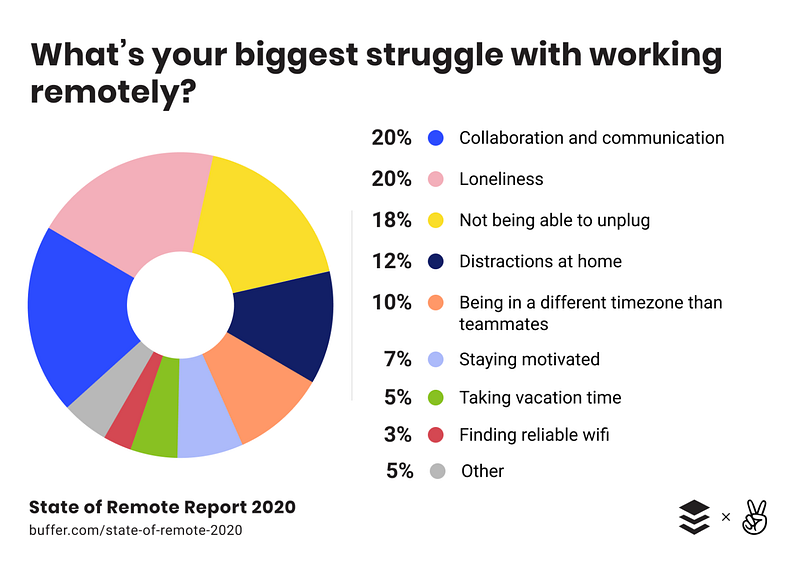
If you want to avoid making any rookie mistakes whilst managing your team remotely, check out this list of top tips on improving collaboration, communication and loneliness within your team.
Making changes to your routine, one to ones and daily management style will help your team better perform. Turning your team into the productivity rockstars you always dreamt of working with.

Share Daily Updates
Creating a routine around sharing what you’ve accomplished during your day is not only a great way to demonstrate accountability and self-reflect but also your team members are kept up to date on your collaboration throughout the day.
Video-On
During calls, create a ‘video-on’ policy to feel more connected with your team. Whilst working from home, many of our communication is nonverbal and without seeing peoples expressions it can sometimes be difficult to understand what they’re really thinking. When you’re video is on, you’re able to address any problematic non-verbal expressions and better understand your team, allowing you to feel more connected.
Annual Meet-Ups
You can’t go wrong here, the team get SO excited around this time of year. You’ll get a fair few “oh you look so different in real life than online”. This time together helps employees match in-person personalities to virtual names, and allows everyone to present the latest projects and discuss the company’s future direction. The energy during these meet-ups are so infectious, and it’s great hearing your team share stories and bond.
Schedule weekly one-on-ones
Keeping a consistent and open line of communication between yourself and your team provides time for you both to check-in and prioritise work-load. If you absolutely have to, reschedule it, but never cancel — it’s important to not lose touch of your team so keep this in the weekly diary.

Whatever changes you decide to take on how you’re currently managing your team, be sure to check in regularly to understand how they’re getting on. By investing time in regular check-ins will remove the challenges your team could be facing by being not in the office.
If you enjoy reading stories like this and you want to support me, why not consider signing up for a Medium membership? It will only cost you $5 a month — and you’ll get access to all stories on Medium!
If you use this link, I will earn a small part of that, otherwise, if you want to stay updated when I share a new story, you can signup here, for my free newsletter!


