
From complete hack to GTO Master: My Poker Journey
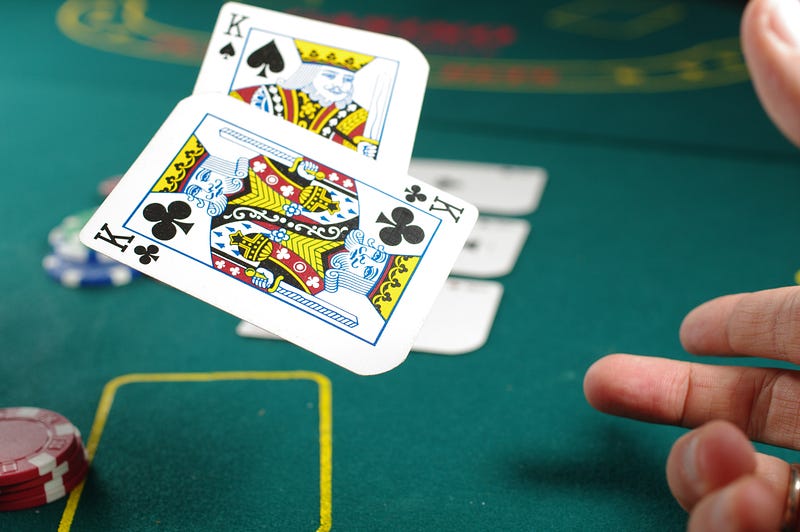
Today marks the first step in my ambitious journey — evolving from a complete hack to a master of Game Theory Optimal (GTO) Poker. I’ve decided to share this journey with you — not only as a means of solidifying and enhancing my own understanding but also to keep track of my progress as I delve deeper into the intricate world of poker strategy.
Until now, my experience with poker has been chiefly recreational. I’ve had my fair share of small victories in tournaments, (when I say this I mean finishing in the top 80), and a basic understanding of poker theory. But, if I’m brutally honest, my game has often been guided more by hope than strategy. The deceptive allure of high cards like Aces and Kings has often led me astray, causing me to overplay weak hands and miss out on more profitable opportunities. At times I’ve played too tight and watched my pot slowly dwindle or played too recklessly from the get-go as I try to take control of the game.
So, why take on this challenge now? I’m someone who thrives on challenges. The complex mathematics that underpins Poker, the strategic thinking it requires, and the tantalizing prospect of swaying the odds in my favour — all of these aspects draw me towards the game. Moreover, I see a captivating coding component that I believe can bolster my training and enable me to analyze the game more thoroughly.
With this in mind, I’ve decided to delve into GTO Poker, a strategy designed to make one’s gameplay unexploitable by ensuring that every possible move is equally profitable. This sophisticated, mathematically grounded approach has been adopted by many of the world’s leading poker players, and I aspire to elevate my game.
GTO
Game theory is a mathematical model used in economics, political science, and other disciplines to understand and predict behaviour in strategic situations where an individual’s success depends on the choices of others. In poker, players’ decisions impact each other’s outcomes. So, the idea behind GTO poker is to make decisions that are optimal in the sense that they balance profit and risk, regardless of what your opponents decide to do.
GTO poker is not about always playing the hand that has the highest probability of winning. Instead, it’s about making your opponent indifferent to their potential actions by ensuring that, no matter what they do, your strategy yields the same expected value.
Here are some key concepts:
- Mixed Strategy: GTO often involves a “mixed” strategy, meaning you don’t always play the same hand in the same way. You might, for example, bluff with a particular hand 30% of the time and fold it 70% of the time. This makes you unpredictable and therefore harder to exploit.
- Balancing Ranges: A significant part of GTO is about balancing your range of hands, so you’re not too weighted towards strong or weak hands in any given situation. This prevents your opponents from exploiting you based on the strength of your hand.
- Indifference Principle: The goal of a GTO strategy is to make your opponent indifferent to their choices. If you’re playing GTO correctly, it shouldn’t matter to your bottom line what your opponent decides to do.
It’s a challenging strategy to master, as it requires a solid understanding of poker theory and the ability to calculate and execute complex strategies. I’ve got a very steep learning curve and I want to see how I can use my coding experience to improve my chances.
Poker Math
Understanding poker math is crucial, especially when you’re aiming to play at a Game Theory Optimal (GTO) level. Here are some key mathematical concepts that you should consider:
- Pot Odds: These are the odds the pot is offering you on your next call. Calculated by dividing the amount of total pot after you call by the amount you need to call. For instance, if the pot is $100, and you need to call $20, the pot odds are 5 to 1. You should call if you think the chances of having the best hand are better than the pot odds you’re getting.
- Implied Odds: These are the odds considering potential future earnings. Even if the pot odds aren’t quite high enough to justify a call, the fact that you can win more money later in the hand can make the call profitable.
- Equity: This is the percentage of the time you will win the hand, considering all the possible cards your opponent might hold. It requires understanding hand ranges and the likelihood of different hands beating yours.
- Expected Value (EV): This is a measure of the amount you expect to win or lose per bet on average over the long run. Positive EV (+EV) implies a profitable bet, and negative EV (-EV) implies a losing bet. EV is calculated by multiplying the amount of money you could win by the likelihood of winning, then subtracting the amount you could lose multiplied by the chance of losing.
- Combination and Permutations: Combinatorics involves calculating the likelihood of different hand combinations. For instance, there are six ways to be dealt pocket pairs because there are six permutations of any two cards.
- Independent and Dependent Events: Understanding these concepts can help you calculate complex probabilities. In poker, certain events are independent (like the probability of flopping a set with a pocket pair), while others are dependent (like the probability of getting an ace on the turn, given that an ace came on the flop).
- Bayes’ Theorem: This formula can be used to revise probabilities based on new information. This can be handy in poker when the likelihood of an opponent having a certain hand changes as the game progresses.
All these concepts sound complicated, but I’m hoping with time and as I start to play more and practice, they will become second nature. Mastering poker math not only helps you make better decisions but also gives you an edge over players who rely solely on instinct and observation.
This is just the beginning, and I’ve chosen to document my journey here. I plan to share the trials and triumphs, the lessons learned, and the exciting insights I’ll gain along the way. If you’re interested in poker, coding, or simply the thrill of learning and personal growth, I invite you to join me on this journey.
In the subsequent articles, we will dive deeper into the concepts and tactics of GTO Poker, and I will chronicle my experiences and advancements as I navigate this exciting path. I look forward to sharing my journey with you all and documenting my many failures along the way.