
From Bullied to Bully and the Road to Redemption
I became everything I hated.
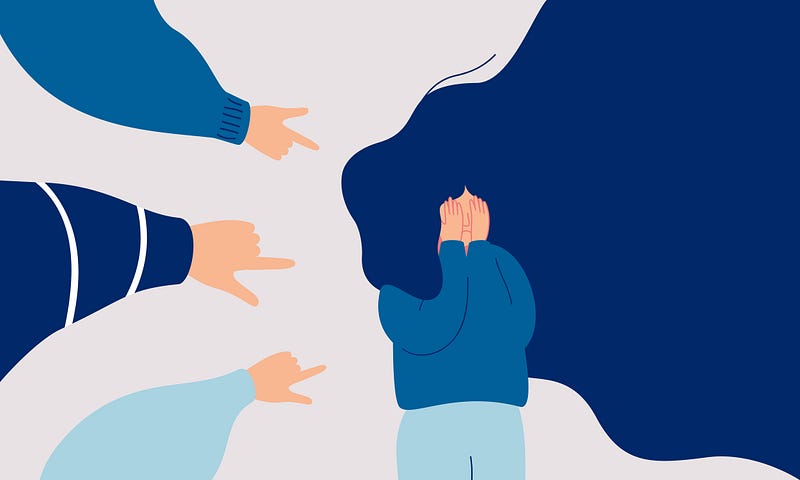
“Battle not with monsters, lest ye become a monster, and if you gaze into the abyss, the abyss gazes also into you.”
– Friedrich Nietzsche, Beyond Good and Evil
It’s one of the things I’m most ashamed of. After years of my peers bullying and abusing me, I became the bully.
As I’ve written before, my school years were a continuous nightmare. I was physically and verbally abused daily. The verbal abuse has shaped my entire life, and I struggle to trust people even now.
Things changed when I was 18. I’d been training in Karate and Boxing and had moved to university. No one knew the old me, and people gave me respect as I climbed the grades to the coveted black belt.
I was finally seen as a tough guy. To my broken and immature mind, this was all that mattered. I never thought I’d get to this point. The fact that people respected me for my fighting ability was intoxicating.
The problem was that my mind and ego needed to catch up to my body’s progress. I lived on a razor’s edge where I had to take the bravest option in every situation, or I’d berate myself as a coward. I was as abusive to myself as any bully from my past.
It was against this backdrop that I turned into a bully.
The bully.
In my second year of university, I was physically strong and ready to fight at any moment. No perceived slight would go without confrontation.
Unlike the first year, we were responsible for finding our accommodation. I moved into a house with a friend and three strangers. One of the strangers was also known as a tough guy. At 6 feet 4 inches and with a reputation for fighting, we were a bad combination for each other.
We connected, but our conversations revolved around fighting, training, and violence.
It started innocently. We began to play pranks like knocking on our housemate’s door and running away. Sometimes, we’d hide his guitar or move things to play with his mind.
This progressed into us putting him down. At the time, I thought it was banter, but I failed to appreciate the dynamic between us. I should have known better.
He didn’t feel like our equal, and we scared him. So everything I dismissed as a “joke” felt like a mockery to him, and he had no respite. He felt unable to ask us to stop.
One day, we knocked on his door and hid, and he screamed, “STOP BULLYING ME.” The next day, he moved out while we were in lessons.
One of the others also moved out in protest. We’d created an oppressive atmosphere where no one felt comfortable.
I never saw those guys again; it was a year before I realized what I’d done. At the time, I’m ashamed to say I felt cocky. I dismissed them as sensitive and weak. They couldn’t hang with the big boys.
The abused had indeed become the abuser.
On another occasion, someone from my Karate club commented that my kicks weren’t as good as my punches. For that perceived slight, I challenged him to a kicking fight.
It was only when I was away from my friend that I realized how intolerant and vile I’d become.
I wish I could apologize to the people I upset. I wish I could tell them the weakness wasn’t in them but in me. I hope they went on to live their lives without any lasting effects from my behavior.
I craved the quiet confidence I saw in some of my fellow Karate students. They didn’t go around trying to prove themselves. They avoided conflict whenever possible.
For the second time in my life, I had to try and find myself again. I’d proven I was physically capable, but now I had to learn how to be calm as well as assertive.
I had to learn how to stop being a bully.
1. I had to understand why I’d become a bully.
This one was easy. I’d overcompensated. I masked my fear with aggression instead of cowardice.
We used to have a dog with three legs — He lost one in a car accident. He was the friendliest dog I’ve ever known, yet when other dogs spotted his missing leg, they’d attack him.
Eventually, my dog got in first with the attack. He expected it, so he would lash out at any dog that came near.
I was like my dog. I expected people to attack me.
As soon as I understood what was happening, I changed my reactions to become less aggressive. I reassured myself that I knew how to fight if necessary but that 99% of the time, I was safe.
2. I took time to think.
Most of my reactions came from an instantaneous response. A trigger happened, and I immediately lashed out. What would happen if I took time to think about my response?
Something as simple as walking away put distance between myself and my reactions. I realized that whatever I do, it’s my decision. I have no excuses, and my words and behavior are under my control.
It was time to stop blaming people from school or society or people triggering me. I had to stop blaming my friend for being a bad influence.
I became a man the day I took responsibility for my actions and when I began to feel remorse for my past behavior.
3. I removed myself from my friend.
At the end of the year, I moved into new accommodation and never met up with my friend again. He called me a few times, but I always made excuses, and eventually it stopped.
Although I’d stopped blaming him for my aggression, it was clear we were terrible for each other. He made me feel good about aggression when, instead, I should have felt ashamed. Sometimes, we have to make hard decisions for our own good.
4. I learned to empathize.
I’d always been a sensitive boy but lost my way. I knew I needed to reconnect with people and learn to trust again.
I began reading books by Iyanla Vanzant. I opened up as I read everything she’d written and began practicing her philosophies.
In a twist of fate, I moved into a new apartment. Across the hall were three spiritual guys. We became good friends and spent hours discussing philosophy.
I was now guided in a more positive direction. I learned how violence was born from fear and how love is what connects all of us.
I began doing voluntary work for the Samaritans — a suicide and crisis hotline. I fell in love with the work and did every shift possible. I took the most heartbreaking calls, and many callers told me I helped them. They didn’t realize how much they helped me, too. The hardness that had formed around my heart broke open as I learned to care about other people again.
I began to look for positive things in every person I met. What did it look like to be respected AND kind to others?
Final thoughts: Understanding the impact.
When I was bullying my housemates, it didn’t seem serious. I was deluded and thought it was banter and they were overreacting.
Maybe this is how my bullies at school felt, yet it still did me irreparable damage.
To my shame, I didn’t consider the impact on my friends. I didn’t look at the big picture — many people who experience bullying turn to self-harm. Some will have a failed suicide attempt, and others will develop an eating disorder.
Bully victims also achieve lower grades, which reduces their career prospects.
Being bullied had left me self-centered. Empathy was the solution. When it comes to relationships, empathy is ALWAYS the solution.
If, by some miracle, my former housemates ever see this article, please know that I’m sorry. The weakness was on me, never you.


