
WRITING
From 1 to 93 Articles: Here’s How I Mass-Produce My Articles
A sneak peek into my writing factory
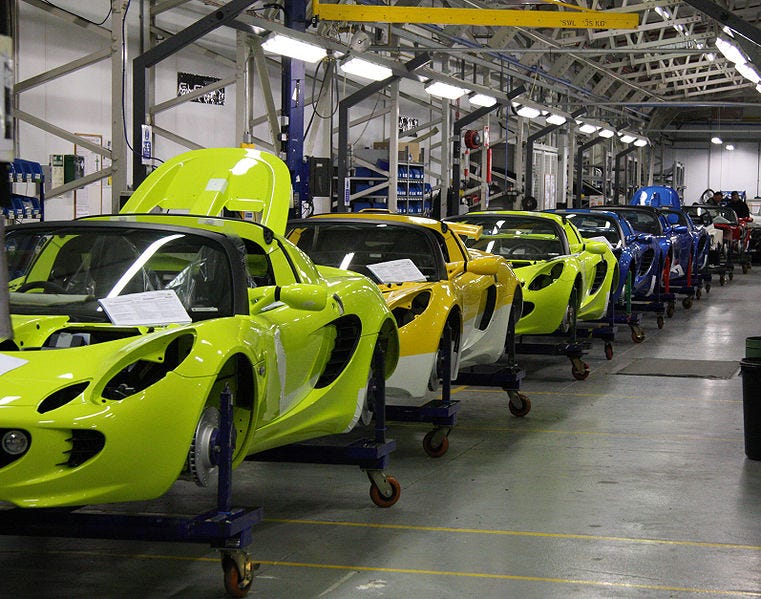

On February 1st, 2022, I started a 100 days of writing challenge and this is article number 93.
Writing one quality article per day has been a challenge for me since I also have a full-time job. And I had to industrialize my article production to survive.
Although there are always ways to improve, I am pretty satisfied with my writing process right now.
Over this journey, I’ve sometimes given you some writing tips as I discovered them. Here are two articles of mine on the subject:
- 3 Must-Have Rules to Write Deep Impact Articles
- Unstoppable Writing: 3 Easy Hacks to Unleash Your Creative Writing Flow
But since I further improved the way I’m writing, I’ll give you an update today. Here’s a sneak peek into my current writing process…
The incubation list
When you write intensively, idea generation is critical. Although I’ve recycled some of the content from my French blog on productivity, most of my articles were brand new. The problem is your subconscious mind works best when your ideas simmer over a couple of days.
To do this, it’s critical to note down many article ideas in advance. Then, once I’m confident about an idea, I can expand it progressively into a full-fledged article.
That’s what I have done by creating an “article incubation list”. The way I do it is to plan the articles day by day. My target is to know which articles I’m going to write in the next seven days.
This is not a rigid list. It changes depending on my inspiration. So I have to rearrange it from time to time. This is why I don’t plan for more than seven days.
I also like to have lists of article ideas by the source of inspiration. Some articles are inspired by an anecdote, some by questions on Quora, or by an image. I also have a couple of book projects for which I like to write articles as a series.
So basically, my article incubation list is organized that way:
- The first section is my 7-day article writing plan
- Then, there’s a list of article ideas sorted by their source of inspiration
- Then I have my article backlog: those are finished articles that I need to publish
- Then there’s my archive of published articles
This is the way I do it right now. But I may tweak it a bit. For example, it would be nice to know which article ideas are most mature in a visual way, by counting the number of words in the draft.
Writing the article
When I have an article idea, I create a separate file where I jot down ideas related to it. Then, when I go ahead with the article, I use a template to make sure I follow my best practices while writing it.
Here are the main parts of this template:
- YOUYOUYOU: this is a code that reminds me I should write for the reader when I write an article.
- Evidence: another code that reminds me I have to provide evidence for what I’m writing.
- Be specific: this is a list of best practices from my article: This Improv’ Trick Will Make Your Articles Unforgettable.
- 10 titles: this is so I don’t forget to generate 10 title ideas before I choose the final one.
- 10 subtitles: a selection of accompanying subtitles (I tend to use this list a bit less often).
- Research: this is where my ideas are going, and I also add links to various resources and papers.
- Featured photo: here, I like to find two or three candidate photos for my article
- New Thing: here I usually write what thing will hook the reader, it can be a metaphor, an anecdote, or a result from a study for example.
- Purpose: I like to write here the message of the article in one sentence
- The different parts of the article
Here’s an example of what it looks like for an actual article I wrote: (Please note I have folded some of the headlines as they were taking too much place to display)
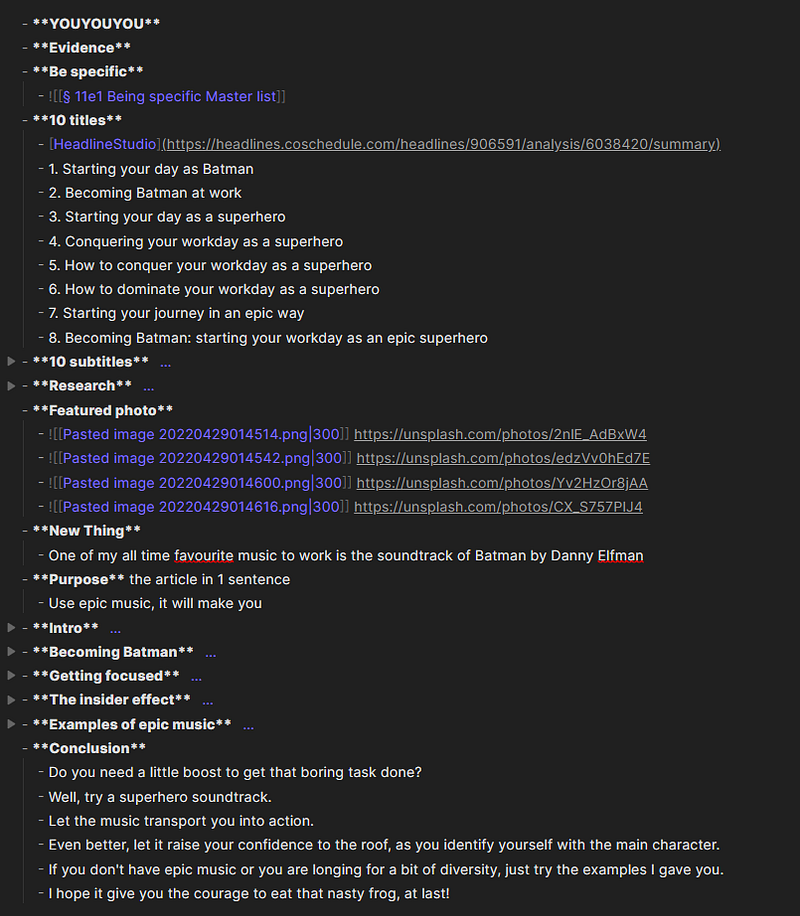
Also, you can see in this screenshot that I don’t always fill this template perfectly. For example, I have generated only 8 titles (not 10), and I didn’t finish my sentence in the “Purpose” section.
But that’s ok. In fact, getting productive is all about being imperfect. In my opinion, it’s better to publish many good enough articles instead of publishing a few perfect articles (if you ever think a perfect article exists).
Linking to other notes
In the previous screenshot, you might have been a bit intrigued by the way the text looks. This is the “Markdown documentation” format. It allows specifying the format of the page using plain-text syntax. For example, if you want a word or paragraph to be displayed in bold, you need to type two asterisks before and after it. Right now, I’m using the application Obsidian to write my articles. It is mostly free. And there are a few optional paid options, such as synchronizing your data in the cloud, or publishing your notes on the internet.
I already spoke about this software here: Building Your Personal Encyclopedia. Obsidian is part of a new generation of note-taking apps that allows bi-directional links.
This means you can create a web of your own notes. The graph view looks like this:
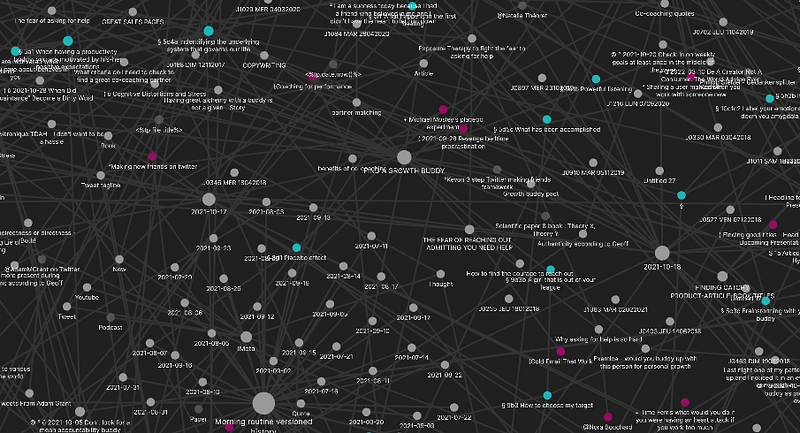
To link to other notes you have already taken for various subjects, you just need to write their name surrounded by double square brackets. For example, here’s how the research section looks in the previously mentioned article:
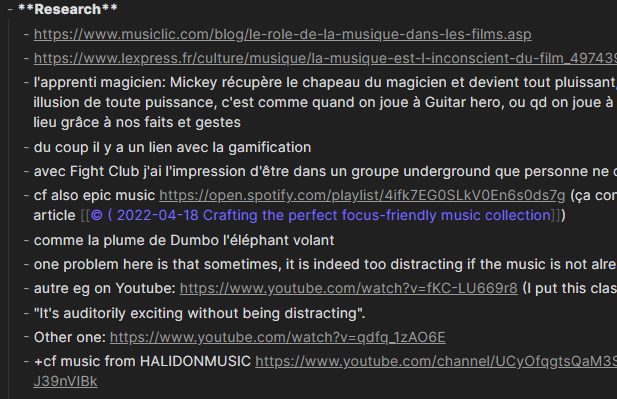
As you can see, there’s a link here in purple to another article I already wrote on the subject. I also have many “permanent notes”. In the Zettlekasten system, it means a short note written in your own words about a particular subject.
Here are a couple of them related to “Motivation” from my own collection:
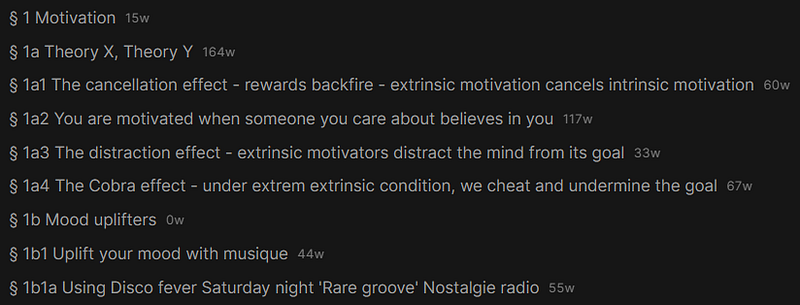
As you can see, I’ve created a kind of hierarchy between them. But in reality, they are supposed to be densely linked to other remote ideas. So, when you do your research while writing an article, you can link to those different permanent notes. And you can browse the graph to see related notions you already have written about.
Right now, I’m very bad at making lots of links between my permanent notes so I don’t link to permanent notes very often. But the option is here and has a lot of potentials.
A story repository
Last but not least, I like to illustrate my articles with stories. That’s why I like to take note of the different stories I come across.
Here’s my story repository right now:
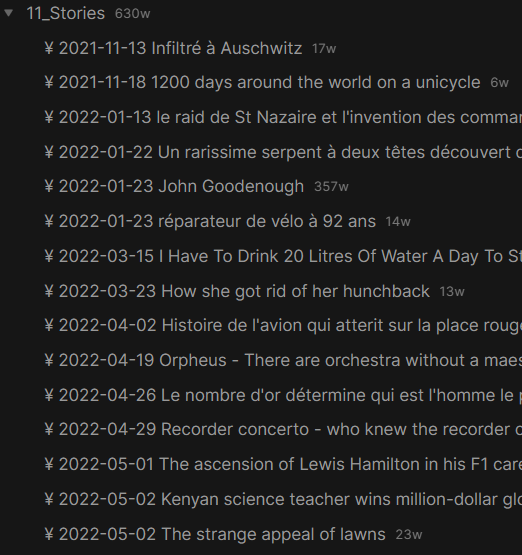
It is pretty tiny, but I plan to extend it. I often feed that list while watching documentaries and reading “Best of Pocket” articles.
—
Do you wish you could increase your article publication rhythm without compromising on quality? Then you need to find a way to mass-produce your articles:
- First, make sure your subconscious mind constantly works in parallel on various article ideas.
- Then, create an article template that helps you follow your best practices.
- You will also benefit from having a large web of interconnected ideas that you can browse while conducting your research for a given article.
- Finally, a story repository will help you make more grounded and appealing articles.
I hope you enjoyed that sneak peek into my writing factory.
Please feel free to give your feedback in the comment and mention any complementary practice that might be useful to write articles more effectively.
On February 1st, 2022, I embarked on a 100 days writing challenge. This is post number 93.