
Friedrich Nietzsche and the Second Explosion of Individualism
Nietzsche wanted to tear down everything, literally everything, and start anew.
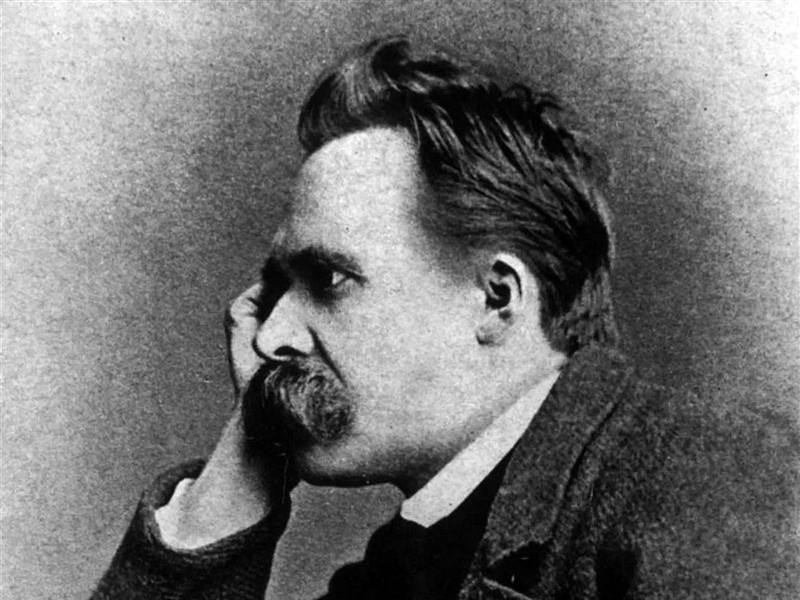
Nietzsche called for us to move beyond tradition and forge a new path. Whether we want to or not, Nietzsche says, we must forge that new path because the old ways are dead. He is infamous for declaring that “God is dead” in his book The Gay Science (1882). Often quoted, but almost never in context, this is not a declaration about the existence of God but about something he found much more relevant. Nietzsche understood that whatever truth Christianity may hold, its tradition was integral to European culture. What he was announcing as being dead was everything that was built on and sustained by this Christian tradition, including and especially the whole of European morality. This moral system was his real target, and this system, he was convinced, was destined for collapse. Worse, Nietzsche claimed, the Christian moral system that had evolved in Europe was harmful to human beings. Humanity must abandon the old foundation, leave the dead and crumbling structures built on it, and create a new morality that is beyond the old categories of good and evil.
Nietzsche’s Rewriting of Moral History
Yes, beyond good and evil is where we must go. Nietzsche’s philosophy is primarily a moral philosophy. His philosophy touches on many other topics because he correctly understands that morality is foundational to and intertwined with all other aspects of how we are and what we do. He saw European culture and society in crisis and that was because the European moral system was dead; it just did not realize it. Therefore, his critique of European culture had to be a critique of European morality.
What exactly was so wrong about European morality? Nietzsche argues in his book, Beyond Good and Evil (1886), that the prevailing moral law based on good and evil is an artificial creation that replaced a more natural morality. We lie to ourselves through our philosophy, laws, and religion that our definitions of good and evil are objective, universal realities. They aren’t. We invented a moral law to constrain ourselves and others — a moral law, he claimed, that was born out of resentment.
Nietzsche’s radical argument is that in humanity’s distant past, a social order emerged with a higher class and a lower class. This arrangement spawned a pair of evaluative terms: “good” and “bad.” Over time, he argues, the idea of goodness came to be associated with character traits that those of the privileged higher class saw in themselves and by which they distinguished themselves as superior to the masses, who were “bad.” Traits such as strength, power, courage, pride, willfulness, and wealth were good and noble virtues. Traits such as weakness, cowardice, timidity, pettiness, and humility, associated with the lower class, were considered bad. The rulers of the ancient Mediterranean societies, Nietzsche claims, were self-directed, their only justification for their actions being their own judgment. They practiced self-mastery and thus mastered their domains and others. This is why Nietzsche, in Beyond Good and Evil, calls good/bad “master morality.” Nietzsche is oversimplifying, but ancient history, a field he knew quite well, does support his basic idea.
The good/bad evaluative terms were gradually replaced with the concepts of “good” and “evil.” This pairing focuses on judging as evil violations of the well-being of others and, therefore, judging as good altruism for others. Nietzsche grants that altruism has some common sense to it, and he is not against feeling love and care for others. Nietzsche’s problem with good/evil thinking is its focus on evil to the exclusion of good.
What Nietzsche thinks happened is that people who lost out when the noble higher classes exerted their power came to resent those with power and wealth. Feeling powerless, downtrodden, and uncertain of themselves, and having no value within good/bad thinking, they revolted against that morality. They engaged in what Nietzsche, in Beyond Good and Evil, provocatively calls “slave morality.” Weaker people feared and resented stronger people; to express their bitterness, they invented the moral concept of evil. The values that the higher class had called “good,” the slave morality now condemned as “evil.” The values that the higher class had called “bad,” the slave morality now called “good.” The qualities of charity, humility, abstinence, compassion, patience, resignation, and submissiveness were now considered virtuous.
Nietzsche argues that demanding that no one be made lesser condemns anyone who expresses self-interest. All of the traits that are good in the good/bad evaluative pairing — strength, power, courage, pride, willfulness, wealth, and so on — are condemned as evil in the good/evil evaluative pairing. That means that the good/evil evaluative pairing declares as being morally good traits such as weakness, cowardice, timidity, poverty, and humility. It is a reversal of the original social order, and this Nietzsche saw as the problem.
Historical evidence for Nietzsche’s theorized sea change in morality is sketchy, but he points blame at a reasonable target: Christianity. He saw the Christian morality of “turn the other cheek” and “the meek shall inherit the earth” as a slave morality. Lacking tangible power, the slaves revolted in the only way they could — through telling and retelling the story of good and evil. This was the revolt and revenge of the slaves — to condemn their masters as evil. The Christian good/evil morality has the appearance of gentleness, kindness, and goodness, Nietzsche claims, but it is a mask for bitter resentment and antipathy for the strong and successful. Nietzsche’s summation of slave morality is as follows: “I dislike him.” — Why? — “I am not a match for him” (Beyond Good and Evil, IV.§185). Because most people lack tangible power in the world, the slave morality of good and evil has enjoyed popularity. When stronger or superior people grab what they want, we can condemn them as evil. We have created the categories of good and evil and use them to judge people and actions.
Moving Beyond Good and Evil — The Will to Power
Okay, so how do we forge a new path beyond good and evil? A good first step, Nietzsche says, is to acknowledge that our primary interaction with the world is in terms of our likes, dislikes, experiences, and lack of experiences, all driven by our instincts. The high-minded notion of the philosophers, theologians, and scientists — that we interact with the world through reason — is a big lie. We are human animals, Nietzsche says, and instinct, not reason, is at the center of human behavior. We have drives, but not so much a drive to knowledge as the learned want to believe. “The greater part of the conscious thinking of a philosopher is secretly influenced by his instincts,” Nietzsche says (Beyond Good and Evil, I.3). That human instinct is another drive that is disguising itself. That drive, a centerpiece of Nietzsche’s philosophy, is the will to power.
Nietzsche’s concept of the will to power has been horribly misunderstood. This is partially because the Nazis misappropriated the concept to justify their murderous regime. For example, the infamous 1935 propaganda film Triumph of the Will glorified Adolf Hitler as the personification of the will to power. The Nazis shamelessly misappropriated Nietzsche as though he were a protofascist, despite the fact that Nietzsche would have vehemently opposed the Nazis and their bigotry.
The truth is that Nietzsche’s will to power is not a will to dominate others. Nietzsche is not Hobbesian in thinking that we are driven by selfish desires. Yes, we are attracted to pleasure and averse to pain, but not in a brutish and destructive way as Hobbes thought. The will to power is a different truth.
From a moral standpoint the world is false. But inasmuch as morality itself is a part of this world, morality also is false. The will to truth is a process of establishing things, it is a process of making things true and lasting, a total elimination of that false character, a transvaluation of it into being. Thus, “truth” is not something which is present and which has to be found and discovered; it is something which has to be created and which gives its name to a process, or, better still, to the Will to overpower, which in itself has no purpose: to introduce truth is a processus in infinitum, an active determining — it is not a process of becoming conscious of something, which in itself is fixed and determined. It is merely a word for “The Will to Power.” (Will to Power §552, emphasis his)
For Nietzsche, the will to power is about rejecting determinism, both material and cultural, in favor of believing in our own power to make and preserve our being. As long as we believe that something other than ourselves is responsible for our happiness, we corrupt our ability to establish our own truth and become ourselves for ourselves. Life itself is the will to power, he says, the will to create and the will to self-preservation. Our basic drive is to overcome obstacles and discomforts and create truth — a truth for us. Yes, we are averse to pain, so we want to overcome it and be free from pain. It can be as simple as we don’t like to be uncomfortable, so we are driven to soothe our discomfort. If we are cold, we turn up the heat. That’s the will to power, not lusting for political power over others. We don’t like not to know or understand things, so we are driven to create beliefs and meaning to feel more at ease. We are our beliefs, and we are driven to create beliefs that are useful to us. In the same way, Nietzsche saw the slave morality and its idea that morality is based on good and evil as a useful facade. Underneath, it was the slaves’ will to power. But now, instead of hiding behind the veneer of Christian European morality, we need to rise up and master ourselves.
What is so radical about Nietzsche’s will to power is that he doesn’t just think that we do create our own truths but that we should create our own truths. This requires, as Nietzsche fully understood, the destruction of all dogmas. ALL dogmas. People bigoted against religion love Nietzsche because he was so antireligion. Nietzsche didn’t hate religion, as some atheists do; he even believed that Jesus really existed. True to Nietzsche’s belief in the will to power, he called Jesus the only true Christian and said that everyone who follows Jesus is a sheep. Don’t follow anyone, Nietzsche would say. Do what Jesus did and forge your own path. “What have we Sons of God to do with morals” (Beyond Good and Evil, IV.§164). Return to the master morality. Strength, accomplishment, and pride are good; timidity and weakness are bad. The will to power is spontaneous, aggressive, and expansive, giving us new interpretations and directions to our lives.
Nietzsche saw the ideas and words of Christianity (similar to Kierkegaard’s conception of Christendom) to be no longer useful — so many archaic dogmas and social traditions that needed to be discarded, just as the dogmas of science and philosophy must be discarded. Nietzsche wanted to tear down everything, literally everything, and start anew. In this, he was similar to Marx in calling for the radical restructuring of society that humanity desperately needed.
This is where Nietzsche is cynical — he believes very few people have the courage to master themselves, much less restructure society. Very few people have the courage to create their own truths. Nietzsche was a person filled with optimism of what people could be but despairs at how little people actually achieve. This is Nietzsche’s cynicism. He thinks he sees a brilliant, positive future beyond our current humanity when we accept our will to power and express our perspectives. We then can create new beliefs, share them with others, and work together to find life-affirming truths that are useful to us.
Nietzsche calls a person with the courage to participate in this process an “Übermensch,” which literally means “over man.” Not “superman” as has been widely misinterpreted, but a man who overcomes. (Yes, “man” because Nietzsche was still in the sexism of his time.) What the Übermensch overcomes is not others, but himself and his human tendency lazily to accept the dogmas given to him. The Übermensch accepts his will to power and joyfully creates new beliefs and new truths. Those who lack the courage to accept their will to power Nietzsche derides as “little gray people” and “shallow ponds” of humanity. They remain stuck in being “all too human.” But Nietzsche was confident that the time of the Übermensch was coming, because the old European morality was dead and humanity was evolving beyond it.