
LIVING WITH ECZEMA
My Entire Life Has Been Marked by Eczema, I Couldn’t Imagine Living Without It . . .

I’ve had eczema for as long as I can remember. Actually, since before I can remember. I was born with it, according to my mother, who told me she used to tie my hands to the crib rails to prevent me from scratching. Inevitably, I’d free myself, scratch my skin bloody and finally fall asleep.
As a child, my crusty, scabby skin drew unwanted attention from other children. I wasn’t allowed to join in a game of cannibals — the chalked circle on the playground was the pot and everyone had to climb in. Not me. “No one would want to eat you anyway.”
When I was foolish enough to wear white clothes, the back and arms were soon speckled with spots of blood. Winter weather, when I could hide my skin with clothes, was my friend. I dreaded hot summer weather.
In a bit of irony, or maybe fate, I spent much of my adult life in southern California, then at almost seventy, I moved to the Languedoc region of France. That was a lack of planning, I didn’t know that it had the hottest summers in all of France.
Soon after I arrived, my eczema flared up. Stress does it and moving, however, well it goes, is stressful. In addition, the notorious Languedoc winds were blowing which was playing havoc with my allergies. (Something else I hadn’t investigated beforehand.
I woke up in the night, itching all over, sat on the edge of the bed and tore at my inflamed skin. By the time the itch subsided ever so slightly, there was blood under my fingers nails, drops all over the sheets. If I’d died in the night and gendarmes had been called in, they’d have suspected murder had taken place.
I dug through my still unpacked luggage for cortisone and realised I’d left a year’s supply of prescription medicine back in the States. This, of course, made me scratch more. The question I was asked most frequently when I told people of my decision to relocate to a foreign country was, ‘what if you get sick?’ With more bravado than common sense, I’d insisted that, other than eczema, I was perfectly healthy and would be fine. More foolishly, I was also of Medicare age and, knew, even before I left the States, that except for emergencies, Medicare would not cover me in a foreign country. While my puffy red face and bleeding arms were alarming, they didn’t constitute an emergency.
Fortunately, I’d moved to a village with a cabinet de medicin. One of the two doctors on staff spoke a little English and agreed to see me without an appointment. After asking about my medical history he wrote an ordinance, a prescription, for cortisone creme to use on my arms and legs and a weaker solution for my face. Then he typed something into the computer on his desk and a brown and white form rolled out of the printer.
“Do not be frightened of your face,” he said as I left. “It will be better.”
The cost of the visit was 26 euros — standard throughout France for general practice; fees are set by the government. Specialists and consultants set their fees which may be anywhere from 5 to 35 euros above the official rate. Either way, compared to US charges for doctor’s visits, it seemed a bargain. My medication cost roughly 30 euros.
If I’d had a carte vitale, the green and yellow micro-chipped health card, I would have been reimbursed for roughly 7 of those costs. France requires anyone over 16, including foreign residents who have lived in the country for more than three months to have this card. Although I now have the card, I’d put off applying for one — even after I was eligible, because I’d heard nightmare stories about the arduous application process. Then I dislodged a surgical pin that had been in my elbow for twenty years — the tip actually came through my skin and had to have it surgically removed.
The same-day procedure at the local hospital, medication and several home visits from a nurse, cost me roughly $1,000 which I put on a credit card. An unexpected expense, but still far less than it would have cost in the States. Even so, I decided I’d procrastinated enough and applied for the carte vitale.
Because my French was, and still is, less than proficient, I paid 105 euros, about $123 for a service to facilitate the process by checking that applications are completed accurately and all the necessary documents are in place. Since reimbursements are sent directly to your bank, I also had to open a French bank account. Roughly six months after applying, I received my carte vitale in the mail. Applications for the carte vitale (www.Amelie.fr) and the French residency carte de sejour sejour.gouv.fr can be made online — there’s even an English language section — which makes everything easier.
With my carte vitale, I received ongoing treatment from an excellent dermatologist, but despite her efforts, years of cortisone use had thinned my skin and my eczema continued to flare up. During a visit earlier this year, she told me about a groundbreaking new drug that works internally — unlike steroid ointments — to calm the overactive immune system that causes eczema flareups. But while the drug, Dupixent, was producing dramatic improvements, the cost — around 3,000 euros monthly for two self-administered injections was prohibitive — even after partial reimbursement.
Fortunately for me, the cost of this drug came under a category called Affections Longue Duree (ALD) which provides 1 coverage for certain chronic conditions such as Cardiac, Diabetes and Cancer. And for exceptionally costly treatment such as this eczema drug.
Two my enormous relief and gratitude, I was approved for the drug and within two weeks of taking it, the itching and outbreaks I’ve suffered my entire life had disappeared. All at no cost to me. Eczema has finally stopped haunting me.
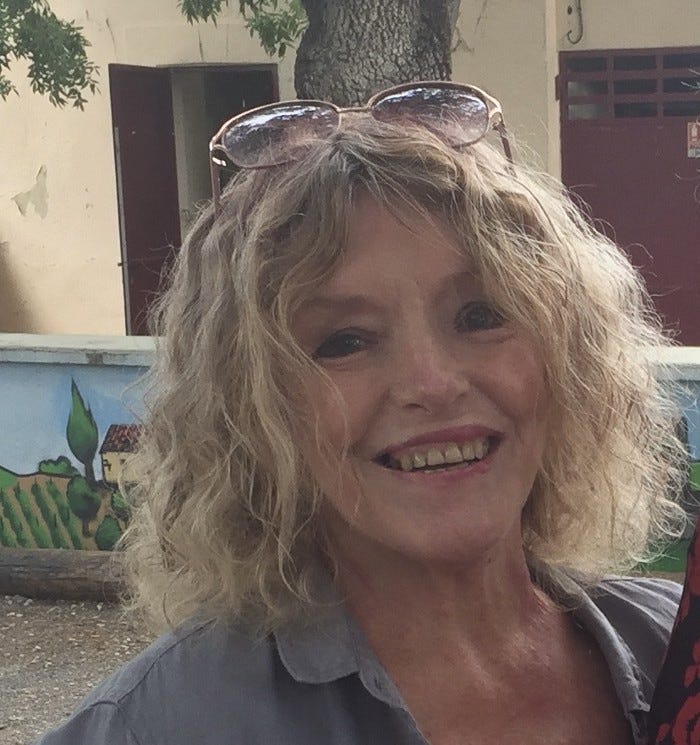
If you’d like to read some of my other stories, plus thousands of others on Medium, why not subscribe?
Part of your subscription will help struggling (and elderly) writers like me and other struggling (and much younger) writers on Medium. Just hit the link. https://janicemacdonald.medium.com/membership
Thanks in advance, Janice
The Memoirist
What’s Your Story?
Following
425
8


