
French Farmers Want War on Wolves
Thirty sheep were killed by wolves in France yesterday
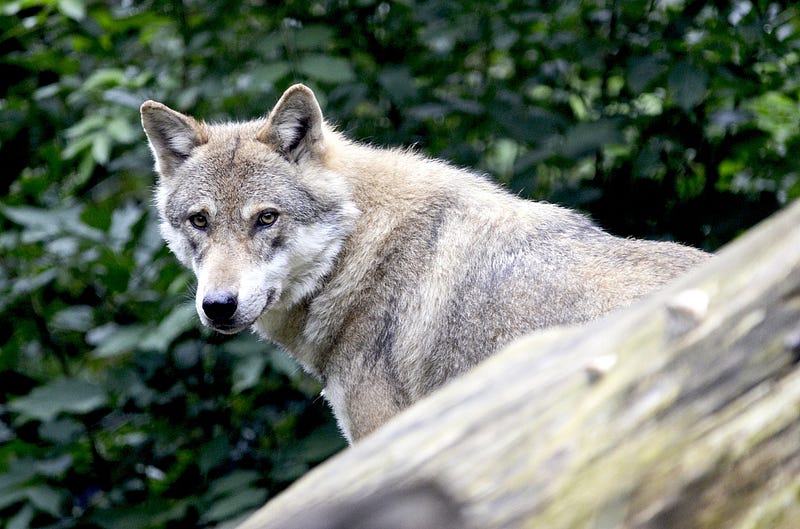
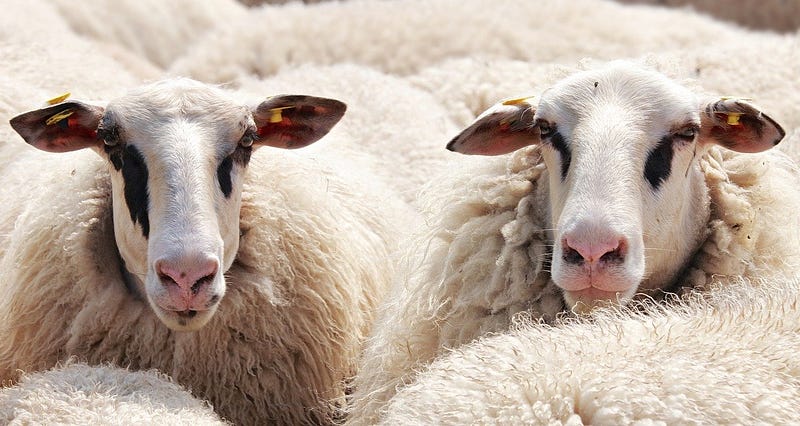
This time last year, farmers in France were marching flocks of sheep across the Place de la Republique in Paris to draw attention to the number of their sheep that were being killed by wolves. In the 1930s, the wolf was deemed extinct in France. In the 1990s a few animals crossed from Italy into France via the Alps and their numbers have been growing slowly but steadily ever since. There have now even been sightings in the Pyrenees. What might be considered to be a rare environmental step in the right direction has ignited huge conflict in this country.
Wolves once ranged freely throughout Europe. In the United Kingdom they were so numerous that a criminal sentenced to death could have his sentence commuted if he produced enough wolf tongues each year. King Edward I (1272–1307) ordered them to be exterminated altogether. By the end of the reign of King Henry VII (1485–1509) there were no wolves left on that island. Across the whole of Europe, wolf numbers stand at just 17 000.
The return of wolves to France was greeted with celebration by environmentalists and nature lovers, but sheep and goat farmers were not as enthusiastic. They immediately saw the predator as a threat to their livelihoods which have already been severely eroded by many other problems facing smaller farmers. A recent report suggests that the average income for a full-time farmer in France is just 11 000 Euros per annum.
This year, wolf numbers rose to over 500 animals and permission was given to cull 53 of them. Under the latest French ‘Wolf Plan 2018’ 500 wolves has been deemed the magic number that will ensure both their survival, and least conflict with farmers.
On average 12 500 sheep and goats are killed by wolves each year out of an estimated 7.2 million livestock. That would seem a fairly tiny percentage and as the farmers are compensated for losses due to wolf attack, one would have hoped that a sustainable compromise was being achieved. In fact, the opposite seems to be happening and farmer’s calls for harsher culls are growing louder.
French farmers are not the only ones wanting more drastic action taken against the wolf. Denmark, Estonia, Italy and Latvia are all calling on the European Union to lift protection laws on these predators.
In many ways, this conflict is an indicator of a far deeper divide in European society. As in many industrialized nations, there are now more people living in cities than there are living in rural areas. Farmers tend to see much of the environmental movement as rich townies wanting a romanticized countryside to play in on the weekend, and themselves as custodians of what the rural life really is. It is perhaps, a legitimate point of view but not all farmers are the custodians of nature that many would have us believe they are. As in other countries, small farms in France are being targeted by large industrial conglomerates who are better able to turn a buck due to economies of scale. Many of these organisations are profit-driven and there is a multitude of examples of that profit being taken at the expense of nature.
Quite where this conflict will take us is uncertain at the moment. The farmers in France are a powerful voting block and have always been quick to take militant action. On the opposite side, the number of people, townie or otherwise, who welcome the return of Europe’s largest predator is also a force to be recognized. There is middle ground if both sides can be persuaded to step back and look for it. The European Union is offerings subsidies for things like electric fencing to reduce wolf attacks and wildlife tourism is another angle that is far from being fully exploited. This could bring in valuable income for farmers struggling against a system that currently seems to be stacked against them. As a keen nature lover, it would seem wrong to me that many African countries have learned to coexist with, and indeed profit from, the likes of the big five, whilst we in Europe cannot tolerate a few hundred wolves.


