
French Colonialism in Algeria
Genocide, settler colonialism, and oppression. The story of French Algeria.
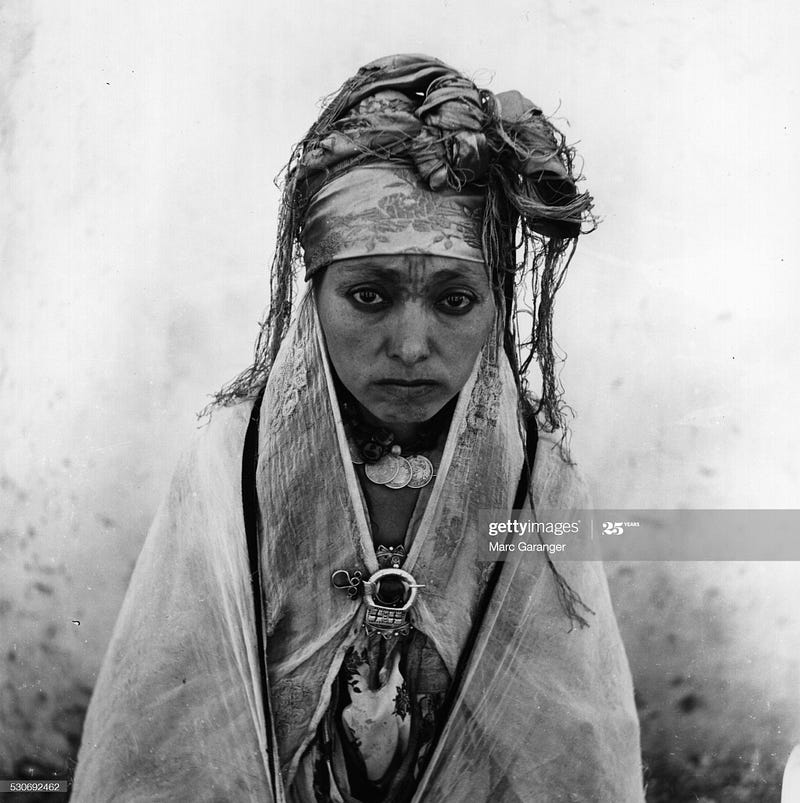
French involvement in Algeria began in 1830 following the invasion of Algiers and was the pretext for a diplomatic incident, the Fan Affair of 1823, which led to a blockade and then further tensions erupted, resulting in the invasion. The result of the assault was a decisive French victory ending several centuries of Ottoman rule over Algiers, taking control of the region and the surrounding coastal communities. The invasion then evolved into the conquest of Algeria, which lasted until 1847 (Abun-Nasr, A history of the Maghrib in the Islamic period, 1987). The French takeover of Algeria was slow and gruelling with much bloodshed, for example, historian Ben Kiernan stated that the conquest from 1830 to 1875 killed around 825,000 indigenous Algerians. To add Kiernan also suggests that the French conquest of Algeria could be characterised as genocide as he notes the genocidal language and action taken against the native population:
“A long shadow of genocidal hatred persisted, provoking a French author to protest in 1882 that in Algeria, “we hear it repeated every day that we must expel the native and if necessary destroy him.” As a French statistical journal urged five years late, “the system of extermination must give way to a policy of penetration.”(Kiernan, Blood and Soil: A World History of Genocide and Extermination from Sparta to Darfur, 2007).
The level of brutality displayed by the French as well as disease brought by them caused the indigenous population to drop by one third from 1830 to 1873 (Somerwine, France since 1870, 2018), causing much upset and anger towards the French, which would help fuel the future independence movements, as was seen with groups such as the National Liberation Front (FLN) which was the main nationalist movement during the Algerian War.
The FLN’s background can be traced prior to the Second World War (but officially founded in 1954), seeing a rise in an anti-colonialist and nationalist sentiment, which was prevalent of the time and similar to other colonial regions. The FLN was able to generate mass support against the French due to the mass slaughter of native Algerian populations during the conquest of Algeria and the oppression against the indigenous peoples, leaving the FLN to take this anger and use it as fuel to drive nationalistic ideals and to break free from the chains of imperial France (Evans, Algeria: Anger of the Dispossessed, 2007). Similar to other independence movements, for example in India a revival of Indian history and culture, with historical events such as the Sepoy Mutiny being used as examples to fight against the Europeans and generate a national sentiment (Laband, The Nature of the Indian Mutiny: A Changing Concept, Theoria: A Journal of Social and Political Theory, 1976).
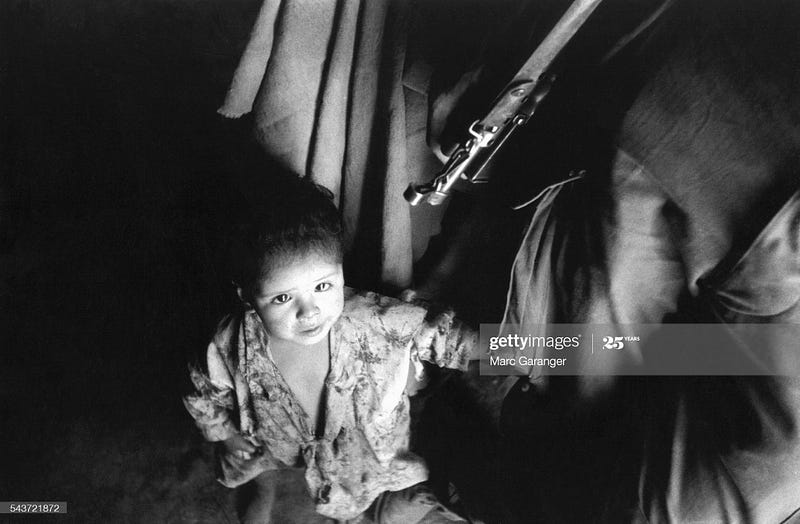
Continued oppressive measures were introduced such as Cremieux Decree in 1870, against the Muslim population to ensure they remained second class citizens, helping generate a revival in Islamic traditions; leading to further nationalist sentiments. The decree granted the Jewish minority in Algeria French citizenship, while not allowing the Muslim majority to become French citizens unless they gave up their culture and religion. This was met with widespread protest and the breakout of the Mokrani Revolt, where more than 250 tribes revolted against the decree, and it was put down brutally by the French, confiscating more land from the tribes which went against the order. The colonial system, reduced the Muslim population to second class citizens within their own home, adding fuel to an ever-growing fire of detest towards the French, eventually spilling over after World War Two with the Algerian War (Chamedes and Foster, Decolonization and Religion in the French Empire, French Politics, Culture & Society, 2015).
French Algeria was far different from a typical colony and differed from her others. Due to it being designated as a metropolitan of France since 1871 and differed significantly to other settler colonies of the time such as British Kenya, due to France and Algeria being so closely connected, with France becoming a metropole of it. For which many French artists would go and seek inspiration from the Algerian people and towns, while many native Algerians left for metropolitan France to take up manual jobs. Also due to the vast amount of migration to the colony, for example, from 1825 to 1847 50,000 French migrated to Algeria, and it quickly rose into the hundreds of thousands, reaching over a million settlers of European descent by 1954, these settlers became known as colons and later as Pied-Noirs (Fisher, Migration: A World History, 2019). These Europeans which emigrated to France’s longest overseas territory benefitted immensely from it. The government dispossessed the native Algerians communal land, which also happened to be the most futile and gifted it to the French settlers. The economic development was done predominantly by cash crops (tobacco, vines, citrus fruits, vegetables) with wine being the most crucial export, which the French benefitted from with most of the produce going back to France. With the loss of land, many urban centres such as the major cities of Algiers and Oran swelled in size due to the indigenous populations losing their land.
However, by the early 20th century they were populated mostly by the colons who had far better opportunities and were better off than the indigenous Algerians within the metropolitan areas, causing hostility to develop amongst the natives (Horne, A Savage War of Peace: Algeria 1954–1962, 2011). Eventually to be a critical factor in the causation of the Algerian War as the Muslim populations felt disengaged, due to the lack of economic and political status. Seeing a greater demand for political autonomy and eventually, independence from the French.
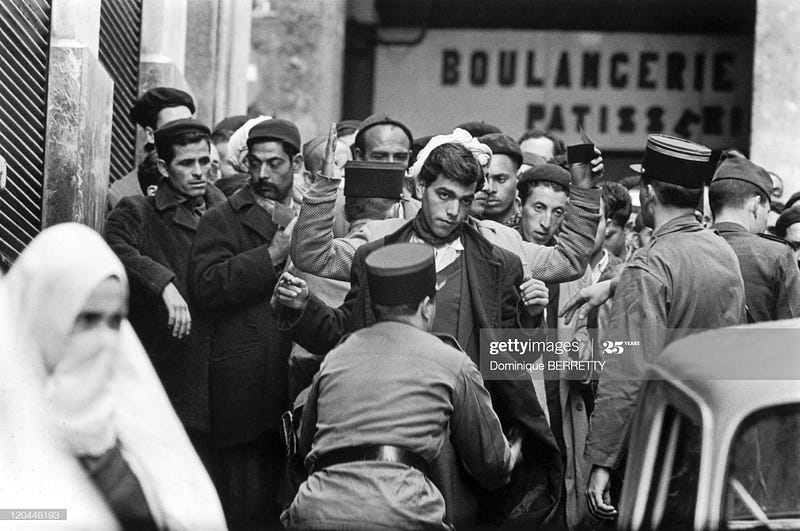
The worldwide anti-imperialist movement began at the end of the Second World War, seeing colonies break free of their imperial masters. The movement became clear within Algeria in 1945 following an uprising against the French occupying forces, encouraged by nationalist leaders such as Messali Hadj and Ferhat Abbas. The revolts were brutally put down by the French and became known as the Sétif and Guelma massacres. These were series of terrorist attacks carried out against native Algerians by French authorities and colons, with the death toll ranging from 1,020 from French sources to 45,000 from Arab sources (Morgan, My battle of Algiers, 2007). The massacres caused irreversible damage to the legacy of the French in Algeria, only worsening tensions between the colonisers and the colonised, also proving to be evidence of Frances genocidal nature. Algerian presidents such as Liamine Zéroual (1994–1999) and Abdelaziz Bouteflika (1999–2019) have also referred to the Sétif and Guelma massacres, reviving the emotional scars of colonialism in the minds of contemporary Algerians.
The tensions stemming from the 1830 invasion of Algiers and oppression against native populations, suppression of uprisings, and genocidal tendencies of the French, culminated in the 1954 Algerian War. Whereby the French went to ruthless measures to maintain their grip on their most prized colony, often using torture as a means to attain information. Which did not sit kindly with the public of mainland France, as comparisons were made between them and Nazi Germany because of the tactics that were used, damaging the French national psyche (Todorov and Denner, Torture in the Algerian War, South Central Review, 2007). However, brutality was shown on both sides with the FLN also displaying gruesome tactics with executions being carried out by beheading and throat-slitting being most popular means of instilling fear and terror into the minds of their enemies, killing over 6,000 Muslims and over 1,000 non-Muslims (Horne, A Savage War of Peace: Algeria 1954–1962, 2011). The controversy regarding torture continued into the 21st century following General Paul Aussaresses (a French Army General) admitting to the use of torture throughout the Algerian War, then went on to justify it and made clear he had no remorse in his 2001 book The Battle of the Casbah. Despite the statements made by Aussaresses the French government continued to deny the use of such barbaric tactics, damaging the relations between Algeria and France, however, in 2018 the French government finally admitted to the use of torture and that war had actually occurred in Algeria (Samuel, The Telegraph, 2018).
Terms from the colonial era and the Algerian War are still used amongst Algerian communities in contemporary France and deemed to be extremely offensive. One word, for instance, Harki (solider) is what indigenous Algerian Muslims which fought for the French were called and also applied to indigenous civilians who supported French rule; it is used mostly now as a slur. Many of the Harkis sought refuge in France following Algerian independence, as they were classified as traitors and suffered reprisals for supporting the French, the murder of Harkis has been estimated to have ranged from 50,000 to 150,000 at the hands of the FLN. The Harkis were forgotten by the French and abandoned; they were not given recognition by the French government, leaving a bitter taste in the mouth of those which supported them. The issue is still not resolved and continues to be an example of the damaged legacy caused by French colonialism (Horne, A Savage War of Peace: Algeria 1954–1962, 2011).
The French colony of Algeria was vastly different from other typical settler colonies; maybe this is why the French went to such great lengths to retain it as a colony as it was deemed an extension of France. However, the legacy it left in Algeria is that of upset, sorrow, and anger, which contemporary France still must deal with and only briefly addressed in 2018. The legacy which remained was one of hate, towards the French and their supporters as was seen by the murder of the Harkis. The fact that the weight of the word remains within Algerian communities in contemporary France, shows the scars of colonialism have not yet healed. Alongside this, events such as the Sétif and Guelma massacre and the Algerian War continue to be immortalised, with memorial days being held and even appearing in popular culture, displaying the grievances which remain. The relationship between France and Algeria will forever be tainted by its brutal and bloody colonial past.


