
Freedom of Speech Doesn’t Mean Freedom to Say Anything
Protect yourself by following one simple guideline
The other week, I was helping out a Medium publication processing writers’ submissions. Among the several dozen stories I reviewed, edited, and accepted for that publication, one writer in his story straight-up accused a politician of deliberately trying to kill someone.
This wasn’t the typical political rhetoric of “Politician X’s policies are dangerous.” No, this writer claimed a politician, outside of his official duties, tried to kill someone. Being a responsible human being, and aware of libel laws, having worked in publishing for over two decades, I asked the writer in a Private Note: “Please provide a reference backing up this claim or moderate your statement.”
Surprisingly, the writer threw a fit. To make his long rant short, he claimed I was limiting his free speech, I had no right to question his statement, and he would not moderate it. He withdrew his article from the publication and probably self-published it.
I sincerely hope the writer doesn’t get sued. See, there’s this legal concept called “libel.” It is a form of defamation by writing and publishing a false statement that is damaging to a person’s reputation. Accusing a person of attempted murder could easily be construed as defamation. If you publish a story on Medium that includes such an accusation, you open up yourself to charges of libel.
You do not want to be accused of libel.
Free speech is a wonderful thing. Not everyone in the world has it. In far too many countries, merely making critical statements can land people in prison. Medium is a wonderful vehicle for people to exercise their free speech without fear of censorship. But here’s the thing:
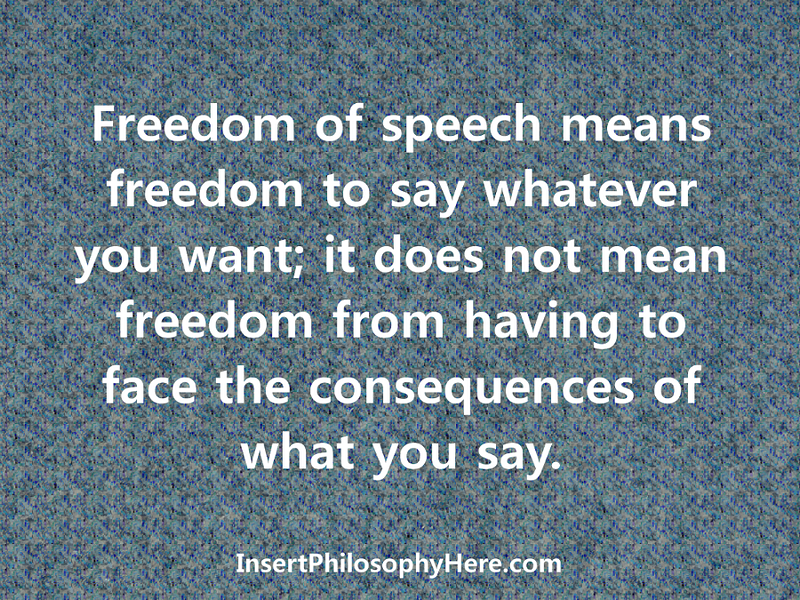
What you write comes with consequences. Most of them are just views and claps, but other consequences could be dire. The above-mentioned writer does indeed have freedom of speech, and I never questioned that. But if he accuses someone of willingly committing a crime, the accused person has every right to sue the writer for libel.
When you publish a Story on Medium, YOU are responsible for what you wrote. Any Medium publication that accepts your story is also accepting responsibility for what you wrote. Sure, write what you want, but don’t pretend that you are immune from consequences.
Protecting Yourself
It’s fairly easy to protect yourself from possible dire consequences from your Medium Stories. Follow one simple guideline:
Don’t write anything you wouldn’t say publicly to someone’s face.
It’s easy to get carried away when writing alone on the keyboard and end up writing wild statements that you can’t support. This is especially true when writing about culture, politics, or public issues. When you read over what you write and before you click Submit or Publish, ask yourself if you can stand by everything you wrote and are willing to say it in public in front of anyone you mention (in court if need be).
Most of you will never have to worry about such a thing, but keeping that one simple guideline in mind won’t hurt you, and just might save you from a whole mess of bad consequences.


