
Freedom of Speech and Who Owns It
Freedom of speech is a principle that supports the freedom of an individual or a community to articulate their opinions and ideas without fear of retaliation, censorship,4 or legal sanction. ~Wikipedia
How far can we pursue our political opinions without being attacked?
I find it disturbing that the offensive tones of comments on many platforms in social media have become so personalized and abusive that it makes it almost painful to read.
We all feel a political season marked by unusually extreme levels of fear and anger, misgiving, and pain. On both sides of the spectrum. But what I find most interesting is that the vitriol by which some express their political views does not only occupy me but also the majority in this nation.
How did we get to the point where we think we know everything about one another, especially those whose opinions we disagree with? Krista Tippett, a host on the radio program of “On Being,” says. “I can disagree with your opinion, it turns out, but I can’t disagree with your experience.”
It is encumbered upon us to examine the source of our convictions, opinions, beliefs. More than ever before, we are bombarded with news accompanied by images. Whether we like it or not, they do help to form our ideas. It is natural to tune into these sources that coincide with our personal experiences. We form opinions according to what they say and adapt if what they say molds into our own thinking and understanding.
I often question whether the external sources are the absolute truth. The tragedy is that the news I hear or see on television is accompanied by mistrust. Mistrust of the media which I feel is laced with personal judgments, which tends to pollute our perception of real issues. As I see it, the gift of free speech we were given by our forefathers is tainted and misunderstood. It has the potential to expand misleading and false information as much as it can propagate accurate information.
But then you might ask, What about freedom of speech? After all, we hold this notion sacred. Indeed, freedom of speech is what makes this country great. Freedom of speech is inclusive and should not exclude anyone’s right to express themselves.
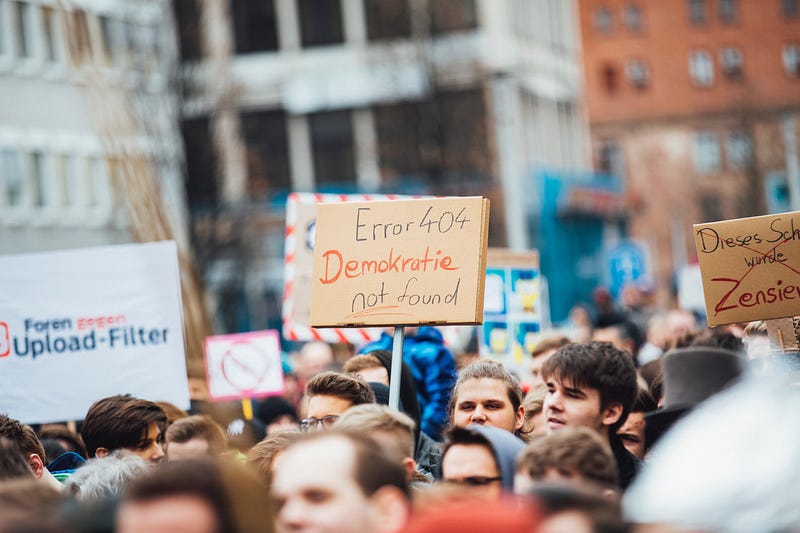
I’m currently reading Michael Donnelly’s, “Freedom of speech and the Function of Rhetoric in the United States.” Mr. Donnelly is an Assistant Professor of Rhetoric and Composition; whose interests include contemporary rhetoric and public discourse.
On close examination, it is possible to poke holes in the concept of freedom of speech. Mr. Donnelly poses that this notion of freedom of speech “privilege[s] individual expression, at the expense of democratic deliberation, the liberal notion of free speech functions largely to suppress rather than promote meaningful public discussion and debate, and works to sustain unequal relations of power.”
You might ask when did we stop to have a civil discourse, and succumb to name-calling and accusations? Has it always been this way? Donnelly maintains that this is not a new phenomenon. “Since the revolution, we’ve seen [the media] used to incite protestors against police, the secular opposition against Islamist groups, and Muslims against Christians and vice versa.”
The difference is the Internet. Anyone with internet access can generate a fake profile and tweet, or blog, with little vetting. And all that is done behind a hidden identity, which allows for freedom of expression without the consequences of expressing oneself in a manner that otherwise will not be acceptable face-to-face.
The way I see it, it is incumbent upon us to research and take in information that is not only fed to us from one source, rather we ought to form our opinion from several sources, listen to opposing views, and open ourselves up to the experience of existing as an active participant of knowledge.


