
It’s Time to Talk about Freedom of Space (And Why Black People Don’t Have It)
White people’s false entitlement to Black spaces comes from two historical artifacts: European Colonialism, and American Slavery.
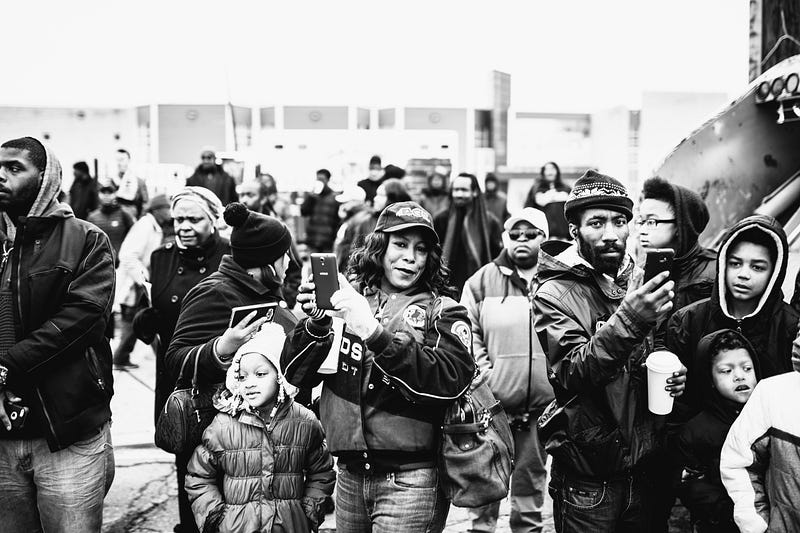
A while back ago I write about the Six Freedoms Black people do not have in a White Supremacy. I don’t remember what catastrophic event took place which lead me to write that article (because there’s so many), but I do know the fact that I was really spilling my mind and soul out on powers that persistently infringe on the rights of Black people in the United States of America. Brainstorming, I concluded that there are six freedoms we as Black people do not have. They are:
- Freedom of Memory
- Freedom of Emotion
- Freedom of Space
- Freedom of Recovery
- Freedom of Self-Defense
- The Freedom to Protect the Other Five
When I first wrote this in 2018 I really was just spilling my heart and brains out on the pen pad. While I kinda dove deep into every freedom our society fails to provide us, I genuinely think the Freedom of Space isn’t explored that much. The Freedom of Emotion and how we don’t have it, is explored deeply within the Afro-Intellectual circles across the United States. The infringement of that Freedom is called “tone policing”, and there’s much written on that. Rocky Bragg of SkillUp Ed, brilliantly touched on this concept, without calling it Freedom of Space (yet). You can see his word, here.
Freedom of Space is defined as freedom of existing without undue harassment. The infringement of this freedom varies from questioning “why are Black people sitting together”, to “what are you doing HERE (boy)”. The disrespect and invasion of Black-person-space or Black-space, as I’ll call it and coin, also includes the notion that any Black person’s hair is free to touch and explore; the free existing state of Black hair; and any ideas on black hair that seeks to deny, degrade, or disrupt it as it exist. The denial of freedom of Space for Black people also include freedom of appearance — I never liked sagging pants, but cosigning political violence upon Black folk who wear what they choose, on top of anathematizing them and demonizing them — is something I cannot agree with. The denial of freedom of space not only includes the frequency at which Black people are interrupted while speaking, but also how Black people speak.
White Supremacy leaves no space uncolonized.
It is a strange thing to ponder the mind of a white society concerning race relations. When I step outside myself to gather the mind of white people in America, one can only conclude that white people insist on impinging on Black folk’s Freedom of Space because, the way their minds work, Black people are not supposed to be here. Black people, from a white standpoint, are not supposed to exist. This is the only logical conclusion why folk under a white supremacy would call the police on someone minding their own business. This is the only conclusion why white people would support a clearly corrupted police/legal system when unarmed Black people are murdered by police.
The Colonization of Black Hair
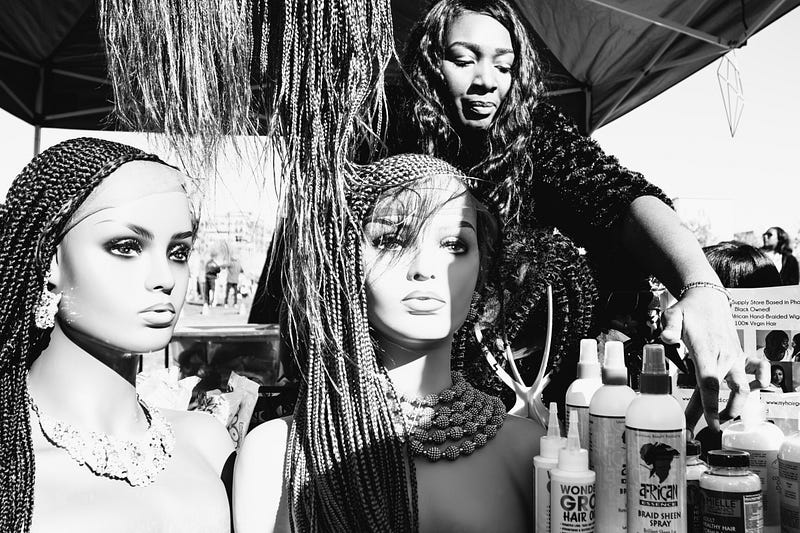
The experience of Black women speaking on the Black hair experience is very, VERY, well documented. Even as a Black man I have enough experiences to reflect on our hair in America.
Most of my experience comes from being once in the military; the Army. From 1999 to 2019, I’ve witnessed a whole massive professional institution struggle to grasp the fact that Black hair in it’s natural state isn’t something to anathematize people with. I’ve witnessed a whole massive professional institution take numerous mental shortcuts on Black hair. Such memories include:
· Observing arrogant white authority figures seek to punish Black female Soldiers for literally obeying Army Regulation. Army Regulation explicitly stated (circa 2005) that ALL natural hair color/tones can be used for women regardless of race/ethnicity. The white chick with stripes? She took it upon herself to tell a Black woman that she can’t have Beyonce-tone blonde/brown hair. We can also add the fact that Black folk literally have ALL hair colors/tones as the hair they are born with. It gets me angry just merely thinking about how ignorant professionals were, from Sergeants to college-educated commanding officers, who routinely get Equal Opportunity training quarterly, on top of should have a firm understanding of AR 670–1 (Army Regulation on Wear and Appearance). AR 670–1 is the #1 document drilled in your head when you arrive in the Army. WTF is wrong with them.
· In the spring of 2014, the U.S. Army sought to revamp AR 670–1 and essentially all-lives-mattered out the fact that Black women even exist, thus writing regulation that forces all Black women to exist in the U.S. Army with wigs. Black hair was so demonized, publications pointed out how racist the Army is. The Army tried defending himself by pointing to the notion that there was a Black female Sergeant Major on the decision table. The Army failed to grasp the accidental racism of drafting “colorblind” policy. Racism by neglect is still racism. Black folk at the helm of white supremacy does not excuse it. Revisions were made.
· Still, the U.S. Army (as well as much of the U.S. military branches) have an aversion to Black hair. Having a fade is in regulation but having a faded fro cut with twists on top is still a problem. Cornrows are still a problem, even though they are a protective hairstyle that doesn’t prohibit the wear of any military head gear, including the pro-mask (gas mask) or ballistic helmet. Even as white MMA fighters continue to nearly Columbus cornrows as “boxer braids”, cornrows are demonized as a thug fad. The ignorance is as thick as an five-hour overcooked steak.
· In 2017, the U.S., Army did in fact began to allow dreads and twists in Black women’s hair. There’s progress. But it doesn’t put a dent in all the ignorance by white authority figures who disregard regulation and go on their ignorance versus being well-read on regulation on non-Eurocentric hairstyles.
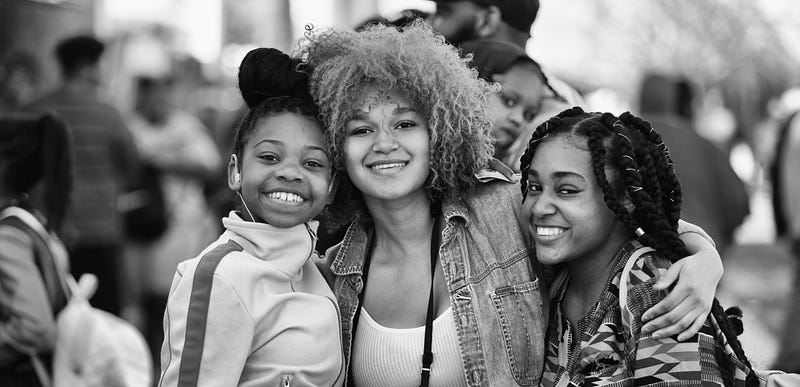
Historically, there were laws constructed by white authorities to prohibit the existence of Black hair in visual space. These laws were called Tignon Laws. These white supremacist laws forced Black women to wrap their hair because of the sheer beauty and diversity of Black hair and what can be done with it, was a threat to the white female stat quo.
A tignon (tiyon) is a headdress used to conceal hair. It was adorned by free and slave Creole women of African ancestry in Louisiana in 1786. The sumptuary law was enacted under Governor Esteban Rodriguez Miró. The regulation was meant as a means to regulate the style of dress and appearance for people of color. Black women’s features often attracted male white, French, and Spanish suitors and their beauty was a perceived threat to white women. The tignon law was a tactic used to combat the men pursuing and engaging in affairs with Creole women. Simply put, Black women competed too openly with white women by dressing elegantly and possessing note-worth beauty. ~ Farida Dawkins
Based on my studies I can only conclude that the disdain, anathematization, and motive to control view and existence of Black hair is rooted in these ancient white supremacist Tignon Laws.
I remember a Black woman telling me about her experience with her white friends where a random white person in a store, an older white woman, wanted to touch her hair. She then looked at her white friend as if, one would defend and understand, but NO, that friend was like “why not”, as if the Black woman at hand was stuck up or arrogant… with her own hair. Both white people — stranger and known friend — felt that it’s their RIGHT to touch a Black woman’s hair whenever or however they choose. Regardless of what or how the Black woman feels about it. Her hair, to white people, was theirs.
To white privilege, her magnificent Afro was no different than Roanoke Island.
We need to Stop Demonizing Black Women with Weave Too
While I understand that weave is considered a Eurocentric concept in many Black men, I believe many of us Black men, especially when young, actually carry the white supremacy torch in speaking ill of weave being worn by Black women.
First of all, [1] wigs and weaves are a categorically ancient African practice on its head (pun intended). With that known, it’s categorically asinine to judge Black women wearing weave as if they hate themselves or something. Case in point, [2] white women wear weave too, and NO ONE opines that they hate themselves. There’s literally NO discussion white women wear weave. Most folk don’t even grasp the frequency at which white women wear weave. We as Black men need to stop aiding and assisting white supremacy concerning Black hair. Get informed, or shut up. Both are options.
Until Black people — especially Black women — are allowed to do whatever they want with their hair we shall continue to view this as an freedom of space infringement.
The Interruption and Over-Policing of Black Speech
A few months ago I was on YouTube watching a lot of the informative channels as I love to do. In letting YouTube randomly run, I stumbled across this amazing gem of a series of videos of this fellow named Eric Singer, who is a dialect coach.
Long story short, this dialect coach is on the internet informing folks about fascinating things about languages. After binge watching all of his videos, the first thing I thought of was the fact that there were scientific terms for the hundreds if not thousands of things you notice about language and speech. For every single thing about how people speak and pronounce things, there’s a term for it, and it’s analyzed and studied.
There’s a talk-tok merger which points to the dialect shift where some Americans merge the two sounds (they say “tok” when when say “talk”). There’s a pin-pen merger as well. Upon now learning of these, you know there’s an ask-axe merger, right? Yeah, let’s talk about that.
As a Black man after learning from a dialect/language expert, the ask-axe merger in dialect study seems to be the most over-corrected dialect concept I’ve ever seen. For the most part, this is passive-aggressively racist, and is drenched in the afrophobic desire to frequently modify, deter and disrupt Black people as we exist. I always see white people over-correct Black people when Black people speak with a very American ask-axe merger, but never do this with other whites. In addition, I never see white people over-correct white people with the “pin-pen merger” in dialects (because it’s a southern thing). I never see white people over-correct the talk-tok merger either.
Sure, they’ll mock a Bostonian or so, but it’s not met with the same you shall not pass type of animosity as the ask-axe merger when it’s said by a Black person. White Privilege Defenders (because even Black people share white supremacist behaviors) genuinely act like your saying a whole other word if you’re a Black voice with a ask-axe merger in your dialect, but never exercise the same scrutiny when a white person from the South says anything with the pen-pin merger. Sure, literally axe is different than ask; but same proves true for pen and pin, or ten and tin. What’s good for our Black goose, should be good for their white, rural, conservative gander. But it’s not. So one cannot argue that such dialect shifts are grounds for contempt for Black voices, it’s actually a mechanism of contempt.
The motivation disrupt and over-correct Blacks doesn’t exist for whites because there’s a racial element to this. The motivation to exaggeratingly correct what has become known as Black artifacts of Americanized English comes from the disdain that we, Black folks, merely exist.
Interrupting Black People
Interrupting Black people when they are speaking, having an opinion (especially on things concerning Black culture) is another form of infringing on our freedom of Space. I can’t count the thousands of times white people, especially white-fragility having white women, have interrupted me while speaking, especially in places where you’re the angry Black man/woman if you merely assert yourself.
This also include social media. If I had a $20 for every time a white woman shown up, centered her feelings over my Black reality, and made everything about themselves all while purposely not listening after misinterpreting something I said, I would have a Hasselblad camera. Them things are expensive. Look them up.
The thing about white women doing this, is that they tend to forget they have white privilege (even as allies!) and only focus on the fact that you are a man. They disregard the fact that you’re Black and just run with the privilege. The painful part? It’s an IMPOSSIBLE situation because under a white supremacy, YOU as a Black male body are core the threat to white women, although fictionalized. Assert yourself in any way as a Black man towards a white woman who is out of pocket and faster than you can say, “hang that neggah” that white chick will hide behind the white privilege of white innocence and begin to do relational damage. It’s really something else. In forgetting or disregarding her white privilege, she becomes the biggest perpetrator of it. It can be argued that they weaponize white privilege more. It’s almost like they have the most profound issue with Black people existing in space.
White people LOVE to interrupt Black folks when we are talking, or cut us off while speaking. I hate that mess. It’s like to the white identity, Black folks exist to disrupt, versus existing to be acknowledged.
Talking over Black people is like an intellectual form of cutting our dreads off. It exercises Jim Crow-measures of dominion and control over Black spaces. This too, needs to be recognized and must stop.
Over-Policing Black Bodies
Last year while still in the Army, I attended a home party (not a real party) at the commander’s house. She was a great host, but that’s not the point. The point I’m getting at was the fact that I got there super early, and a few other fellows, both Black men, sat down with me.
Eventually, like clockwork, a white fellow referenced us jokingly albeit passive-aggressively, how three Black folks are sitting at the couch. Never mind the fact that we were the first three there and maybe two other guys sat with a guy that’s already sitting. This man only saw three Black men sitting on a couch.
When he muttered his passive-aggressive racial micro-aggression, I said, while looking at my glass and then placing it down:
“What would really cook your noodle is wondering if he would have ever said that if he saw three white men sitting here.”
I’ve said this before; The Freedom of Space is a spectrum and the infringement of this Freedom is diverse. Having a discomfort in more than one Black person existing in open space, and the maintenance of that feeling, comes from a false entitlement to Black spaces. White people’s false entitlement to Black spaces comes from two historical artifacts: European Colonialism, and American Slavery. If you research and understand the mind of a white person in the 1700’s and 1800's — a white person who figured every Black person they will ever see is accounted for by another white person — you can then get an understanding of how white people modern day figure “something” isn’t right, and feel the urge to inject a white person in that Black group. Wedge that ass on that couch with us. Regardless of how awkward that was.
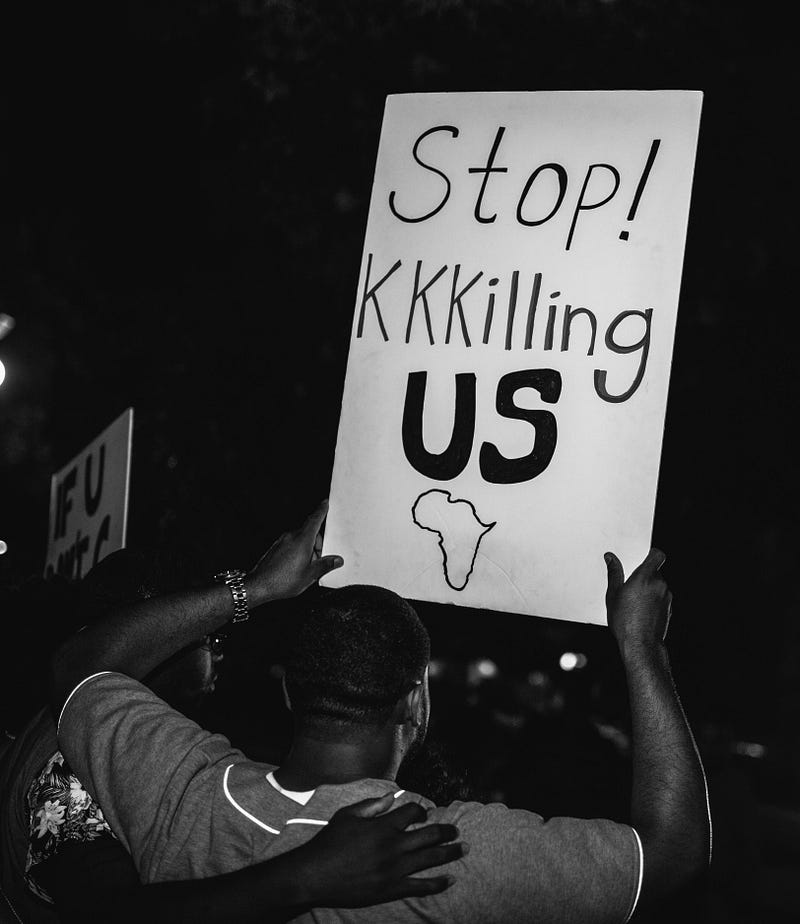
When I first wrote about these six freedoms which include the Freedom of Space, There were a couple of injustices that were not observed.
A police officer walking into the wrong apartment, MURDERING a man minding his own business eating ice cream. Another policeman, MURDERED a Black woman sitting in her own house. A man, jogging, minding his own business is MURDERED in broad daylight.
There’s powers trying to defend these murderers.
It’s getting worse.
The ultimate manifestation of infringing on our Freedom of Space is murdering us with impunity. The socialization process of America most certainly denigrates Black identity, while anglicizing white identity. Because of this, white people (or anyone with a white reference group orientation) will have a discomfort of some sort, and seek to remove the Black person out of sight. No one ever challenges this discomfort. Maybe Black people do. Breaking the chains.
My Black Thanos Story
Years ago (2014 or so) when I was in Hawaii, I lived in Waikiki. On this tight Waikiki block there was this beyond 6-foot tall muscle-bound Black man with dreads, who normally wore sunglasses, who routinely walked his dog. This man was huge; his body frame looked like the body-model for Thanos. I never had an issue or felt anyway about him. Being the few Black men around, we acknowledged each other, but didn’t know each other. You know? The head nod across from the street? That.
One day I was at a corner store in nearby. He ends up right behind me in line to pay for goods.
I hate to admit it; my Black self had an aversion to the Thanos-sized Black dude with dreads standing behind me. I had the feeling of fear similar to the fear of getting jumped in school. These are one the things that really got me thinking. I questioned why I felt that way when I got home. I cooked, cleaned, thinking about WHY I felt that way. The feeling made no sense. I gave the head nod all the time. He returns the greeting, all the time. He’s chill. WHY did I feel that way?
At that point I began to deep dive into what defines a colonized Black mind. I learned about racist socialization processes. I learned about internal, passive and aggressive racism forms. I learned how we perpetrate and extend white supremacy as Black people ourselves. I learned what Afrophobia (an irrational fear of Black people) was. I engaged in self-reflection.
My question is this: Do white people self-reflect on their irrational fears of Black people?
I don’t think white people do. I think white people generally just figure all their nonsensical, sociologically trained fears for Black people are rational and therefore justified. This is why they frequently call the police, like an Afrophobia Customer Service, to push us out of their view. They literally call an instrument of political violence to make the Black folk disappear. This explains why Alison Ettel willingly becomes #PermitPatty using the threat of political violence to remove a Black child from public. This is why Jennifer Schulte arrogantly decided to become #BBQBecky, threatening political violence just because Black folk were enjoying themselves in a park cooking. I myself. Let’s call this what it really is — political violence, because of an irrational fear. Because of the white privilege to lean into Afrophobia and justify state-sanctioned summary executions of Black lives.
Because we don’t have this freedom, it has to be taken. The next time a white person interrupts, we need call them out on it. The next time a white person attempts to touch your hair, say no, and be adamant about it. You have to respect your own space first, because in a world of no Freedoms one must struggle to have them. The first part is identifying the problem and we did that here. The next part? Executing the blunt requirement to do right by us.


