
“Free” is expensive
It’s tempting to take things that are “free.” Facebook is one such free product that is pretty darn good. But, free things are actually quite expensive.
If you aren’t paying for something with money, you’re paying for it in some other way. You pay with your time, your attention, and the opportunity costs: What could you have done otherwise with that time and attention?
The economies of scale that technology provides makes this especially true today. The burden of “paying” can be spread across a larger group of people, which can in turn afford a more sophisticated product, which can in turn attract even more people.
But, it’s not necessarily new. Nearly 2000 years ago, Seneca wrote:
Our stupidity may be clearly proved by the fact that we hold that “buying” refers only to the objects for which we pay cash, and we regard as free gifts the things for which we spend our very selves….we are eager to attain them at the cost of anxiety, of danger, and of lost honour, personal freedom, and time; so true it is that each man regards nothing as cheaper than himself.
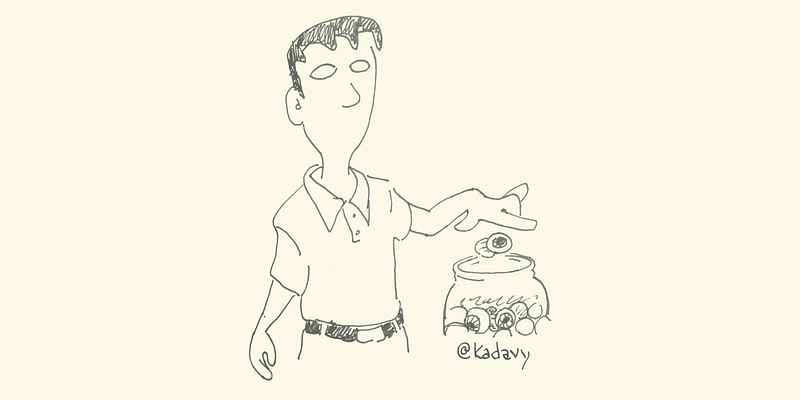
If you aren’t focusing on producing, you are becoming a product. Your neurons are being hijacked by advertisers — or venture capitalists delaying said hijacking — and neural pathways are being carved to make it easier to do it again and again.
You are selling pieces of yourself, and you’re worth more than that.
This is most true of information, and there’s a surefire way to fight it: Buy information. When you buy information, you flip the economics. Instead of incentivizing people to try to steal your attention with clickbait titles and articles of dubious integrity — all for the sake of selling your eyeballs to an advertiser, or raising another round of funding — you incentivize them to create something you value enough to pay for it.
It’s like buying carbon offsets. (Okay, so you don’t buy carbon offsets, but still.) When you buy information you value, you reduce information pollution. Unlike carbon offsets, you get something tangible right away: You take in brain nutrition instead of brain junk food.
So, buy information: next time a friend recommends a book to you, buy it. Next time that high-quality online magazine tells you you’ve exhausted your free articles for the month, buy it. Next time your favorite podcast launches a Patreon campaign, buy it. Next time your favorite public radio station launches a pledge drive, buy it. Your attention will go where your money goes, and that will work in a virtuous cycle.
That’s what I believe. Then again, this advice may not be worth more than what you paid for it.
On my podcast, Love Your Work, I’m planning an important conversation with Nir Eyal about the state of digital distraction. Subscribe on iTunes, or listen to the interview with Jason Fried now.


