Free AI Tools in Religion: The Case of the German AI Church
Free to Create, Free to Learn
Exploring the Boundaries of AI: The Mass Event in Germany
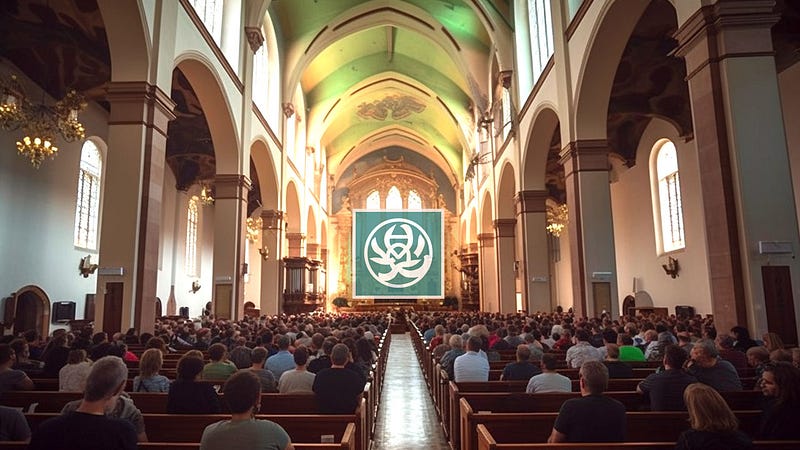
In June 2023, a mass event marked a landmark moment in the fusion of technology and religion. In a neo-Gothic building nestled in the Bavarian towns of Nuremberg and Fuerth, an AI Church Service unfolded.
What Religions Can Do for AI?
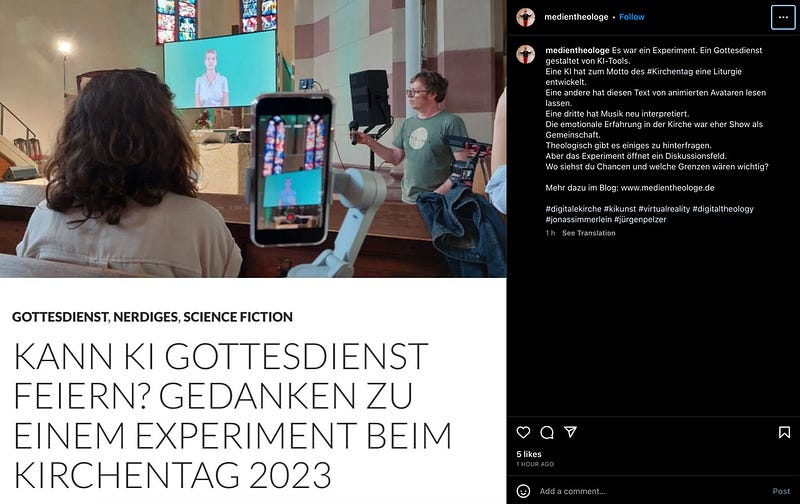
Hundreds of German Protestants congregated to witness the spectacle of a ChatGPT chatbot — a machine — guiding them through 40 minutes of prayer, music, and sermons. The event was part of the Deutscher Evangelischer Kirchentag convention, drawing tens of thousands of believers to discuss their faith and current world issues.
While this event was a striking demonstration of the potential of AI technology, it also highlighted the limitations and risks of fully automated systems. Even as AI carried out its role competently, some attendees felt the lack of human touch and connection in the sermons delivered with a monotonous voice and expressionless face.
A Taste of AI: The Unsuccessful AI Mass
One example of an unsuccessful AI mass event was a service delivered by an avatar known as GODGPT. Its monotonous voice and lack of emotion drew laughter from the congregation. A feeling of disconnect emanated from the words spoken, making it difficult for the congregation to engage with the service. While the technology was impressive, the lack of human qualities — heart, soul, body language — made it feel alienating to some attendees found it “increasingly off-putting as it went along.”
The experience served as a cautionary tale: while AI can perform tasks efficiently, the application of technology must be thoughtfully executed to achieve the desired effect.
In Catholicism, the Mass is the central act of worship, also known as the Eucharist, which culminates in the celebration of sacrament. The Church teaches that the Mass is a sacrifice, in which bread and wine are consecrated by an ordained priest and become the sacrificial body, blood, soul, and divinity of Christ. It is described as the “source and summit of the Christian life” and is only permitted for baptized members in a state of grace to receive. The Roman Rite of the Mass is the most widely used liturgical rite within the Latin Church. The Mass consists of different elements, which include the proclamation of the Word of God, thanksgiving to God the Father, the consecration of bread and wine, and participation in the liturgical banquet by receiving the Lord’s body and blood. The liturgical structure of the Mass includes the introductory rites, the liturgy of the word, the preparation of the gifts, the Eucharistic prayer, the communion rite, and the concluding rite.
Free AI Tools: Power and Potential in Our Hands
The AI Church event’s shortcomings underline the need for a proper understanding of how to use AI tools. Thankfully, resources like the article ‘Free to Create, Free to Learn’ published on MLearning.ai, provide a perfect starting point.
‘Free to Create, Free to Learn’ offers insight into the business and creative potentials of free AI tools. The article showcases how these tools, once mastered, can enable anyone — from students and researchers to designers and hobbyists — to easily create designs and obtain accurate information.
Master AI Tools with MLearning.ai
By subscribing to MLearning.ai, readers gain access to a wealth of knowledge on how to make the most of free AI tools. The platform provides an easy-to-follow guide on how to harness these tools effectively, preventing the pitfalls witnessed in the AI Church Service event.
Becoming adept with these AI tools does more than just solve the problem of creating attractive content or finding accurate information — it empowers you to interact and contribute meaningfully to the evolving digital age.
Embrace AI: Solve Today’s Problems and Shape Tomorrow’s World
Whether it’s conducting an AI Church service or designing a beautiful visual, the intelligent application of AI tools can make a significant difference. The experience of the AI mass event in Germany underpins the importance of skilful use of AI. By engaging with resources like:
‘Free to Create, Free to Learn,’
you not only solve your digital problems but also equip yourself with skills to influence tomorrow’s digital world.
AI is no longer a distant concept; it’s here in our daily lives, free for us to use, and the potential is limitless. AI doesn’t just belong to tech wizards and software developers — it belongs to all of us. So, let’s embrace the free AI tools at our disposal, and together, we can shape a more connected, more intelligent, more creative future.
🟣 The story is part of data driven fiction project. Data-Driven scenarios of future events