
Fraggle Rock and Deep Environmental Philosophy
The Trash Heap Has Spoken
This morning I woke my daughter up with the theme song to Fraggle Rock. Then I sat her down and made her watch an episode while getting ready for school.
This was my show. This was my childhood. All of this stuff — Fraggles, Dark Crystals, early Sesame Street, Mr. Rogers, Reading Rainbow. It is hard to get her into it, sadly. Times have changed, media has changed, pace and attention spans have changed. But we did sit and watch an episode of Fraggle Rock this morning.
And it was the first time in a long time I had actually laughed at a children’s show. Actually laughed. Multiple times. The humor was clean, neat, endearing, silly, and served a purpose for the most part. It was smart and funny at the same time. It made me feel nostalgic and sad a bit. My daughter and most other kids that I know watch endless streams of talking and talking on YouTube, talking people opening plastic toys, making slime, playing video games, consuming consuming consuming. What ever happened to things that involved writing, powerful messages, life lessons, and silly family friendly humor? Sigh.
Also I was struck by something on a philosophical and environmental level. The wise figure, almost sacred, almost holy, almost guru figure in Fraggle Rock is Trash Heap. A heap of trash named Marjory. And for some reason today this hit me like a ton of bricks.
How. Deep.
A World on Fire Requires Taking a Look at Trash
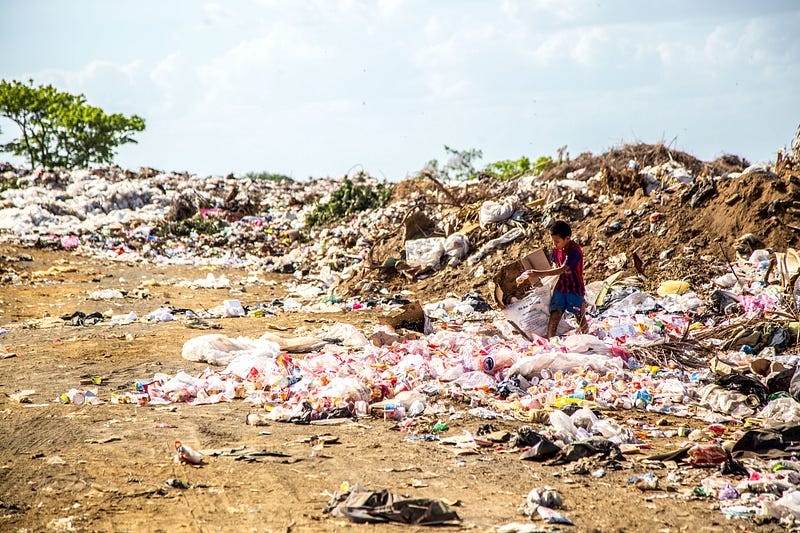
See, in 2019 as the world burns we need two things: to return to some Fraggle Rock pace of humor and education and also to listen to the wisdom of trash. Our trash. In heaps. In piles. In landfills. In the ocean. In space. We have trashed this planet and are not learning from it.
Trash is wise. It tells us what we are doing. It forces us to look at our habits. It demands that we realize that it is still here. There is no away. It floats on the water, it rains from the air. And still, we do not talk about it, let alone attempt to consider its role in the creation of a powerful environmental dialogue.
It exists on beaches, it exists on the side of roads. There are photos of people wading through it, people digging through it, people sleeping in it. Countries have shipped it back and forth to each other in the spirit of colonialism and exploitation and in the spirit of standing up against these things. It is trucked secretly between states and tossed into mountains that are sacred, land that is meant for wildlife and national recreational use.
Trash Cannot Be Ignored
And yet, we just ignore it. Out of sight, out of mind. We do not seek it for anything, we want to believe it is gone, disappeared.
Our failures to commune with and face up to our trash have resulted in complacency and ignorance to environmental devastation and environmental segregation. Global divides and class divides can be seen on who puts their trash where. Which nations are expected to take the trash of other nations, which neighborhoods are expected to house the factories that produce toxic wastes in the dirt, air, water.
We have failed by not considering trash. We have put it aside mentally even though it still exists physically.
The Spirituality of Trash
Perhaps it is time to take a tip from Fraggle Rock, to get deep about our trash. To listen to our trash. To treat our trash respectfully. At a time when trash and planet have merged and continue to merge in ways that result in ecosystems and species ending, it is time to think about the material and spiritual conditions of trash.
We might not be able to dance our cares away on this one, folks. But we may just be able to heed the wisdom of the trash heap before it consumes every last inch of the planet.
Jenny Justice is a mom, Sociology instructor, and writer. You can follow her on Medium and at Jenny Justice, Writer. She has been recognized as a Top Writer on Medium in Poetry, Parenting, Reading, Education, Books, Racism, Feminism and Climate Change, so far.


