
Fr. Dwight Longenecker: Crushing the People of the Lie
In “Immortal Combat,’’ Longenecker reveals the roots of resentment, rivalry, and revenge

GREENVILLE, S.C. — We knew we had to visit Father Dwight Longenecker. The Holy Spirit “reminds’’ (John 14:26), and reminders kept coming.
We drove hours through Michigan, Ohio, Kentucky, Tennessee, and a “feeling’’ made us switch from music to the SiriusXM Catholic Channel.
One minute after changing channels, we learned the priest we were driving toward was about to be interviewed for a full hour. We sat at attention, listened and learned.
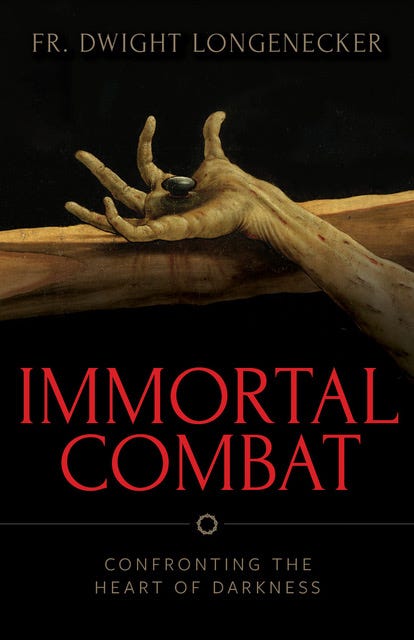
- His latest book, “Immortal Combat,’’ is riveting, more timely than when he wrote it.
- He chose to tackle the heart of “the sin of the world’’ just in time for the widespread societal upheaval that began with our spring “season of discontent.” Tensions have since escalated.
- The most “on fire’’ Catholics keep recommending Longenecker’s new book or one of his latest articles.
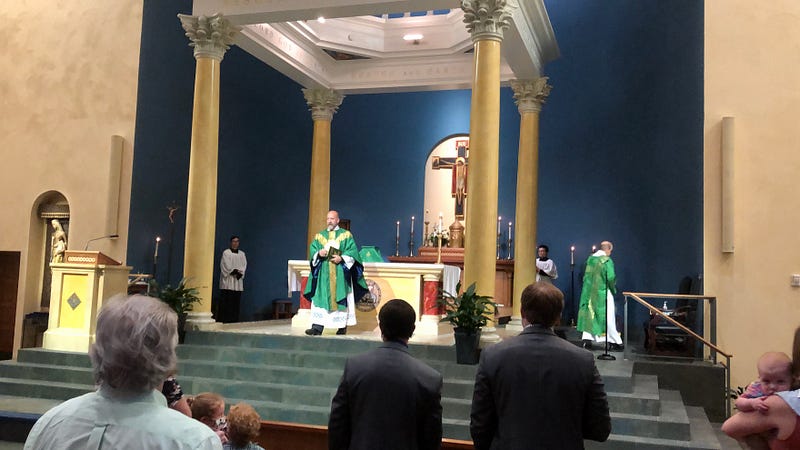
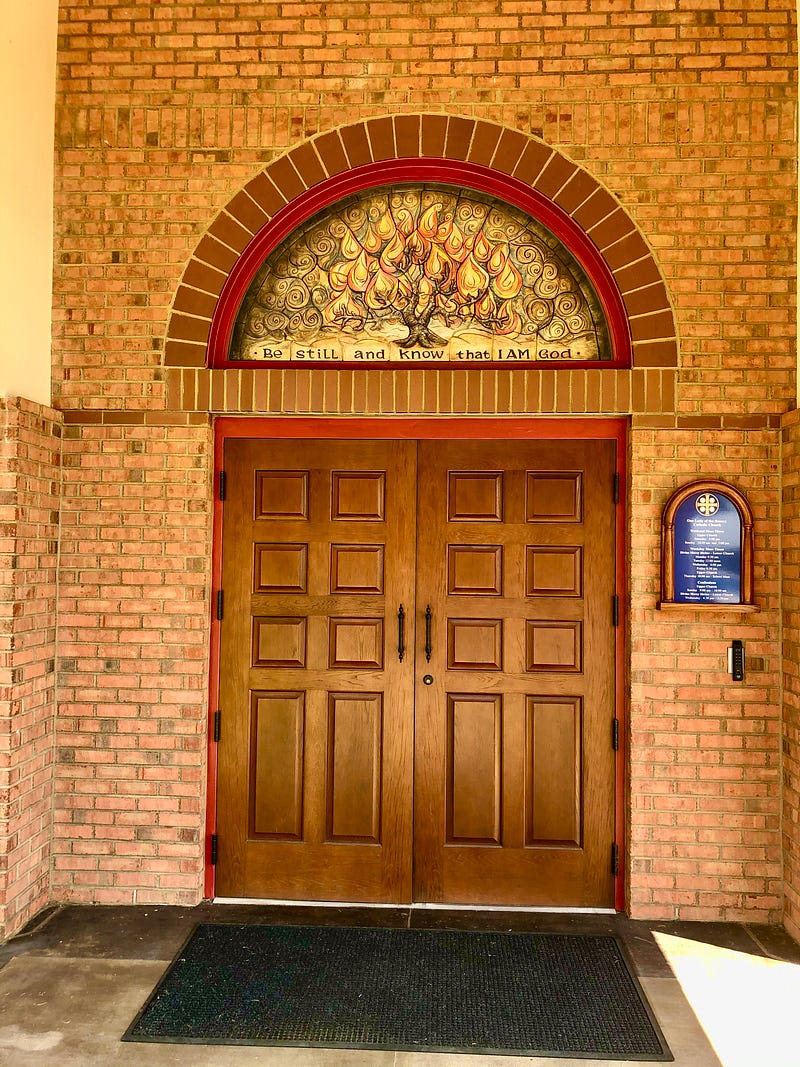
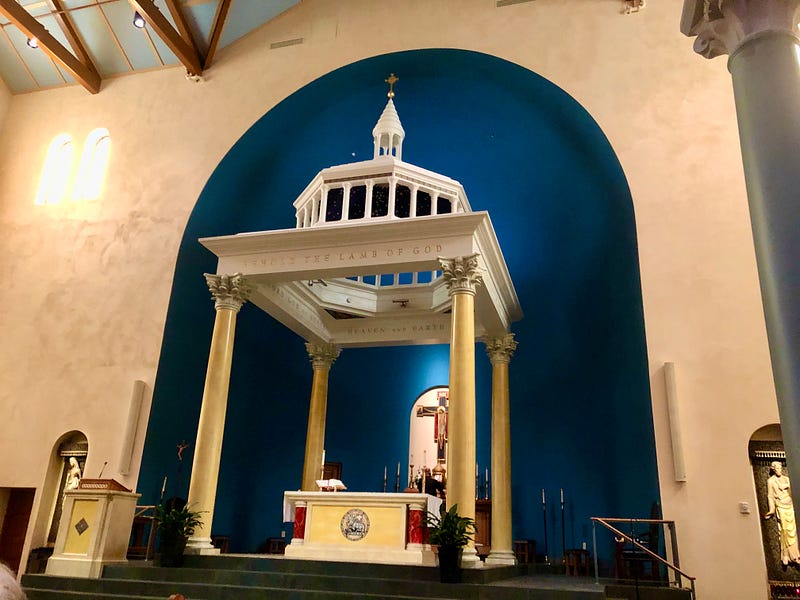
- His Our Lady of the Rosary Church is itself a destination: both classic and new, a Catholic island in a sea of Southern Protestantism surrounded by a world of secularism.
Why does God permit evil? Choice
God, who is love and truth itself, gave us the power to choose. Choice opens us to both right and wrong choices.
He explains: “without choice, there is no evil, but without choice, there is also no love.’’
“Love must be chosen,’’ Longenecker stresses.
Choice requires: “God’s great gamble. He must have love because He is love, but love must be chosen. And for it to be chosen, there must be an option not to love. Therefore, God gave His children the power to choose.’’
Why are we so angry? The Resentment Loop
Our frustrated sense of pride, power and prejudice each fuel a “resentment loop’’ toward certain individuals or groups, he writes:
“It is the repeated reliving of negative emotions. It is a deep-seated cycle of anger in a person’s life,’’ a burst of negative emotions that “feels good’’ inspiring us to “assert ourselves.’’
He argues the addictive resentment loop “is like a drug. It makes us feel euphoric. It makes us feel high and mighty… But like all drugs, the effect is not real. It wears off, and we need to go back more frequently and take a higher dosage, and soon — like an addict, we are enslaved.’’
Resentment leads to Rivalry then Revenge
Resentful people suffer from an ongoing “constant unnamed unhappiness’’ and search for a cause, someone or something to blame.
Predicting the 2020 riots, he writes: “all the revolutionary movements down through history,’’ and “identity politics’’ lead to “angry little groups of protesters.’’
“When the resentful form into a collective mob, it is truly frightening to see,’’ Longenecker writes in this book completed before the soaring crime of 2020. “Their resentment and rage render them irrational… They are obsessed with their righteous crusade because it has become the source of their self-esteem.’’
He also makes it clear no single ideology or political group is the source of this behavior. In fact, very religious good people are just as vulnerable. Resentment abounds in the sin of the world we all must resist and confront.
Bishop Robert Barron similarly warns: “When tensions arise in a group (as they inevitably do), people commence to cast about for a scapegoat. Deeply attractive, even addictive, the scapegoating move rapidly attracts a crowd, which in short order becomes a mob.
“In their common hatred of the victim, the blamers feel an ersatz sense of togetherness. Filled with the excitement of self-righteousness, the mob then endeavors to isolate and finally eliminate the scapegoat, convinced that this will restore order to their roiled society.’’
The People of the Lie and the black sheep of the family
Many have heard of psychologist M. Scott Peck’s bestseller, The Road Less Traveled, but Peck’s The People of the Lie (written in 1983) is jarring for the way Peck explains evil: Showing the direct correlation between the frequency of lies and evil behavior. Longenecker completes the puzzle.
God is truth, and Satan is the father of lies. The more you live and follow lies, the more you are ruled by the evil one. The People of the Lie, Longenecker shows, “always have a sacrificial lamb’’ to hate, attack and blame.
“Somewhere in their life, you can be sure they have a person or group of people they believe are the source of their difficulties,’’ Longenecker explains. “In a family, they even call their sacrificial lamb ‘the black sheep.’
“This ‘difficult’ member of the family is the troublemaker, the oddball, the one who doesn’t fit in, the one who doesn’t play the game, the one who rocks the boat… The People of the Lie always blame another.’’
“Blame another” — the one who stands out, who isn’t going along with the crowd or following the norms of the tribe or family.
This constant search for a “black sheep’’ to blame for all our woes is the actual “Sin of the World,’’ Longenecker explains. Watch how it plays out in families, in culture, and of course, in our divisive politics.
How we shift the blame, always finding a black sheep to blame
Longenecker’s book went to press in late 2019, but his predictions of 2020 are jolting. He warned: “Violence simmers in our streets and our homes as it does in our hearts. The domestic violence and abuse continue.’’
“Going to war to control our ‘vital economic interests’ is tribal violence born of Rivalry, Resentment, and Revenge,’’ he writes. “Through abortion, we sacrifice the lives of the innocent who stand in the way of our pride and prosperity.
“Euthanasia is our way of eliminating ‘the problem’ in the same way as the commandant of Auschwitz operating the gas chambers or the rival chieftain beheading and skinning the victim of the neighboring tribe.’’
In the streets of U.S. hot spots like Minneapolis and Portland, Katherine Kersten, a senior policy fellow at the Center of the American Experiment, speculates,
“What is unfolding before our eyes is a new secular religion. For all its claims of “inclusivity,” this new faith is deeply intolerant. It has roots in the American past that would likely surprise its adherents: the Puritan era of our nation’s earliest religious zealots. Progressives are now engaged in doing theology without God.’’
Everyone wants to change the world — no one wants to change themselves
The “Sin of the World’’ Jesus died on a cross for is not merely “the naughty things you’ve done.’’ It’s much, much deeper, Longenecker stresses, involving the bigger issues we leave buried “in all of our cellars.’’
False piety is bipartisan, multi-racial and universal, though the targets differ. The constant is “the indignant self-righteousness of those who blame the immigrants, the Jews, the liberals, the conservatives, or anyone but themselves for their problems and the problems of the world.’’
Whenever you gossip about others or marginalize and accuse another person, you share in the sin of Cain,’’ Longenecker writes. “Whenever you prop yourself up by putting another person down, you plunge into the dark place. Whenever you blame another person or group for your problems or the world’s problems, you reveal your Resentment, Rage, and thirst for Revenge.’’
“I knew that my heart and mind would always be tempted to feel anger — to find blame and hate. But I resolved that when the negative feelings came upon me, I wouldn’t wait for them to grow or fester. I would always turn immediately to the Source of all true power: I would turn to God and let His love and forgiveness protect and save me.” — Immaculée Ilibagiza, Left to Tell: Discovering God Amidst the Rwandan Holocaust.
“Secret Superhero’’ story: From ancient myths to modern movies
Again and again, from ancient times to Superman to Harry Potter, we are drawn to the “secret superhero story.’’ Why do we love it?
“Because it is the true story of mankind’s liberation from the kingdom of death and darkness,’’ Longenecker writes. “The timeless story is the story which explains everything.’’
All stories, yours and mine and all the rest, “point to the great story — that great story that tells us who Jesus Christ is. He is the Secret Son.’’
The problem? We focus on what he did more than who he was: “He was the Son of God disguised as a son of man.’’
How to break the Resentment Loop: The paradox of pride
Imagine playing a game of Tug of War, always pulling with all your might but getting nowhere. The other way to win? Drop the rope.
“Forgiveness is the other side of repentance,’’ Longenecker writes. “If repentance means taking responsibility for ourselves, then forgiveness means taking responsibility for another person’s fault. As the Lord Jesus picked up our trash, forgiveness is picking up another person’s trash.’’
Love your enemies. Forgiving, he writes, is “repenting for another person,’’ where we take responsibility for someone else and immediately, “It’s over. The offense is obliterated with an embrace.’’
“Think of the Lord as a clay vessel filled with the universal power and life of God Himself,’’ he writes. “When that clay vessel of His body was broken, the power of the Creator, the power of the one who is the Foundation and Source of All Existence burst into the unexpecting world. It exploded right in the middle of death’s dream kingdom.’’’
When we arrived at Father Longenecker’s church for Sunday Mass, we felt elated to see the magnificent church and its people showing The Way to all.
Then a taste of the “resentment loop,’’ a sense of let-down when we realized, after driving 684 miles to see this priest, it was his deacon’s turn to give the homily. Of course, the deacon’s homily was excellent and we got to see Father Dwight do something more moving: bring a new child into the faith via Baptism. And we of course, have his book.
Following The Way offers “a path to a fullness of life that we cannot attain simply through good works, self-discipline, and self-help. It means living in a new dimension of reality — a supernatural renewal of heart and mind that draws us ever closer into an intimate union with the Lord Himself.’’


