
Four Responses to Trauma that Destroy Relationships
And the one that builds
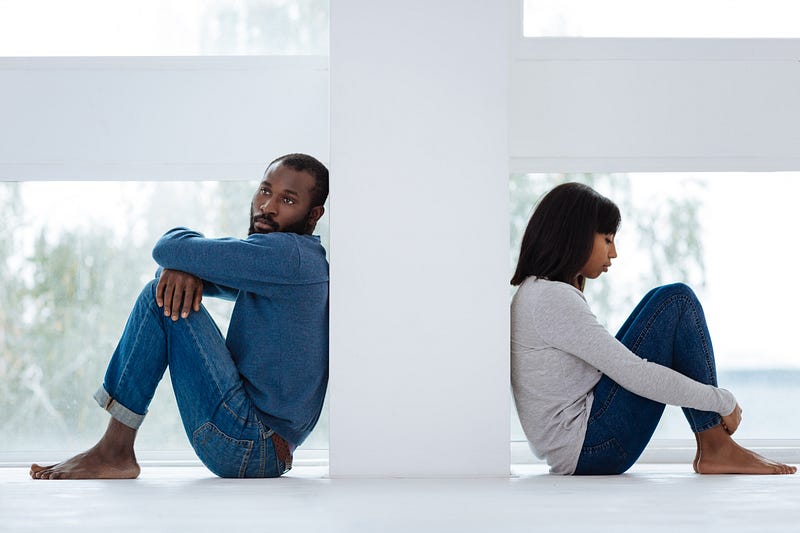
Like many survivors of childhood trauma, developing high-quality relationships was my nemesis. Relationships are where many survivors express their dysfunction while being great at everything else in their lives. I was no different.
Fear of abandonment often produces behaviors that create abandonment. The need for approval attracts highly critical partners. The desire for control results in high conflict that leaves you feeling powerless. One or more of these relationship destroyers arise with frequency for most survivors.
You Are Who You Love
Many survivors enter the healing journey based on relationship fatigue. We get tired of “getting it wrong,” whether with our spouses, children, friends, or co-workers. We fail at predicting the outcome of relationships and end up feeling betrayed and isolated.
When we find the healing path, we come kicking and screaming like a toddler who doesn’t want to come off the playground, but their diaper is full of poop. We hope for a quick change so we can go back to playing. Unfortunately, building high-quality relationships is a developmental process. Furthermore, our proficiency in relationships develops in tandem with the healing process.
As we learn to self-soothe, be alone with ourselves, and let go of fear, our expectations in relationships shift toward healthy patterns. As we reduce trauma triggers through a practice of self-awareness, relationship priorities get resigned.
Survivors who are willing to walk through the fire of healing old wounds will travel a rugged emotional path of unlearning behaviors that foster pain and experiment with new patterns that support healthy bonds.
Although healing is not linear in a way that can be systematically verified, my ten years of working with survivors have given me insight into some notable patterns. The degree to which survivors consciously address their trauma plays a significant role in their relationship success.
Five Responses to Trauma
Five responses to victimization influence the relationships that survivors attract and build: denial, disclosure, deindividuation, discovery, and development. The intent of these descriptions is not to substantiate human behavior for scientific exploration. Rather, to offer survivors a possible understanding of where their struggles may lie in their futile attempt to master relationships.
Denial
When I committed to healing in 2007, I found out 40 million adult survivors of childhood sexual abuse lived in America. I was mystified why I had only met one other person who had identified as a survivor.
I started reading journal articles and realized that being a survivor was associated with many behavioral dysfunctions, none of which I had. The negative impact of silencing 40 million people is that little is known about how we navigate the world.
Sadly, most of us navigate in denial. In denial, I earned an undergraduate Ivy League degree at age 21, a master’s degree at age 22, and later, a Ph.D. in psychology. I built a stable career and family while in denial. I never expected to implode emotionally despite my success. I did, at the age of 28 and again at 44.
How relationships look in denial response could be anybody’s guess. We may never know as long as 50% of survivors never tell a soul. We know that a disproportionate number of survivors end up in a domestic violence situation, divorced, or single-parent. Research shows that, compared to peers, children of survivors have more severe emotional issues even in the absence of identifiable abuse.
Some relationships end up being a trauma buffer in the denial response. I would describe the first 14 of my 30-year marriage that way. I took complete advantage of marrying at the age of 29. I compare the decision to marry instead of heal to driving a car on a donut tire for 16 years.
Living in denial is not a permanent fix, and it doesn’t make the healing process any easier. I have a good life full of missed opportunities from living small. Other survivors sacrifice much more than opportunities in the denial response. Addiction, crime, and poor health leave more evident markers.
Disclosure
The initial disclosure of trauma is often based on presumed intimacy. Telling someone about the trauma is perceived as gift-giving. The survivor gives their truth as an offering. Implicit expectations unfold to guide the survivor’s behavior, as gift-giving is reciprocal. Survivors often attract one another, making a seemingly even exchange.
Both people may be survivors of the same type of abuse or have experienced different types of adverse childhood experiences. The mutual commitment to secret-keeping is the key ingredient in the relationship.
As practical and harmoniously as reciprocity sounds, these relationships tend to end up toxic. The blind trying to lead the blind leaves too much room for enabling dysfunction. To remain partnered, the two people must stay stuck in victim mode together or heal together. Otherwise, one person will outgrow the relationship.
Moving beyond this response is difficult. The healing turbulence of relationships keeps survivors spinning between recognizing unwanted toxicity and developing the discipline to practice healthy patterns. Many survivors slow or halt their growth. Familiarity or tradition keeps them stuck in dysfunctional patterns with people they already love.
Deindividuation
In the deindividuation response, survivors may look to be saved themselves instead of saving others. Much disappointment comes in this stage because survivors cannot find people to commit to them the way they have committed to others. They do not fully understand how to develop healthy patterns of relationships.
Many survivors look for support from a specific person in their lives. They want a lover, spouse, child, parent, or friend to come to their rescue. The survivor may be disappointed that people aren’t taking their healing seriously.
While the survivor eats, sleeps, and thinks about healing constantly, the rest of their world seems numb to it. Every aspect of life is seen through the lens of being a survivor. That’s great for self-analysis, but not for expectations of the world.
Survivors may experience bitterness, resentment, or self-righteousness in this stage, repellants to building healthy relationships. I’ve heard many survivors state their demand to be understood as survivors in all of their relationships. So, all of their relationships revolve around their wounds.
Even when survivors in the deindividuation response attract healthy people, they don’t stay. Healthy people don’t want to be therapists to their friends, lovers, or relatives. Unhealthy people are willing to attach for their own needs, not the needs of the survivor.
People aren’t showing up in our lives to help us heal. They show up to help us live. When we get stuck on our need to heal and use it as a measure to engage in relationships, we sell ourselves short. We end up sabotaging instead of developing relationships.
Discovery
In the discovery response to victimization, the focus is on self-discovery. What survivors once expected of others, they practice giving to themselves. They expand their relationships instead of looking for the person who understands them. They attract emotionally healthy human beings by developing healthy emotional habits.
The more variety we have in our lives, the more opportunity we have for friendships. In this response, survivors have a network of friends, which means a higher chance of getting their needs met authentically.
Maybe we have a friend who makes us laugh and act silly. We have a different friend for serious talks. We have a friend who knows the answer to every question. We find a friend in an impressive circle of influence.
We are multi-dimensional. We don’t stop exploring relationships just because we find a single person willing to spend time with us. We invite people into our lives to help us live well, not just heal. Our relationships reflect our complexity.
Development
In the development response, you spend the rest of your life committed to personal development. You use relationships to self-reflect, rather than using them to determine your value.
In the development response, you accept that relationships sometimes reveal the pain that is ready to be healed. Relationships are not viewed as the cause of emotional pain, only the pointer.
You develop out of victimhood and into love as a state of being. You choose how you love and allow each person to show up in your life. You leave space to invite people in and to let them go.
When we view relationships as invitations to go within, we cultivate more joy with others. We build relationship patterns that support our interests instead of our wounds.
Oddly, people in the individuation response may believe they are in the development response. They are intolerant and judgmental and mistake these traits for boundaries. In the absence of consistent joy and the presence of constant conflict, you are not in the development response.
The development response relies on an internal focus that is lacking in the earlier response. Survivors in development do not focus on the behavior of others. They seek to make choices that align with high human principles and self-care that give them access to authentic joy. Anyone who lives in authentic joy will meet others in their bliss.


