
Four Nights, Three Countries and 587 Christmas Market Chalets
The best part of the Rhine Valley Christmas Markets wasn’t the unique merchandise, festive decor or even the food and wine
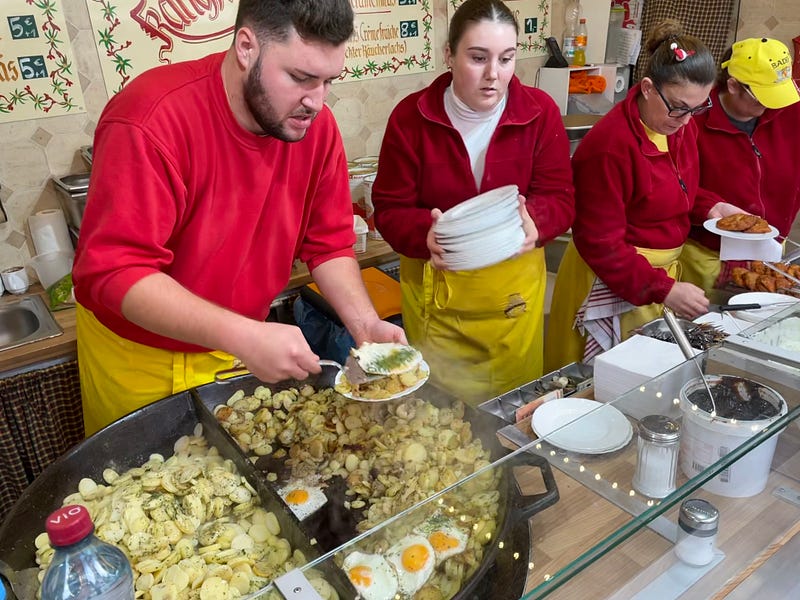
I watched in hungry anticipation as a middle-aged woman, gray hair pulled back into a bun, ladled scoop after scoop of shredded potato batter into a tray of sizzling oil.
Next to her behind the counter of the wooden chalet, another woman in a Grand Duchy of Baden baseball cap used tongs and spatula to flip the potato pancakes as they cooked, sliding them down a short assembly line of hot oil toward a steel grate, where they might rest for 30 seconds before going onto a plate and to a customer.
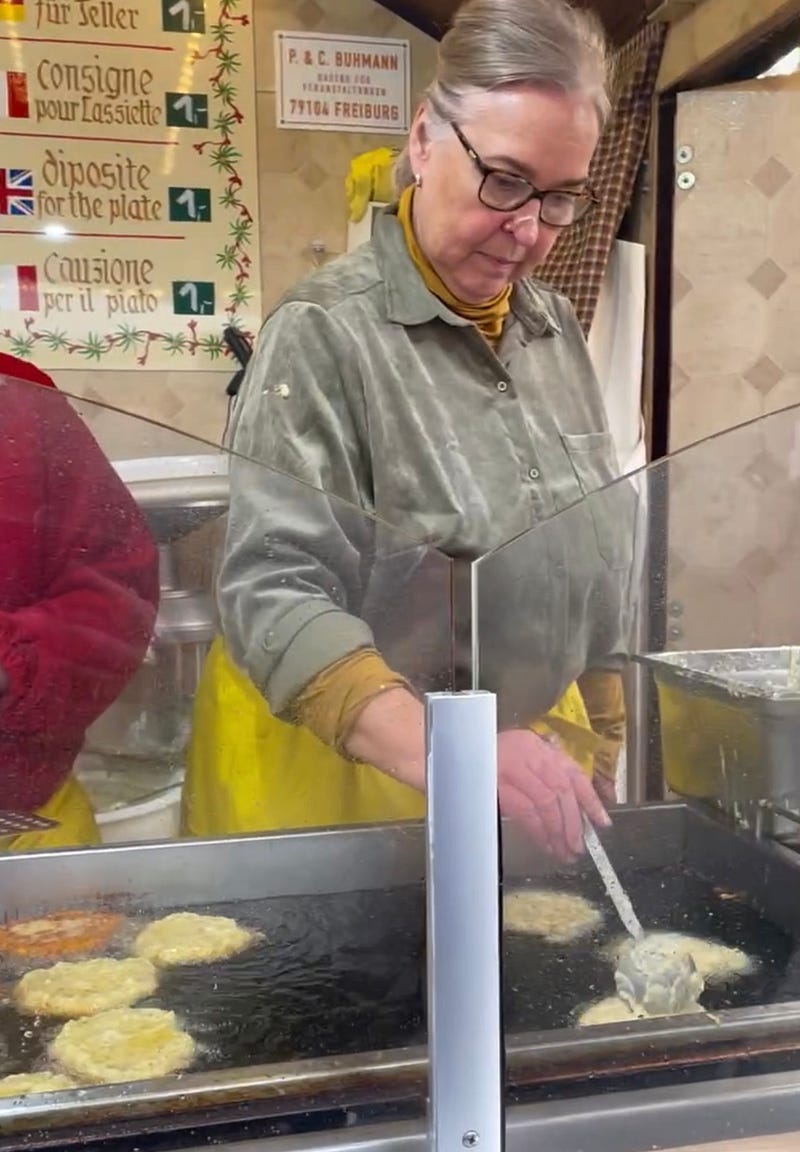
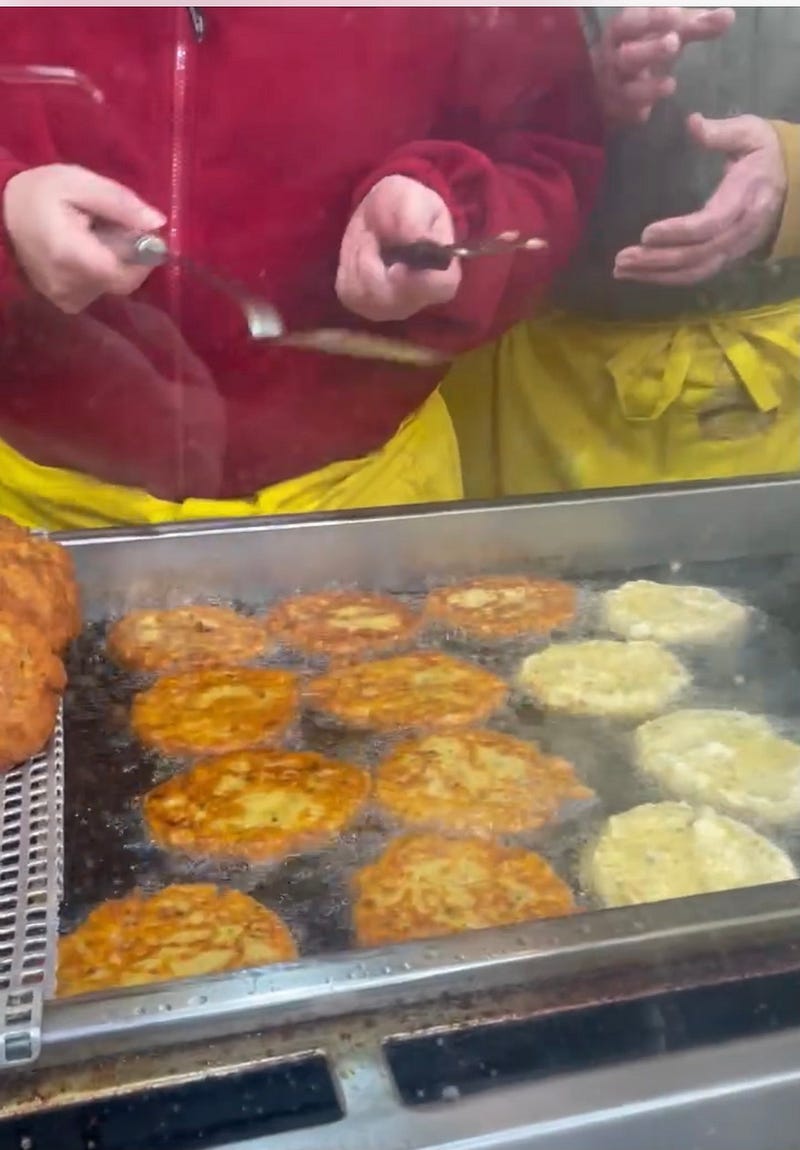
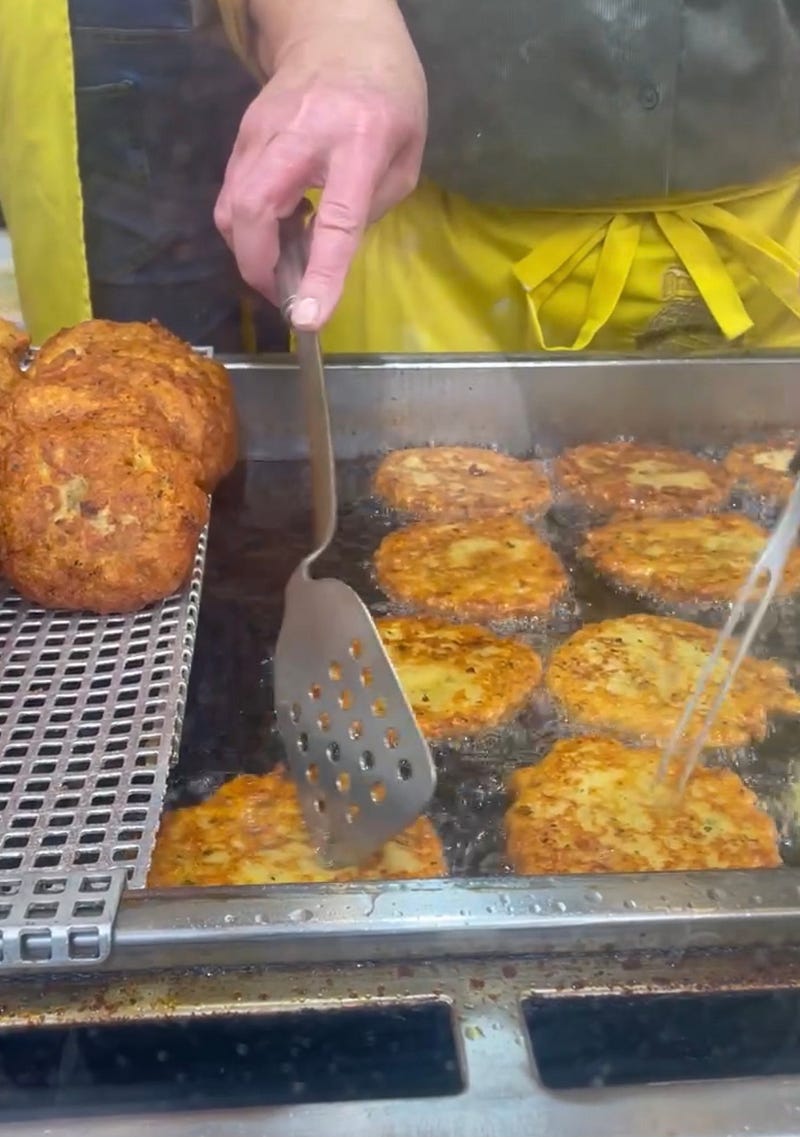
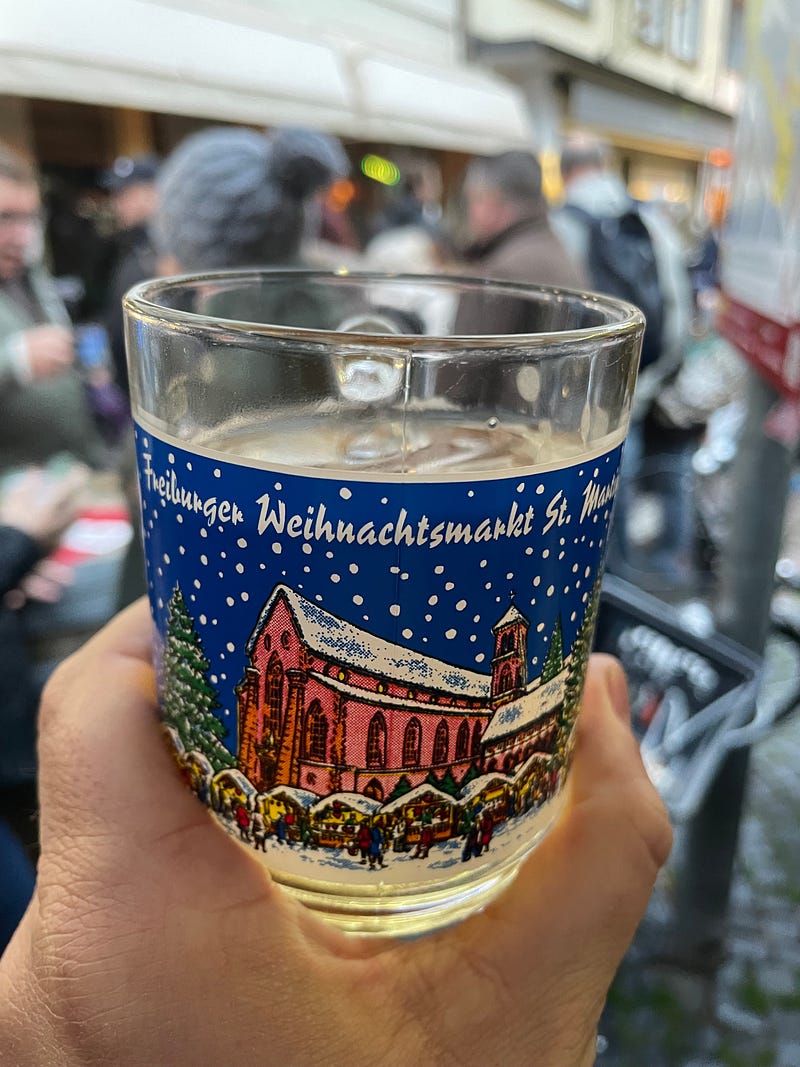
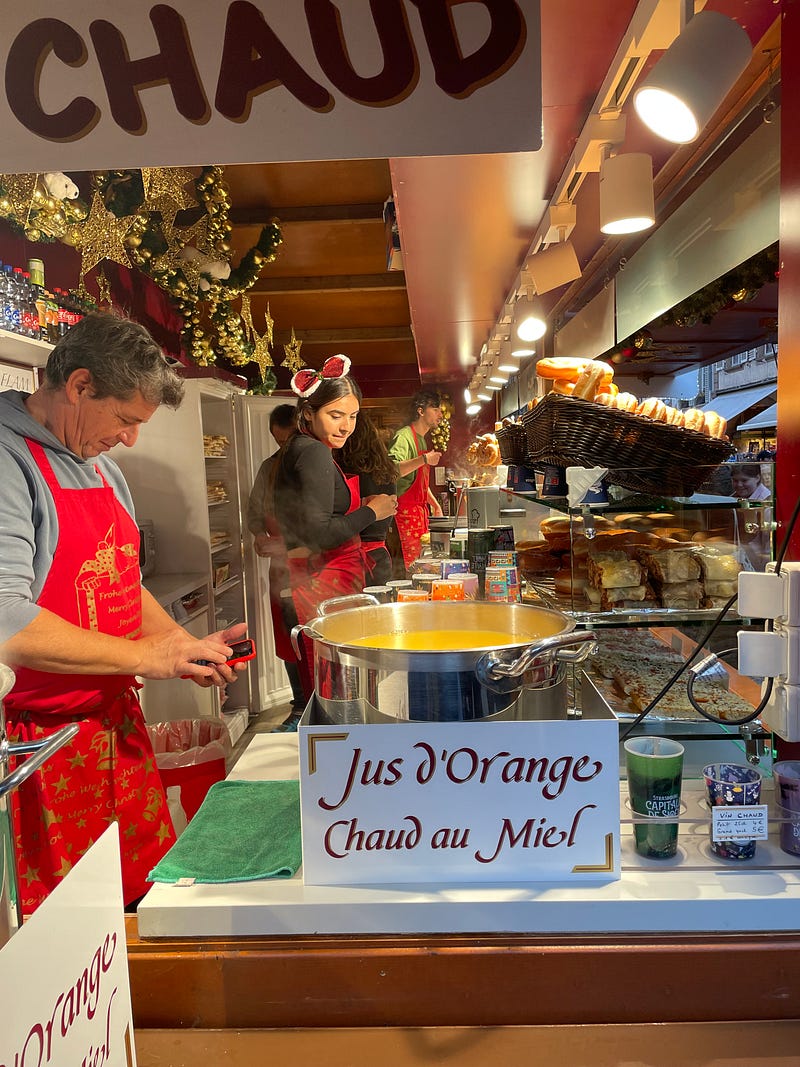
In a moment, I would be one of those customers, enjoying Kartoffelpuffer, or piping hot potato pancakes, with a side of a white garlicky cheese sauce and a steaming mug of white wine, mulled with citrus, cinnamon, star anise and honey.
We stood at a round wooden table, eating our late afternoon snack with real silverware, plates and mugs — no disposable paper or plastic here — all of which would be returned for a one-Euro deposit refund.
I was in Freiburg’s Weihnachtsmarkt, a collection of chalets selling food and Christmas gifts that wound through the streets of the city center — in the middle of an impromptu four-night trip that would also include Christmas markets in Strasbourg, France, and Basel, Switzerland.
As the temperatures dropped and the nights reached their peak, I found light and warmth across the Atlantic.
For the last two decades, my Decembers have often included a visit to downtown Chicago’s Christkindlmarket in Daley Plaza, where I buy German Christmas ornaments and eat potato pancakes with applesauce. I have visited similar markets in Bethlehem (Pa.), Philadelphia and New York City, though none feels as European as the Chicago market.
Five years ago, I was fortunate to be able to visit Vienna on Thanksgiving weekend to experience the real thing. The Austrian capital has markets all over the city, from the Rathausplatz in the city center, complete with long winding ice skating paths, to the Schönbrunn Palace, four miles outside the city center.
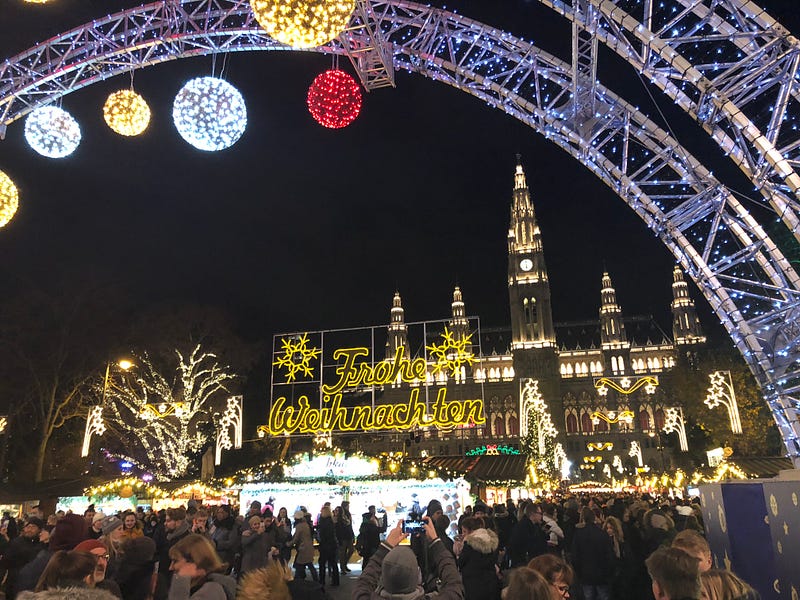
This year, with the help of my brother’s airline employee benefits, I was able to return to Europe, covering three countries in four nights:
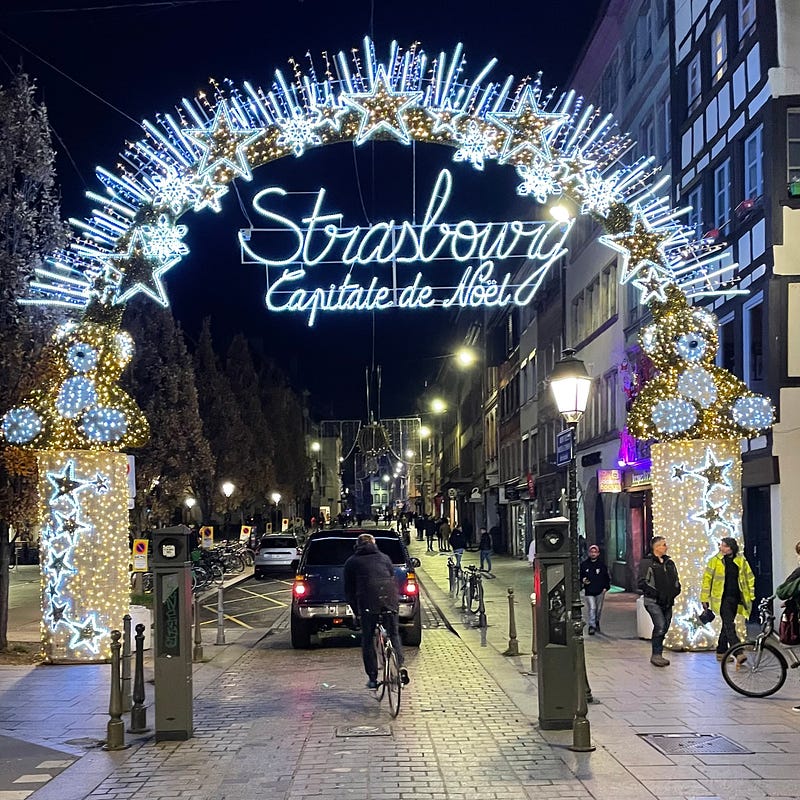
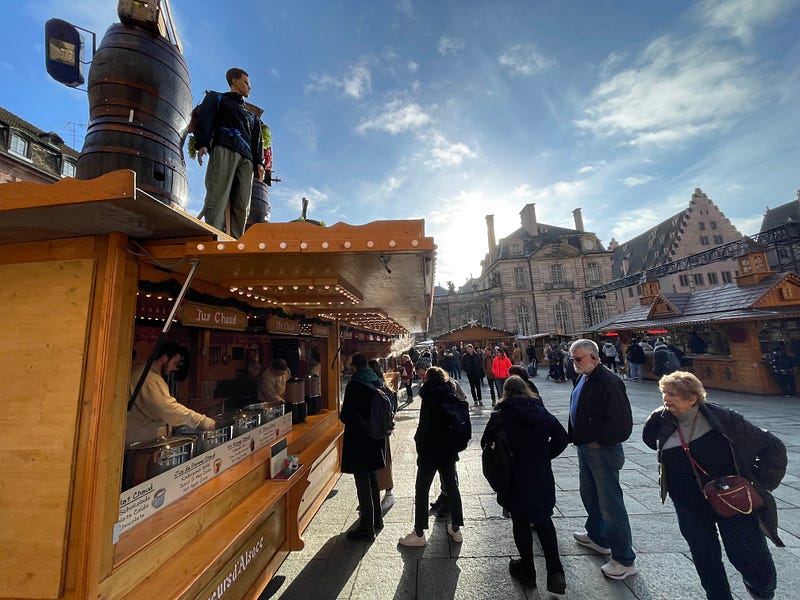
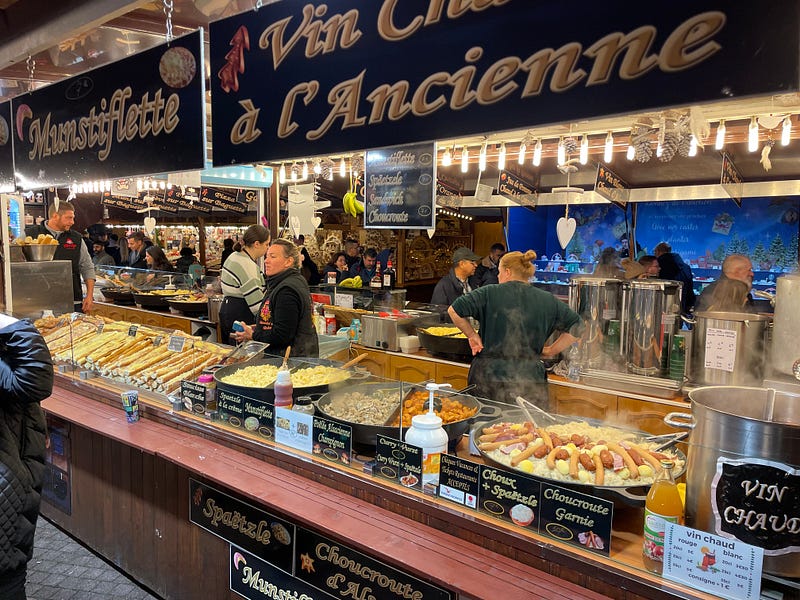
- Just three hours before enjoying those potato pancakes in Freiburg, I was eating a foie gras and fig jam sandwich from a chalet in Strasbourg, France. This city of 287,000 on the French-German border calls itself the Capital of Christmas — a deserved motto considering it has 13 markets with more than 300 chalets on its less-than-half-square-mile Grand Île. The market at the Plaza Broglie dates to 1570 and is considered one of Europe’s oldest.
- With a population of 220,000, Freiburg is a slightly smaller city, known for its university and for being an entrance to Germany’s Black Forest. The markets there include 127 chalets that are nearly contiguous to one another — centered on the Rathausplatz but also extending to Kartoffelmarkt, Franziskanerstrasse, Turmstrasse and Unterlindenplatz — creating the feeling of an endless, winding market through the town.
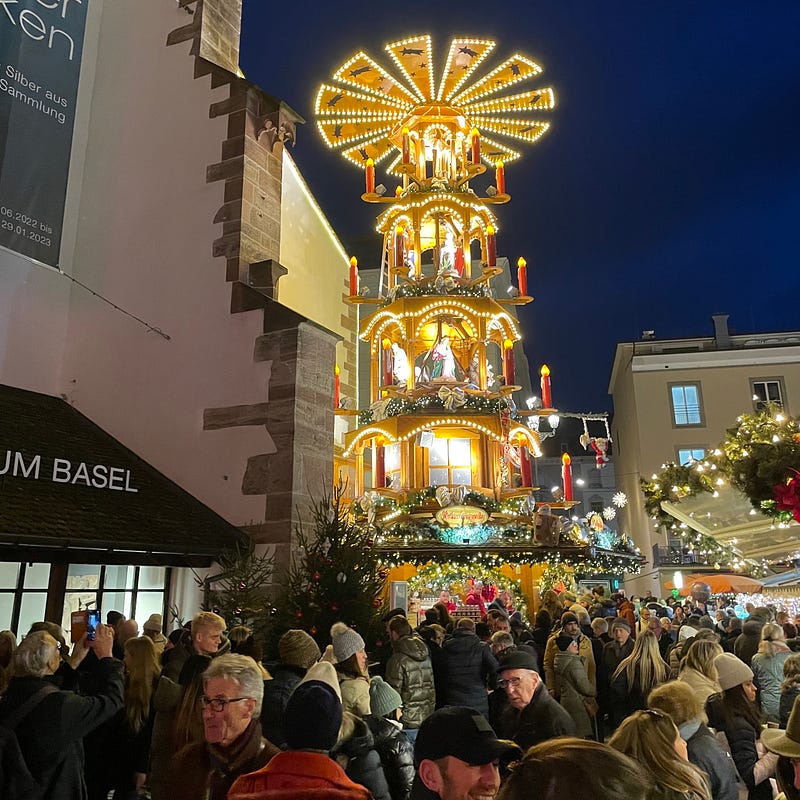
- Our last stop was Basel, a city of 177,600 on the Rhine, which has 160 chalets in two markets, one at the Munsterplatz that includes a Marchenwäld — a little forest walk with childrens activities — and another at Barfüsserplatz that includes a giant 42-foot-tall rotating Christmas pyramid above a bar selling hot and cold spirits.
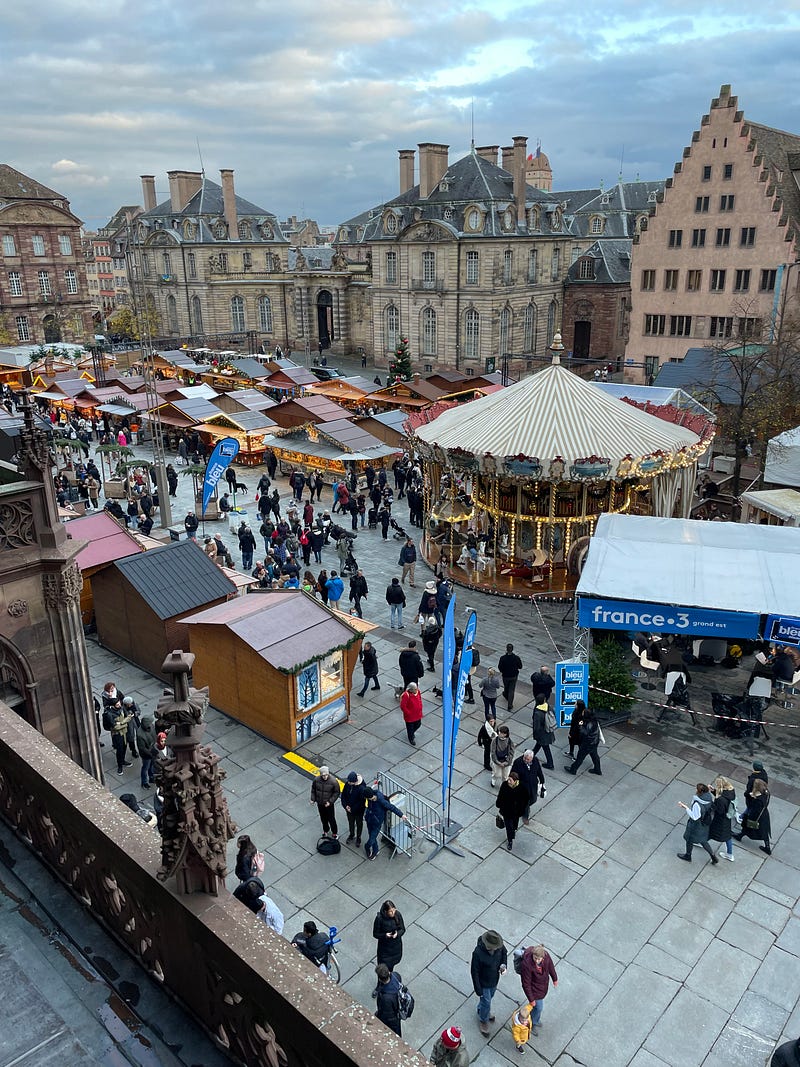
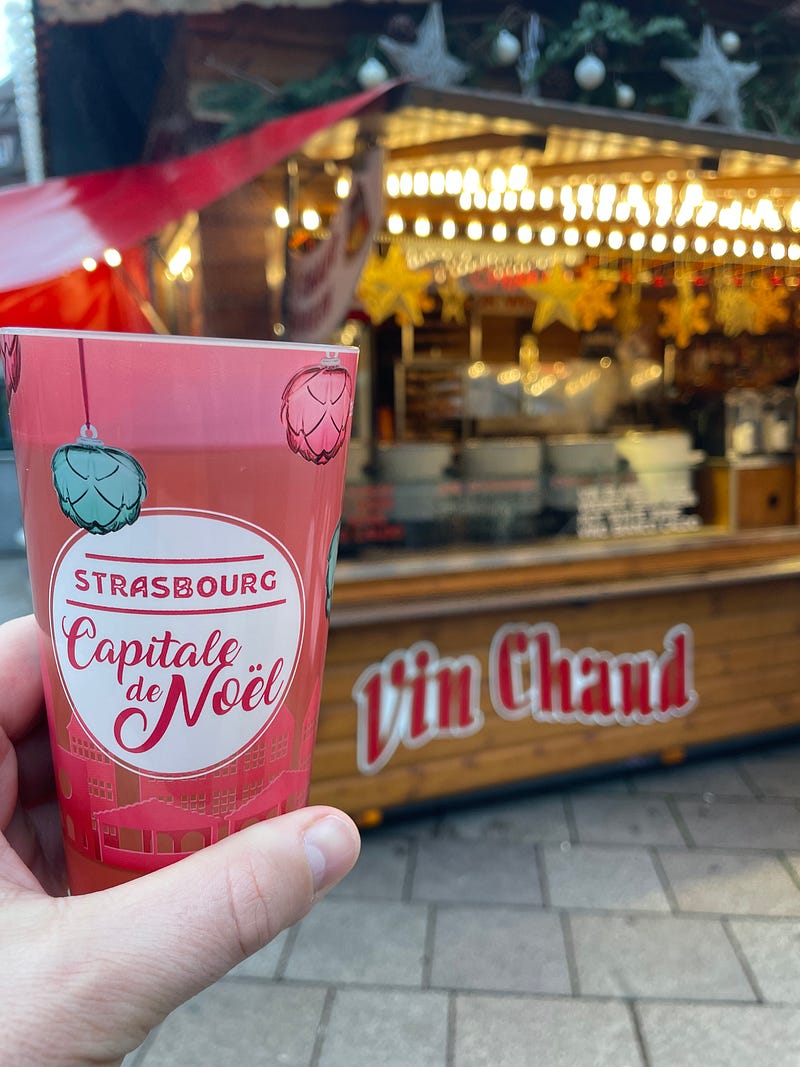
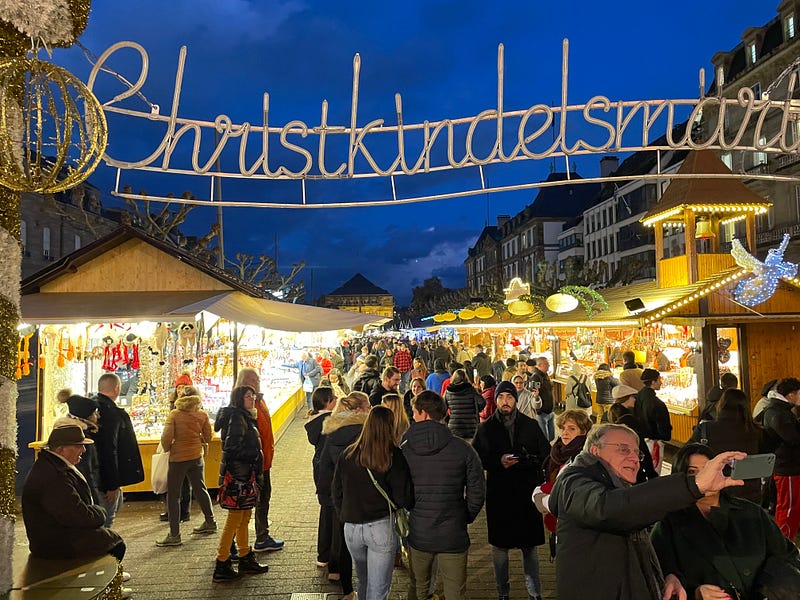
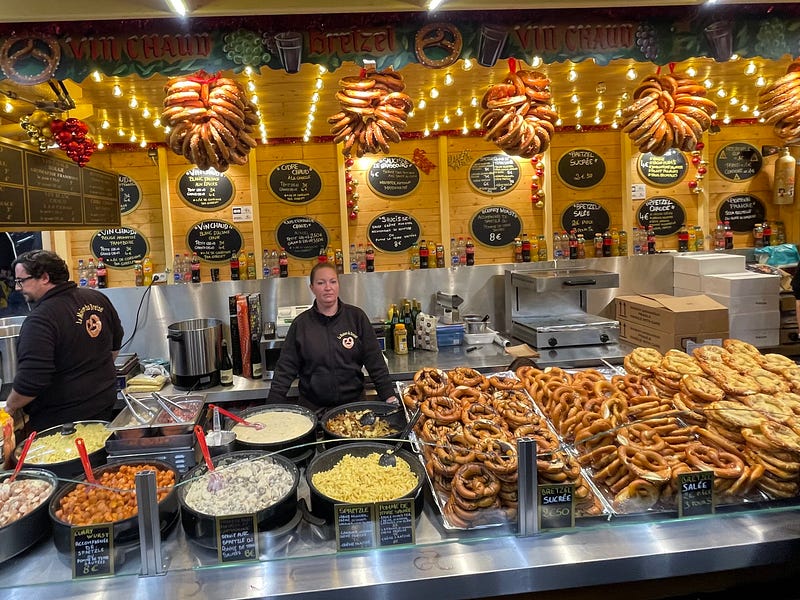
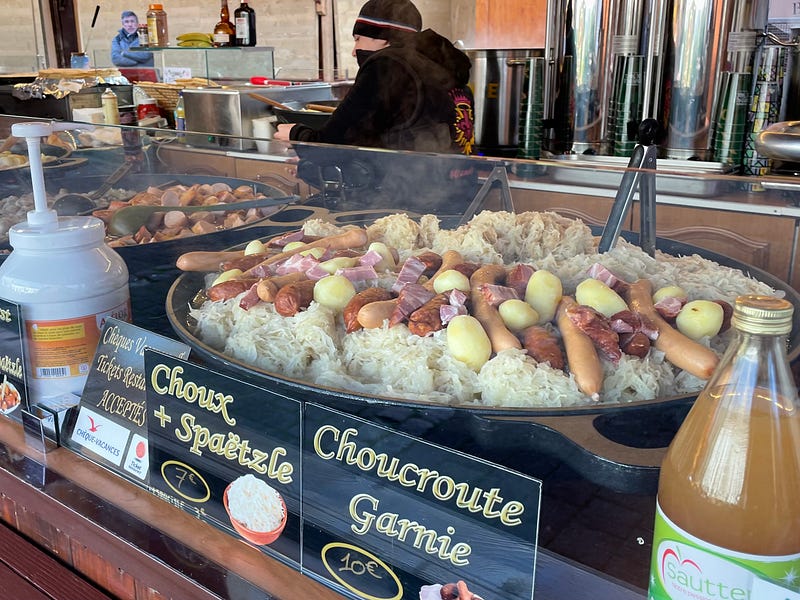
Three sausage sandwiches, three potato pancakes, one foie gras sandwich, two glasses of red glühwein and five glasses of white glühwein later, I’ve learned that the markets aren’t about the handcrafted merchandise or even the freshly made food — but the people.
Whether you call them Christkindlmarkets, Weinachtmarkets, Christkindelsmärik or Marché de Noel, they are not just beautiful, festive ways to support the local economy, but they embody what I have come to love about Europe: a more communal society that prioritizes human interaction.
The markets draw people out of their apartments, houses and cars and give them the space to eat, drink and enjoy each other’s company on cold winter evenings.
And it’s not just a Christmas or winter phenomenon. Every time I am in Europe, I marvel at how their public spaces draw people together, whether it’s Italians of all ages making the early evening passeggiata, or Spaniards eating and drinking in public squares while their children play. (Of course, the one thing these public spaces all have in common is the lack of cars, something we can’t seem to achieve in the United States.)
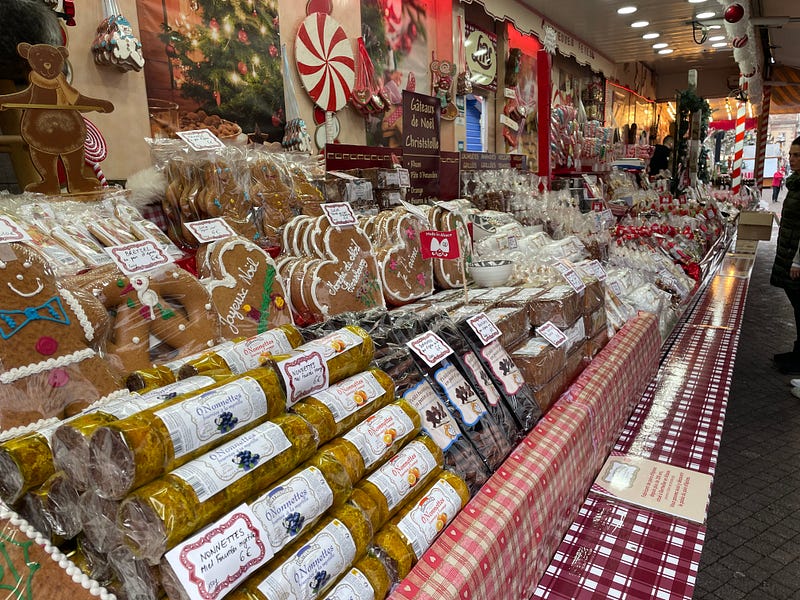
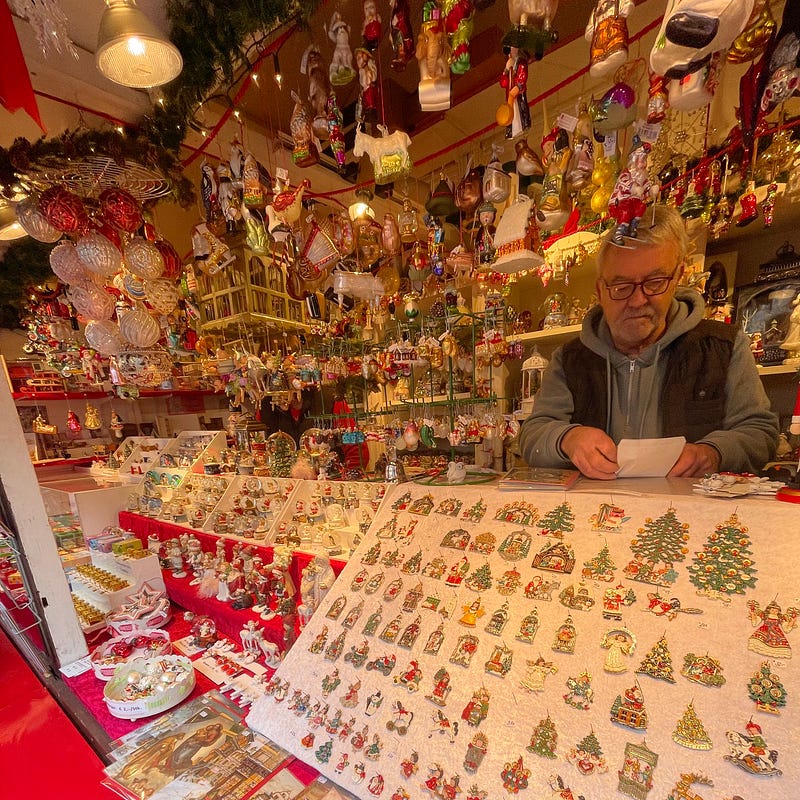
Yes, the shopping is great, too, at the Christmas markets — handcrafted ornaments, Nativity figures, local food and wines, locally made clothing — an endless variety of goods you will never find at an American big box store.
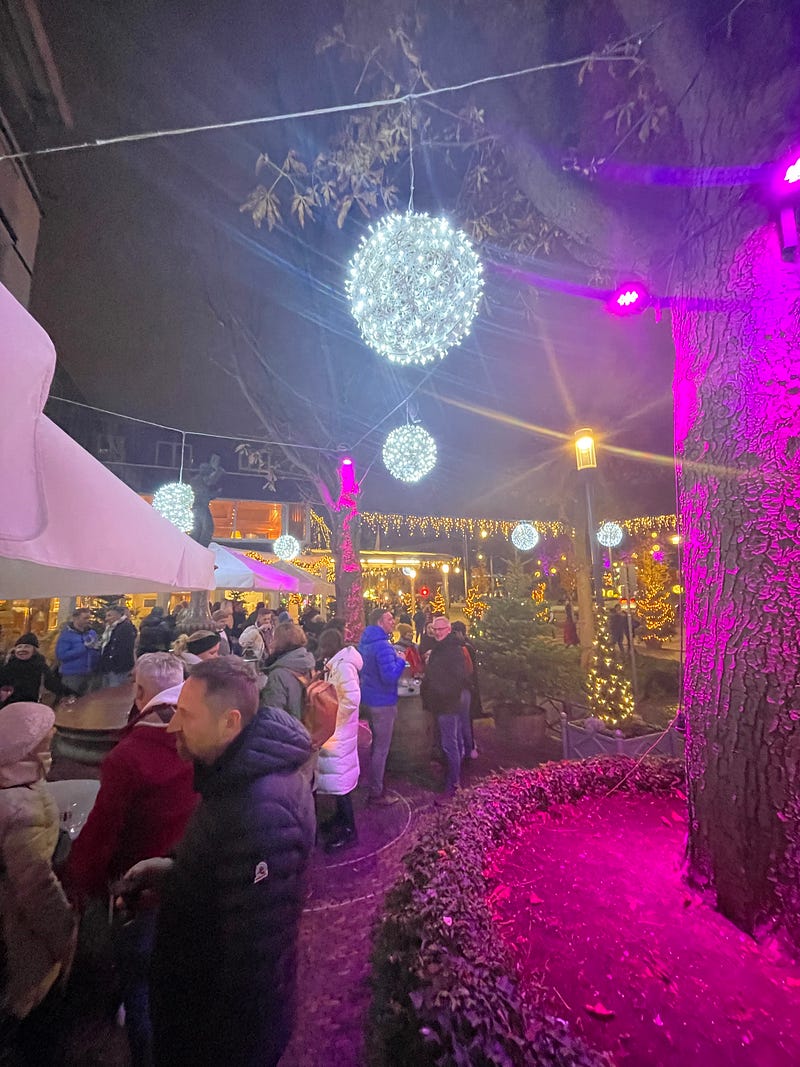
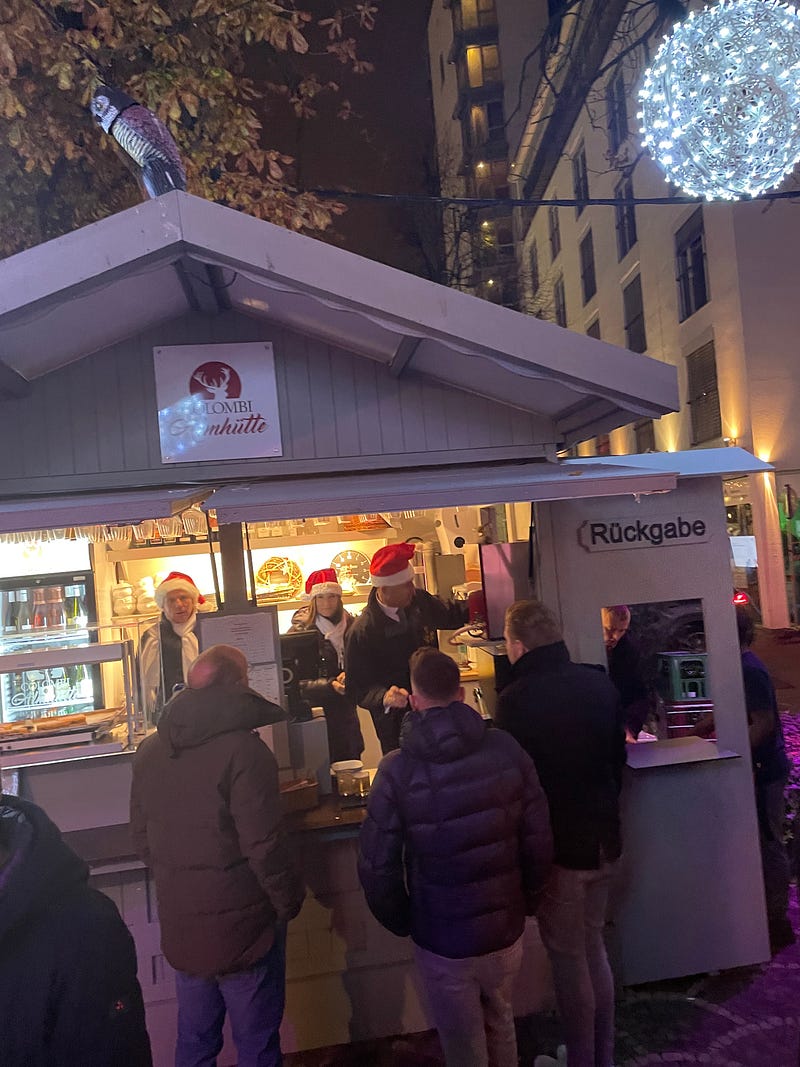
Our evening in Freiburg ended with an impromptu stop for drinks, not at a Christmas market, but outside a hotel that had the same idea. The 5-star Columbi hotel had set up a hut outside, selling beer, wine, after-dinner drinks, as well as hot soup, slices of stollen and chocolate brownies. Traditional American Christmas carols played in the background, and people gathered around tables and small fire pits, many of them pouring bottles of Alsatian sparkling wine to split among their party.
To say that Europeans know how to live may be cliche. But it is true, especially at this time of year.
It’s not just because Europeans value handcrafted goods, or have hot food and wine within easy reach amid festive music and decor — but because they use all of this to bring people together for interaction far more meaningful than any possible smartphone distraction.
Do you have a favorite Christmas market experience from any part of the world? Or a U.S. Christmas market I should check out? Drop me a note in the comments!