
Four Bold and Controversial Novels That Should be Required
Over a half-century ago, these challenging novels were ahead of their time

These profound, yet provocative, works of literature aren’t always easy-going. But they’re powerful, and often beautiful. Overall, they’re rewarding. And they’re all fairly slim volumes.
If someone can blaze through thousands of pages of magic and escapism by J.K. Rowling, Stephen King, or George R.R. Martin, they should have no problem with these.
And don’t just watch the movies instead. Savor these for their linguistic specialties — and their bold, virtuosic potential to penetrate into the darker regions of human nature.
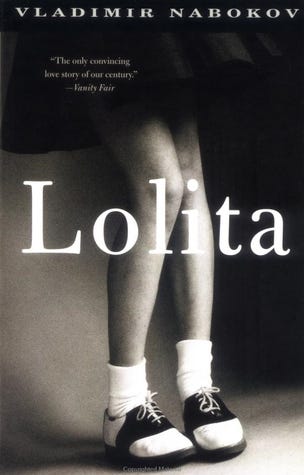
1. Lolita by Vladimir Nabokov (1955)
It’s about a 37 year-old man — a pedophile — and his romantic, sexual relationship with a twelve year-old girl. But the writing itself is incongruous with the disturbing subject matter. Stylistically, Lolita is beautiful, romantic, and sensuous.
Nabokov was a master of linguistic manipulation. You’ll be so mesmerized by the prose, and all its poetic wordplay, that you’ll find yourself morbidly fascinated by this immoral story.
Such is literature, such is life. Reality is often not what it seems. The surfaces are shimmering while the depths are crude. Love can be obsessive, disturbing, and intoxicating.
As both a great scholar and creative mind, there are few writers as essential as Vladimir Nabokov. And Lolita is one of his greatest achievements.
“The only convincing love story of our century.” -Vanity Fair
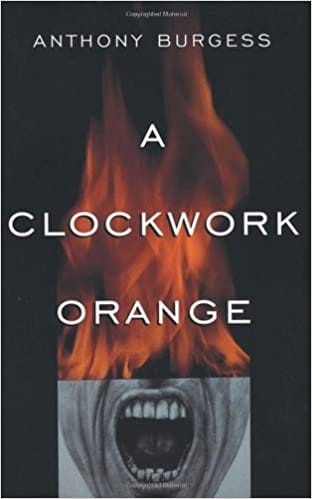
2. A Clockwork Orange by Anthony Burgess (1962)
Burgess is so inventive with language that this book deserves its place on the short list of modern classics. Add to this his wry social commentary and black humor, and you have nothing short of a masterpiece.
The novel is told by the main character, Alex. He and his gang of never-do-well droogs come up with their own colorful dialect (“Nadsat”), and as a reader you’ll have to kopat all the neologisms and slang, through inference. Burgess christens you into his bizarre world through full immersion.
It’s a fun, visceral, and conceptually fascinating work of dystopian science fiction. Not only thought-provoking on a sociological level, A Clockwork Orange is also an aesthetically pleasing work of art.
“If he can only perform good or only perform evil, then he is a clockwork orange — meaning that he has the appearance of an organism lovely with colour and juice but is in fact only a clockwork toy to be wound up by God or the Devil.” — Anthony Burgess
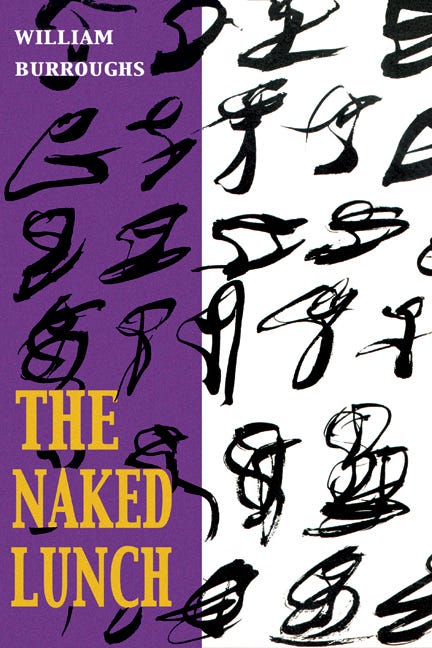
3. The Naked Lunch by William S. Burroughs (1959)
This is a daring and subversive novel dealing with envelope-pushing subjects like homosexuality and addiction. It’s a bizarre, phantasmagoric, hybrid work, blending elements of science-fiction, detective noir, satire, and autobiography.
Burroughs is another writer who had an ingenious and passionate talent for wordplay and imagery. Different from Nabokov and Burgess, his work is more experimental, and sometimes doesn’t add up chronologically, linearly, or literally.
But his work is fascinating and awe-inspiring, and Naked Lunch is the best example of his writing. It’s alternatingly funny, disturbing, and enthralling. In some ways apparently unfinished, it still seems somehow perfect just as it is.
“The face of evil is always the face of total need.” -William Burroughs
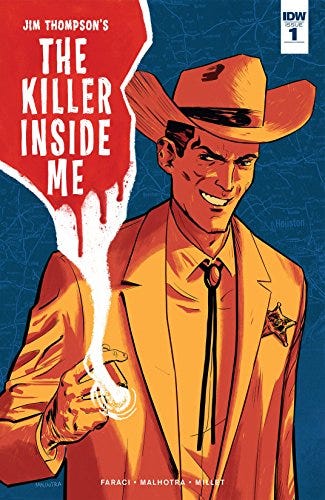
4. The Killer Inside Me by Jim Thompson (1952)
Here’s another case where the author assumes the identity of a fictional, criminal mind. Written in a more straightforward way than the others, what’s remarkable about this is how lucid and calm the narrator remains throughout the novel.
It tells the story of a sociopathic sheriff, offering direct insights into the cold, calculated, and borderline reasonable thought processes behind carrying out his horrible crimes.
The Killer Inside Me was an influential, but often overlooked, classic noir novel, that is highly regarded in many literary circles.
Acclaimed filmmaker Stanley Kubrick called it:
“Probably the most chilling and believable first-person story of a criminally-warped mind I have ever encountered.”
Thanks for reading. James Gordon is a writer and musician. He has an MFA in Creative Writing. You can subscribe to his stories here, or sign up as a Medium member using the referral link below.