
Fortunes of a Dead Mountain Village
The headlines read, “Mountain village sells homes for One Euro”, and “No Young left in Old Mountain Village”. Time and time again, I have read such articles and understood that in these modern times, these age-old abodes of humanity are doomed to fade away into oblivion — consigned to the dusty pages of history books. They have nothing to offer the young, they no longer have a purpose for the old, and there is no space left for them in our technological age of the future. It is a sad reflection, but that’s how it is — no use crying over spilt milk. Romantic as their stories are, it is not possible to live your life in the past. But is this altogether true?
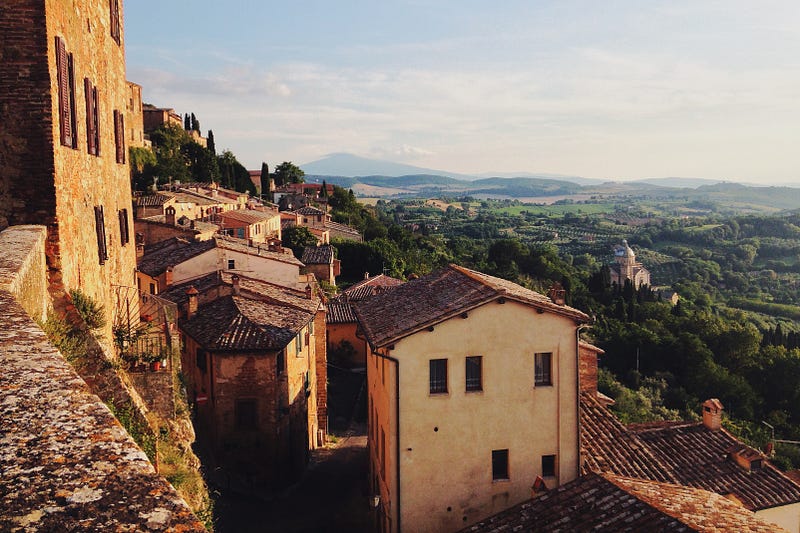
Recently, I have had the opportunity to visit these almost forgotten and certainly ignored places. They stand perched in almost inaccessible niches. Without doubt, were it not for the marvellous engineering of modern roads, they would remain unvisited — a dying cultural inheritance that paints a lonely picture. Their streets lie empty for most of the year with an occasional, battered car speeding through on a journey to God knows where. The few remaining die-hard residents are no younger than fifty-five, and most of these youngsters spend the majority of their time at the local bar where they start the day on a glass of red wine — courage or tradition? Now and again, you will see a robust octogenarian sitting on an antique chair outside her stone cottage dressed all in black and minding everybody else’s business — picture perfect for a travelogue. The sole restaurant always seems to have diners at lunchtime with no evidence at all from where they have materialised. Life is low cost, timeless and unchanging — except for the growing emptiness emphasised by the increasing number of picturesque houses abandoned with “For Sale” signs nailed to their boarded doors and windows. At night the stars are clear and bright with the absence of any light pollution and it’s so silent that you have to make a noise to reassure yourself that you are not deaf. Surely a place without hope, but is it?
In such a setting, your mind begins to speak very loudly, and mine was no exception. It conjured up the perfect recipe for salvation. These beautiful villages are not just forlorn spaces where even the grim reaper avoids, but a haven. A potential destination for the stressed, for the harassed, for the wage slaves, for the financially bullied — for the city dwellers addicted to cell phones and computers. A place for families who long for clean air, sweet natural water, adventure, but safety for their kids. A place to leave reality behind and escape into a cleansed fantasy of what the old days were like when great grandfather was but a boy — yet not to be caught in cooking, cleaning and the hard drudgery and grind of peasant life. Green spaces, running springs devoid of rubbish and chemicals, trees, majestic and secluded where one can be free of the annoying presence of unwanted neighbours — all in one affordable package. Here at my feet was the perfect dish to serve for a two weeks annual vacation.
What was this master plan then? How could Lazarus be brought back from the dead? Surely only the second coming of Jesus could achieve this miracle. Not really. These few people are sitting on real estates that we folks who make our living in cities would die for — mostly, admittedly, in our dreams. It was not necessary to carry out large scale redevelopment. It was not essential to invest enormous amounts of money. It may be even possible to avoid visiting the dubious bank manager. What was needed was organisation, co-operation and co-ordination. Everything was already there — the elements were in place. It just required stringing together. In the Italy of today, the family is still everything. Somewhere in a nearby city, you would find a University-educated son, daughter, niece, whatever, with IT skills. Another will be involved in the advertisement business — yet another in the local government.
These extensive links would open your eyes with surprise and wonder. At the centre of this hub, where the spider sits, there would be our little, dying mountain village. Here you will find several half-empty and empty houses fully furnished. Grandmothers with a knowledge of ancient local recipes that have not found their way into any cookbooks as yet. Someone who has a mini-bus who loves driving. Someone who is fascinated with walking. Who knows all the routes through the mountains — and how to avoid the feral dogs, by the way. Someone who knows all the old local songs and dances. Mothers whose children are long gone who would love to play and look after the young once again. Can you visualise the picture that was forming in my head?
I felt that I was onto a winner. I was sure that the solution was so simple that no one had ever thought of it before. Armed with this exciting business opportunity, I mentioned my grand scheme, admittedly still in its infancy to an Italian friend who I was certain was in the know and whom I was confident, would be similarly enthused.
I was a bit puzzled as he looked at me in a sympathetic way — one that fathers tend to reserve for their most ignorant and naive sons. Finally, without wasting words, he said.
“It won’t work.”
“Why?” I asked, with naked incredulity in my voice.
“Have you spoken to these people?” he inquired. “No? That’s because you’ve already sensed that they won’t listen to you. Why they wouldn’t even listen to a neighbour with whom their families have shared the village since its first conception — it is not that your idea cannot be done, it’s that they have no wish for it to be done.”
“Then why do they complain?” I asked.
He smiled at me and did not comment. To this day, I remain in a deep state of puzzlement. There are things that I will never understand, and this was my biggest learning curve.