
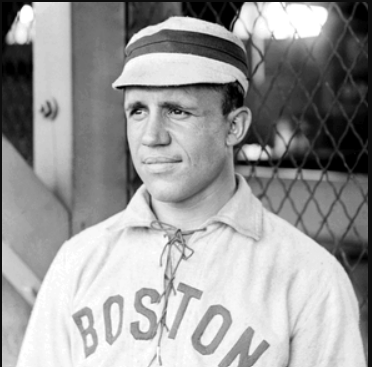

Former Baseball Star Freddy Parent’s Recollections Of Playing In The First World Series
An early MLB player lived for nearly a century and accumulated many amazing stories during his life
Early baseball star Freddy Parent was a terrific player. A strong defensive shortstop who could also handle the bat a little, he was well regarded by fans and opponents alike. Living to just prior to his 97th birthday, he experienced and saw a lot in the world of baseball over the years, which gave him many stories he was only too happy to tell.
Parent played in the big leagues for 12 seasons (1899; 1901–1911). His best seasons were the seven he spent with the Boston Americans, including playing in the first ever official World Series in 1903, which thy won. In 1,327 career games, he batted .262 with 1,306 hits, 20 home runs, 471 RBIs and 184 stolen bases. At a time when middle infielders were not expected to shoulder much of the offensive load, his superior glovework and capable bat made him stand out.
Even in his later years, the former player enjoyed baseball and talking about it. In an October 16, 1970 interview that appeared in the Bangor Daily News when he was about to turn 95, Parent shared a number of interesting memories and thoughts.
Despite his age, he still enjoy baseball. When asked if he was still into the game, he seemed almost offended by the question:
“You’re damn right. I don’t miss anything on television. But I am bothered with the football programs and also the basketball programs. I’m bothered a lot on that account.”
Naturally, he had fond memories of the first World Series in 1903 against the Pittsburgh Pirates. He was a key contributor, hitting .281 with three triples and four RBIs, which was something he would always be proud of:
“I can remember the most when we was in Pittsburgh and they had us three to one in games and we finished it up in Boston. And, yes, we won five out of nine then.”
The World Series was big business by the time of this interview. Parent was asked if it was popular during that first Fall Classic:
“It must have been. They had to make special ground rules for a two-base hit that went into the crowd because the crowd broke down the fences and the gates in Boston. They didn’t do too bad as that in Pittsburgh because they were losing.
“People in those days, they liked the Series because it was something new. Of course, it wasn’t run like it is today, more of a business today. The people enjoyed it very good then.”
Parent’s counterpart at shortstop during that World Series was the legendary Honus Wagner. He was honest about what he thought of his rival:
“He wasn’t in very good shape for the Series and he didn’t do too good, which I enjoyed myself. But he was one of the great players.”
Having lived for so long Parent saw quite the evolution in the behavior of big-league ball players. He was in a unique position to answer a question about the differences he observed from when he played to the time of the interview:
“We felt more nervous then. They seem to be more — well, they look at it to get more money fast. And we were pretty hard losers in those days. We tried to win harder than they do today. Don’t know why. Maybe the lively ball and the short fields to hit on.”
After his playing days were over, Parent went on to have a coaching career, including a stint with the then minor league Baltimore Orioles. One of the players he worked with on that team was a young pitcher named George (Babe) Herman Ruth. The green youngster was incredibly talented but also naïve and still learning. Thus, he was the subject of a story the old shortstop still laughed about decades later:
“I coached Babe more than anybody else at that time. I remember he was pitching in the late innings of a close game and there was two outs and the bases loaded and a dangerous left-handed hitter was up. He got two strikes on him. I ran out and told Babe to waste a pitch.
“The next pitch he throws right down the middle. Oh gee, a triple. Babe comes in and I said, ‘What happened?’ He said, “I threw it waist high, didn’t I?’ I talked to him later when he was in the big leagues and I asked him how his ‘waist’ pitch was. He didn’t like that very much.”
Parent passed away in 1972, a week before his 97th birthday. He was the last surviving participant of that inaugural World Series. His near century of existence and lengthy professional career made him one of the game’s best witnesses and story tellers, which only enhances his impressive baseball resume.