avatarDavid Alayón

Summary

The article discusses the concept of multiplicity, a present-day reality where human-machine collaboration shapes our future, contrasting with the singularity apocalypse often portrayed in dystopian narratives.

Abstract

The article introduces the idea of multiplicity as a current trend in technology, moving away from the speculative notion of a singularity apocalypse. Multiplicity, as defined by Ken Goldberg, a professor at the University of Berkeley, emphasizes the synergy between human intelligence and artificial intelligence, enhancing our collective capabilities. This concept is not a distant future scenario but a present-day phenomenon influencing various aspects of life, from the algorithms that govern daily activities to the increasing presence of robotics and automation in industrial and customer service environments. The article acknowledges the ongoing debate about the implications of this shift, including job displacement, the potential need for a basic income funded by robot taxes, and the vision of a future where humans can enjoy more quality time due to the support of machines.

Opinions

  • Ken Goldberg's perspective suggests a collaborative relationship between humans and machines, enhancing each other's capabilities.
  • The author contrasts the multiplicity movement with both the utopian promise of singularity-driven abundance and the dystopian fears of technology turning against humanity, as warned by figures like Stephen Hawking.
  • The article points out that while some, like Peter Diamandis, are optimistic about the abundance that technology could bring, there is also concern about job losses and the challenge of transitioning to new roles in an increasingly automated world.
  • There is an ongoing discussion about implementing robot taxes to compensate for human job displacement and to fund a universal basic income, a concept supported by thinkers like Bill Gates.
  • The author emphasizes that the multiplicity trend is already evident in our interactions with algorithms, robotics, and interfaces in everyday life, suggesting a need to consider the consequences and ethical implications of these technologies.

Forget the robot singularity apocalypse. Welcome to the multiplicity movement.
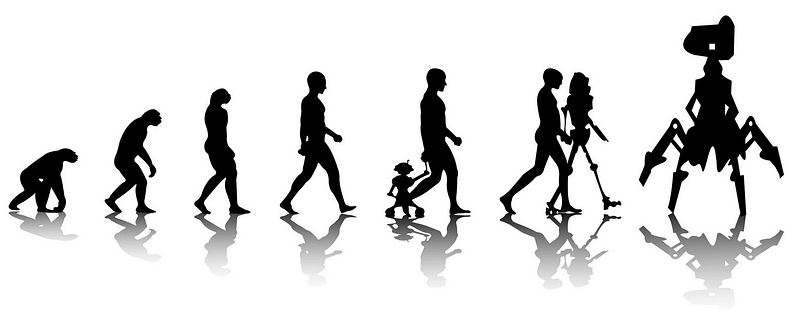
We have talked a lot about Singularity and a possible future, full of abundance for the human race, and also of dystopian futures, where technology turns against us to annihilate us, one of the major fears of Stephen Hawking. But what happens in the present-future? We can talk about whether the Singularity is near or not (this is when exponential thinking comes in) but what is certain is that it will not happen this year. What is happening right now that I have to consider in terms of robotics, automation and Artificial Intelligence?

The vision of Ken Goldberg, Professor and Head of the Department of Industrial Engineering and Operations Research at the University of Berkeley, is that we are in the age of multiplicity, and it’s based on the collaboration between machines and humans, just working together, enhancing together. To understand better multiplicity, watch his TEDx.

Multiplicity = AI (Artificial Intelligence) + IA (Intelligence Amplification)

Currently our life is governed by algorithms, some of them we talked about in a previous article, others we don’t even think about them like Google Maps. In industrial ecosystems, robotics have a lot of impact in the automation of processes and little by little they are conquest the physical space, in direct contact with customers. We interact more and more with “vending machines” and software application interfaces, and less with people in our day to day. This is happening right now. Is someone thinking about the consequences of this multiplicity?

Some people talk about abundance like Peter Diamandis but others think that some jobs are going to be erased and there will be a lot of people without the ability to apply for the new jobs that are going to be created. There is an interesting vision where taxes are applied to robots that substitute humans in order to create a basic income. A nice vision, shared by Bill Gates, where we can have more quality time relying on machines.

What are you talking about? What do you think?

#365daysof #futurism #innovation #technology #multiplicity #day56

Artificial Intelligence
Innovation
Futurism
Robots
Transhumanism
Recommended from ReadMedium