
Forget Roses. Give Her These Legendary Flowers Instead
A few alternatives for those tired roses
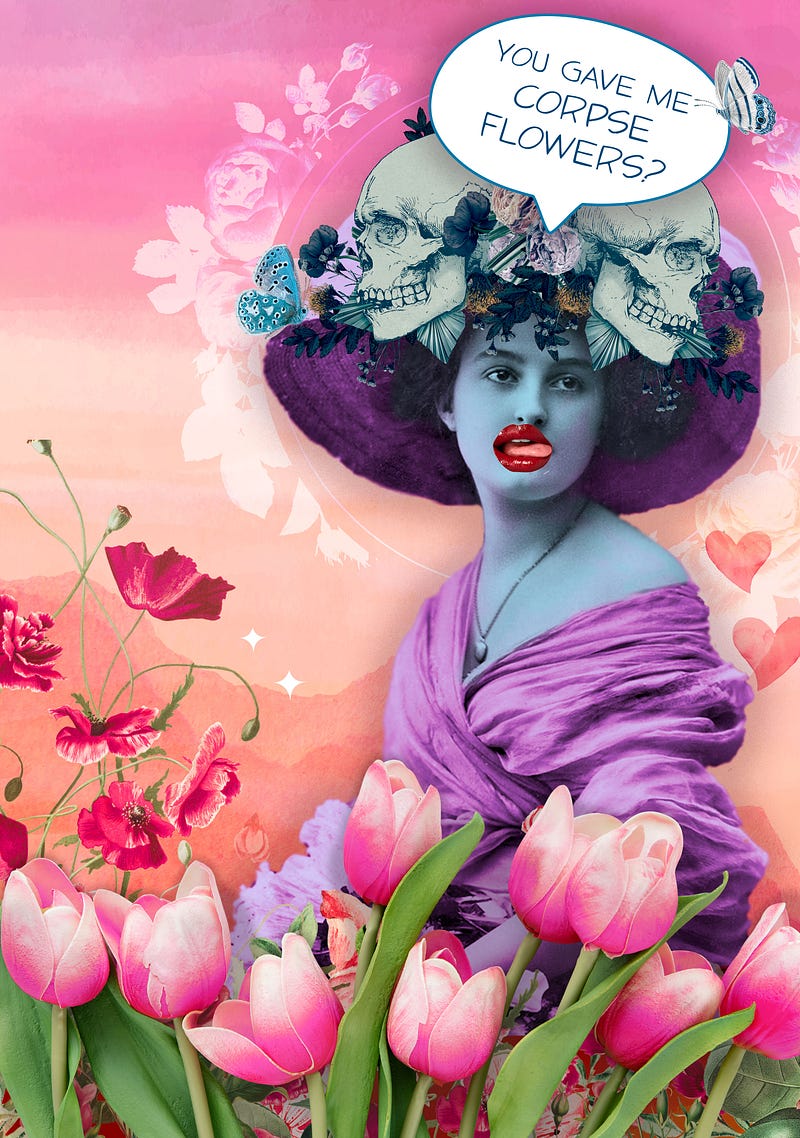
Every time a man gives me a bouquet of roses, my ex-husband dryly remarks, “Must not be serious. Or else he would know you hate roses.”
He’s right. I hate roses.
Roses are the ugly criers of the flower world. When they die, their plump, red petals bleed into melancholic browns, frayed at the edges and fragile to the touch. The crinkling sound of their decay unnerves me. Their fleeting beauty frustrates. They smell of unmourned death.
Not so with tulips. When a tulip dies, its petals slip off to expose naked sex organs standing tall and proud. A tulip doesn’t wilt. It performs a flirtatious striptease to reveal its phallic glory. That’s kind of badass.
And tulips are not the only flower with personality. Here is the grim history of some of the most popular flowers.
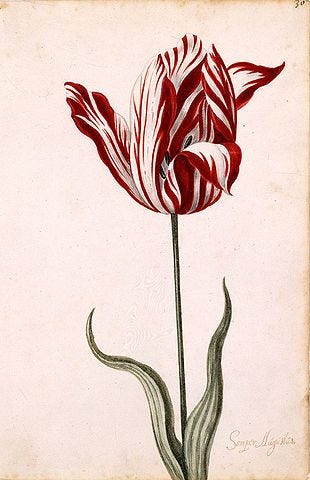
Tulips — for your manic history lover
Any flower that can compete with bitcoin is my kind of bud. The trouble began in the Netherlands in the mid-seventeenth century. At the time, the plague had ravished Europe, leaving survivors with inheritances from dead relatives. Consequently, the Dutch were enjoying a period of unprecedented wealth.
And when people have discretionary income, they will blow it on just about anything.
Enter the humble tulip. Or, more precisely, the striped tulip or Rembrandt tulip — named for the flowers Rembrandt placed in his paintings. Interestingly, the flower got its variegated stripes from the tulip breaking virus (TBV). Apparently, even disease can be beautiful.
The burgeoning middle class first purchased tulips to signify wealth and status, but their popularity fed into a tulip trading market. From 1636 to 1637, the price of tulips surged, with the most prized bulbs costing as much as a mansion. The tulip frenzy got so heated that it is known today as Tulip Mania.
Merchants invested, and speculation followed. Eventually, the tulip economy burst, losing its value and bankrupting 37 investors.¹
Although many historians have claimed the economic backlash from Tulip Mania has been exaggerated, tulips also saved Holland from starvation. During the winter of 1944–1945, known as the Hongerwinter (hunger winter), a famine devastated German-occupied Holland. To survive, the Dutch ground up tulip bulbs to make tulip flour. Most complained that it tasted like sawdust, but it did allow them to survive the winter.
Who to give it to:
Give this flower to someone who appreciates a flower's valiant history.
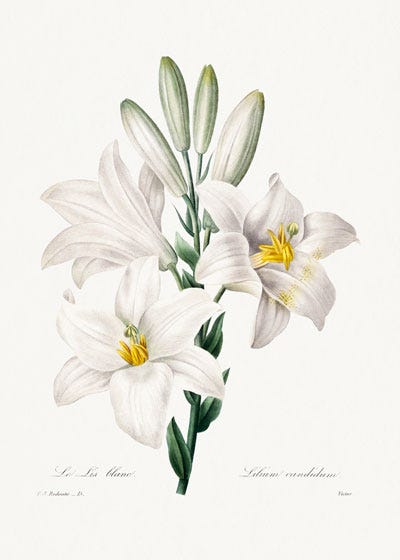
Lilies — make slut shaming pretty
Nothing says purity like a fresh white lily. According to lore, after that floozy Eve got booted from the garden, the lily sprung from her tears. Later slut shaming tales claimed lilies were yellow until the Virgin Mary picked one and turned it white with her purity.
This purity nonsense was carried into the medieval period. If parents suspected a daughter had lost her virginity, they would feed her ground-up lilies. Supposedly, if she were a virgin, she would immediately urinate. No pee meant the girl was a hussy.²
Who to give it to:
Despite its slut shaming past, a white lily also represents femininity, fertility, and love. You can also celebrate her wantonness and gift her a yellow lily which symbolizes the desire for enjoyment.
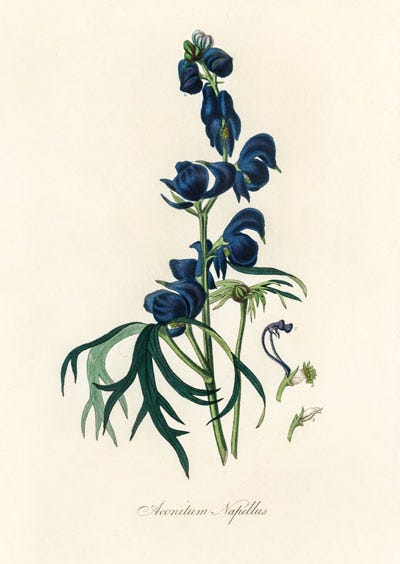
Aconite — if your lover is a beast in bed
In 1856, a Scottish servant was instructed to dig up some horseradish for a dinner party. Instead, he came back with a flower that resembles many common herbs — aconite.³
The cook grated it into the sauce. Sadly, two guests dropped dead, and several others fell severely ill.
Aconite has undoubtedly caused its share of murder and mayhem. Also known as monkshood or devil’s helmet, aconite is so toxic that even touching the stems can cause paralysis. The ancient Greeks coated their arrows with poisonous aconite when hunting wolves. (Thus, it got its other name — wolf’s bane.) But aconite was not just a weapon of the ancients. During WWII, Nazi scientists also poisoned their bullets with aconite.
Given its dubious past, you won’t find aconite’s bright blue bloom in most floral shops. But you can find it growing in mountainous regions.
Who to give it to:
Only send this flower if your lover sprouts hair in weird places.
A corpse flower — for a deathless love
While lilies smell like old ladies and tulips smell like a spring day, nothing beats the rancid smell of a corpse flower. The plant only blooms every 7–10 years, so you will have to do some legwork to get that rotting flesh smell.
But if your partner doesn’t find the smell pleasant, dung beetles and flesh flies will. A corpse flower smells pungent to attract the bugs that eat dead flesh. Awwwww…cheers to romance.
Who to give it to:
Give this flower to an eager botanist or anyone who appreciates a flower with a grimmer presence.
Pansies — for your brainy crush
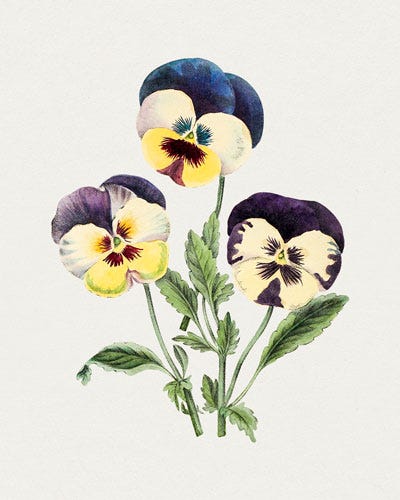
In Shakespeare’s A Midsummer Night’s Dream, a love potion is made from the flower love-in-idleness, otherwise known as the wild pansy. From this love potion, various hijinx ensues.
The word ‘pansy’ comes from the French ‘pensée,’ meaning ‘thought.’ In the eighteenth century, Louis XV called his beloved surgeon François Quesnay, “the thinker.” To reward him for his service, Louis XV gave Quesnay a coat of arms decorated with three pansy flowers symbolizing profound thoughts.
Who to give it to:
Give this flower to show your appreciation for your partner’s cerebral side.
“There’s pansies. That’s for thoughts.” — Hamlet, act iv., sc.5
Belladonna — put some sparkle in her eye
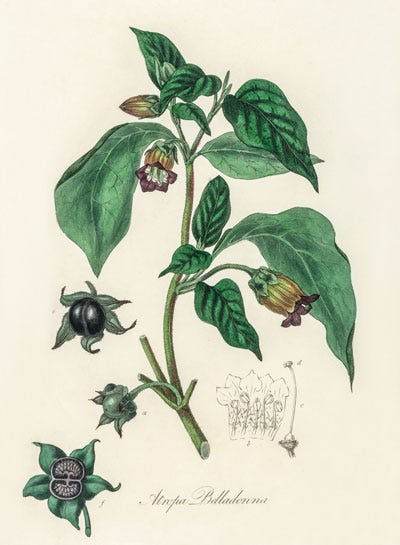
Want to leave your lover speechless? Look no further than belladonna — a poisonous flower that causes hallucinations, dry mouth, a fast heartbeat, and slurred speech.
Belladonna or Deadly Nightshade is a plant with a wicked past. Often referred to as “the beautiful death,” it got that name the hard-won way —by poisoning its share of famous people.
According to legend, Roman empress Livia Drusilla poisoned emperor Augustus with its deadly berries. In 1030, King Macbeth of Scotland called a truce with the invading English army. He offered the English troops some bedtime tea poisoned with belladonna and then murdered them in their sleep.
Venetian Renaissance women dropped tinctures of it into their eyes to make their pupils dilate. (A dilated pupil signals sexual attraction to the opposite sex.) This is why the flower means “beautiful lady” in Italian.
Who to give it to:
If you have a special someone in your life, you should pass on a belladonna bouquet. Just touching its leaves can irritate the skin, and only two berries contain enough poison to kill.⁴
Sources and further reading:
(1) Goldgar, Anne. Tulipmania: Money, Honor, and Knowledge in the Dutch Golden Age. Switzerland, University of Chicago Press, 2008, 385. (2) Binney, Ruth. Plant Lore and Legend: The Wisdom and Wonder of Plants and Flowers Revealed. United States, Dover Publications, 2019, 83. (3) Morrow-Cribbs, Briony, and Stewart, Amy. Wicked Plants: The A-Z of Plants that Kill, Maim, Intoxicate and Otherwise Offend. United Kingdom, Timber, 2010, 1. (4) ibid, 31.

Carlyn Beccia is an award-winning author and illustrator of 13 books.
Want more? Subscribe to Conversations with Carlyn for free content every Wednesday, or become a paid subscriber to get the juicy stuff on Sundays.


