
Forget Home Ownership — Apartment Life Can Be Magical
Living close to others brings its own gifts
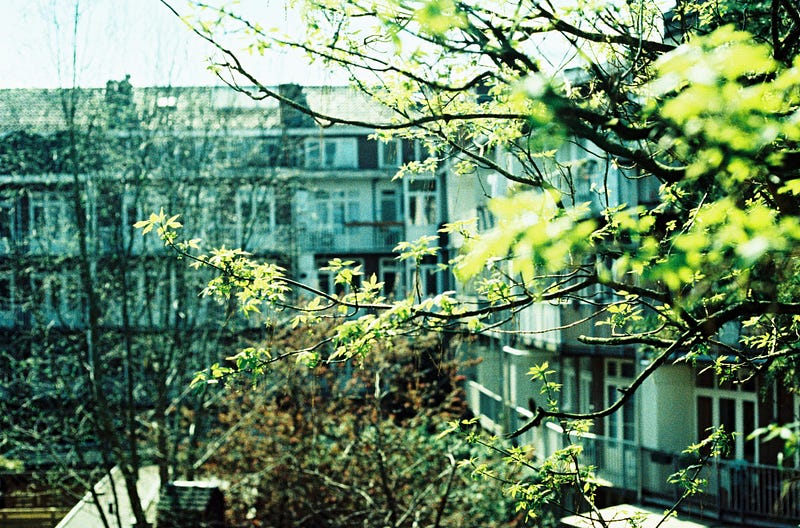
Every morning around 7:30, the little girl who lives on the first floor comes up the stairs to see if my daughter wants to play. The two girls bound down the stairs in their pajamas and play in the courtyard until it’s time for them to get ready for school. As soon as this same little girl gets home in the afternoon, she runs up to our door yelling “Eva! I’m home!” My daughter shouts “Susan!” and jumps up to go play outside until dinner time.
Sometimes the kids in the apartment next door come out too, and our courtyard is full of small children playing tag, drawing with chalk, and tossing gliders off the balcony. Because our building has an enclosed courtyard, we let our kids play without worrying too much about keeping an eye on them at all times. All the apartments face the courtyard and we know that more than one parent has an eye on what is going on.
These hours of playtime give us parents a moment to make dinner, to check our email, and take a breath. Our kids are outside playing in a safe place. They have friends they can play with daily, and we don’t need to coordinate kids’ busy schedules to arrange playdates.
When I look out the window at the kids playing, I feel grateful to live in an apartment. Apartment neighbors know what’s going on in your life without you having to explain it, and they are there to help when you need it. Most people who live in an apartment know what it is to struggle financially, and that creates a sense of empathy and care that I just don’t see in neighborhoods of single-family homes where people pride themselves in a greater sense of self-sufficiency and just don’t need each other in the same way.
I remember when we came home from the hospital with our first child and our downstairs neighbor had decorated our door with an “It’s a Girl!” banner and balloons. I remember when my son had a seizure and went to the hospital in an ambulance. Two of the women in my building saw it happen and immediately texted us to see what we needed. We’ve attended funerals when neighbors lost loved ones. We’ve received so many Christmas and birthday gifts and hand-me-downs from neighbors who thought of us. In turn, we’ve also given away furniture and clothes or cooked meals for neighbors when they needed it.
I value the small interactions created by living in close quarters with other people. I can’t count the number of times I’ve ended up spending an hour talking on the stairs or in the courtyard to a neighbor. We probably would never have planned the conversation, but we ended up less lonely as a result.
Apartments often bring together a diverse community in terms of race, age, and background. Due to systemic racism, the home-owning community in many places skews whiter than the renting community, sadly. As an interracial and intercultural family, raising our kids in a diverse community where they have daily interactions with people of varied backgrounds is an important value for us. We recognize that apartment complexes are often some of the most integrated parts of a city, neighborhood, or even of an individual block.
If we ever bought a house, we’d have to move farther from the center of the city and go out to the suburbs. As people who value walking and using public transportation over driving, we prize being within walking distance of grocery stores, libraries, and parks. Renting has made given us access the central parts of the city and helped us truly enjoy the city where we live. Our quality of life would certainly be lower if we lived in a suburban cul-de-sac and had to drive everywhere.
Homeownership is great, but I’ve noticed that with more real estate comes more distance between me and my fellow human beings. My best memories of childhood are from when we lived in a working-class neighborhood with kids nearby to play with and a strong sense of connection to our neighbors. When my family’s economic situation improved and we moved to the suburbs, we had a bigger house and a huge yard but we were much more isolated. Our days of playing outside with neighbor kids until the sun went down were over. Neighbors drove home, clicked open their garage doors, and disappeared from sight.
Of course, living in close proximity to other people isn’t all positive. We’ve had our share of weed-smoking neighbors, neighbors who yell at each other all night, and neighbors who simply don’t say hello at all.
At the same time, though, I have come to believe that we do have some control over our fate as members of an apartment complex. I think it’s important to embrace apartment life as an opportunity to build community and to take time to develop relationships with neighbors. Everyone gains when we build connections that make it possible for you to depend on each other in time of need or celebrate small victories together.
I appreciate neighbors who dropped by to introduce themselves when we moved in or who take time to find out how we are doing when we run into each other, and I strive to be the kind of neighbor who does the same thing. It’s important to recognize the ways that our neighbors show care, to make sure we reciprocate and show that even though we didn’t choose their presence in our lives, we recognize our interconnectedness as a gift.