seems like a staggering sum driven by Altman’s unchecked ambition.</p><h1 id="4869">3. AI unwraps secrets of ancient scrolls</h1>
<figure id="dc7a">
<div>
<div>
<img class="ratio" src="http://placehold.it/16x9">
<iframe class="" src="https://cdn.embedly.com/widgets/media.html?src=https%3A%2F%2Fwww.youtube.com%2Fembed%2FrLy5sI_6xjM%3Ffeature%3Doembed&display_name=YouTube&url=https%3A%2F%2Fwww.youtube.com%2Fwatch%3Fv%3DrLy5sI_6xjM&image=https%3A%2F%2Fi.ytimg.com%2Fvi%2FrLy5sI_6xjM%2Fhqdefault.jpg&key=a19fcc184b9711e1b4764040d3dc5c07&type=text%2Fhtml&schema=youtube" allowfullscreen="" frameborder="0" height="480" width="854">
</div>
</div>
</figure></iframe></div></div></figure><p id="ad5f">10 months back, one heck of an interesting new contest popped up — the Vesuvius Challenge.</p><p id="1221">This global competition set out on the crazy mission to crack the long-lost contents of the Herculaneum Papyri — those ancient scrolls that got tragically turned into burnt clumps of stuff when Mount Vesuvius erupted in 79AD, burying the nearby Roman town of Herculaneum.</p><p id="2d23">Somehow, against all odds, these researchers Youssef M. Nader, Luke Farritor, and Juli Schillij managed to use artificial intelligence to virtually unwrap the fragile scrolls.</p><p id="0cb9">For the first time in nearly 2000 years, they revealed what the scrolls actually said — shedding light on a fascinating ancient philosophical text musing on pleasures like music, likely written by the Greek thinker Philodemus.</p><p id="6068">By pulling off this virtual unwrapping once thought impossible, Nader, Farritor and Schillij’s team won the Challenge’s 700,000 Grand Prize money.</p><p id="48db">Hats off to them for using AI in this genius way to revive history long thought lost and gone.</p><p id="4fea">But this may just be a tiny fraction of what’s hidden away in there.</p><p id="b225">Only ~5% of the scrolls have had their contents transcribed at this point.</p><p id="65fd">There’s surely tons more groundbreaking stuff locked inside the rest, now on the verge of being fully “unwrapped” thanks to AI.</p><p id="3d49">Makes you think just what other awesome revelations might be uncovered from those burnt ancient works!</p><h1 id="b62f">4. Brilliant Labs just revealed their new Frame smart glasses</h1>
<figure id="2267">
<div>
<div>
<img class="ratio" src="http://placehold.it/16x9">
<iframe class="" src="https://cdn.embedly.com/widgets/media.html?src=https%3A%2F%2Fwww.youtube.com%2Fembed%2FSM6EPmzw_Jk%3Ffeature%3Doembed&display_name=YouTube&url=https%3A%2F%2Fwww.youtube.com%2Fwatch%3Fv%3DSM6EPmzw_Jk&image=https%3A%2F%2Fi.ytimg.com%2Fvi%2FSM6EPmzw_Jk%2Fhqdefault.jpg&key=a19fcc184b9711e1b4764040d3dc5c07&type=text%2Fhtml&schema=youtube" allowfullscreen="" frameborder="0" height="480" width="854">
</div>
</div>
</figure></iframe></div></div></figure><p id="6efa">After the huge success of ChatGPT, individuals are integrating AI into a number of places.</p><p id="1954">The recent example is a company that integrated AI into the glasses called frames.</p><figure id="36b4"><img src="https://cdn-images-1.readmedium.com/v2/resize:fit:800/1*775c925DRwWaLlvDgLduYQ.png"><figcaption></figcaption></figure><p id="f7e4">And you can preorder them at 349 dollar from their official website.</p><p id="2350">For the first time, they actually put an AI assistant right into the frames.</p><p id="9aec">You can search the web, generate images, translate what you can see and hear, and more.</p><figure id="8a0c"><img src="https://cdn-images-1.readmedium.com/v2/resize:fit:800/1*rg-phPsplrZBH2Llk8xmIg.png"><figcaption></figcaption></figure><p id="6141">To know more, visit <a href="https://brilliant.xyz/">here</a>.</p><h1 id="1021">5. Amazon now has over 750,000 robots in their warehouses</h1><ul><li>AI wi
Options
ll take your job.</li><li>Master AI before it masters you.</li><li>AI will not replace you, but the one that uses it definitely will.</li></ul><p id="eeb0">You may have heard these phrases many times. But let me tell you, this is happening, and most of us don’t know about this.</p><p id="54a2">Let me take an example.</p>
<figure id="e23b">
<div>
<div>
<img class="ratio" src="http://placehold.it/16x9">
<iframe class="" src="https://cdn.embedly.com/widgets/media.html?src=https%3A%2F%2Fwww.youtube.com%2Fembed%2FPtyNFNKHnMo%3Ffeature%3Doembed&display_name=YouTube&url=https%3A%2F%2Fwww.youtube.com%2Fwatch%3Fv%3DPtyNFNKHnMo&image=https%3A%2F%2Fi.ytimg.com%2Fvi%2FPtyNFNKHnMo%2Fhqdefault.jpg&key=a19fcc184b9711e1b4764040d3dc5c07&type=text%2Fhtml&schema=youtube" allowfullscreen="" frameborder="0" height="480" width="854">
</div>
</div>
</figure></iframe></div></div></figure><p id="52de">Recently, the news is going viral that Amazon has over 750,000 robots in their warehouses</p><p id="56b5">And let me tell you, this robot army isn’t just about saving money…it’s about advancing Amazon’s AI capabilities.</p><p id="1fd0">You see, all those robots are collecting tons of data while they transport items, scan barcodes, and interact with the environment.</p><p id="1cde">Amazon then feeds this data to machine learning models so their AI gets smarter every day. Smarter robots, smarter operations.</p><p id="bb8e">The recent addition of a two-legged robot named Digit highlights Amazon’s AI-first strategy. Digit can navigate floors, grab packages, open doors — all crucial research for AI.</p><p id="815c">So make no mistake — those 750,000+ warehouse bots aren’t just doing mundane tasks. They’re unlocking groundbreaking developments in robotics and AI.</p><p id="c1e1">Yet again, Amazon plays the long game. Their robotics division started small in 2012, but has now grown to a massive data-collecting empire that keeps their AI a step ahead.</p><p id="7e2e">An absolute competitive advantage for Amazon.</p><p id="faf7">The craziest part? They’re just getting started.</p><p id="31f6">Amazon robots will soon be over 1 million strong. An AI army marching toward the future. Resistance is futile!</p><h1 id="8f60">6. Create a realistic image and edit right inside Microsoft Copilot</h1>
<figure id="f692">
<div>
<div>
<img class="ratio" src="http://placehold.it/16x9">
<iframe class="" src="https://cdn.embedly.com/widgets/media.html?src=https%3A%2F%2Fwww.youtube.com%2Fembed%2F97xaRbHNExw%3Ffeature%3Doembed&display_name=YouTube&url=https%3A%2F%2Fwww.youtube.com%2Fwatch%3Fv%3D97xaRbHNExw&image=https%3A%2F%2Fi.ytimg.com%2Fvi%2F97xaRbHNExw%2Fhqdefault.jpg&key=a19fcc184b9711e1b4764040d3dc5c07&type=text%2Fhtml&schema=youtube" allowfullscreen="" frameborder="0" height="480" width="854">
</div>
</div>
</figure></iframe></div></div></figure><p id="42cc">If you follow me, you may know I have been using Microsoft Copilot to generate images, book covers, thumbnails, and so on.</p><p id="5dda">And after that, I need to use Canva to edit the image based on what I want. But from now on, you can easily edit it right inside Microsoft Copilot.</p><p id="9ea6">Just generate your favorite image, then pick new styles in the bar below. Copilot handles the rest.</p><p id="a044">When you finish editing, export or share your creation: download the file, copy the link, or share the link.</p><p id="0e97">Thanks to Copilot, you can make the perfect AI art and edit right in Copilot!</p><p id="459e">No more starting over. Select, tweak, export for free!</p><p id="52ae">Hope you like it.</p><p id="4a4e">That’s it — thanks.</p><blockquote id="4354"><p><b><i>Originally published on <a href="https://nitinfab.substack.com/p/this-week-in-ai-check-out-the-jaw">Substack</a>.</i></b></p></blockquote></article></body>
Forget ChatGPT— Check Out The (Jaw-Dropping) Innovations That Are Changing Everything!
This post marks #3 where I get to share fascinating AI stuff with you fine people.

Hello everyone!
We all know, in the AI world, things are changing so fast.
It seems like every day there’s a new invention or discovery that blows my mind. AI is advancing at warp speed!
As a curious learner hungry for the latest AI news, I soak up as much as I can. When I come across something extra exciting, I can’t wait to tell you all about it. Knowledge is power!
This post marks #3 where I get to share fascinating AI stuff with you fine people. To get my regular AI updates, you can also sign up for my newsletter.
No doubt, the future of AI is going to bring ideas and creations we can barely imagine yet. I can’t predict exactly what’s coming — but I can promise it will stretch our brains in amazing ways!
So, join me on this journey to the strange new frontiers of AI.
1. Google launched it’s most capable AI model
Recently, Gemini, the most capable AI model developed by Google, has been released.
From now onwards, it will be Gemini that you integrate with — no more Bard. Google has repeatedly claimed that Gemini can outperform ChatGPT.
Even in their latest blog post, the Google team asserts that Gemini Advanced with Ultra 1.0 is now the most preferred chatbot compared to leading alternatives.
Traditionally, multimodal models have been created by stitching together text-only, vision-only, and audio-only models in a suboptimal way.
However, Gemini is multimodal from the ground up, enabling seamless conversation across modalities and providing the best possible response
2. Sam Altman wants to raise $5-$7 Trillion Dollar for an AI chip company
After setting ChatGPT to reach 100 million monthly active users in just two months after launch, Sam Altman is thinking big once again.
He’s now seeking to raise close to $7 trillion — yes trillion with a “T” — to reshape the business of chips and AI.
To put that valuation in perspective, $7 trillion would allow OpenAI to outright buy top companies like Nvidia, Meta, Instagram, Samsung, and more.
It seems like a staggering sum driven by Altman’s unchecked ambition.
3. AI unwraps secrets of ancient scrolls
10 months back, one heck of an interesting new contest popped up — the Vesuvius Challenge.
This global competition set out on the crazy mission to crack the long-lost contents of the Herculaneum Papyri — those ancient scrolls that got tragically turned into burnt clumps of stuff when Mount Vesuvius erupted in 79AD, burying the nearby Roman town of Herculaneum.
Somehow, against all odds, these researchers Youssef M. Nader, Luke Farritor, and Juli Schillij managed to use artificial intelligence to virtually unwrap the fragile scrolls.
For the first time in nearly 2000 years, they revealed what the scrolls actually said — shedding light on a fascinating ancient philosophical text musing on pleasures like music, likely written by the Greek thinker Philodemus.
By pulling off this virtual unwrapping once thought impossible, Nader, Farritor and Schillij’s team won the Challenge’s $700,000 Grand Prize money.
Hats off to them for using AI in this genius way to revive history long thought lost and gone.
But this may just be a tiny fraction of what’s hidden away in there.
Only ~5% of the scrolls have had their contents transcribed at this point.
There’s surely tons more groundbreaking stuff locked inside the rest, now on the verge of being fully “unwrapped” thanks to AI.
Makes you think just what other awesome revelations might be uncovered from those burnt ancient works!
4. Brilliant Labs just revealed their new Frame smart glasses
After the huge success of ChatGPT, individuals are integrating AI into a number of places.
The recent example is a company that integrated AI into the glasses called frames.
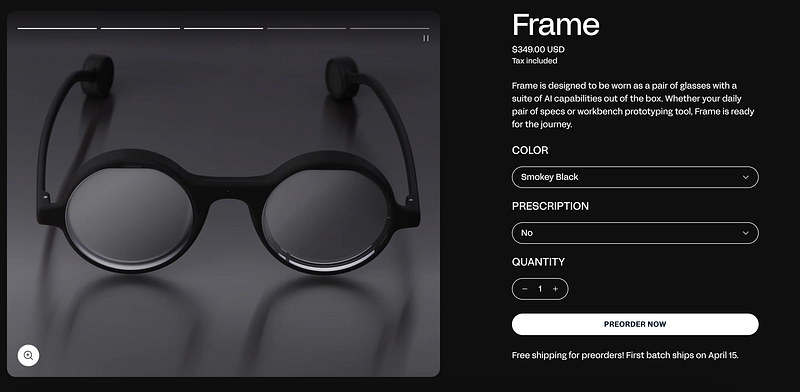
And you can preorder them at $349 dollar from their official website.
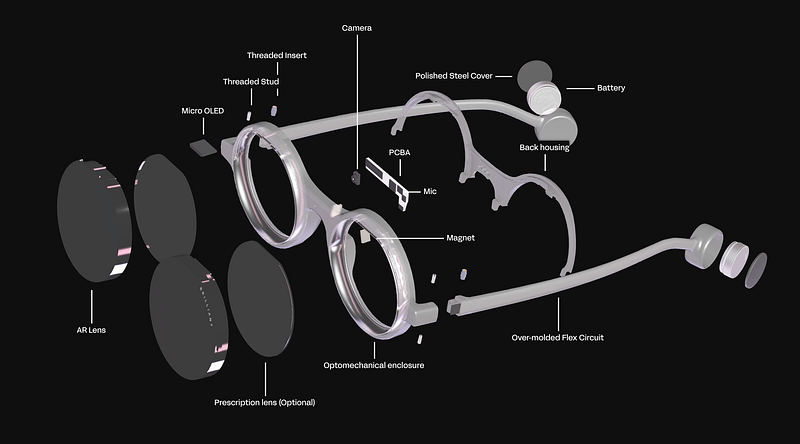
For the first time, they actually put an AI assistant right into the frames.
You can search the web, generate images, translate what you can see and hear, and more.
5. Amazon now has over 750,000 robots in their warehouses
AI will take your job.
Master AI before it masters you.
AI will not replace you, but the one that uses it definitely will.
You may have heard these phrases many times. But let me tell you, this is happening, and most of us don’t know about this.
Let me take an example.
Recently, the news is going viral that Amazon has over 750,000 robots in their warehouses
And let me tell you, this robot army isn’t just about saving money…it’s about advancing Amazon’s AI capabilities.
You see, all those robots are collecting tons of data while they transport items, scan barcodes, and interact with the environment.
Amazon then feeds this data to machine learning models so their AI gets smarter every day. Smarter robots, smarter operations.
The recent addition of a two-legged robot named Digit highlights Amazon’s AI-first strategy. Digit can navigate floors, grab packages, open doors — all crucial research for AI.
So make no mistake — those 750,000+ warehouse bots aren’t just doing mundane tasks. They’re unlocking groundbreaking developments in robotics and AI.
Yet again, Amazon plays the long game. Their robotics division started small in 2012, but has now grown to a massive data-collecting empire that keeps their AI a step ahead.
An absolute competitive advantage for Amazon.
The craziest part? They’re just getting started.
Amazon robots will soon be over 1 million strong. An AI army marching toward the future. Resistance is futile!
6. Create a realistic image and edit right inside Microsoft Copilot
If you follow me, you may know I have been using Microsoft Copilot to generate images, book covers, thumbnails, and so on.
And after that, I need to use Canva to edit the image based on what I want. But from now on, you can easily edit it right inside Microsoft Copilot.
Just generate your favorite image, then pick new styles in the bar below. Copilot handles the rest.
When you finish editing, export or share your creation: download the file, copy the link, or share the link.
Thanks to Copilot, you can make the perfect AI art and edit right in Copilot!
No more starting over. Select, tweak, export for free!