Forget Cancel Culture We Need to Talk
It’s time to start talking or history may repeat.

Today, we seem to be obsessed with cancel culture. Everyone seems offended by this or that and are quick to condemn someone for expressing their opinion. This seems like a popular thing to do. When you don’t agree with something, you cancel the other person because it makes you feel better about yourself. You think you have some moral higher authority. Everyone wants to be outraged when in many cases, there is no need for outrage.
Naturally, there are things in this life that we have to be outraged about.
I am outraged about racism, bigotry, homelessness, poverty, persecution of LGBTQ communities, and so on. The problem I see with cancel culture that you are closing the door to what we all should be doing more of. We need to start a dialogue, discussion, and debate about our issues, or nothing is going to be resolved. What we get now is groups of people screaming at each other, which the past shows us is dangerous.
We Are Too Quick with Feelings
A lot of the times, we let our emotions guide us. This clouds our thinking and our judgment. We don’t have time to process an issue because we are emotional at that moment. It is natural to give in to emotions, but we have to be careful with them, so they don’t get the best of us. Often we have ignorance about the issue and don’t even understand our own outrage.
We should spend more time understanding something before we rush off and allow our emotions to get in the way. For example, whenever you get into an argument with someone you care about, it might not understand their point of view. You shut off your ability to listen and communicate with that person. When you do this, you are being led by your emotions. You’re not allowing your logic and reasoning to decipher what the other person is saying.
My Way or the Highway
Some of the time, we have our own opinion on something, and we don’t want to change. It is my way or the highway. What we need to do is to agree to disagree on certain subjects and move on. Not everyone is going to agree with what we have to say.
We have to appreciate the opinions of someone else, even if we don’t like them.
In politics, for example, we often need to agree to disagree for the government to function. We allow the other side to do what they want to do while they are in power. Once it comes time for an election, we exercise our right to vote, remove those from power, and then institute our own way of thinking. It’s common ground when there is a middle. We still disagree on many points, but we are open and willing to change.
This allows society to function. When we don’t do this, we end up having a dictatorship is only one side is allowed to save their point of view. In our world today, we don’t want to listen to anyone else. We think that only our way of thinking is the way it should be, and this is causing a lot of conflicts.
We have to let others speak their mind. I can’t just cancel out the political party that is in power. I have to let them do the job that they think they can do. If I don’t like that job, I can vote and remove them. I am not canceling them. I’m allowing them to have their opinions as they try to make things better the way they see fit.
Canceling Leads to Darkness
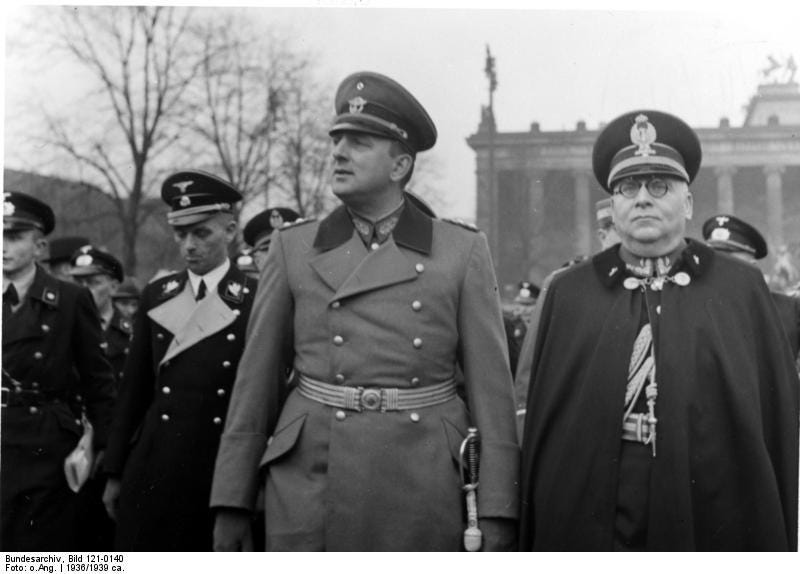
In the 1930s, we had a type of cancel culture.
Of course, this is an extreme example of what we are going through today, but it shows that things like this can get out of hand. We don’t know where cancel culture is going to take us. Perhaps something that you care about tomorrow will be canceled, and you will be persecuted based upon your own beliefs. Let’s go back and have a look at Nazi Germany in the 1930s to see how the Jewish people were canceled.
On January 30th, 1933, Hitler became the chancellor of Germany, which is the German government's most powerful position. At the time, President Hindenburg thought Hitler could bring the German Nation out of the economic and political crisis. Hitler was a member of the Nazi party or the National Socialist German Workers Party.
They worked quickly to remove speech, freedom of the press, and assembly.
He had special security forces called the Gestapo. He used this power to arrest the members of opposition political parties or murdered them outright. This was the start of German cancel culture, which worked to cancel an entire group of people deemed undesirable. This was the Jewish people and others living in Germany.
Hitler viewed the Germans to be racially superior. The Nazis saw people such as the disabled, gypsies, and the Jews living in Germany as a biological threat to their race's purity. Around 525,000 Jews were targeted because of their beliefs, and they were deemed to be inferior. A lot of hatemongering and propaganda took place in Germany during this time.
The Jews were blamed for the economic depression and the defeat of Germany in World War 1. New laws in Germany forced Jews out of jobs, the courts, universities, and other areas of their public life. Jews ended up becoming second-class citizens in Germany. In starting around 1937, more anti-jewish regulations began to segregate Jews and make life difficult for them.
They couldn’t go to theatres, public schools, vacation resorts, cinemas, or even walk in certain areas of German cities. You see, the Jews were canceled. Not just their beliefs were canceled, but actual people.
In 1938 a large riot called Kristallnacht or the night of the broken glass attacked Austrian and German Jews. Many Jewish businesses and synagogues were destroyed. Homes were vandalized, Jewish men were arrested, and multiple individuals were outright murdered. The Nazis in Germany also started to prosecute other groups such as the disabled and other individuals they deemed should be canceled.
Blacks and Roma gypsies could no longer marry with German citizens. They, too, were canceled. It is estimated that around 320,000 to 350,000 individuals had either mental or physical handicaps where is subject to radiation and surgical procedures so that they could no longer have children. This also included 30,000 Roma gypsies.
All of this persecution and canceling of someone’s beliefs, culture, and religion led to concentration camps.
This is where the extermination of the people deemed undesirable by the Nazis took place. Their lives were canceled. It wasn’t until the end of the Second World War that these events' true nature was understood.
This is What Cancel Culture Can Lead To
The reason why I bring up Nazi Germany is that this is what cancel culture can lead to. It seems harmless, but it's ripe for total abuse. All you need is a leader to galvanize people and make them believe something. You have a recipe to cancel whatever you don’t like. Today, it might be a celebrity with an unpopular opinion.
Tomorrow, it might be someone that has a different religion than you. If a leader can convince others that an entire group should be canceled, you have genocide. Don’t think that things like this can’t happen because they have happened. We must be cautious when we talk about cancel culture as it can lead to complete darkness. Where does it take us? Today it is harmless, tomorrow, it’s people dying.
Talk About Issues
All issues, whether we are uncomfortable with them or not, should be discussed. We need dialogue and debate. We can’t hope to change our world if we are not willing to talk about it. If we continue to cross sabers and scream at each other over issues, we’re going to have another genocide as we had in the 1930s and 1940s. This is where our inability to speak to one another is going to lead. Stop canceling each other and start talking.
We must learn from history.
Source:
https://www.myjewishlearning.com/article/1933-1939-early-stages-of-persecution/
Get my newsletter with writing, blogging, and other updates.