
Nobody Fights For Good. Nor Evil.
We all pursue our interests.
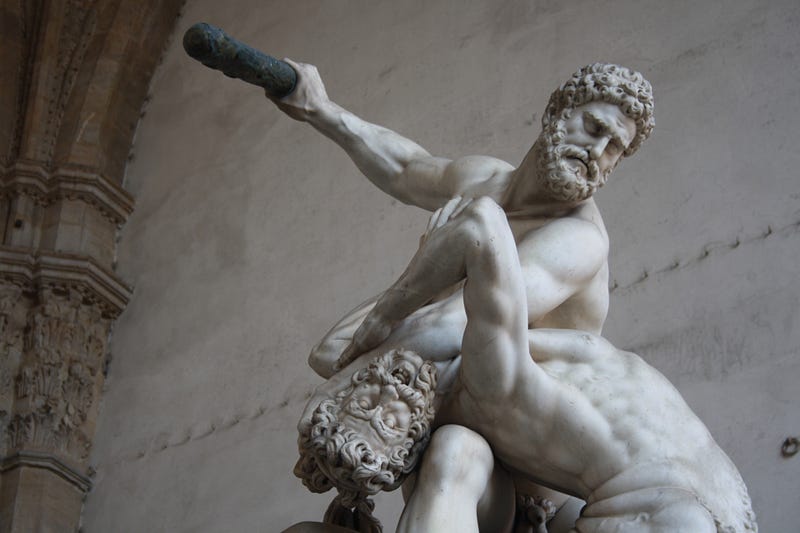
I’m tired of the good against the bad scheme. Wake up! We don’t live in a Disney movie.
The 22 years old Julien feels like he understood something. The food we give to our belly conditions our physical health. The food we give our mind conditions our mental health.
I try to take accountability for diversifying my brain’s foods. It’s up to us to decide what we eat, not a mom, not a higher unit. That’s why the centralization of a handful of information holders scares me.
What happens when Mark Zuckerberg will slightly change the settings of the content blocker algorithm? To avoid the propagation of hate speech, for example? It will smooth people’s behaviors toward the direction chosen by these gods 2.0.
It’s impossible today to have a complete hand on your mind’s diet.
TVs and GAFAM have the power to shape the narrative. However, they seem to strive to give a voice to anyone. To not take away the right to express oneself. Still, I am not free to say everything.
It’s not really that I can’t. It’s more that it’s risky. An invisible and insidious veil protects a handful of subjects.
This entity calls moral dictates topics we can discuss and others we can’t. On the latter, a common assumption that we shouldn’t contradict, for which we should all agree.
If you cross the red line, you will be thrown in jail. In a mind’s jail. All that you stand for will be categorized and put into a box. We will come to apply a label on this box to warn everyone how your opinion is dumb and useless.
“To learn who rules over you, simply find out who you are not allowed to criticize.” — Voltaire

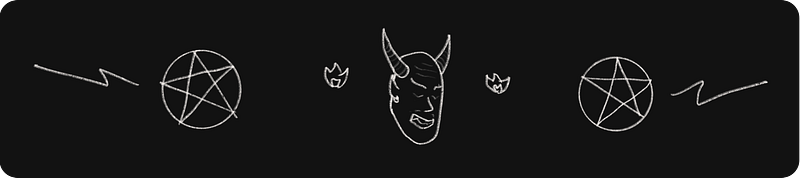
Creating a Monster
I have seen this process over and over again. People say you tell sh*t. They say It goes against their values, that they are shocked.
A falling tree makes more noise than a growing forest. We retain better what arouses emotion. What provokes pain.
I am not satisfied with mockings or gigglings, or alarming alerts. It’s quite the contrary. When people all deeply hate a cause. Reject it. Neglect it. I’m intrigued and want to know more.
I always found that the devil is not that evil. I’m smart enough to not fall in love with the first conspiracy theories that cross my road and to find good points raised in this “hell.”
Often conclusions are raw, unpleasant, and difficult to swallow. But they are full of shades that people remove just like the boring analysis. In the end, only the unpleasant part remains in the minds of the majority.
A Good Human
The problem is that we want friends. We imagine having dinner with politicians and public figures. But there is a big difference between someone you can learn from and someone you can have dinner with.
Gutmensch means good human in German. A Gutmenschen has an overwhelming wish to be good and eagerly seeks approval. He thinks there is a moral we should all align with, that it’s the only way to make the world better.
Good humans are driven by dogma and that old concept; Conformity.
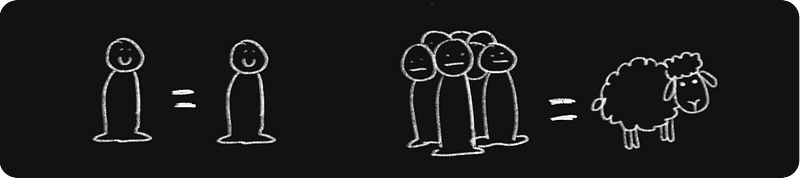
Conformity is a survival reflex brought to light by many scientists. It tells that we prefer to reject the truth for the benefit of a lie admitted by the majority.
Back then, you had to choose between disagreeing with your 10 fellow humans and risk sleeping outside the cave or nodding with a smile and taking advantage of the fire one more night. In this case, It’s easy to choose.
Today it’s different. There is still a rejection by the group, but the consequences are less dramatic.
What Is Your Moral?
Scar, Ursula, and Curella are bad. Trump no. You think someone is naughty because he goes against your morals, fine. My question is: Is it really yours? Or the group’s one?
Life is easy when you don’t make a fuss. Easy when you spend your evening sinking into the sofa and turning on the TV. Why fight battles if the war does not concern us?
Adhering to the dominant morality is much easier. But easier doesn’t mean happier. So I came to conclude that we should all build personal morals.
They say it has been proven.
They say science all agree on.
They say history shows that.
Forget about science. Even in this field, few things are certified “true.” It doesn’t matter what they say. What matters is what YOU think.
Don’t blindly believe narratives:
- Take accountability for the content you consume,
- Constantly question Gutmensches,
- Uplift your own morals,
- Burn all preconceived notions. The things you always thought were true,
- Build your own truth from the ashes.
I won’t tell you what path you should take. So let me give you an accurate definition of hell to end this article:
“On your last day on earth, the person you became will meet the person you could have become.”
Further reading from me :
I’m active on Twitter too.


