
Forced Labour is Worse than a Drop of Blood
The Devil is in the details
Everyone is talking about the bloody “Satan Shoes”. Much of the commentary has been negative. And now Nike is taking MSCHF Product Studio, Inc. (the company that refurbished the shoes) to court, claiming trademark infringement. It’s all gravy for Lil Nas X, though. The emerging queer icon released the 666 pairs of hell-themed shoes on March 29 and they sold out in under a minute. Even with the shoes off the market, the internet buzzes on. All the negative feedback is just amplifying the musician’s brand and pushing traffic to his newly released single, “Montero (Call Me By Your Name)”. In other words, his marketing strategy is working. But for those who are genuinely outraged by the shoes that supposedly include a drop of human blood in them, I’ve got news for you. With unethical sweatshop labour still prevalent in the manufacturing industry, there already is blood in our shoes.
Nike
Companies seem to come under fire cyclically for feeding the troubling sweatshop industry by outsourcing manufacturing to countries with sub-par labour laws and shockingly low wages. In the 90s, Nike was one of the most noteworthy offenders. It gained attention for unacceptable conditions in its Indonesian factories. I can recall an elementary school lesson, in which a teacher enlightened us about kids, just like us, who were forced to work in hot, unsafe warehouses for long hours instead of going to school. He urged us to be mindful of what we wore and to think twice about whether we really needed something before buying new or asking our parents to do so. I have no doubt that lesson informed my penchant for hand-me-downs and thrifted clothing, even after it stopped being a financial necessity.
In response to a campaign led by United Students Against Sweatshops that began in 1997, Nike took measures to improve its practices and image. By 2016, a Business of Fashion report deemed Nike a leader of sustainability. The brand had finally overcome its tarnished reputation. But just one year later, as reported by Good on You, a company that rates brands based on ethics and sustainability, “The company had turned its back on its commitment to the Worker Rights Consortium (WRC), which effectively blocks labour rights experts from independently monitoring Nike’s supplier factories.”
Use of forced labour
Again, the company did some PR magic to get its brand in a better place. By 2020, it scored 51–60% in the Fashion Transparency Index, which is on the high end compared with other companies. But that same year, Nike was implicated in a bombshell report called “Uyghurs for sale” by the Australian Strategic Policy Institute. It details “At least 82 well-known global brands in the technology, clothing and automotive sectors” that were and, in some cases, still are using factories where ethnic minority Muslims known as Uyghurs work under forced labour conditions imposed by the Chinese government. Companies linked to the factories include Apple, BMW, Gap, Huawei, Nike, Samsung, Sony and Volkswagen, to name a few.
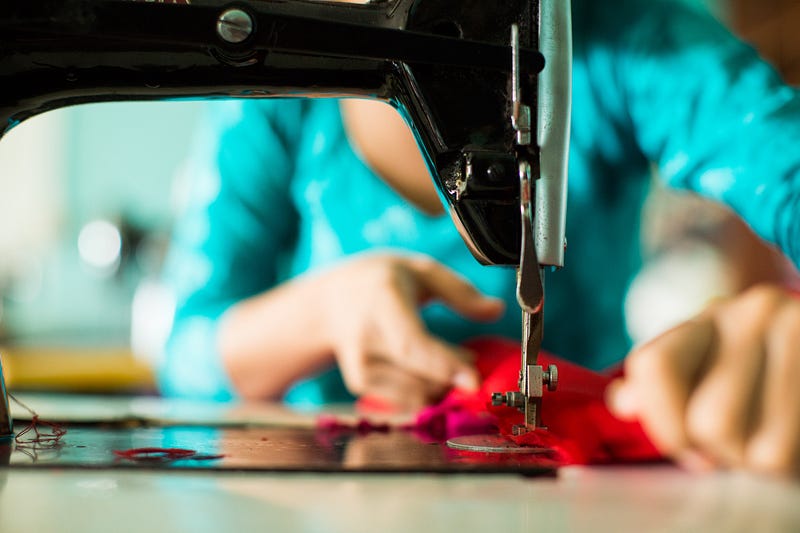
The conditions the workers live under are extremely inhumane. Working long hours, they are segregated from their Han counterparts, must undergo cultural training, and are not allowed to practice their religion or leave for holidays. Constant surveillance ensures they do not. The report explains, “A factory in eastern China that manufactures shoes for US company Nike is equipped with watchtowers, barbed-wire fences and police guard boxes.”
Since the report’s publication, cries for justice have mounted globally. In addition to the forced labour outlined in the Australian report, more than a million Uyghur people are believed to be detained in “re-education camps”. There is also evidence of women being sterilized against their wills. If what’s happening sounds like genocide, that’s because it is. Countries like the United States and Canada have been bold enough to say so, and have even imposed sanctions on China in response. Of course, both countries have their own days of reckoning ahead for human rights infringement. I’ll speak for Canada, where I live. The country continues to commit acts of genocide against the Indigenous population, as found in the 2015 Truth and Reconciliation Report and the National Inquiry into Missing and Murdered Indigenous Women and Girls. It’s an ongoing and unfathomable tragedy. Chinese officials have aptly called attention to the hypocrisy.
Nevertheless, with global attention on China’s egregious acts against the Uyghur people, brands have been standing squarely against what’s happening. Nike released a statement, saying it was “concerned” about the news. Like other brands, it quickly lost endorsements from Chinese celebrities as a result. The statement appeared on the company’s website this month. It reiterated a previous statement that was posted in November 2020, eight months after the damning Australian report showed Nike to have been using sites of forced labour in its production.
The Australian Strategic Policy Institute report was widely published and fact-checked by respected news organizations. Nike may be able to cast doubt on its findings but I have a hard time believing the company was in no way connected, considering it does outsource labour to the region. It also outsources to the Philippines, Vietnam, Indonesia, and Taiwan, and its use of low-cost overseas labour is central to its profitability. Demand from companies like Nike is what drives supply from factories like Qingdao Taekwang Shoes Co. Ltd. As the world’s leading footwear manufacturer, Nike has a vested interest in protecting its image and maintaining the current, low-cost manufacturing model.
The problem closer to home
As the world continues to witness the unfolding atrocities against the Uyghur people, it’s also important to note that unethical sweatshop labour isn’t only found in the East. In fact, California has an ongoing problem with textile factories that have unacceptable conditions, including wages below the national minimum, unsanitary workplaces, vermin infestations, upwards of 12-hour days, and on-the-job harassment. Forever 21, Ross Dress for Less, and TJ Maxx are some of the brands that hire these factories for their lines. While they enjoy the optics of a made in America label, the truth is that they are still profiting off of the exploitation of workers, largely comprised of women of colour from Latin America and Asia.
During the coronavirus pandemic, many of these workers have been deemed essential, as their production lines switched from garments to PPE such as masks and gowns. But they have expressed fear over the conditions they have experienced, particularly at one factory, Los Angeles Apparel. This was reported in Harper’s Bazaar:
“Last June, the city’s Department of Public Health forced Los Angeles Apparel operations to shut down after inspectors discovered “flagrant violations” of public health and infection control guidelines, including cardboard barriers set up between workers and a lack of social distancing, the Los Angeles Times reported. Of the 400 employees who were producing 100,000 masks per week for Los Angeles Apparel, whose website includes a page dedicated to their efforts in sustainability and worker rights, there were four virus-related deaths and 300 infections.”
Bottom line
Now, I don’t know about you, but all of this has me feeling rage. Red hot rage. While the internet loses its mind over a few pairs of shoes with blood allegedly, intentionally spilled in them, workers of colour from east to west are being exploited, harmed, and killed for our obsession with fresh and instant fashion (and cars and electronics).
Don’t get me wrong, I think Lil Nas X deserves attention for “Montero (Call Me By Your Name)”. We all need good music and radical self-expression to get through these trying times we’re living in. I also applaud his ability to self-promote so brilliantly. But can we please hold the outrage for that which actually merits it? I’m talking about ongoing, unfathomable human rights violations. If all the “Satan Shoe” panic were channelled that way, think of the movement and pressure that the world could put on brands to divest from unethical labour practices.
Seriously. Those who are having trouble with Lil Nas X’s publicity stunt had better think long and hard about what really matters to them. A little more biblical imagery in the pop culture landscape really isn’t consequential, especially when you consider that everyone who consumes fast fashion or buys into planned obsolescence invests in unethical labour practices and human rights atrocities. It doesn’t have to be that way. It can change if we stay aware, continually demand better, and vote with our wallets. Until we do, we all have blood on our hands. And feet.
Rachel Ramkaran is an author, editor, poet & flow artist. Find her on Twitter: @TheRachelRam and Instagram: @WatershieldPoetic. Sign up for her emails for regular creativity tips, updates and more.